Water based Fire Extinguisher Filling
CN → US| HS Code | Tariff Rate | Origin | Destination | Doc |
|---|---|---|---|---|
| 8424100000 | 17.5% | CN | US | Official Doc |
| 8479896500 | 20.3% | CN | US | Official Doc |
| 8424201000 | 37.9% | CN | US | Official Doc |
| 8413810040 | 35.0% | CN | US | Official Doc |
Product Images
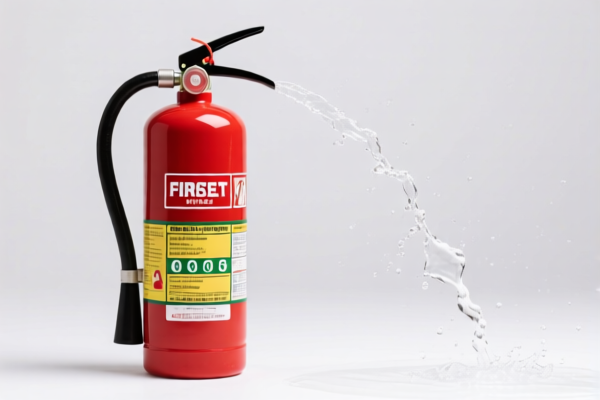
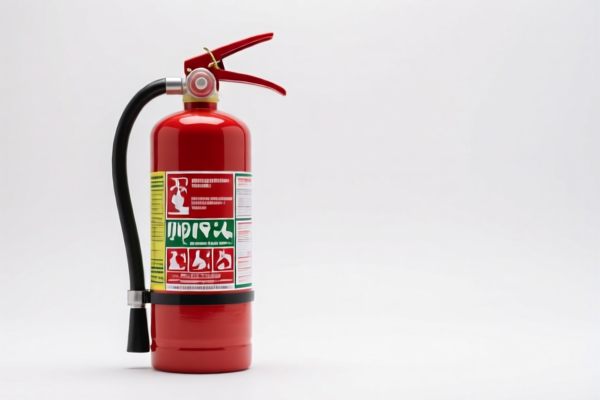
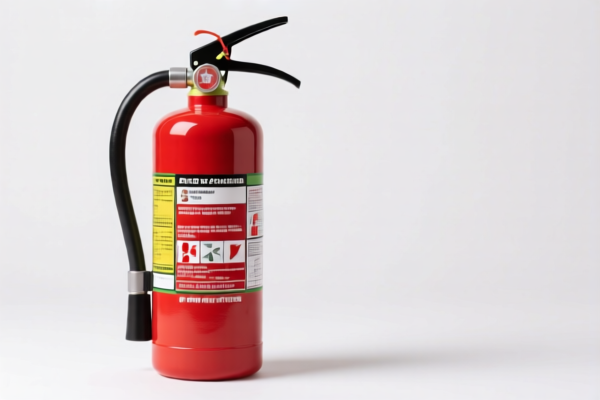

AI Analysis
🔥 Water-Based Fire Extinguisher Filling: HS Code Classification & Tariff Analysis (2026)
🌐 HS Code Reference & Customs Clearance Guide | 2026 Latest Tariff Analysis | Professional Clearance Strategy
📌 I. Product Definition & Classification: Do You Really Understand "Water-Based Fire Extinguisher Filling"?
Water-based fire extinguishers are critical safety devices used for suppressing Class A fires (ordinary combustibles like wood, paper, and cloth) and, in some formulations, Class B fires (flammable liquids). The product in question is "Water-Based Fire Extinguisher Filling", which typically refers to:
- Concentrated Fire Retardant Solutions: Liquid additives mixed with water to create the extinguishing agent.
- Pre-mixed Extinguishing Agents: Ready-to-fill liquid solutions intended for injection into extinguisher cylinders.
⚠️ Key Classification Distinction:
- Is it a Finished Fire Extinguisher? → No, it’s the filling material or agent.
- Is it a Simple Chemical? → No, it’s formulated for mechanical dispensing via spray/pump systems.
- Is it a Standalone Mechanical Device? → No, it’s a liquid/semi-liquid substance intended for use within a mechanical device (the extinguisher).
📌 Critical Point:
- If the product is merely a chemical additive (e.g., foam concentrate), it may fall under chemical headings.
- However, if it is formulated specifically for use in fire extinguishers and functions as a liquid discharge agent, it is more appropriately classified under mechanical apparatus headings (Chapter 84) due to its integrated function with spraying/pumping mechanisms.
📦 II. HS Code Classification Details (2026 Latest Tariff Authority Cross-Reference)
| HS Code | Product Description | Application Scenario | Inclusion of Pump/Spray Mechanism? |
|---|---|---|---|
8424.10.00.00 |
Mechanical appliances for projecting, dispersing, or spraying liquids (e.g., fire extinguishers, garden sprayers) | Water-based fire extinguisher filling (as a functional component of spraying apparatus) | ✅ Yes (inferred use with spray/pump) |
8479.89.65.00 |
Other machinery & mechanical appliances having individual functions, not specified elsewhere | General-purpose mechanical liquid handling devices | ✅ Yes (but less specific than 8424) |
8424.20.10.00 |
Fire extinguishers, charged or not | Pre-charged fire extinguishers (if complete unit) | ✅ Yes (complete unit) |
8413.81.00.40 |
Other pumps for liquids (not electrically operated) | Liquid transfer pumps (not discharge/spraying) | ⚠️ Partially (only pumping function) |
🔍 Important Note:
-8424.10.00.00is the most accurate classification because it explicitly covers mechanical appliances for projecting/dispersing/spraying liquids, which includes fire extinguishers and their filling agents designed for such systems.
-8424.20.10.00applies only if the product is a complete, pre-charged fire extinguisher, not just the filling material.
-8413.81.00.40is less suitable because it focuses on pumping (transfer) rather than spraying/dispersing (discharge).
💰 III. 2026 Latest Tariff Rate Breakdown (Including Additional Duties & Policy Surcharges)
✅ Applicable Country: United States (US)
✅ Country of Origin: China (CN)
✅ Effective Date: November 10, 2025 (and subsequent imports)
🎯 1. 8424.10.00.00 —— Mechanical Appliances for Projecting/Dispersing/Spraying Liquids (Fire Extinguishers & Filling Agents)
| Item | Content |
|---|---|
| Base Tariff Rate | 0% (ad valorem) |
| Section 301 Tariff (USITC Footnote 9903.88.01) | +7.5% (Additional Duty) |
| IEEPA Tariff (China-origin) | +10% (Effective Nov 10, 2025) |
| Total Tariff Rate | 17.5% |
| Tax Calculation | CIF Value × 17.5% |
| De Minimis Eligibility | ❌ Not Eligible (deny_de_minimis) |
| Legal Authority Path | IEEPA:9903.01.25 → IEEPA:9903.01.24 → USITC:8424.10.00.00 → FOOTNOTE:9903.88.01 |
📌 Explanation:
- The 7.5% additional duty is under Section 301 (China-specific).
- The 10% IEEPA surcharge applies to all China-origin goods since Nov 10, 2025.
- Total: 17.5%, which is moderate compared to other categories.
- No de minimis exemption – must declare and pay tariffs.
🎯 2. 8479.89.65.00 —— Other Machinery & Mechanical Appliances (General Purpose)
| Item | Content |
|---|---|
| Base Tariff Rate | 2.8% (ad valorem) |
| Section 301 Tariff | +7.5% |
| IEEPA Tariff | +10% |
| Total Tariff Rate | 20.3% |
| Tax Calculation | CIF Value × 20.3% |
| De Minimis Eligibility | ❌ Not Eligible |
| Legal Authority Path | IEEPA:9903.01.24 → USITC:8479.89.65.00 |
📌 Note:
- This code is less precise than8424.10.00.00because it covers "other machinery" broadly.
- 20.3% total tariff is 2.8% higher than the preferred classification.
- Use only if8424.10.00.00is rejected by Customs.
🎯 3. 8424.20.10.00 —— Fire Extinguishers (Complete Units)
| Item | Content |
|---|---|
| Base Tariff Rate | 2.9% (ad valorem) |
| Section 301 Tariff | +25.0% |
| IEEPA Tariff | +10% |
| Total Tariff Rate | 37.9% |
| Tax Calculation | CIF Value × 37.9% |
| De Minimis Eligibility | ❌ Not Eligible |
| Legal Authority Path | IEEPA:9903.01.24 → USITC:8424.20.10.00 → FOOTNOTE:9903.88.01 |
📌 Warning:
- This code applies only to complete, pre-charged fire extinguishers, not filling materials.
- 37.9% is a high tariff – misclassification can lead to severe penalties.
- Do not use this for empty cylinders or filling agents.
🎯 4. 8413.81.00.40 —— Other Pumps for Liquids
| Item | Content |
|---|---|
| Base Tariff Rate | 0.0% (ad valorem) |
| Section 301 Tariff | +25.0% |
| IEEPA Tariff | +10% |
| Total Tariff Rate | 35.0% |
| Tax Calculation | CIF Value × 35.0% |
| De Minimis Eligibility | ❌ Not Eligible |
| Legal Authority Path | IEEPA:9903.01.24 → USITC:8413.81.00.40 |
📌 Caution:
- This code covers pumps (liquid transfer), not spraying devices.
- 35.0% is high and less accurate for fire extinguisher filling.
- Only use if the product is purely a pump component without spraying function.
🛠️ IV. Customs Clearance Practical Advice (Real-World Pitfall Avoidance Guide)
✅ 1. Document Checklist (All Mandatory)
| Document | Required | Description |
|---|---|---|
| ✅ Product Specification Sheet | ✔️ | Includes formulation, viscosity, pH, fire rating (UL/ULC/CE), usage instructions |
| ✅ Material Safety Data Sheet (MSDS/SDS) | ✔️ | Required for hazardous materials classification |
| ✅ Product Photos (Including Label) | ✔️ | Clear view of label, net weight, batch number, expiry date |
| ✅ Third-Party Certification | ✔️ | UL, ULC, CE, FM approval certificates (if applicable) |
| ✅ Commercial Invoice | ✔️ | Must state "Water-Based Fire Extinguisher Filling Agent" + HS Code 8424.10.00.00 |
| ✅ Certificate of Origin (CO) | ✔️ | If non-China origin, may qualify for reduced tariffs |
| ✅ Packing List | ✔️ | Details quantity, weight, and packaging type |
✅ 2. Declaration Tips (Key Mantra)
🔥 "Specify 'Filling Agent', Not 'Extinguisher'; Use HS 8424.10, Not 8424.20; Avoid 'Pump' Unless It’s Just a Pump!"
| Scenario | Correct Declaration | Incorrect Approach |
|---|---|---|
| Liquid Filling Agent (Empty) | 8424.10.00.00 – "Water-based fire extinguisher filling agent" |
Misdeclare as "Fire Extinguisher" → 37.9% |
| Complete Pre-Charged Extinguisher | 8424.20.10.00 – "Fire extinguisher, charged" |
Misdeclare as "Filling Agent" → 17.5% (underpaid) |
| Pump Component Only | 8413.81.00.40 – "Liquid pump, non-electric" |
Misdeclare as "Sprayer" → 17.5% (incorrect function) |
| Chemical Additive (Not Formulated for Fire) | Chapter 38/39 | Misdeclare as "Fire Agent" → Incorrect tariff |
✅ 3. Special Cases Handling
| Scenario | Handling Advice |
|---|---|
| OEM Custom Formulation | Provide client order + formulation sheet to prove specific use |
| Foam-Enhanced Water-Based Agents | Still 8424.10.00.00 if designed for fire extinguishers |
| Bulk Chemical (Not for Direct Use) | May fall under chemical headings (e.g., 3824.99.95) – lower tariff risk but requires SDS |
| Expiry-Dated Product | Declare expiration date clearly to avoid rejection |
🌍 V. Global Market Customs Comparison (2026 Latest)
| Country/Region | Recommended HS Code | Tariff | Certification Requirement | Notes |
|---|---|---|---|---|
| 🇺🇸 USA | 8424.10.00.00 |
17.5% (China-origin) | UL/ULC + SDS | Prefer over 8424.20 for filling agents |
| 🇨🇳 China | 8424.10.00.00 |
5% | CCC + Fire Safety Label | No additional duties |
| 🇪🇺 EU | 8424.10.00.00 |
0% (if CE certified) | CE + EN 3 Standard | No additional surcharges |
| 🇬🇧 UK | 8424.10.00.00 |
0% | UKCA + BRE Approval | Post-Brexit rules apply |
| 🇯🇵 Japan | 8424.10.00.00 |
0% | JIS Standard | No additional duties |
📌 Conclusion:
- USA imposes the highest effective tariff (17.5%) on China-origin fire extinguisher filling agents.
- EU, UK, Japan, and China have no additional surcharges, making them more cost-effective markets.
- Certifications (UL, CE, JIS) are critical for market access and Customs acceptance.
📌 VI. Common Mistakes & Pitfall Avoidance (Blood Lessons)
❌ Mistake 1: Declaring "Fire Extinguisher" for filling agent only
👉 Consequence: Underpayment of tariff (17.5% vs 37.9%) → Penalty + Back Taxes!
❌ Mistake 2: Using 8424.20.10.00 for empty cylinders or liquid agents
👉 Consequence: Customs rejects declaration → Delay, Inspection, or Return!
❌ Mistake 3: Failing to provide MSDS/SDS
👉 Consequence: Classified as hazardous → Higher inspection rate + Storage Fees!
❌ Mistake 4: Ignoring expiring date on filling agents
👉 Consequence: Rejected at border → Destruction or Re-export Costs!
✅ Correct Declaration Example:
"Water-Based Fire Extinguisher Filling Agent, Non-Charged, UL Listed, Formulated for Class A Fires, HS Code 8424.10.00.00, Origin: China"
🎯 VII. Conclusion: Precision in Classification Saves Costs!
🎯 Remember the Mantra:
🔹 "Filling Agent ≠ Extinguisher; Use 8424.10, Not 8424.20"
🔹 "SDS is Mandatory; Certifications Open Doors"
🔹 "17.5% in USA, 0% in EU/Japan – Choose Wisely!"
📌 Pro Tip:
- If your product is original equipment manufacturer (OEM) for a US brand, provide the brand’s UL certificate to streamline Customs clearance.
- Consider shifting supply chain to Vietnam, India, or Mexico to avoid US Section 301 + IEEPA tariffs (0%–2.8% base rate).
- Always apply for an Advance Ruling (CBP Ruling) before shipping to guarantee HS Code acceptance.
📣 Take Action Now:
📞 Engage a Licensed Customs Broker + Submit Product Photos + Apply for CBP Advance Ruling
🚀 Ensure Smooth Customs Clearance, Minimize Tariffs, Maximize Profit Margins!
✨ Professional Customs Clearance Starts with Accurate Classification!
💼 Every Dollar Saved in Tariffs is Pure Profit!
Customer Reviews
About HS Code Classification
The Harmonized System (HS) is an internationally standardized nomenclature developed by the World Customs Organization (WCO) to classify traded products. Over 200 countries use the HS system as the basis for customs tariffs, trade statistics, and import/export regulations.
Each HS code follows a hierarchical structure:
- Chapter (2 digits) — Broad category of goods (e.g., Chapter 84: Machinery and Mechanical Appliances)
- Heading (4 digits) — More specific grouping within the chapter
- Subheading (6 digits) — Internationally standardized breakdown, used by all WCO member countries
- National subdivisions (8-10 digits) — Country-specific extensions for further classification, such as US HTSUS 10-digit codes
Correct HS code classification is essential for smooth customs clearance, accurate duty payment, and compliance with trade regulations. Misclassification can lead to customs delays, overpayment of duties, or penalties.
When importing from CN to US, the applicable tariff rates may include:
- Most-Favored-Nation (MFN) rate — The standard duty rate applied to WTO members
- General rate — Applied to countries without trade agreements
- Trade remedy duties — Additional tariffs such as Section 301 (anti-dumping), Section 232 (national security), or countervailing duties
The information provided on this page is for reference purposes only. For official classification, please consult with your local customs authority or a licensed customs broker.