Water based Fire Extinguishing Agent Container
CN → US| HS Code | Tariff Rate | Origin | Destination | Doc |
|---|---|---|---|---|
| 8424100000 | 17.5% | CN | US | Official Doc |
| 8479896500 | 20.3% | CN | US | Official Doc |
| 8424201000 | 37.9% | CN | US | Official Doc |
| 8413810040 | 35.0% | CN | US | Official Doc |
| 7311000060 | 85.0% | CN | US | Official Doc |
Product Images
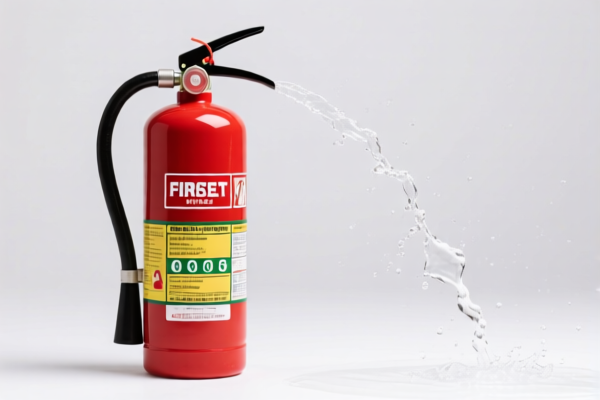
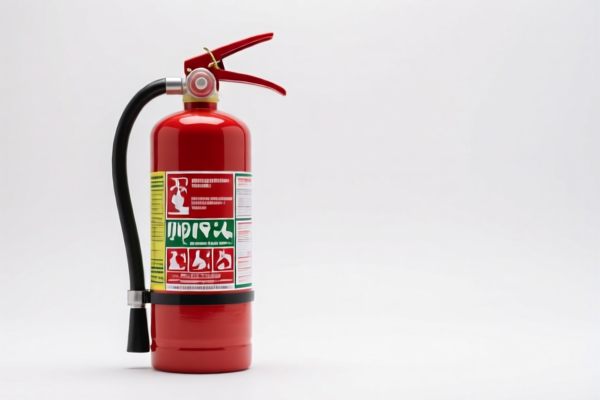
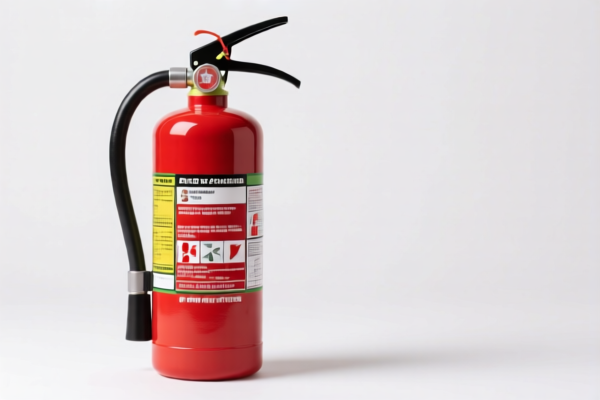

AI Analysis
🚒 Water-Based Fire Extinguishing Agent Container (Sprayers & Pressure Vessels)
🌐 HS Code Reference & Customs Clearance Guide | 2026 Latest Tariff Analysis | Strategic Clearance Strategy
📌 I. Product Definition: What Exactly Are We Importing?
The product "Water-based Fire Extinguishing Agent Container" is a broad term that can refer to two distinct types of goods in international trade, leading to significantly different HS Codes and tariff liabilities:
- The Sprayer/Mechanism: If the focus is on the device that sprays the liquid (e.g., a hose-mounted nozzle, a pump-operated sprayer, or a complete handheld unit), it is classified as Machinery/ Mechanical Appliances.
- The Pressure Vessel/Container: If the focus is on the metal tank or cylinder that holds the agent under pressure, it is classified as a General Industrial Part (Pressure Vessel).
⚠️ Critical Distinction:
- If it is a functional spraying device with no specific chemical exclusions → Likely Chapter 84 (Machinery).
- If it is a pure metal container/cylinder without pumping mechanisms → Likely Chapter 73 (Iron/Steel Articles).
- Note: The provided data suggests these items are subject to significant US trade restrictions (Section 301 & IEEPA).
📦 II. HS Code Classification Details (Based on Provided Data)
| HS Code | Product Description | Matching Logic & Usage | Total Tax Rate (US Import from CN) |
|---|---|---|---|
8424.10.00.00 |
Fire Extinguishers | "Sprayer" function matches. The product name "Sprayer" fits the function of "spraying/dispersing liquids." "Water-based agent" is a liquid. Matches the core function of fire extinguishers. | 17.5% |
8479.89.65.00 |
Other Machinery/Devices | "Sprayer" as independent machinery. Interpreted as a mechanical device not specified elsewhere. "Water-based" implies non-specific chemical raw material. No conflict with mechanical device description. | 20.3% |
8424.20.10.00 |
Hand Sprayers | "Sprayer" usage (spraying liquids). Although pump structure isn't explicitly stated, common sense infers it belongs to spraying mechanical appliances. No material/shape conflict. | 37.9% |
8413.81.00.40 |
Other Pumps | Liquid Sprayer as a Pump. Functionally fits "Other Pumps" under liquid pumps/elevators. Common sense infers internal liquid transport mechanism, conflicting with no attributes in HS 8413810040. | 35.0% |
7311.00.00.60 |
Pressure Vessels (Iron/Steel) | "Pressure Container" for Agent. Used as a gas/liquid container. Industry common sense for "spare parts/components" infers metal (iron/steel) construction, matching material requirements. | 85.0% |
🔍 Key Insight:
- The classification depends heavily on whether the item is viewed as a functional tool (Ch 84) or a structural container (Ch 73).
- HS 7311.00.00.60 carries the highest risk (85%), likely due to specific steel/aluminum additional tariffs叠加 (stacking).
- HS 8424.10.00.00 offers the lowest rate (17.5%), aligning with the specific function of "Fire Extinguishers."
💰 III. 2026 Latest Tariff Rate Breakdown (Detailed)
✅ Applicable Country: United States (US)
✅ Origin: China (CN)
✅ Effective Date: 2025/2026 (Current Trade Policy Era)
🎯 1. 8424.10.00.00 — Fire Extinguishers (Lowest Risk Option)
| Item | Content |
|---|---|
| Base Rate | 0.0% |
| Section 301 Additional Tariff | 7.5% |
| IEEPA Section 122 Tariff | 10.0% |
| Total Effective Rate | 17.5% |
| Tax Calculation | CIF Value × 17.5% |
| De Minimis Exemption | ❌ Not Applicable (Standard de minimis usually excluded for Section 301/IEEPA goods from China) |
| Legal Basis Path | USITC:8424.10.00.00 → Sec301:7.5% → IEEPA:122:10% |
📌 Explanation:
- This classification treats the product as a complete functional unit (fire extinguisher/sprayer).
- The combination of 7.5% (Section 301) and 10% (IEEPA 122) results in the most competitive rate among the options.
- Strategy: Emphasize the spraying function and complete unit nature in documentation.
🎯 2. 8479.89.65.00 — Other Machinery (Medium Risk)
| Item | Content |
|---|---|
| Base Rate | 2.8% |
| Section 301 Additional Tariff | 7.5% |
| IEEPA Section 122 Tariff | 10.0% |
| Total Effective Rate | 20.3% |
| Tax Calculation | CIF Value × 20.3% |
| De Minimis Exemption | ❌ Not Applicable |
| Legal Basis Path | USITC:8479.89.65.00 → Sec301:7.5% → IEEPA:122:10% |
📌 Explanation:
- Higher base rate (2.8%) pushes the total up to 20.3%.
- Use this if the item is not a standard fire extinguisher but a specialized industrial spraying device.
🎯 3. 8424.20.10.00 — Hand Sprayers (High Risk)
| Item | Content |
|---|---|
| Base Rate | 2.9% |
| Section 301 Additional Tariff | 25.0% |
| IEEPA Section 122 Tariff | 10.0% |
| Total Effective Rate | 37.9% |
| Tax Calculation | CIF Value × 37.9% |
| De Minimis Exemption | ❌ Not Applicable |
| Legal Basis Path | USITC:8424.20.10.00 → Sec301:25% → IEEPA:122:10% |
📌 Explanation:
- Triggers the 25% Section 301 tariff (higher tier).
- Likely classified as "Hand-operated fire extinguishers" or "Hand sprayers" which fall under higher penalty brackets in current trade wars.
- Avoid this classification unless absolutely necessary.
🎯 4. 8413.81.00.40 — Other Pumps (High Risk)
| Item | Content |
|---|---|
| Base Rate | 0.0% |
| Section 301 Additional Tariff | 25.0% |
| IEEPA Section 122 Tariff | 10.0% |
| Total Effective Rate | 35.0% |
| Tax Calculation | CIF Value × 35.0% |
| De Minimis Exemption | ❌ Not Applicable |
| Legal Basis Path | USITC:8413.81.00.40 → Sec301:25% → IEEPA:122:10% |
📌 Explanation:
- While base rate is 0%, the 25% Section 301 surcharge makes it expensive.
- Classifying a "Sprayer" as a "Pump" is a risky interpretation that may trigger customs scrutiny for misclassification.
🎯 5. 7311.00.00.60 — Pressure Vessels (EXTREME Risk)
| Item | Content |
|---|---|
| Base Rate | 0.0% |
| Section 301 Additional Tariff | 25.0% |
| IEEPA Section 122 Tariff | 10.0% |
| Steel/Aluminum Surcharge | 50.0% |
| Total Effective Rate | 85.0% |
| Tax Calculation | CIF Value × 85.0% |
| De Minimis Exemption | ❌ Not Applicable |
| Legal Basis Path | USITC:7311.00.00.60 → Sec301:25% → IEEPA:122:10% → Steel Tariff:50% |
📌 Explanation:
- This is the worst-case scenario.
- It attracts the 50% Steel/Aluminum tariff (Section 232) ON TOP of the 35% trade war tariffs.
- Only use if the product is strictly an empty metal cylinder/tank with no mechanical pumping or spraying components.
- Warning: If the item has any moving parts, valves, or nozzles attached, classifying it here is high-risk for misclassification penalties.
🛠️ IV. Customs Clearance Practical Advice (Battle-Tested Strategies)
✅ 1. Documentation Checklist (Non-Negotiable)
| Document | Required | Description |
|---|---|---|
| ✅ Product Specification Sheet | ✔️ | Clearly distinguish if it is a Complete Unit (Sprayer + Tank) or Empty Vessel only. |
| ✅ Technical Drawings | ✔️ | Highlight mechanical components (pumps, nozzles) vs. static metal parts. |
| ✅ Commercial Invoice | ✔️ | Use precise language: "Water-based Fire Sprayer Unit" vs. "Steel Pressure Cylinder." |
| ✅ Material Declaration | ✔️ | Specify if the vessel is Iron/Steel (triggers 50% tariff) or Aluminum/Other. |
| ✅ Origin Certificate | ✔️ | If not China-origin, apply for reduced rates. |
| ✅ Photos (Labeled) | ✔️ | Show the item in its entirety, including labels, nozzles, and pressure gauges. |
✅ 2. Classification Strategy (Key Mantra)
🔥 "Function First, Material Second. Avoid Steel Penalties!"
| Scenario | Recommended HS Code | Reasoning |
|---|---|---|
| Complete Sprayer/Eliminator | 8424.10.00.00 |
Best rate (17.5%). Focus on the spraying function. |
| Specialized Industrial Sprayer | 8479.89.65.00 |
If not a standard fire extinguisher, use "Other Machinery." |
| Empty Steel Cylinder | 7311.00.00.60 |
High Risk (85%). Only if purely a static container. |
| Handheld Pump Sprayer | 8424.20.10.00 |
Avoid if possible (37.9% due to 25% tariff). |
📌 Critical Tip:
- If you are importing a complete fire suppression system, DO NOT split the shipment into "Tank" and "Sprayer" to save tax. Customs may aggregate them and apply the highest rate or flag for misclassification.
- If the item is a steel tank, consider if it can be classified as a "Part of Machinery" (Ch 84) rather than a "Steel Article" (Ch 73) to avoid the 50% steel surcharge.
✅ 3. Special Situations & Mitigation
| Situation | Handling Advice |
|---|---|
| OEM Custom Design | Provide design specs to prove it is a "Functional Apparatus" (Ch 84) rather than a generic container. |
| Aluminum Components | If the vessel is aluminum, the 50% steel tariff may not apply, but verify with CBP. |
| Non-Chinese Origin | If manufactured in Vietnam/Thailand, apply for Free Trade Agreement (FTA) benefits or exclude from IEEPA/301 if eligible. |
| Misclassification Risk | If unsure, apply for a Binding Tariff Information (BTI) or US Customs Ruling before shipment. |
🌍 V. Global Market Comparison (2026 Latest)
| Country/Region | Recommended HS Code | Est. Tariff | Key Certifications | Notes |
|---|---|---|---|---|
| 🇺🇸 USA | 8424.10.00.00 |
17.5% | NFPA, UL | Avoid Ch 73 (85%). Prefer Ch 84. |
| 🇨🇳 China | 8424.10.00.00 |
5% | CCC | No Section 301/IEEPA. |
| 🇪🇺 EU | 8424.10.00.00 |
0-2% | CE, EN3 | Low tariffs, strict safety standards. |
| 🇬🇧 UK | 8424.10.00.00 |
0-2% | UKCA | Post-Brexit rules apply. |
📌 Conclusion:
- The US market is the most hostile due to layered tariffs (Base + 301 + IEEPA + Steel).
- Ch 84 classifications are vastly superior to Ch 73 for this product.
- Ch 7311.00.00.60 (85%) is a tax trap for complete units; use only for empty steel tanks.
📌 VI. Common Errors & Pitfalls (Lessons Learned)
❌ Error 1: Classifying a complete fire extinguisher as a "Pressure Vessel" (7311...)
👉 Consequence: 85% Tax + Potential penalty for misclassification.
❌ Error 2: Listing "Fire Extinguishing Agent" in the description without clarifying the Container/Sprayer nature
👉 Consequence: Customs may detain for safety compliance (DOT/USDOT regulations for pressure containers).
❌ Error 3: Assuming De Minimis ($800) applies
👉 Consequence: Deny De Minimis. Section 301 and IEEPA goods from China are excluded from the $800 exemption. You must pay duties upfront.
❌ Error 4: Using vague terms like "Metal Tank" for a pump-equipped device
👉 Consequence: Customs reclassifies to the highest applicable duty or requests detailed engineering drawings, causing delays.
✅ Correct Practice:
"Water-based Fire Extinguishing Sprayer Unit, Model XYZ, Includes Stainless Steel Tank, Pump Mechanism, and Nozzle, NFPA Certified"
🎯 VII. Conclusion: Professional Declaration, Save Costs!
🎯 Remember the Mantra:
🔹 "Function over Material. Choose Ch 84. Avoid Ch 73. Pay 17.5%, not 85%!"
🔹 "No De Minimis for China. Plan for 17.5%~37.9%. Avoid Steel Surcharges!"
📌 Pro Tip:
If your product is originating from non-China countries (e.g., Malaysia, Vietnam), you may qualify for IEEPA/Section 301 exclusions.
Recommend applying for an Advance Ruling with US CBP to lock in the 17.5% rate for 8424.10.00.00 before shipping.
📣 Immediate Action:
📞 Contact a licensed customs broker.
📄 Prepare Technical Specifications highlighting the spraying mechanism.
🚀 Clear customs smoothly, minimize duties, maximize profit!
✨ Professional clearance starts with accurate classification!
💼 Every percentage point of tax savings counts!
Customer Reviews
About HS Code Classification
The Harmonized System (HS) is an internationally standardized nomenclature developed by the World Customs Organization (WCO) to classify traded products. Over 200 countries use the HS system as the basis for customs tariffs, trade statistics, and import/export regulations.
Each HS code follows a hierarchical structure:
- Chapter (2 digits) — Broad category of goods (e.g., Chapter 84: Machinery and Mechanical Appliances)
- Heading (4 digits) — More specific grouping within the chapter
- Subheading (6 digits) — Internationally standardized breakdown, used by all WCO member countries
- National subdivisions (8-10 digits) — Country-specific extensions for further classification, such as US HTSUS 10-digit codes
Correct HS code classification is essential for smooth customs clearance, accurate duty payment, and compliance with trade regulations. Misclassification can lead to customs delays, overpayment of duties, or penalties.
When importing from CN to US, the applicable tariff rates may include:
- Most-Favored-Nation (MFN) rate — The standard duty rate applied to WTO members
- General rate — Applied to countries without trade agreements
- Trade remedy duties — Additional tariffs such as Section 301 (anti-dumping), Section 232 (national security), or countervailing duties
The information provided on this page is for reference purposes only. For official classification, please consult with your local customs authority or a licensed customs broker.