Waterproof Paper Label
CN → US| HS Code | Tariff Rate | Origin | Destination | Doc |
|---|---|---|---|---|
| 3919102055 | 40.8% | CN | US | Official Doc |
| 4823908680 | 35.0% | CN | US | Official Doc |
| 4823908620 | 35.0% | CN | US | Official Doc |
| 3919905060 | 40.8% | CN | US | Official Doc |
| 3926909989 | 22.8% | CN | US | Official Doc |
Product Images
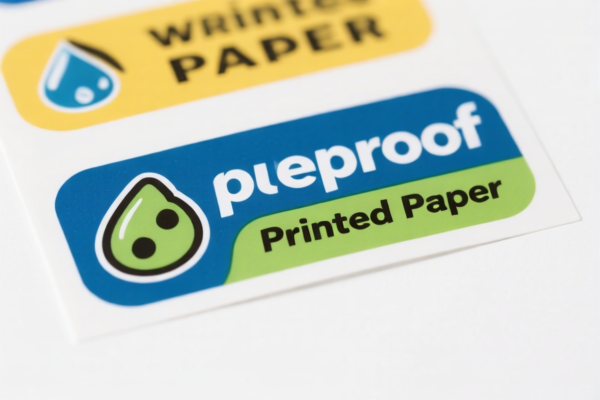
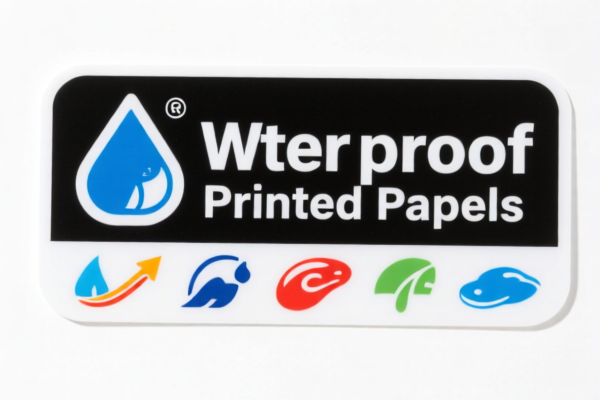
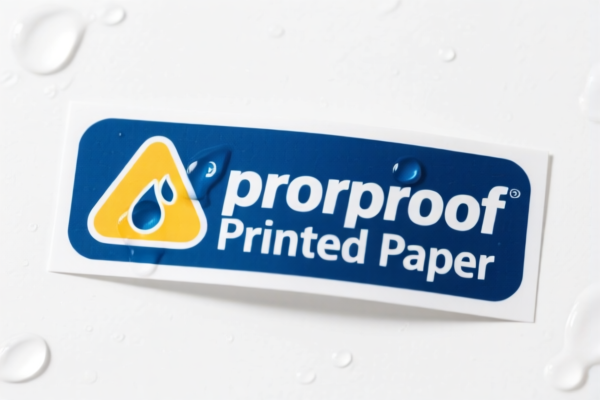

AI Analysis
🏷️ Waterproof Paper Label: HS Code Classification & US Customs Clearance Guide (2026 Update)
🌐 HS Code Reference & Customs Clearance Strategy | 2026 Latest Tariff Analysis | Professional Compliance Guide
📌 I. Product Definition & Classification: What Exactly is a "Waterproof Paper Label"?
A "Waterproof Paper Label" is a versatile labeling solution designed to withstand moisture, humidity, and oil. In international trade, the classification is not determined solely by the word "Paper," but by the material composition, adhesive properties, and final form.
Key distinctions that affect HS Code selection: * Material Base: Is it truly cellulose-based (paper) with a waterproof coating, or is it a synthetic polymer (plastic/PET/PP) that looks like paper? * Adhesive: Is it self-adhesive (stick-on) or heat-sealed? * Form: Is it in rolls, sheets, or cut to specific shapes?
⚠️ Critical Distinction:
- If the backing is paper but the face material is plastic/polymer (e.g., polypropylene) for waterproofing → It is a Plastic Article.
- If the entire structure is cellulose with a waterproof coating → It is a Paper Article.
- Self-Adhesive status often pushes items into Chapter 39 (Plastics) or Chapter 48 (Paper) subheadings 39.19 or 48.23.
📦 II. HS Code Classification Matrix (Based on Provided Data)
The following HS Codes are derived from the provided dataset (<DATA>). Each code represents a different inference regarding the material nature of the "Waterproof Paper Label."
| HS Code | Product Description (Inferred) | Key Classification Logic | Total Tax Rate (US Import from China) |
|---|---|---|---|
3919.10.20.55 |
Plastic Self-Adhesive Film/Sheeting | Classified as Plastic (Chapter 39) because "waterproof" implies a polymer/film base. Fits "Other self-adhesive plastic tapes/films." | 40.8% |
3919.90.50.60 |
Other Self-Adhesive Plastic Articles | Classified as Plastic. Uses the "Other" category for self-adhesive plastic flat shapes not specified elsewhere. | 40.8% |
4823.90.86.80 |
Other Paper Articles | Classified as Paper (Chapter 48). Assumes the product is a cellulose-based paper product, cut to size, with "waterproof" being a coating feature. | 35.0% |
4823.90.86.20 |
Other Paper/Plastic Labels | A hybrid inference. Treats the item as a Label under paper/plastic categories. No material conflict assumed; generic "Other paper products." | 35.0% |
3926.90.99.89 |
Other Plastic Articles | Note: Data mismatch identified. The dataset summary mentions "Paper Gaskets" (纸垫片), not labels. This code is for Plastic articles. High Risk of Misclassification if applied to labels. | 22.8% |
💰 III. 2026 US Tariff Rate Breakdown (Detailed Analysis)
✅ Applicable Country: United States (US)
✅ Origin: China (CN)
✅ Effective Date: Ongoing (Post-2025 Adjustments)
The total tax rate is a combination of MFN Base Duty, Section 301 Additional Duty, and Section 122 Additional Duty.
🎯 1. Plastic-Based Classification (3919.10.20.55 & 3919.90.50.60)
Total Tax: 40.8%
| Component | Rate | Legal Basis | Explanation |
|---|---|---|---|
| MFN Base Duty | 5.8% | Harmonized Tariff Schedule (HTSUS) | Standard import duty for self-adhesive plastic tapes/films. |
| Section 301 Duty | 25.0% | USITC Footnote 9903.88.01 | Additional tariff on Chinese-made plastic articles under Chapter 39. |
| Section 122 Duty | 10.0% | IEEPA / Section 122 | Additional surcharge on specific Chinese imports. |
| TOTAL | 40.8% | Sum of 5.8 + 25.0 + 10.0 |
📌 Strategy:
- These products are considered highly sensitive due to the 25% Section 301 tariff.
- De Minimis Exemption (Section 321): NOT APPLICABLE. Products under 3919 are generally excluded from the $800 de minimis threshold if subject to 301 tariffs.
🎯 2. Paper-Based Classification (4823.90.86.80 & 4823.90.86.20)
Total Tax: 35.0%
| Component | Rate | Legal Basis | Explanation |
|---|---|---|---|
| MFN Base Duty | 0.0% | HTSUS | Most paper articles have a 0% base duty. |
| Section 301 Duty | 25.0% | USITC Footnote 9903.88.01 | Additional tariff on Chinese-made paper products under Chapter 48. |
| Section 122 Duty | 10.0% | IEEPA / Section 122 | Additional surcharge on specific Chinese imports. |
| TOTAL | 35.0% | Sum of 0.0 + 25.0 + 10.0 |
📌 Strategy:
- Cost Advantage: Saving 5.8% compared to the plastic classification.
- Risk: You must prove the product is primarily paper (cellulose-based). If Customs determines it is a plastic film (even if thin), they will reclassify it to Chapter 39, leading to back-taxes and penalties.
⚠️ 3. The Outlier: 3926.90.99.89 (Dataset Mismatch)
Total Tax: 22.8%
| Component | Rate | Legal Basis | Explanation |
|---|---|---|---|
| MFN Base Duty | 5.3% | HTSUS | Other plastic articles. |
| Section 301 Duty | 7.5% | USITC | Reduced 301 rate for certain "Other plastic articles." |
| Section 122 Duty | 10.0% | IEEPA | Additional surcharge. |
| TOTAL | 22.8% | Sum of 5.3 + 7.5 + 10.0 |
🚨 CRITICAL WARNING:
- The<DATA>summary explicitly states: "Based on 'Paper Gaskets' (纸垫片)..."
- DO NOT USE this HS Code for Labels unless your product is literally a gasket made of plastic, not a label.
- Using this code for a label is a misdeclaration. The description does not match the product.
🛠️ IV. Customs Clearance Practical Advice
✅ 1. Documentation Requirements (Must-Have)
| Document | Required? | Purpose |
|---|---|---|
| Product Spec Sheet | ✔️ Yes | Must specify: Face material (e.g., "White Paper," "Polypropylene"), Adhesive type, Backing paper type. |
| Physical Sample | ✔️ Yes | Customs may request to burn-test or tear-test to determine if it's paper or plastic. |
| Commercial Invoice | ✔️ Yes | Must clearly state: "Waterproof Self-Adhesive Labels," HS Code, and Country of Origin. |
| Proof of Material | ✔️ Yes | Supplier declaration stating the % composition of cellulose vs. polymer. |
✅ 2. Classification Strategy: Paper vs. Plastic
| Feature | Classify as Paper (4823...) |
Classify as Plastic (3919...) |
|---|---|---|
| Face Material | Cellulose-based (Coated Paper) | Polypropylene (PP), Polyester (PET), PVC |
| Tear Test | Tears easily, fibrous edges | Stretchy, smooth edges, melts when burned |
| Texture | Matte, porous (even if coated) | Glossy, smooth, synthetic feel |
| Tax Rate | 35.0% | 40.8% |
| Risk Level | Medium (Must prove paper base) | Low (Standard plastic classification) |
💡 Pro Tip: If your label is "Bopp Label" (Biaxially Oriented Polypropylene), it is PLASTIC. Do not try to classify it as paper to save tax. The cost of misdeclaration penalties outweighs the 5.8% savings.
✅ 3. Common Mistakes & Pitfalls
❌ Mistake 1: Calling it "Paper Label" when it is actually PP (Polypropylene).
👉 Consequence: Customs reclassifies to 3919.10.20.55. You owe 40.8% instead of 35.0%, plus fines.
❌ Mistake 2: Using 3926.90.99.89 for labels.
👉 Consequence: This code is for Plastic Articles (specifically gaskets in the data). Misalignment of description leads to shipment hold.
❌ Mistake 3: Ignoring Section 122 Duty.
👉 Consequence: Even if MFN and Section 301 are paid, missing the 10% Section 122 duty causes customs audits.
✅ 4. Optimization Suggestion
- Verify Material: If the label is truly Paper-based (e.g., wet-glue or coated paper), use
4823.90.86.80. This saves you 5.8% on the base duty. - If Plastic-Based: Use
3919.10.20.55. This is the most accurate for "self-adhesive plastic films/tapes." - Avoid
3926...for labels unless you are shipping plastic gaskets.
🌍 V. Global Comparison (Quick Reference)
| Market | Preferred HS Code for Labels | Estimated Total Duty (China Origin) | Notes |
|---|---|---|---|
| 🇺🇸 USA | 3919.10.20.55 (Plastic) or 4823... (Paper) |
35.0% - 40.8% | High due to Sec 301 + Sec 122. |
| 🇨🇳 China | 3707.92.90 (Self-adhesive) |
5% | Lower duty, no 301. |
| 🇪🇺 EU | 3919.90 or 4823.90 |
4.5% - 6.5% | No Section 301 equivalent, but potential anti-dumping. |
| 🇨🇦 Canada | 3919.90 |
6% | FTA may apply if originating. |
📌 VI. Conclusion & Final Recommendation
"Waterproof Paper Label" is a misleading name.
- If it stretches or burns to a bead → It’s Plastic. Use 3919.10.20.55 (40.8% Tax).
- If it tears fibrously and is cellulose-based → It’s Paper. Use 4823.90.86.80 (35.0% Tax).
🔥 Final Verdict:
- Best Case for Tax Savings: Prove it is Paper (4823.90.86.80).
- Safest Compliance: Use3919.10.20.55for standard waterproof labels (which are usually BOPP).
- Never Use3926.90.99.89unless you are shipping plastic gaskets.
📣 Action Item:
1. Ask your supplier for the Material Safety Data Sheet (MSDS) or Material Composition Report.
2. Perform a simple burn test on a sample.
3. Select the HS Code that matches the actual material, not the marketing name.
✨ Clear Classification = Faster Clearance = Lower Costs!
💼 Don't let a 5% duty difference cause a 5-week customs delay!
Customer Reviews
About HS Code Classification
The Harmonized System (HS) is an internationally standardized nomenclature developed by the World Customs Organization (WCO) to classify traded products. Over 200 countries use the HS system as the basis for customs tariffs, trade statistics, and import/export regulations.
Each HS code follows a hierarchical structure:
- Chapter (2 digits) — Broad category of goods (e.g., Chapter 84: Machinery and Mechanical Appliances)
- Heading (4 digits) — More specific grouping within the chapter
- Subheading (6 digits) — Internationally standardized breakdown, used by all WCO member countries
- National subdivisions (8-10 digits) — Country-specific extensions for further classification, such as US HTSUS 10-digit codes
Correct HS code classification is essential for smooth customs clearance, accurate duty payment, and compliance with trade regulations. Misclassification can lead to customs delays, overpayment of duties, or penalties.
When importing from CN to US, the applicable tariff rates may include:
- Most-Favored-Nation (MFN) rate — The standard duty rate applied to WTO members
- General rate — Applied to countries without trade agreements
- Trade remedy duties — Additional tariffs such as Section 301 (anti-dumping), Section 232 (national security), or countervailing duties
The information provided on this page is for reference purposes only. For official classification, please consult with your local customs authority or a licensed customs broker.