Waterproof Plug
CN → US| HS Code | Tariff Rate | Origin | Destination | Doc |
|---|---|---|---|---|
| 3926904510 | 38.5% | CN | US | Official Doc |
| 3926909987 | 22.8% | CN | US | Official Doc |
| 8536694010 | 35.0% | CN | US | Official Doc |
| 8536694020 | 35.0% | CN | US | Official Doc |
Product Images
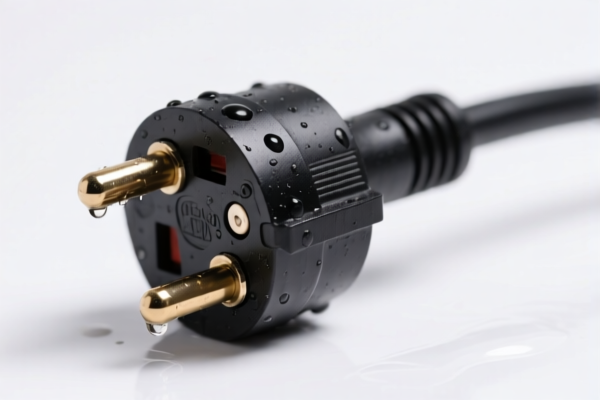
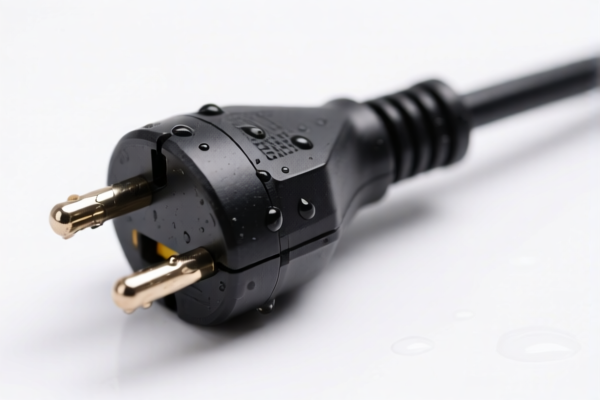
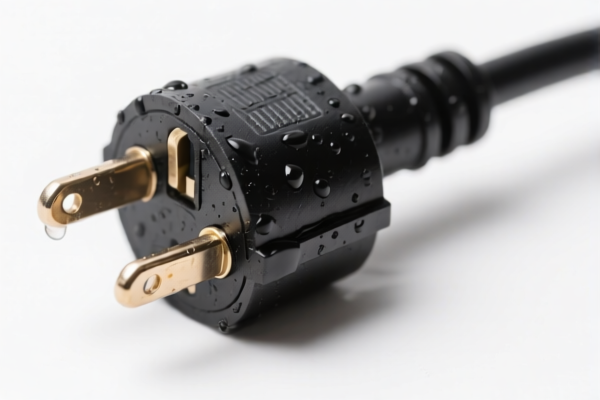
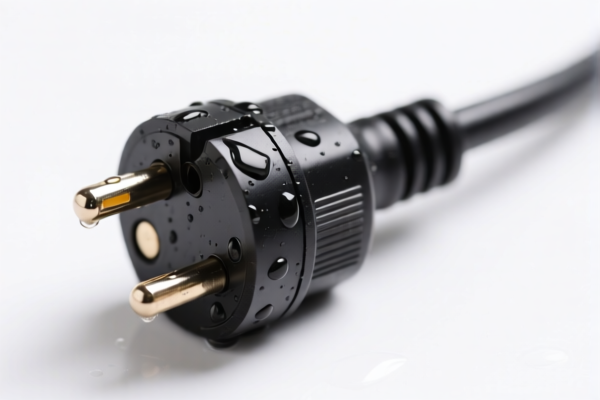
AI Analysis
🔌 Waterproof Plugs & Electrical Connectors: The Ultimate Customs & Tariff Guide (2026)
🌐 HS Code Reference & Clearance Guide | 2026 Latest Tariff Analysis | Professional Compliance Strategy
📌 Part I: Product Definition – What Exactly Is a "Waterproof Plug"?
In international trade, "Waterproof Plug" is a generic commercial term, not a precise technical description for customs classification. It refers to electrical connectors designed to prevent the ingress of water (typically rated IP67, IP68, or higher) used to protect electrical circuits from moisture, dust, and corrosion.
Internationally, these are classified based on function and voltage:
1. Plastic Seals/Gaskets (Non-Conductive)
If the "plug" is actually just a rubber/silicone O-ring, gasket, or sealing washer made of plastic/rubber used to seal pipe joints or machinery casings (not carrying electricity), it falls under Chapter 39.
2. Electrical Connectors (Conductive)
If the "plug" is an electrical device that connects wires to complete a circuit and is rated for ≤1,000 Volts, it falls under Chapter 85. This includes:
- Coaxial Connectors: Used for RF signals (TV, antennas, radar).
- Cylindrical Multicontact Connectors: Heavy-duty, round connectors (often MIL-spec or industrial) with multiple pins, frequently used in harsh environments (marine, automotive, industrial).
⚠️ Key Distinction Point:
- Is it carrying electricity and making a connection? → Chapter 85 (8536)
- Is it just a seal/gasket made of plastic/rubber? → Chapter 39 (3926)
- Do not misdeclare an electrical connector as a "gasket" to avoid taxes; customs will inspect the internal structure.
📦 Part II: HS Code Classification Details (2026 Latest Tariff Alignment)
Based on the provided data, here are the two primary classifications for waterproof plugs/connectors:
| HS Code | Product Description | Key Characteristics | Material/Type |
|---|---|---|---|
3926.90.45.10 |
Gaskets, Washers & Other Seals (O-Rings) | Non-electrical sealing components; plastic/rubber O-rings for pipes or machinery | Plastics (Chapter 39) |
3926.90.99.87 |
Other Rigid Tubes/Pipes (Electrical Conduit) | Rigid plastic pipes for housing electrical wires, not the connector itself | Plastics (Chapter 39) |
8536.69.40.10 |
Coaxial Connectors | Waterproof coaxial connectors for RF signals (≤1,000V) | Electrical Apparatus (Chapter 85) |
8536.69.40.20 |
Cylindrical Multicontact Connectors | Heavy-duty, round, multi-pin waterproof electrical connectors (≤1,000V) | Electrical Apparatus (Chapter 85) |
🔍 Critical Note:
- If your product is a plug that connects cables and has metal contacts inside, it is NOT a gasket. It must be classified under 8536. -3926.90.45.10is only for non-conductive rubber/plastic seals. -8536.69.40.10and8536.69.40.20are for electrical connectors. The difference lies in the type of connection: Coaxial (signal) vs. Multicontact (power/data signals via pins).
💰 Part III: 2026 Tariff Rate Analysis (US Imports from China)
✅ Applicable Country: United States (US)
✅ Origin: China (CN)
✅ Effective Time: 2025/2026 Tariff Regime (Section 301 + IEEPA)
🎯 1. 3926.90.45.10 – Gaskets, Washers, O-Rings (Plastic/Rubber)
| Item | Detail |
|---|---|
| Basic Tariff | 0.0% |
| Additional Tariff (Section 301) | 0.0% |
| Total Tax Rate | 0.0% |
| Tax Calculation | CIF Value × 0% = $0 |
| Why 0%? | Small plastic seals and O-rings are often excluded from high-tariff lists or fall under favorable subheadings for industrial consumables. |
📌 Explanation:
- This HS Code is for non-electrical sealing elements. - If you declare a waterproof electrical plug as "O-Ring," customs may reject it for misclassification. Only use this if it is purely a seal without contacts.
🎯 2. 3926.90.99.87 – Other Plastic Articles (Rigid Tubes/Conduit)
| Item | Detail |
|---|---|
| Basic Tariff | 5.3% |
| Additional Tariff (Section 301) | 7.5% |
| Total Tax Rate | 12.8% |
| Tax Calculation | CIF Value × 12.8% |
📌 Explanation:
- This HS Code is for plastic conduits/pipes, not plugs. - Warning: Do not classify waterproof plugs here unless they are rigid plastic housings without any electrical connection capability. Misclassification leads to audits.
🎯 3. 8536.69.40.10 – Coaxial Connectors (Waterproof)
| Item | Detail |
|---|---|
| Basic Tariff | 0.0% |
| Additional Tariff (Section 301) | 25.0% |
| Total Tax Rate | 25.0% |
| Tax Calculation | CIF Value × 25.0% |
| Legal Basis | USITC:8536.69.40.10 + Section 301: 25% |
📌 Explanation:
- These are electrical connectors used for high-frequency signals (e.g., antenna plugs, RF cables). - If the plug is waterproof, it still falls under this category if it is coaxial. - 25% tax is significant. Ensure the product is indeed coaxial (single central conductor + shield).
🎯 4. 8536.69.40.20 – Cylindrical Multicontact Connectors (Waterproof)
| Item | Detail |
|---|---|
| Basic Tariff | 0.0% |
| Additional Tariff (Section 301) | 25.0% |
| Total Tax Rate | 25.0% |
| Tax Calculation | CIF Value × 25.0% |
| Legal Basis | USITC:8536.69.40.20 + Section 301: 25% |
📌 Explanation:
- These are heavy-duty electrical connectors with multiple pins (e.g., M12, M23, industrial circular connectors) used for power or data transmission. - Common in marine, automotive, and industrial automation. - 25% tax applies. These are high-value components and strictly regulated.
🛠️ Part IV: Customs Clearance Practical Advice (Avoiding Pitfalls)
✅ 1. Preparation Checklist (Must-Have Documents)
| Document | Required? | Purpose |
|---|---|---|
| Product Specifications | ✔️ | Must clearly state: Voltage, Current, IP Rating (e.g., IP67), Contact Material, Connector Type (Coaxial/Multi-pin). |
| Technical Drawing | ✔️ | To prove it is an electrical connector (Chapter 85) and not a plastic seal (Chapter 39). |
| Photos (Internal/External) | ✔️ | Show the contacts, pins, and sealing rings. |
| Commercial Invoice | ✔️ | Description must be precise: "Waterproof Coaxial RF Connector, 50 Ohm, IP68, 1000V" – NOT just "Plastic Plug". |
| Origin Certificate | ✔️ | Required for tariff calculation. |
✅ 2. Classification Strategy (Critical!)
| Scenario | Correct HS Code | Incorrect HS Code | Risk |
|---|---|---|---|
| Electrical Plug with Contacts | 8536.69.40.10 or 8536.69.40.20 |
3926.90.45.10 |
High Risk: Customs will inspect, find contacts, impose penalties + back taxes (25% vs 0%). |
| Pure Plastic O-Ring/Seal | 3926.90.45.10 |
8536.69.40.10 |
Low Risk: But if declared as electrical, it may be delayed for unnecessary testing. |
| Plastic Conduit Pipe | 3926.90.99.87 |
8536.69.40.20 |
Medium Risk: Pipe vs. Connector distinction. |
🔥 Golden Rule:
"If it has metal pins or conducts electricity, it is Chapter 85. If it is just rubber/plastic for sealing, it is Chapter 39."
✅ 3. Special Tips for Waterproof Connectors
- IP Rating Proof: Provide a copy of the IP67/IP68 test report. This helps justify the "waterproof" claim but does not change the HS Code.
- Voltage Limit: Ensure the voltage does not exceed 1,000V. If it exceeds 1,000V, it falls under 8536.90 (other electrical apparatus), which may have different tariffs.
- Multi-Function: If a connector is both waterproof and includes a fuse, it may still be classified under 8536 as a "protective apparatus," but consult a customs broker for complex cases.
🌍 Part V: Global Market Comparison (2026)
| Market | HS Code (Typical) | Tariff (China Origin) | Certification Needed |
|---|---|---|---|
| 🇺🇸 USA | 8536.69.40.10/20 |
25% (Section 301) | FCC (if RF), UL (if safety) |
| 🇪🇺 EU | 8536.69 |
0%~2.5% (General) | CE, RoHS, REACH |
| 🇨🇳 China | 8536.69 |
0%~5% | CCC (if applicable) |
| 🇦🇺 Australia | 8536.69 |
5% | RCM |
📌 Note: The US imposes a 25% additional tariff on most electrical connectors from China. This is the main cost driver. Consider supply chain diversification if volumes are high.
📌 Part VI: Common Mistakes & Pitfalls
❌ Mistake 1: Declaring an electrical plug as "Plastic Part" or "Seal" (3926)
👉 Result: Customs detects metal contacts → 25% back tax + penalty.
❌ Mistake 2: Using "Waterproof Plug" as the HS Code description
👉 Result: Description too vague → Customs detention for clarification.
❌ Mistake 3: Confusing Coaxial (8536.69.40.10) with Multicontact (8536.69.40.20)
👉 Result: If you declare a multi-pin connector as coaxial, it may be rejected for不符. However, both have the same 25% tariff in this dataset.
✅ Correct Declaration Example:
"Waterproof Cylindrical Electrical Connector, 8-Pin, IP67 Rated, 600V, Aluminum Housing, for Industrial Use. HS Code: 8536.69.40.20"
🎯 Part VII: Conclusion
🎯 Remember:
🔹 "Electrical = 25% Tax (US)"
🔹 "Seal/Gasket = 0% Tax (US)"
🔹 "Do Not Mix Them!"
Your product structure determines the HS Code, not the brand or marketing name.
📌 Action Item:
📞 Contact a Customs Broker to provide:
1. Product Photos (showing contacts)
2. Technical Specs (Voltage, IP Rating)
3. Test Reports (IP67/IP68)🚀 Get an Advance Ruling from US CBP if the classification is ambiguous. It saves thousands in potential penalties.
✨ Professional Clearance Starts with Accurate Classification!
💼 Don't let a 25% tariff surprise you – classify correctly from day one!
Customer Reviews
About HS Code Classification
The Harmonized System (HS) is an internationally standardized nomenclature developed by the World Customs Organization (WCO) to classify traded products. Over 200 countries use the HS system as the basis for customs tariffs, trade statistics, and import/export regulations.
Each HS code follows a hierarchical structure:
- Chapter (2 digits) — Broad category of goods (e.g., Chapter 84: Machinery and Mechanical Appliances)
- Heading (4 digits) — More specific grouping within the chapter
- Subheading (6 digits) — Internationally standardized breakdown, used by all WCO member countries
- National subdivisions (8-10 digits) — Country-specific extensions for further classification, such as US HTSUS 10-digit codes
Correct HS code classification is essential for smooth customs clearance, accurate duty payment, and compliance with trade regulations. Misclassification can lead to customs delays, overpayment of duties, or penalties.
When importing from CN to US, the applicable tariff rates may include:
- Most-Favored-Nation (MFN) rate — The standard duty rate applied to WTO members
- General rate — Applied to countries without trade agreements
- Trade remedy duties — Additional tariffs such as Section 301 (anti-dumping), Section 232 (national security), or countervailing duties
The information provided on this page is for reference purposes only. For official classification, please consult with your local customs authority or a licensed customs broker.