Waterproof Shoe Covers
CN → US| HS Code | Tariff Rate | Origin | Destination | Doc |
|---|---|---|---|---|
| 6406104500 | 23.5% | CN | US | Official Doc |
| 6406903060 | 15.3% | CN | US | Official Doc |
| 3926206000 | 35.0% | CN | US | Official Doc |
| 6307909891 | 24.5% | CN | US | Official Doc |
| 6307909884 | 24.5% | CN | US | Official Doc |
Product Images
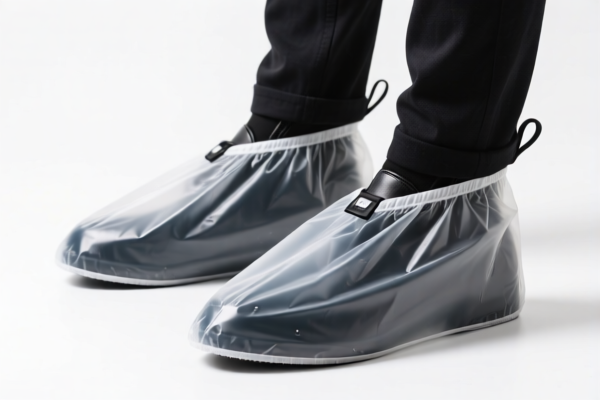
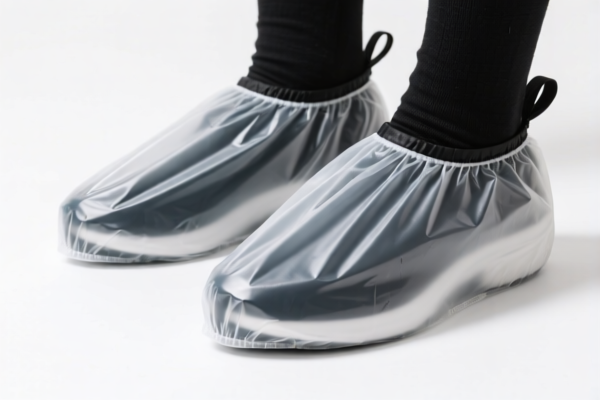
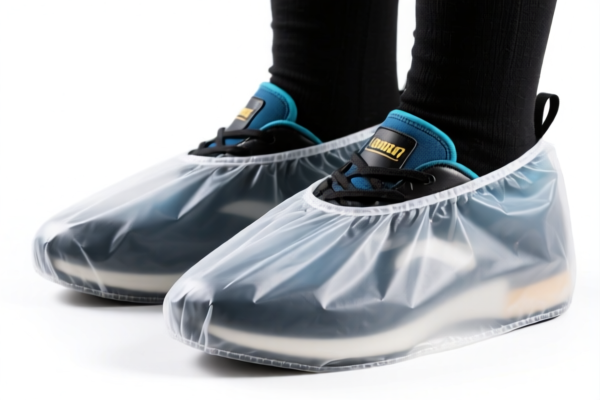
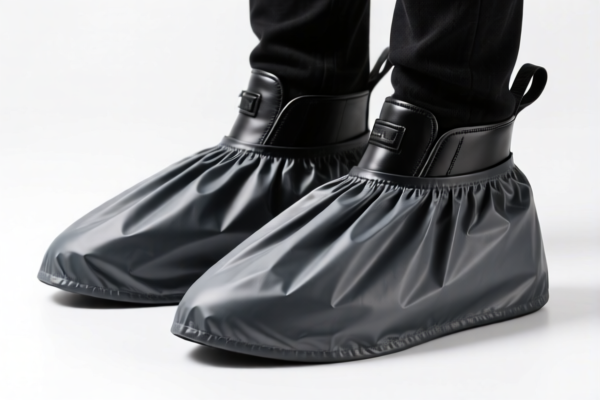
AI Analysis
🌧️ Waterproof Shoe Covers (防水材质鞋套)
🌐 HS Code Reference & Customs Clearance Guide | 2026 Latest Tariff Analysis | Strategic Compliance for China-to-US Imports
📌 I. Product Definition & Classification: What Exactly Is a "Waterproof Shoe Cover"?
Waterproof shoe covers are disposable or reusable protective accessories designed to shield footwear from rain, mud, snow, and other contaminants. In international trade, their classification is not straightforward. It depends heavily on material composition and functional description.
The US Harmonized Tariff Schedule (HTSUS) offers multiple pathways for this product, leading to vastly different tax burdens:
1. Footwear Parts/Accessories (Headwear & Footwear Chapters)
If viewed as an accessory to shoes, it falls under Chapter 64.
2. Plastic Articles (Chapters 39 or 63)
If viewed as a general plastic household item or clothing accessory, it falls under Chapter 39 or 63.
⚠️ Critical Distinction Point:
- If classified as a "Footwear Part" (6406), it attracts 23.5% total duty.
- If classified as a "Plastic Raincoat/Outerwear" (3926), it attracts 35.0% total duty (Highest Risk).
- If classified as a "Plastic Household Item" (6307), it attracts 24.5% total duty.
📦 II. HS Code Classification Details (2026 HTSUS Reference)
Based on the provided data, here are the four possible HS Codes for "Waterproof Shoe Covers," along with the logic for each classification:
| HS Code | Product Description & Logic | Material/Form Factor | Total Tax Rate |
|---|---|---|---|
6406.10.45.00 |
Footwear Parts: Waterproof shoe covers, made of rubber or plastic. Classified as parts/accessories of footwear. | Rubber or Plastic; Shoe-related protective gear. | 23.5% |
6406.90.30.60 |
Other Footwear Parts: Waterproof shoe covers, generic footwear-related articles. | Rubber or Plastic; General protective form. | 15.3% |
3926.20.60.00 |
Plastic Articles (Clothing Accessory): Waterproof shoe covers classified as raincoats/outerwear protective gear. | PVC or similar plastics; Clothing-like form. | 35.0% |
6307.90.98.91 |
Other Made-up Articles: Waterproof shoe covers as finished products, plastic/rubber. | Plastic or Rubber; General finished goods. | 24.5% |
6307.90.98.84 |
Specialty Made-up Articles: Shower/protective covers, plastic or synthetic fiber. | Plastic or Artificial Fiber; Shower/Protection specific. | 24.5% |
🔍 Key Insight:
- Code6406.90.30.60offers the lowest tax burden (15.3%), classifying the item strictly as a "footwear part" with specific sub-heading alignment.
- Code3926.20.60.00is the most expensive (35.0%), likely because it is interpreted as "Plastic Clothing" (like a raincoat) rather than a shoe accessory.
- Codes6307are intermediate options, treated as general "made-up" textile/plastic articles.
💰 III. 2026 Latest Tariff Rate Breakdown (Including Additional Duties)
✅ Applicable Country: United States (US)
✅ Origin: China (CN)
✅ Effective Date: Post-November 2025 (Subject to ongoing Section 301 & IEEPA policies)
🎯 1. 6406.10.45.00 — Footwear Parts (Rubber/Plastic Shoe Covers)
| Item | Content |
|---|---|
| Base Duty Rate | 6.0% |
| Section 301 Additional Duty | +7.5% |
| IEEPA 122 Clause Duty | +10.0% |
| Total Effective Rate | 23.5% |
| Tax Calculation | CIF Value × 23.5% |
| De Minimis Exemption? | ❌ No (Denied for Section 301 goods) |
| Legal Path | HTSUS:6406.10.45.00 → Sec301:7.5% → IEEPA:10% |
📌 Explanation:
- This classification treats the shoe cover as a part of footwear.
- It is subject to all three layers of tax: Base + Section 301 + IEEPA.
- Total: 23.5%. This is the standard "safe" classification for most rubber/plastic shoe covers if they are clearly linked to footwear usage.
🎯 2. 6406.90.30.60 — Other Footwear Parts (Lowest Tax Option)
| Item | Content |
|---|---|
| Base Duty Rate | 5.3% |
| Section 301 Additional Duty | 0.0% |
| IEEPA 122 Clause Duty | +10.0% |
| Total Effective Rate | 15.3% |
| Tax Calculation | CIF Value × 15.3% |
| De Minimis Exemption? | ❌ No (IEEPA still applies) |
| Legal Path | HTSUS:6406.90.30.60 → IEEPA:10% |
📌 Key Advantage:
- This specific sub-heading (6406.90.30.60) appears to be exempt from Section 301 (7.5%).
- This makes it the most cost-effective legal classification for China-origin shoe covers.
- Crucial: You must justify why it falls under this specific "Other" sub-category and not6406.10.
🎯 3. 3926.20.60.00 — Plastic Articles (Raincoat/Outerwear Category)
| Item | Content |
|---|---|
| Base Duty Rate | 0.0% |
| Section 301 Additional Duty | +25.0% |
| IEEPA 122 Clause Duty | +10.0% |
| Total Effective Rate | 35.0% |
| Tax Calculation | CIF Value × 35.0% |
| De Minimis Exemption? | ❌ No |
| Legal Path | HTSUS:3926.20.60.00 → Sec301:25% → IEEPA:10% |
📌 High Risk Alert:
- Although the base duty is 0%, the Section 301 duty jumps to 25% for plastic articles.
- Combined with IEEPA, the total hits 35%.
- Avoid this classification unless the product is marketed explicitly as "Plastic Rainwear" rather than footwear protection.
🎯 4. 6307.90.98.91 & 6307.90.98.84 — Other Made-up Articles
| Item | Content |
|---|---|
| Base Duty Rate | 7.0% |
| Section 301 Additional Duty | +7.5% |
| IEEPA 122 Clause Duty | +10.0% |
| Total Effective Rate | 24.5% |
| Tax Calculation | CIF Value × 24.5% |
| De Minimis Exemption? | ❌ No |
| Legal Path | HTSUS:6307.90... → Sec301:7.5% → IEEPA:10% |
📌 Intermediate Option:
- These codes treat the shoe cover as a general plastic or textile article.
- Tax is 24.5%, slightly higher than the best footwear code (15.3%) but lower than the plastic rainwear code (35.0%).
- Suitable if the product is made of synthetic fibers (6307.90.98.84) rather than pure rubber/plastic.
🛠️ IV. Customs Clearance Practical Advice (Pitfall Avoidance Guide)
✅ 1. Documentation Checklist (Non-Negotiable)
| Document | Required | Purpose |
|---|---|---|
| ✅ Product Photos | ✔️ | Must clearly show the item is a shoe cover (covering the shoe), not a rain boot. |
| ✅ Commercial Invoice | ✔️ | Description must be precise: "Waterproof Plastic Shoe Covers, for Rain Protection" |
| ✅ Material Composition | ✔️ | Specify % of Rubber, PVC, or TPU. This determines if you go to 64, 39, or 63. |
| ✅ Usage Statement | ✔️ | Confirm usage is protective footwear accessory, not clothing. |
| ✅ Packaging List | ✔️ | Show individual units, not bulk rolls (unless specified). |
✅ 2. Classification Strategy (The "Golden Rule")
🔥 "If it's rubber/plastic, aim for 6406.90.30.60. Avoid 3926!"
| Scenario | Recommended HS Code | Total Tax | Why? |
|---|---|---|---|
| Pure Rubber/Plastic Cover | 6406.90.30.60 |
15.3% | Lowest tax. Best for standard PVC/TPU covers. |
| Synthetic Fiber Fabric Cover | 6307.90.98.84 |
24.5% | If made of non-woven fabric or synthetic knit. |
| Marketed as "Rainwear" | 3926.20.60.00 |
35.0% | AVOID. High tax. Only use if you must use plastic chapters. |
| General Household Accessory | 6307.90.98.91 |
24.5% | Safe fallback if 6406 is challenged. |
📌 Critical Warning:
- Do NOT describe your product as "Plastic Rain Boots" or "Shoe Raincoats."
- Do NOT declare it simply as "Plastic Sheets" if it is shaped for feet.
- Accurate Description: "Waterproof Protective Overshoes, Made of PVC, for Footwear Protection."
✅ 3. Special Circumstances
| Situation | Handling Advice |
|---|---|
| Mixed Materials | If the cover has fabric and plastic, consider 6307 (Textile/Plastic mix). Avoid 6406 if fabric is the main component. |
| OEM Private Label | Ensure the invoice matches the product photo exactly. Mismatches cause delays. |
| Small Parcel (De Minimis) | ❌ Not Exempt. Section 301 and IEEPA taxes apply to all values. Do not rely on $800 de minimis exemption for China-origin goods. |
🌍 V. Global Market Comparison (2026)
| Country/Region | Recommended HS Code | Est. Total Duty | Notes |
|---|---|---|---|
| 🇺🇸 USA | 6406.90.30.60 |
15.3% | Best option due to 0% Section 301. |
| 🇨🇳 China | 6406.90.00.00 |
~5-10% | Lower base duties, no Section 301. |
| 🇪🇺 EU | 6406.90.10 |
~2.7% + VAT | Lower duties, but strict CE/RoHS. |
| 🇨🇦 Canada | 6406.90.10 |
~5-10% | CUSMA may apply if originating in NA. |
📌 Conclusion:
- The USA market is the most complex due to Section 301 and IEEPA.
- Classification is key: A 19.7% difference exists between6406.90.30.60(15.3%) and3926.20.60.00(35.0%).
📌 VI. Common Mistakes & Pitfalls (Blood & Tears Lessons)
❌ Mistake 1: Classifying as 3926.20.60.00 (Plastic Articles)
👉 Consequence: 35% Tax. Unnecessary cost increase of ~20%.
👉 Fix: Justify it as a footwear part (6406).
❌ Mistake 2: Using "De Minimis" for China-origin shoe covers
👉 Consequence: Seizure or Back-tariff. IEEPA/301 do not apply de minimis.
👉 Fix: Prepare for full duty payment on all shipments.
❌ Mistake 3: Vague Description "Plastic Cover"
👉 Consequence: Customs exam leads to reclassification.
👉 Fix: Use specific terms: "Waterproof PVC Shoe Overshoes."
🎯 VII. Conclusion: Smart Classification, Smarter Profits!
🎯 Remember the Mantra:
🔹 "Footwear Part, Not Plastic Wear. Go for 6406.90.30.60. Save 19% Tax!"
🔹 "Don't say Raincoat, Say Overshoe. Avoid the 35% Trap."
🔹 "China Origin? No De Minimis. Pay Duties Upfront."
📌 Pro Tip:
If your supplier can provide a Material Safety Data Sheet (MSDS) and Product Spec Sheet highlighting "Rubber/Plastic Footwear Accessory," you have strong evidence for the 15.3% classification.
Recommendation: Apply for a Customs Ruling from US CBP before large shipments to lock in the 6406.90.30.60 classification.
📣 Immediate Action:
📞 Consult a licensed US Customs Broker.
📄 Submit product images and spec sheets for Pre-Import Ruling.
🚀 Protect Your Margin. Classify Correctly. Clear Smoothly.
✨ Professional Compliance Starts with Accurate Classification!
💼 Every Percentage Point Counts in International Trade!
Customer Reviews
About HS Code Classification
The Harmonized System (HS) is an internationally standardized nomenclature developed by the World Customs Organization (WCO) to classify traded products. Over 200 countries use the HS system as the basis for customs tariffs, trade statistics, and import/export regulations.
Each HS code follows a hierarchical structure:
- Chapter (2 digits) — Broad category of goods (e.g., Chapter 84: Machinery and Mechanical Appliances)
- Heading (4 digits) — More specific grouping within the chapter
- Subheading (6 digits) — Internationally standardized breakdown, used by all WCO member countries
- National subdivisions (8-10 digits) — Country-specific extensions for further classification, such as US HTSUS 10-digit codes
Correct HS code classification is essential for smooth customs clearance, accurate duty payment, and compliance with trade regulations. Misclassification can lead to customs delays, overpayment of duties, or penalties.
When importing from CN to US, the applicable tariff rates may include:
- Most-Favored-Nation (MFN) rate — The standard duty rate applied to WTO members
- General rate — Applied to countries without trade agreements
- Trade remedy duties — Additional tariffs such as Section 301 (anti-dumping), Section 232 (national security), or countervailing duties
The information provided on this page is for reference purposes only. For official classification, please consult with your local customs authority or a licensed customs broker.