Waterproof Synthetic Rubber
CN → US| HS Code | Tariff Rate | Origin | Destination | Doc |
|---|---|---|---|---|
| 4005200000 | 35.0% | CN | US | Official Doc |
| 4002190019 | 35.0% | CN | US | Official Doc |
| 4005100000 | 35.0% | CN | US | Official Doc |
| 3911907000 | 35.0% | CN | US | Official Doc |
| 3911901000 | 35.0% | CN | US | Official Doc |
Product Images
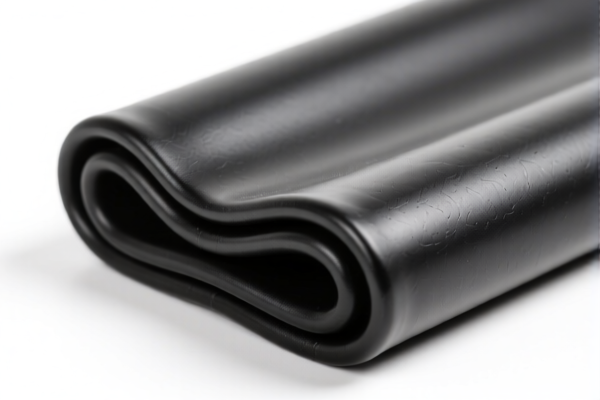
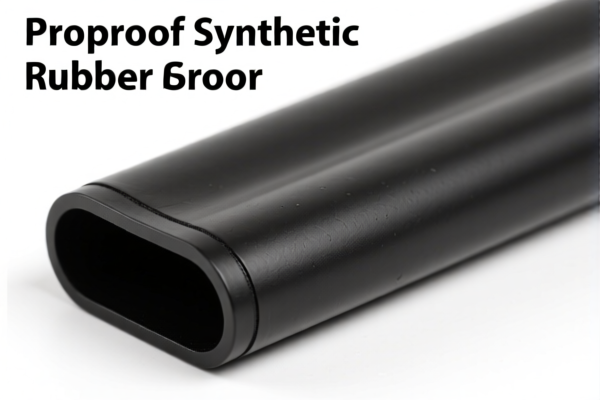
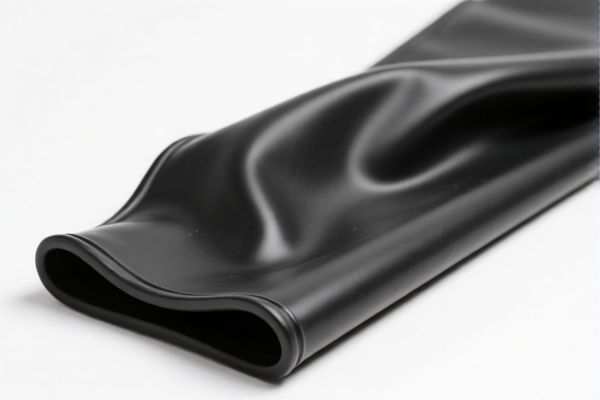
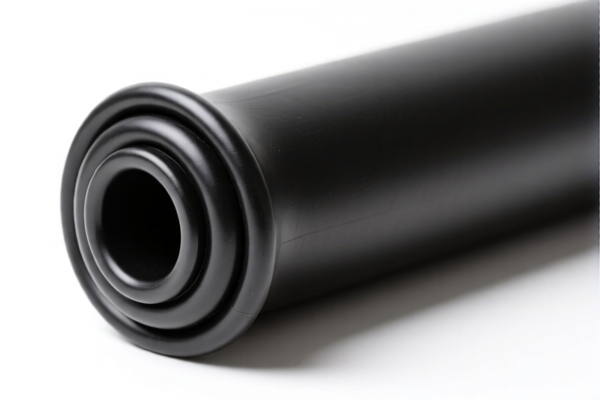
AI Analysis
💧 Waterproof Synthetic Rubber (Heat-Resistant Compounds)
🌐 HS Code Reference & Customs Clearance Guide | 2026 Latest Tariff Analysis | Professional Entry Strategy
📌 I. Product Definition & Classification: What Exactly is "Waterproof Synthetic Rubber"?
"Waterproof Synthetic Rubber" is a broad commercial term. In international trade and customs classification, this description is too vague for direct HS Code assignment. However, based on specific material properties (heat resistance, synthetic origin, chemical structure), it falls into specific sub-categories. The key to correct classification lies in distinguishing between:
- Uncured/Unvulcanized Mixed Rubber: Raw materials ready for processing.
- Specific Chemical Types: Such as Chlorinated Rubber or Polysulfides.
- Finished/Formulated Compounds: Specific performance-based raw materials.
⚠️ Critical Distinction:
- If the rubber is uncured (soft, pliable, not yet set) → It is classified as "Uncured Mixed Rubber" (Heading 4005).
- If the rubber is cured/vulcanized → It may fall under different headings (e.g., Parts of Vehicles or Industrial Items), but based on the provided<DATA>, we are focusing on raw/material forms.
- "Waterproof" and "Heat-Resistant" are functional claims. Customs classifies by material composition and state, not function alone.
📦 II. HS Code Classification Details (2026 Latest Tariff Authority Comparison)
Based on the provided <DATA>, here are the precise HS Codes corresponding to different types of "Waterproof Synthetic Rubber":
| HS Code | Product Description | Application Scenario | State of Material |
|---|---|---|---|
4005.20.00.00 |
Heat-resistant synthetic rubber, uncured mixed rubber | Raw compound for manufacturing seals, gaskets, or coatings | ❌ Uncured (Mixed) |
4002.19.00.19 |
Other synthetic rubber derived from petroleum derivatives | General-purpose synthetic rubber, often SBR or similar | ✅ Unvulcanized |
4005.10.00.00 |
Synthetic rubber with specific performance properties | Custom formulations for high-temp/waterproof applications | ❌ Uncured (Formulated) |
3911.90.70.00 |
Chlorinated synthetic rubber category | Chemical-resistant, waterproof applications (e.g., chemical tanks) | ✅ Polysulfide/Chlorinated type |
3911.90.10.00 |
Polysulfides and related elastomers | High-performance sealants, aerospace, or chemical lining | ✅ Polymer/Resin type |
🔍 Key Reminder:
- 4005 Series: Specifically for uncured rubber mixtures. If your product is a solid, vulcanized sheet, this code is incorrect.
- 3911 Series: Covers polysulfides and related polymers, often used as sealants or coatings rather than bulk rubber.
- 4002 Series: Covers basic synthetic rubbers (like SBR, NBR) in primary forms.
💰 III. 2026 Latest Tariff Rate Breakdown (Including Surcharges & Policy Add-ons)
✅ Applicable Country: United States (US)
✅ Country of Origin: China (CN)
✅ Effective Date: Starting November 10, 2025 (and subsequent imports)
All HS Codes listed below share the same tax structure based on the provided data.
🎯 1. General Tax Structure for All Listed Codes
| Item | Detail |
|---|---|
| Base Tariff Rate | 0.0% (Ad Valorem) |
| Section 301 Surcharge | +25.0% (USITC Footnote) |
| Section 122 Tariff | +10.0% (Specific policy add-on) |
| Total Effective Tax Rate | 35.0% |
| Tax Calculation | CIF Value × 35% |
| De Minimis Exemption | ❌ NOT APPLICABLE (Denied for these categories) |
| Legal Basis Path | USITC:4005.20.00.00 → Section 301:25% + Section 122:10% |
📌 Explanation:
- "Base 0%": Standard MFN (Most Favored Nation) rate is low or zero for rubber imports.
- "+25% Section 301": This is the major tariff imposed by the U.S. Trade Representative on Chinese goods under Section 301 of the Trade Act of 1974. It applies to most industrial rubber products.
- "+10% Section 122": A specific additional tariff clause mentioned in the data, adding to the total burden.
- Total 35%: This is a high tariff rate. Importers must budget accordingly.
🛠️ IV. Customs Clearance Practical Advice (Pitfall Avoidance Guide)
✅ 1. Document Preparation Checklist (All Required)
| Document | Mandatory? | Explanation |
|---|---|---|
| ✅ Product Specification Sheet | ✔️ | Must state: Chemical Composition, State (Uncured/Cured), Temperature Resistance Range. |
| ✅ Commercial Invoice | ✔️ | Clearly describe as "Uncured Synthetic Rubber Compound" or "Polysulfide Elastomer", not just "Waterproof Rubber". |
| ✅ Packing List | ✔️ | Weight and dimensions must match exactly. |
| ✅ Certificate of Origin (CO) | ✔️ | To prove Chinese origin (triggers the 35% tax). |
| ✅ Test Report (SGS/TUV) | ✔️ | Crucial: Must confirm material type (e.g., Polysulfide vs. NBR) to support HS Code 3911.90.70.00 or 4005.20.00.00. |
| ✅ Safety Data Sheet (SDS) | ✔️ | Required for chemical classification and safety handling. |
✅ 2. Declaration Tips (Key Mantra)
🔥 “State Matters, Material Dictates, Don’t Hide the Chem!”
| Scenario | Correct Declaration | Wrong Action |
|---|---|---|
| Soft, pliable rubber blocks | 4005.20.00.00 (Uncured Mixed Rubber) |
Declare as "Finished Seal" → Customs Rejection |
| Chemical-resistant coating rubber | 3911.90.70.00 (Chlorinated Rubber) |
Declare as "Plastic Sheet" → Misclassification Penalty |
| Petroleum-derived synthetic rubber | 4002.19.00.19 |
Declare as "Natural Rubber" → 0% vs 35% Discrepancy |
| Polysulfide sealant raw material | 3911.90.10.00 |
Declare as "Adhesive" → Different HS Code & Tax |
✅ 3. Special Handling Cases
| Situation | Advice |
|---|---|
| Mixed Packages | If packing contains both cured and uncured rubber, split the declaration. Do not mix 4005 (uncured) with cured products. |
| Private Label/OEM | Provide the manufacturer’s technical data sheet to prove the exact chemical composition (e.g., % Polysulfide). |
| Heat-Resistant Claim | Ensure the spec sheet explicitly states "Heat Resistant" and "Synthetic" to justify the HS Code. |
🌍 V. Global Market Comparison (2026 Latest)
| Country/Region | Recommended HS Code | Tax Rate (China Origin) | Certification | Remarks |
|---|---|---|---|---|
| 🇺🇸 USA | 4005.20.00.00 / 4002.19.00.19 |
35% (0% Base + 25% 301 + 10% 122) | None Specific | High Tariff – Budget carefully. |
| 🇨🇳 China | 4005.20.00.00 |
5% (Import Duty) | RoHS (if applicable) | Lower tax than US. |
| 🇪🇺 EU | 4005.20.00.00 |
6.5% (Standard) | REACH Registration | No 301/122 equivalent tariffs. |
| 🇦🇺 Australia | 4005.20.00.00 |
5% | GSR (Garment Safety?) | Moderate tax. |
📌 Conclusion:
- The USA imposes a 35% total tariff on these synthetic rubber products from China.
- EU and Australia have significantly lower duties (5-6.5%).
- Consider supply chain diversification if shipping to the US to avoid the 35% burden.
📌 VI. Common Mistakes & Pitfalls (Lessons Learned)
❌ Mistake 1: Declaring all rubber as "Waterproof Rubber"
👉 Consequence: Customs may reject vague descriptions. Must specify Chemical Type (e.g., Polysulfide, Chlorinated).
❌ Mistake 2: Confusing Uncured (4005) with Cured (e.g., 4016)
👉 Consequence: If you ship uncured rubber but declare it as cured parts, you risk fraud allegations or re-classification.
❌ Mistake 3: Ignoring the 122 Tariff Clause
👉 Consequence: Underpaying taxes by 10%. The total rate is 35%, not just 25%.
❌ Mistake 4: Assuming "Synthetic" means "Plastic"
👉 Consequence: Plastics (Chapter 39) and Rubber (Chapter 40) have different tariffs. 3911 is for polysulfides (plastic-like), while 4005 is rubber. Misclassification leads to penalties.
✅ Correct Approach:
"Uncured Heat-Resistant Synthetic Rubber Compound, Chlorinated Type, for Industrial Sealing, HS Code 4005.20.00.00"
🎯 VII. Conclusion: Precise Classification Saves Money!
🎯 Remember the Mantra:
🔹 "Uncured = 4005, Polysulfide = 3911, Pet-Derived = 4002"
🔹 "USA Tax is 35%, Don’t Guess the Code!"
📌 Pro Tip:
If your synthetic rubber contains high percentages of Polysulfides, consider classifying under 3911.90.70.00 or 3911.90.10.00 as it might offer different logistical handling, though the tax rate remains 35% in the US under the provided data.
Always request a Pre-Ruling (Advance Ruling) from U.S. Customs (CBP) if the chemical composition is complex.
📣 Immediate Action:
📞 Contact your freight forwarder with the SDS and Spec Sheet.
🚀 Verify the "Uncured" state to ensure correct HS Code.
💰 Budget 35% for US Duties – do not underestimate the Section 301 + 122 impact.
✨ Professional Clearance Starts with Precise Classification!
💼 Your Profit Margin Depends on Accurate HS Codes!
Customer Reviews
About HS Code Classification
The Harmonized System (HS) is an internationally standardized nomenclature developed by the World Customs Organization (WCO) to classify traded products. Over 200 countries use the HS system as the basis for customs tariffs, trade statistics, and import/export regulations.
Each HS code follows a hierarchical structure:
- Chapter (2 digits) — Broad category of goods (e.g., Chapter 84: Machinery and Mechanical Appliances)
- Heading (4 digits) — More specific grouping within the chapter
- Subheading (6 digits) — Internationally standardized breakdown, used by all WCO member countries
- National subdivisions (8-10 digits) — Country-specific extensions for further classification, such as US HTSUS 10-digit codes
Correct HS code classification is essential for smooth customs clearance, accurate duty payment, and compliance with trade regulations. Misclassification can lead to customs delays, overpayment of duties, or penalties.
When importing from CN to US, the applicable tariff rates may include:
- Most-Favored-Nation (MFN) rate — The standard duty rate applied to WTO members
- General rate — Applied to countries without trade agreements
- Trade remedy duties — Additional tariffs such as Section 301 (anti-dumping), Section 232 (national security), or countervailing duties
The information provided on this page is for reference purposes only. For official classification, please consult with your local customs authority or a licensed customs broker.