Waterproof and Oil Resistant Label Paper
CN → US| HS Code | Tariff Rate | Origin | Destination | Doc |
|---|---|---|---|---|
| 4806200000 | 35.0% | CN | US | Official Doc |
| 4806100000 | 35.0% | CN | US | Official Doc |
| 4811596000 | 35.0% | CN | US | Official Doc |
| 4811606000 | 35.0% | CN | US | Official Doc |
| 4823908680 | 35.0% | CN | US | Official Doc |
Product Images
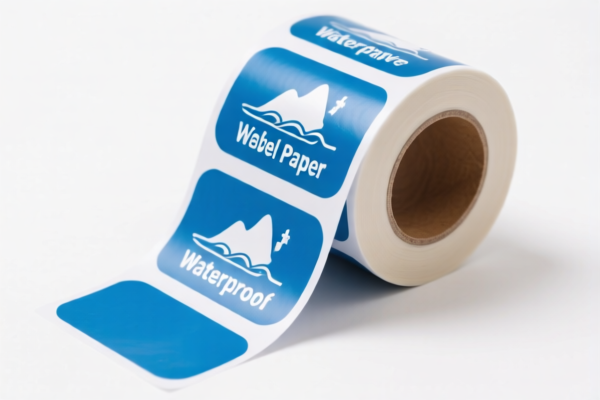
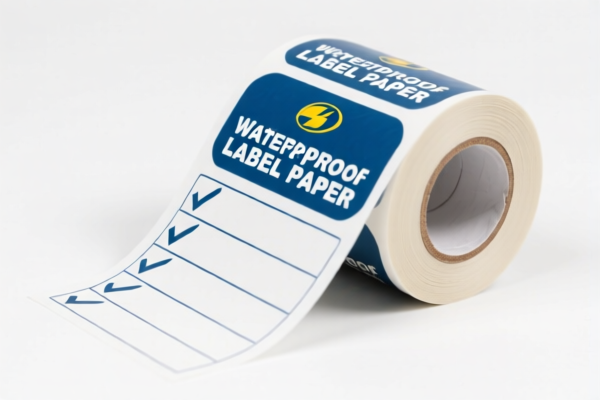
AI Analysis
🏷️ Waterproof and Oil Resistant Label Paper
🌐 HS Code Reference & Customs Clearance Guide | 2026 Latest Tariff Analysis | Professional Clearance Strategy
📌 1. Product Definition and Classification: Do You Really Understand "Label Paper"?
Waterproof and oil-resistant label paper is a specialized functional paper used primarily for food packaging, logistics, and industrial labeling. In international trade, it is not a single unified product but is classified based on its manufacturing process, surface treatment, and final form.
Key distinctions determine the HS Code: * Uncoated/Basic Functional Paper: Paper with inherent oil resistance properties, often used as a base for labels. * Coated/Impregnated Paper: Paper treated with chemicals (like wax, polymer, or synthetic materials) to achieve water/oil resistance. * Cut/Finished Label Sheets: Paper that has been cut into specific shapes or prepared for printing.
⚠️ Key Distinction Point:
- If the paper is raw/coated and needs further processing (printing/cutting) → Look at 4806 or 4811.
- If the paper is finished/cut into label shapes or specific paper goods → Look at 4823.
- Crucial Note: The presence of "waterproof/oil-resistant" features often triggers classification under "Coated/Impregnated" chapters (4811) rather than standard paper (4806), unless it is an untreated functional paper.
📦 2. HS Code Classification Details (Based on Provided Data)
| HS Code | Product Description | Application Scenario | Key Characteristics |
|---|---|---|---|
4806.20.00.00 |
Oil-resistant paper, used for food packaging | Food wrapping, deli containers, base for labels | Material and use match "anti-oil paper" definition |
4806.10.00.00 |
Oil-resistant paper, used for food packaging | Food packaging, label base stock | Material and use are fully consistent with oil-resistant paper |
4811.59.60.00 |
Paper products coated/impregnated with oil-resistance properties | Specialty labels, synthetic-like paper labels | Has surface treatment/coating for oil resistance |
4811.60.60.00 |
Paper products covered with oils | Oil-coated paper labels, heavy-duty food labels | Fits the definition of "oil-covered" paper |
4823.90.86.80 |
Other paper products, material is paper, form fits paper definition | Cut label sheets, pre-printed label rolls | Finished state, "other" category for specific paper goods |
🔍 Important Reminder:
- 4806 series: Typically refers to uncoated or mechanically treated oil-resistant paper (often basis for self-adhesive labels).
- 4811 series: Refers to paper that has been chemically coated or impregnated (e.g., waxed, plastic-coated) to achieve waterproof/oil-resistant properties.
- 4823 series: Refers to paper that has been cut, shaped, or processed into final article forms (like specific label sheets). If it's just a roll of coated paper, do NOT use 4823. If it's a printed/cut label, 4823 might be applicable depending on local interpretation, but often label goods are classified under 4811 if they remain as sheets/rolls. Note: The provided data lists 4823.90.86.80 as an option for "other paper products," so we include it as per constraints.
💰 3. 2026 Latest Tariff Rate Breakdown (Including Additional Taxes & Policy Surcharges)
✅ Applicable Country: USA (US)
✅ Country of Origin: China (CN)
✅ Effective Date: From Nov 10, 2025 (for subsequent imports)
🎯 1. 4806.20.00.00 —— Oil-Resistant Paper (Food Packaging Use)
| Item | Content |
|---|---|
| Base Tariff Rate | 0% (ad valorem) |
| USITC Additional Tariff | +25% (under Section 301, Footnote related to 4806) |
| IEEPA Additional Tariff | +10% (Targeting China/HK products, effective Nov 10, 2025) |
| Total Tariff Rate | 45% |
| Tax Calculation | CIF Value × 45% |
| De Minimis Exemption Available? | ❌ NO (deny_de_minimis) |
| Legal Basis Path | IEEPA:9903.01.25 → IEEPA:9903.01.24 → USITC:4806.20.00.00 → FOOTNOTE:9903.88.01 |
📌 Explanation:
- "USITC Additional Tariff 25%" comes from US Trade Law Section 301 "Additional Tariffs."
- "IEEPA 10%" is the "International Emergency Economic Powers Act" surcharge on Chinese products.
- Total 45%, which is a very high tariff, must be anticipated in advance!
🎯 2. 4806.10.00.00 —— Oil-Resistant Paper (Fully Consistent Use)
| Item | Content |
|---|---|
| Base Tariff Rate | 0% |
| USITC Additional Tariff | +25% |
| IEEPA Additional Tariff | +10% |
| Total Tariff Rate | 45% |
| Tax Calculation | CIF × 45% |
| De Minimis Exemption Available? | ❌ No |
| Legal Basis Path | IEEPA:9901.25 → IEEPA:9903.01.24 → USITC:4806.10.00.00 → FOOTNOTE:9903.88.01 |
📌 Note:
- Identical tariff structure to the previous code.
- Even if it is "premium" food-grade oil-resistant paper, as long as it falls under 4806, the tariff is 45%.
🎯 3. 4811.59.60.00 —— Coated/Impregnated Oil-Resistant Paper Products
| Item | Content |
|---|---|
| Base Tariff Rate | 0% |
| USITC Additional Tariff | +25% |
| IEEPA Additional Tariff | +10% |
| Total Tariff Rate | 45% |
| Tax Calculation | CIF × 45% |
| De Minimis Exemption Available? | ❌ No |
| Legal Basis Path | IEEPA:9903.01.25 → IEEPA:9903.01.24 → USITC:4811.59.60.00 → FOOTNOTE:9903.88.01 |
📌 Explanation:
- If your label paper is coated with polyethylene (PE), wax, or other synthetic materials to make it waterproof/oil-resistant, it often falls under Chapter 4811.
- The 10% IEEPA tariff applies specifically to products of Chinese origin imported under this code.
🎯 4. 4811.60.60.00 —— Oil-Covered Paper Products
| Item | Content |
|---|---|
| Base Tariff Rate | 0% |
| USITC Additional Tariff | +25% |
| IEEPA Additional Tariff | +10% |
| Total Tariff Rate | 45% |
| Tax Calculation | CIF × 45% |
| De Minimis Exemption Available? | ❌ No |
| Legal Basis Path | IEEPA:9901.25 → IEEPA:9903.01.24 → USITC:4811.60.60.00 → FOOTNOTE:9903.88.01 |
📌 Note:
- This code is for paper covered with oils (e.g., heavy wax coating).
- Same high tariff burden. Distinguish between "coated/impregnated" (4811.59) and "covered with oils" (4811.60) based on the manufacturing process and material composition.
🎯 5. 4823.90.86.80 —— Other Paper Products (Finished/Cut)
| Item | Content |
|---|---|
| Base Tariff Rate | 0% |
| USITC Additional Tariff | +25% |
| IEEPA Additional Tariff | +10% |
| Total Tariff Rate | 45% |
| Tax Calculation | CIF × 45% |
| De Minimis Exemption Available? | ❌ No |
| Legal Basis Path | IEEPA:9903.01.25 → IEEPA:9903.01.24 → USITC:4823.90.86.80 → FOOTNOTE:9903.88.01 |
📌 Explanation:
- If the "Label Paper" is pre-cut into specific shapes, printed, or processed into final paper goods (like sticker sheets ready for use), it may fall under "Other Paper Products" (4823).
- Warning: Misclassifying raw coated paper as "finished goods" to avoid higher scrutiny can lead to customs penalties. Ensure the product is indeed a finished article.
🛠️ 4. Customs Clearance Practical Advice (Real-World Pitfall Avoidance Guide)
✅ 1. Document Checklist (All Required)
| Document | Mandatory | Description |
|---|---|---|
| ✅ Product Specification Sheet | ✔️ | Must detail: Material (paper type), Coating Type (PE, Wax, etc.), Dimensions, Weight, Oil/Water Resistance Standard (e.g., FDA 21 CFR 176.170 for food contact). |
| ✅ Photos (With Label) | ✔️ | Clear images of the product, showing the roll/sheet, coating side, and any printed text. Must show the "Made in China" mark if present. |
| ✅ Commercial Invoice | ✔️ | Clearly state: "Oil-Resistant Label Paper," HS Code, Country of Origin (China), and CIF Value. |
| ✅ Packing List | ✔️ | Detail gross/net weight, number of rolls/sheets, and packaging material. |
| ✅ Certificate of Origin (CO) | ✔️ | If not from China, may qualify for lower tariffs. For China, CO confirms origin for IEEPA application. |
| ✅ FDA Registration (If for Food) | ✔️ | If the label paper is used in direct food contact packaging, FDA compliance is critical. |
✅ 2. Declaration Tips (Key Mantra)
🔥 "Coating Determines Code, Origin Determines Tax, Form Determines Chapter!"
| Scenario | Correct Declaration | Wrong Practice |
|---|---|---|
| Raw Oil-Resistant Paper (Uncoated/Base) | 4806.20.00.00 or 4806.10.00.00 |
Misdeclare as 4811 → Higher scrutiny |
| Coated/Illuminated Paper (PE/Wax Coated) | 4811.59.60.00 or 4811.60.60.00 |
Misdeclare as 4806 → Risk of reclassification |
| Cut/Printed Label Sheets (Finished) | 4823.90.86.80 |
Misdeclare as raw paper → Risk of under-declaration |
| Any of the above from China | Add 35% Additional Tax | Forget to declare Origin |
✅ 3. Special Situation Handling
| Situation | Handling Advice |
|---|---|
| OEM Custom Labels | Provide design files and customer orders. Specify if they are "printed" or "blank." |
| Food-Grade vs. Industrial | If food-grade, ensure FDA compliance documentation is attached. Non-compliance can lead to rejection. |
| Multiple Coatings | If paper has multiple layers (e.g., kraft paper + PE + adhesive), classify based on the principal material or the chief value. Usually, coated paper goes to 4811. |
| Samples | Even samples are subject to duties if over $800 (unless using de minimis, which is DENIED for these HS codes from China). |
🌍 5. Global Market Customs Comparison (2026 Latest)
| Country/Region | Recommended HS Code | Tariff | Certification | Remarks |
|---|---|---|---|---|
| 🇺🇸 USA | 4811.59.60.00 or 4806.20.00.00 |
45% (35% Additional + 0% Base) | FDA + RoHS (if applicable) | Highest cost market. IEEPA 10% applies. |
| 🇨🇳 China | 4811.59.60.00 or 4806.20.00.00 |
5-7% | N/A | No additional US-style tariffs. |
| 🇪🇺 EU | 4811.59.60.00 |
~6.5% | CE + REACH | No IEEPA-like surcharges. |
| 🇦🇺 Australia | 4811.59.60.00 |
5% | N/A | Lower tariffs. |
| 🇯🇵 Japan | 4811.59.60.00 |
6% | PSE (if electrical components involved, not applicable here) | Moderate tariffs. |
📌 Conclusion:
- The USA is the only major market with extremely high additional tariffs (35%) on Chinese oil-resistant label paper.
- Chinese-origin label paper faces a 45% total tariff rate in the US, making it very expensive.
- Consider supply chain diversification (e.g., sourcing from Vietnam, Thailand, or Malaysia) to potentially avoid IEEPA tariffs, though USITC Section 301 may still apply depending on country-specific rules.
📌 6. Common Mistakes & Pitfalls (Lessons Learned)
❌ Mistake 1: Declaring "Coated Paper" as "Uncoated Paper" (4806 instead of 4811)
👉 Consequence: Customs may reclassify, impose penalties, and back-tax.
✅ Fix: Clearly specify coating type (PE, Wax, etc.) in the specification sheet.
❌ Mistake 2: Ignoring the 35% Additional Tariff for Chinese Origin
👉 Consequence: Unexpected cost increase of 35%, eroding profit margins.
✅ Fix: Factor the 45% total tariff into your pricing strategy immediately.
❌ Mistake 3: Using "De Minimis" (Under $800) for Small Shipments
👉 Consequence: Shipment seized or taxed. The IEEPA 10% tariff explicitly denies de minimis exemption for these goods from China.
✅ Fix: Pay duties upfront. Do not try to split shipments to avoid taxes.
❌ Mistake 4: Failing to Specify "Oil-Resistant" in Description
👉 Consequence: Customs may classify under a different, potentially higher or restricted, code.
✅ Fix: Use clear descriptions: "Oil-Resistant Paper, Coated with Polyethylene, for Food Packaging Labeling."
🎯 7. Conclusion: Professional Declaration, Save Time, Reduce Costs!
🎯 Remember the Mantra:
🔹 "Coating Defines HS, Origin Defines Tax, No De Minimis for China!"
🔹 "45% Total Tariff is Real, Plan Ahead or Lose Money!"
📌 Pro Tip:
If your label paper is originated from Vietnam, Mexico, Thailand, or Malaysia, you may be eligible to avoid the 10% IEEPA tariff, potentially reducing the total tariff to 25% (still subject to USITC 301).
Recommendation: Apply for a Pre-Ruling (Advance Ruling) from US Customs (CBP) to confirm the correct HS Code and tax liability before shipping.
📣 Act Now:
📞 Contact a professional customs broker + Provide product specs + Apply for HS Code Pre-Ruling
🚀 Let your label paper, clear customs smoothly, export efficiently, and maximize profits!
✨ Professional Clearance Starts with Accurate Classification!
💼 Every Cent of Cost Deserves to Be Precisely Calculated!
Customer Reviews
About HS Code Classification
The Harmonized System (HS) is an internationally standardized nomenclature developed by the World Customs Organization (WCO) to classify traded products. Over 200 countries use the HS system as the basis for customs tariffs, trade statistics, and import/export regulations.
Each HS code follows a hierarchical structure:
- Chapter (2 digits) — Broad category of goods (e.g., Chapter 84: Machinery and Mechanical Appliances)
- Heading (4 digits) — More specific grouping within the chapter
- Subheading (6 digits) — Internationally standardized breakdown, used by all WCO member countries
- National subdivisions (8-10 digits) — Country-specific extensions for further classification, such as US HTSUS 10-digit codes
Correct HS code classification is essential for smooth customs clearance, accurate duty payment, and compliance with trade regulations. Misclassification can lead to customs delays, overpayment of duties, or penalties.
When importing from CN to US, the applicable tariff rates may include:
- Most-Favored-Nation (MFN) rate — The standard duty rate applied to WTO members
- General rate — Applied to countries without trade agreements
- Trade remedy duties — Additional tariffs such as Section 301 (anti-dumping), Section 232 (national security), or countervailing duties
The information provided on this page is for reference purposes only. For official classification, please consult with your local customs authority or a licensed customs broker.