Wax Beans
CN → US| HS Code | Tariff Rate | Origin | Destination | Doc |
|---|---|---|---|---|
| 3404905110 | 35.0% | CN | US | Official Doc |
| 3404905150 | 35.0% | CN | US | Official Doc |
| 1208900000 | 36.4% | CN | US | Official Doc |
| 1208100090 | 36.9% | CN | US | Official Doc |
| 3404905150 | 35.0% | CN | US | Official Doc |
Product Images
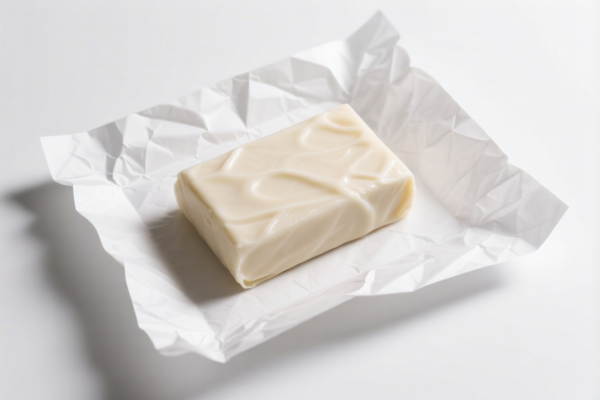
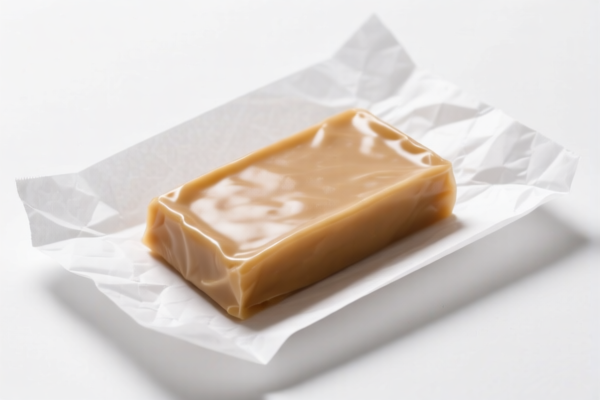
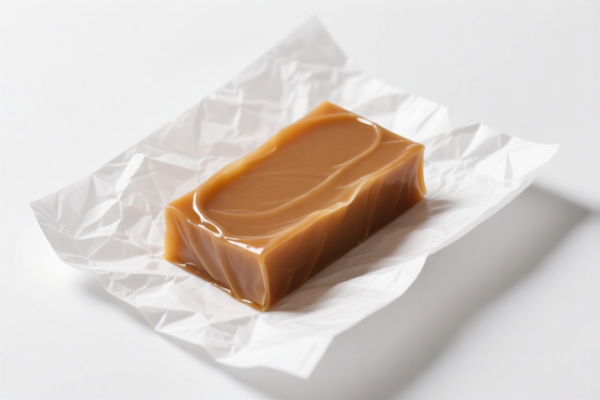
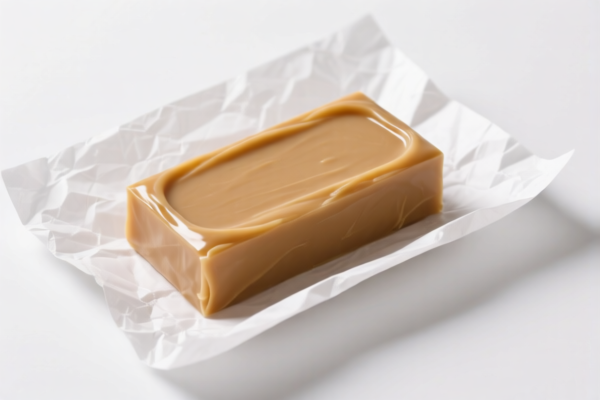
AI Analysis
🌿 Wax Beans (Wax Beads / Granules)
🌐 HS Code Reference & Customs Clearance Guide | 2026 Latest Tariff Analysis | Professional通关 Strategy
📌 I. Product Definition & Classification: What Exactly Are "Wax Beans"?
Wax Beans (often referred to in trade as Wax Granules or Wax Pellets) are the primary form of wax products, typically appearing as small, solid beads or granules. In international trade, they are versatile raw materials used for candle making, cosmetics, packaging, and industrial coatings.
Depending on the material composition and origin of the wax, they fall into two distinct customs categories:
- Synthetic/Prepared Waxes: If made from paraffin, microcrystalline, stearin, or other chemically synthesized/modulated waxes, they fall under Chapter 34.
- Oilseed/Agri-products: If the "wax" is derived from oilseeds (specifically soybeans or similar) or contains significant seed residue, it may be misclassified or legally defined under Chapter 12 (Oilseed meals and residue).
⚠️ Key Distinction Point:
- If the product is pure wax (paraffin, ester, etc.) in granular form →归入 3404
- If the product is soybean meal/oilseed residue with waxy properties →归入 1208
- Note: Customs may scrutinize the material safety data sheet (MSDS) to determine if it is truly "wax" or "agricultural byproduct."
📦 II. HS Code Classification Details (2026 Latest Tariff Authority Comparison)
| HS Code | Product Description | Applicable Scenario | Material Characteristic |
|---|---|---|---|
3404.90.51.10 |
Artificial wax and prepared wax (Granular/Primary Form) | Pure wax beads, candle wax pellets | ✅ Wax Category |
3404.90.51.50 |
Other artificial/prepared wax (Non-modified lignite) | General granular wax, cosmetic wax beads | ✅ Wax Category |
1208.90.00.00 |
Oilseed flour, meal, and other solid residues (Excl. Mustard) | Soybean wax residues, agri-based wax blends | ✅ Oilseed/Agri |
1208.10.00.90 |
Other soybean flour, meal, and other solid residues | Soybean-derived wax products, fallback category | ✅ Soybean/Derived |
🔍 Critical Reminder:
- Wax Beans are primarily Chapter 34 products. However, if imported from China and declared as agricultural byproducts, customs may shift them to Chapter 12 for tariff reasons, leading to different tax structures. - Do not mix pure synthetic wax with soybean meal in one shipment unless explicitly declared as a composite product.
💰 III. 2026 Latest Tariff Rate Breakdown (Including Surtaxes & Policy Surcharges)
✅ Applicable Country: United States (US)
✅ Origin: China (CN)
✅ Effective Time: Post-2025/2026 Regulations
🎯 1. 3404.90.51.10 & 3404.90.51.50 — Artificial & Prepared Wax (Granular)
These two codes are functionally similar for "Wax Beans," differing only in specific sub-descriptions. Both attract the same tariff structure.
| Item | Content |
|---|---|
| Base Duty Rate | 0.0% (Ad Valorem) |
| Section 301 Surtax | +25.0% (USITC Footnote) |
| Section 122 / IEEPA Surtax | +10.0% (Specific policy surcharge for Chinese goods) |
| Total Tax Rate | 35.0% |
| Tax Calculation | CIF Value × 35% |
| De Minimis Exemption | ❌ Not Eligible (High duty rate disqualifies from de minimis) |
| Legal Basis Path | Section 301: 301.03 → IEEPA: 122 → USITC: 3404.90.51.xx |
📌 Explanation:
- "Base Duty 0%": Wax is generally low-tariff under normal trade relations. - "+25% Section 301": Retaliatory tariffs on Chinese manufactured goods. - "+10% Section 122/IEEPA": Additional national security or emergency economic power surcharge. - Total 35%: This is the final landed duty cost for pure wax beans.
🎯 2. 1208.90.00.00 & 1208.10.00.90 — Oilseed Meal & Residues (Soybean/Wax Blend)
If customs determines the product is more "oilseed residue" than "pure wax," these codes apply.
| Item | Content |
|---|---|
| Base Duty Rate | 1.4% - 1.9% (Varies by specific sub-code) |
| Section 301 Surtax | +25.0% |
| Section 122 / IEEPA Surtax | +10.0% |
| Total Tax Rate | 36.4% - 36.9% |
| Tax Calculation | CIF Value × (Base + 25% + 10%) |
| De Minimis Exemption | ❌ Not Eligible |
| Legal Basis Path | USITC: 1208.xx.xx.xx → Section 301 → IEEPA: 122 |
📌 Explanation:
- The base duty is slightly higher (1.4%-1.9%) compared to pure wax (0%). - The total tax burden is 36.4% - 36.9%, which is slightly higher than pure wax (35.0%). - Risk: Misclassification here can lead to audits if the product is clearly synthetic wax.
🛠️ IV. Customs Clearance Practical Advice (Real-World Pitfall Avoidance)
✅ 1. Required Documentation Checklist (Non-negotiable)
| Document | Mandatory? | Purpose |
|---|---|---|
| ✅ Product Specification Sheet | ✔️ | Must clearly state "Synthetic Wax," "Paraffin," or "Soybean Residue." |
| ✅ MSDS (Material Safety Data Sheet) | ✔️ | Critical for proving chemical composition vs. agricultural origin. |
| ✅ Commercial Invoice | ✔️ | Must use precise description: "Artificial Wax, Granular Form" or "Soybean Meal Residue." |
| ✅ Packing List | ✔️ | Detail net/gross weight, packaging type. |
| ✅ Certificate of Origin (CO) | ✔️ | Required for Section 301 exemption claims (if applicable in future policies). |
✅ 2. Declaration Strategy (Key Mantra)
🔥 "Pure Wax = 3404 (35%); Soy Residue = 1208 (36.9%); Choose Wisely!"
| Scenario | Correct Declaration | Wrong Action | Consequence |
|---|---|---|---|
| Pure Paraffin/Stearin Beads | 3404.90.51.10 |
Declare as "Soybean Meal" | Overpayment of tax + Audit risk |
| Soybean Wax Residue | 1208.10.00.90 |
Declare as "Artificial Wax" | Customs seizure for misclassification |
| Mixed/Unknown Composition | Provide Lab Test Results | Guessing HS Code | Delay, fines, potential return |
✅ 3. Special Case Handling
| Situation | Handling Advice |
|---|---|
| Importing for Candle Making | Clearly declare as "Prepared Wax for Candle Industry" under 3404. |
| Importing for Agricultural Feed | If used as feed supplement, consider 1208, but prove nutritional content. |
| Small Sample Shipments | Even small samples are subject to 35-36.9% duty. Do not rely on de minimis. |
| Origin Fraud Risk | Do not mark Vietnamese/Malaysian goods as Chinese if origin is disputed. Verify supply chain. |
🌍 V. Global Market Customs Comparison (2026 Latest)
| Country/Region | Recommended HS Code | Duty Rate (China Origin) | Certification | Notes |
|---|---|---|---|---|
| 🇺🇸 USA | 3404.90.51.10 / 1208.xx |
35.0% - 36.9% | None specific | High tariff due to Section 301 & 122. |
| 🇨🇳 China | 3404.90.51.10 |
~0% - 5% | N/A | Lower import barriers for domestic producers. |
| 🇪🇺 EU | 3404.90.90 |
6.5% | REACH Compliance | No Section 301 equivalent, but REACH is strict. |
| 🇬🇧 UK | 3404.90.90 |
6.5% | UKCA | Post-Brexit rules apply. |
| 🇦🇺 Australia | 3404.90.90 |
5% | AICA | Moderate duty, no major surcharges. |
📌 Conclusion:
- USA is the most expensive market for Wax Beans due to 35-37% effective tariff. - EU/UK/Australia are more cost-effective, with duties around 5-7%. - Strategy: If targeting the US, factor in the 35% cost. Consider sourcing from non-China origins (e.g., Malaysia, Indonesia) to avoid Section 301/122 tariffs.
📌 VI. Common Errors & Pitfall Guide (Blood & Tears Lessons)
❌ Error 1: Declaring synthetic wax as "Soybean Meal" to avoid higher base duties.
👉 Consequence: Customs lab tests prove it's paraffin → Confiscation + Fines.
❌ Error 2: Assuming "Granules" = "Plastic" (HS 39).
👉 Consequence: Wrong HS Code → Shipment held at port for weeks.
❌ Error 3: Ignoring the Section 122 10% surcharge.
👉 Consequence: Underpaid taxes → Post-closure audit & back taxes + interest.
❌ Error 4: Missing MSDS for "Wax Beans."
👉 Consequence: Safety inspection delay → Storage fees accrue daily.
✅ Correct Action:
"Synthetic Paraffin Wax, Granular Form, Melting Point 60-65°C, For Candle Manufacturing, MSDS Attached, Origin: China."
🎯 VII. Conclusion: Professional Declaration Saves Money!
🎯 Remember the Mantra:
🔹 "Wax is 3404, Soy is 1208. US Tariff is 35-37%. No De Minimis!"
🔹 "MSDS is your best friend. Clear description, smooth clearance."
📌 Pro Tip:
If your Wax Beans are sourced from Indonesia, Malaysia, or Brazil, you may qualify for 0% Section 301/122 tariffs, reducing total duty to just the base rate (0-6.5%).
👉 Action: Verify country of origin. If possible, switch supply chain to avoid US punitive tariffs.
📣 Immediate Action Required:
📞 Consult a licensed customs broker.
📄 Prepare MSDS and Product Specifications.
🚀 Clear your Wax Beans quickly, profitably, and legally!
✨ Professional Customs Clearance Starts with Accurate Classification!
💼 Every percentage point of duty impacts your bottom line!
Customer Reviews
About HS Code Classification
The Harmonized System (HS) is an internationally standardized nomenclature developed by the World Customs Organization (WCO) to classify traded products. Over 200 countries use the HS system as the basis for customs tariffs, trade statistics, and import/export regulations.
Each HS code follows a hierarchical structure:
- Chapter (2 digits) — Broad category of goods (e.g., Chapter 84: Machinery and Mechanical Appliances)
- Heading (4 digits) — More specific grouping within the chapter
- Subheading (6 digits) — Internationally standardized breakdown, used by all WCO member countries
- National subdivisions (8-10 digits) — Country-specific extensions for further classification, such as US HTSUS 10-digit codes
Correct HS code classification is essential for smooth customs clearance, accurate duty payment, and compliance with trade regulations. Misclassification can lead to customs delays, overpayment of duties, or penalties.
When importing from CN to US, the applicable tariff rates may include:
- Most-Favored-Nation (MFN) rate — The standard duty rate applied to WTO members
- General rate — Applied to countries without trade agreements
- Trade remedy duties — Additional tariffs such as Section 301 (anti-dumping), Section 232 (national security), or countervailing duties
The information provided on this page is for reference purposes only. For official classification, please consult with your local customs authority or a licensed customs broker.