Wax Block
CN → US| HS Code | Tariff Rate | Origin | Destination | Doc |
|---|---|---|---|---|
| 3404905110 | 35.0% | CN | US | Official Doc |
| 3404905150 | 35.0% | CN | US | Official Doc |
| 2712902000 | 35.0% | CN | US | Official Doc |
| 2712200000 | 17.5% | CN | US | Official Doc |
Product Images
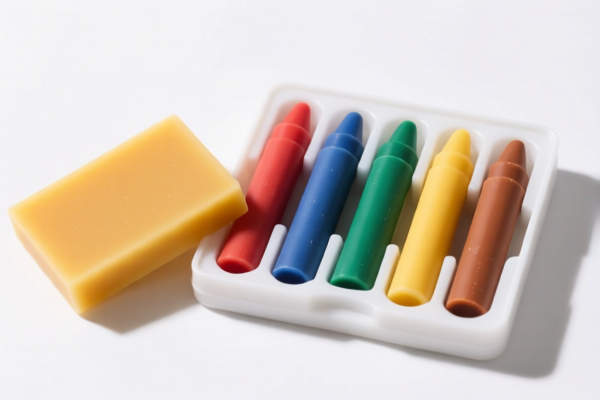
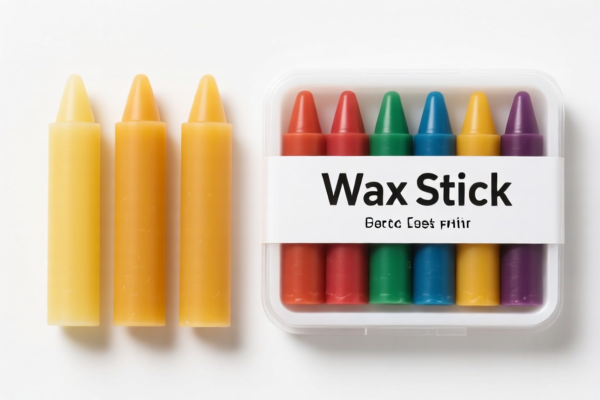
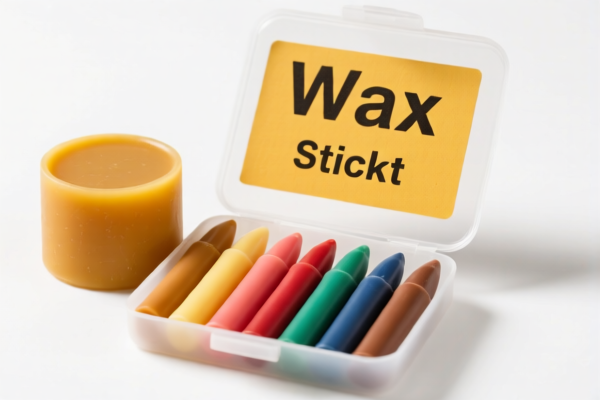
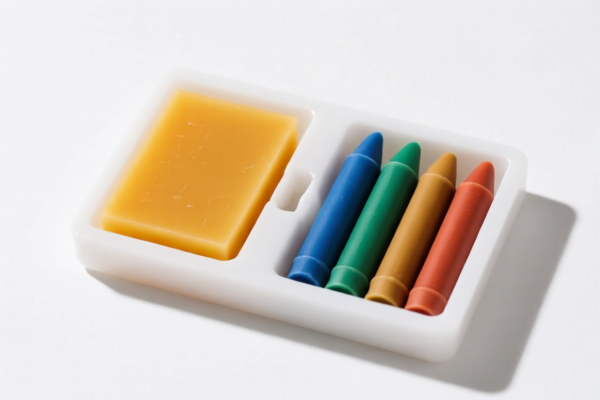
AI Analysis
🕯️ Wax Blocks (Wax Blocks for Industrial/Consumer Use)
🌐 HS Code Reference & Customs Clearance Guide | 2026 Latest Tariff Analysis | Professional Clearance Strategy
📌 I. Product Definition & Classification: Do You Really Understand “Wax Blocks”?
Wax blocks are semi-solid, solid forms of natural or synthetic hydrocarbons, esters, or other organic compounds. In international trade, the classification depends heavily on the raw material source and processing method. They are generally categorized into two main groups:
1. Mineral/Waxy Crude Oils (Chapter 27): * Paraffin Wax (石蜡): Derived from petroleum distillation. * Microcrystalline Wax (微晶石油蜡): A complex mixture of hydrocarbons, more plastic and adhesive than paraffin.
2. Artificial/Synthetic Waxes (Chapter 34): * Synthetic Wax (合成蜡): Produced via chemical synthesis (e.g., Fischer-Tropsch wax). * Prepared/Waxed Mixtures (调制蜡): Waxes mixed with other substances (stabilizers, colors) but not chemically altered into a different substance.
⚠️ Key Distinction Point:
- If the wax is derived directly from petroleum distillation (Paraffin/Microcrystalline) → Classified under Chapter 27.
- If the wax is synthetically produced or is a prepared mixture not falling under specific Chapter 27 definitions → Classified under Chapter 34.
📦 II. HS Code Classification Details (2026 Latest Tariff Authority Comparison)
| HS Code | Product Description | Applicable Scenario | Material Source |
|---|---|---|---|
2712.90.20.00 |
Paraffin Wax & Similar Products (Block Shape) | Standard industrial paraffin wax, block form | ✅ Petroleum-derived (Mineral) |
2712.20.00.00 |
Microcrystalline Petroleum Wax | Plastic, adhesive wax from petroleum residues | ✅ Petroleum-derived (Mineral) |
3404.90.51.10 |
Artificial Waxes & Prepared Waxes (Other) | Synthetic waxes, specific prepared mixtures | ✅ Synthetic/Chemical |
3404.90.51.50 |
Artificial Waxes & Prepared Waxes (Other) | General synthetic waxes, no specific sub-category | ✅ Synthetic/Chemical |
🔍 Key Reminder:
- Paraffin Wax is explicitly listed in 2712.90. If your product is standard white/yellow paraffin blocks, this is the primary category.
- Microcrystalline Wax has a specific code 2712.20. It is distinct from paraffin due to its higher oil content and plasticity.
- Synthetic Waxes (like polyethylene wax) or Prepared Waxes (wax blends for candles/cosmetics) fall under 3404.90.
💰 III. 2026 Latest Tariff Rate Details (Including Surtaxes & Policy Add-ons)
✅ Applicable Country: United States (US)
✅ Origin: China (CN)
✅ Effective Date: From November 10, 2025 (and subsequent imports)
🎯 1. 2712.90.20.00 – Paraffin Wax (Block Shape)
| Item | Content |
|---|---|
| Basic Tariff | 0% (ad valorem) |
| USITC Surtax | +25% (Section 301 Duties) |
| IEEPA Add-on Tariff | +10% (China/HK specific, effective Nov 10, 2025) |
| Total Tax Rate | 35.0% |
| Tax Calculation | CIF Value × 35% |
| De Minimis Eligibility | ❌ No (deny_de_minimis) |
| Legal Path | IEEPA:9903.01.25 → IEEPA:9903.01.24 → USITC:2712.90.20.00 → FOOTNOTE:9903.88.01 |
📌 Explanation:
- The 25% is the standard Section 301 tariff on Chinese chemical products.
- The 10% is the new IEEPA surcharge specifically targeting China-origin goods starting late 2025.
- Total: 35%. This is a significant cost increase for paraffin wax importers.
🎯 2. 2712.20.00.00 – Microcrystalline Petroleum Wax
| Item | Content |
|---|---|
| Basic Tariff | 0% |
| USITC Surtax | +7.5% |
| IEEPA Add-on Tariff | +10% |
| Total Tax Rate | 17.5% |
| Tax Calculation | CIF Value × 17.5% |
| De Minimis Eligibility | ❌ No |
| Legal Path | IEEPA:9903.01.25 → IEEPA:9903.01.24 → USITC:2712.20.00.00 → FOOTNOTE:9903.88.01 |
📌 Note:
- Microcrystalline wax benefits from a lower Section 301 surtax (7.5% vs 25%).
- Total: 17.5%. This is half the tax of standard paraffin wax.
- Crucial Strategy: If your wax is microcrystalline (highly plastic, adhesive, dark color), ensure documentation confirms this to qualify for the lower 17.5% rate instead of 35%.
🎯 3. 3404.90.51.10 & 3404.90.51.50 – Artificial/Prepared Waxes
| Item | Content |
|---|---|
| Basic Tariff | 0% |
| USITC Surtax | +25% |
| IEEPA Add-on Tariff | +10% |
| Total Tax Rate | 35.0% |
| Tax Calculation | CIF Value × 35% |
| De Minimis Eligibility | ❌ No |
| Legal Path | IEEPA:9903.01.25 → IEEPA:9903.01.24 → USITC:3404.90.51.10/50 → FOOTNOTE:9903.88.01 |
📌 Note:
- These codes apply to synthetic waxes (e.g., polyethylene wax, Fischer-Tropsch wax) or prepared waxes (e.g., candle wax blends with additives).
- The tax rate is high (35%) due to the 25% Section 301 surtax.
- Classification Risk: Importers often try to classify paraffin under 3404 to avoid 2712 codes, but customs will reject this if the material is mineral-based. Conversely, misclassifying synthetic wax as mineral wax can lead to penalties.
🛠️ IV. Customs Clearance Practical Advice (实战避坑指南)
✅ 1. Required Documentation Checklist (Non-Negotiable)
| Document | Required | Description |
|---|---|---|
| ✅ Product Specification Sheet | ✔️ | Must clearly state: Type (Paraffin/Microcrystalline/Synthetic), Melting Point, Color, Odor. |
| ✅ Certificate of Analysis (COA) | ✔️ | Lab report confirming hydrocarbon composition. Critical for distinguishing 2712.90 vs 2712.20. |
| ✅ Product Photos | ✔️ | Show block shape, packaging, and any labels indicating "Microcrystalline" or "Synthetic". |
| ✅ Commercial Invoice | ✔️ | Describe as "Wax Blocks, [Type], [Origin]", not just "Wax". |
| ✅ Bill of Lading | ✔️ | Ensure weight and volume match invoice. |
| ✅ Origin Certificate (if applicable) | ✔️ | If produced in Vietnam/Malaysia, may avoid China-specific surtaxes (check rules of origin). |
✅ 2. Declaration Tips (Key Mantras)
🔥 “Shape tells form, Material tells Code, Code tells Tax!”
| Scenario | Correct Declaration | Wrong Practice |
|---|---|---|
| Standard White Paraffin | HS 2712.90.20.00, Desc: "Paraffin Wax Blocks" |
Calling it "Synthetic Wax" → 35% tax (correct) or Misclassification Risk |
| Plastic, Dark, Adhesive Wax | HS 2712.20.00.00, Desc: "Microcrystalline Petroleum Wax" |
Calling it "Paraffin" → 35% tax (Incorrect! Should be 17.5%) |
| Blended Candle Wax | HS 3404.90.51.x0, Desc: "Prepared Wax for Candles" |
Calling it "Paraffin" → 35% tax (Correct if prepared) |
| Polyethylene Wax | HS 3404.90.51.x0, Desc: "Synthetic Polyethylene Wax" |
Calling it "Mineral Wax" → Penalty for False Declaration |
📌 Strategic Advice:
- If your product is Microcrystalline Wax, ensure the COA highlights "Microcrystalline" and "High Oil Content" to justify HS 2712.20.00.00 (17.5% tax).
- Do not assume all "Wax" is paraffin. The 17.5% vs 35% difference is massive.
✅ 3. Special Case Handling
| Situation | Handling Suggestion |
|---|---|
| Blended Wax (Paraffin + Additives) | If additives change the fundamental character, it may be 3404.90 (35%). Check formulation. |
| Mixed Shipment (Paraffin + Microcrystalline) | Split Declaration! Do not lump them. Declare 2712.90.20.00 for one line, 2712.20.00.00 for the other. |
| Import from Non-China Origin | If wax is from Canada or KSA, IEEPA 10% and potentially Section 301 25%/7.5% may not apply. Verify Country of Origin! |
| De Minimis (Section 321) | Not Eligible. All wax blocks from China are subject to duties regardless of value. |
🌍 V. Global Market Comparison (2026 Latest)
| Country/Region | Recommended HS Code | Tariff (China Origin) | Certification | Remarks |
|---|---|---|---|---|
| 🇺🇸 USA | 2712.20.00.00 |
17.5% (Microcrystalline) | FDA (if food grade) | Cheapest Chapter 27 option |
| 🇺🇸 USA | 2712.90.20.00 |
35.0% (Paraffin) | FDA (if food grade) | High tax due to 301+IEEPA |
| 🇨🇳 China | 2712.90.20.00 |
0% (Import Duty) | N/A | China is a major exporter |
| 🇪🇺 EU | 2712.90.20 |
6.5% | REACH Registration | No Section 301 tariffs in EU |
| 🇬🇧 UK | 2712.90.20 |
6.5% | UK REACH | Post-Brexit alignment with EU |
📌 Conclusion:
- The US market is the most expensive due to additive tariffs.
- Microcrystalline Wax (2712.20.00.00) is the strategic choice for US imports if your product fits, saving 17.5% in tariffs compared to Paraffin.
📌 VI. Common Errors & Pitfalls (Lessons Learned)
❌ Error 1: Declaring Microcrystalline Wax as Paraffin Wax (2712.90.20.00)
👉 Consequence: Pay 35% tax instead of 17.5%. Overpayment of $1,750 per $10,000 shipment!
✅ Fix: Use COA to prove microcrystalline nature.
❌ Error 2: Declaring Synthetic Wax as Paraffin Wax
👉 Consequence: Customs rejection, inspection, potential fraud allegations.
✅ Fix: Accurately declare as 3404.90.51.10/50.
❌ Error 3: Ignoring the IEEPA 10% Add-on Tariff
👉 Consequence: Underestimating landed cost by 10% for any China-origin wax since Nov 2025.
✅ Fix: Always include Total Tax = Basic + 301 + IEEPA.
❌ Error 4: Mixed Packing List without Split HS Codes
👉 Consequence: Customs may classify the entire shipment under the highest duty rate (35%) for safety.
✅ Fix: Separate boxes/labels for Paraffin and Microcrystalline wax in the packing list.
🎯 VII. Conclusion: Precision in Classification Saves Money!
🎯 Remember the Mantra:
🔹 “Paraffin is 35%, Micro is 17.5%, Synthetic is 35%.”
🔹 “Check the COA! Don’t guess the wax type.”
🔹 “IEEPA 10% is here to stay for China origins.”
📌 Pro Tip:
If you are importing Paraffin Wax and want to reduce costs, consider sourcing from non-China origins (e.g., Saudi Arabia, Canada) where IEEPA tariffs do not apply.
If you must import from China, audit your product formula. If it can be technically classified as Microcrystalline Wax, leverage the lower 17.5% rate.
📣 Immediate Action:
📞 Consult with a customs broker to pre-classify your wax based on the Certificate of Analysis.
📄 Ensure your Commercial Invoice explicitly states the Wax Type (Paraffin vs. Microcrystalline).
🚀 Avoid 35% if 17.5% is applicable!
✨ Professional Clearance Starts with Accurate Classification!
💼 Your Landed Cost Depends on the HS Code!
Customer Reviews
About HS Code Classification
The Harmonized System (HS) is an internationally standardized nomenclature developed by the World Customs Organization (WCO) to classify traded products. Over 200 countries use the HS system as the basis for customs tariffs, trade statistics, and import/export regulations.
Each HS code follows a hierarchical structure:
- Chapter (2 digits) — Broad category of goods (e.g., Chapter 84: Machinery and Mechanical Appliances)
- Heading (4 digits) — More specific grouping within the chapter
- Subheading (6 digits) — Internationally standardized breakdown, used by all WCO member countries
- National subdivisions (8-10 digits) — Country-specific extensions for further classification, such as US HTSUS 10-digit codes
Correct HS code classification is essential for smooth customs clearance, accurate duty payment, and compliance with trade regulations. Misclassification can lead to customs delays, overpayment of duties, or penalties.
When importing from CN to US, the applicable tariff rates may include:
- Most-Favored-Nation (MFN) rate — The standard duty rate applied to WTO members
- General rate — Applied to countries without trade agreements
- Trade remedy duties — Additional tariffs such as Section 301 (anti-dumping), Section 232 (national security), or countervailing duties
The information provided on this page is for reference purposes only. For official classification, please consult with your local customs authority or a licensed customs broker.