Wax Polish
CN → USProduct Images
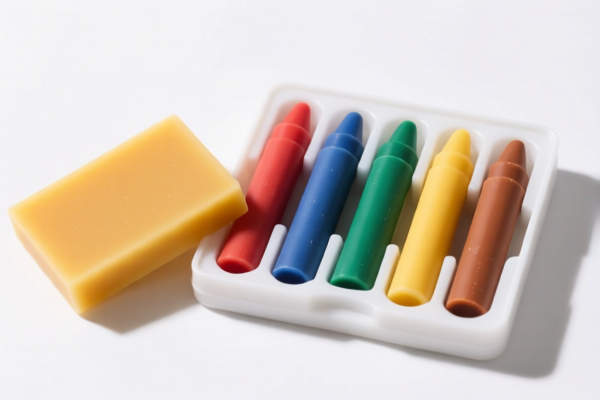
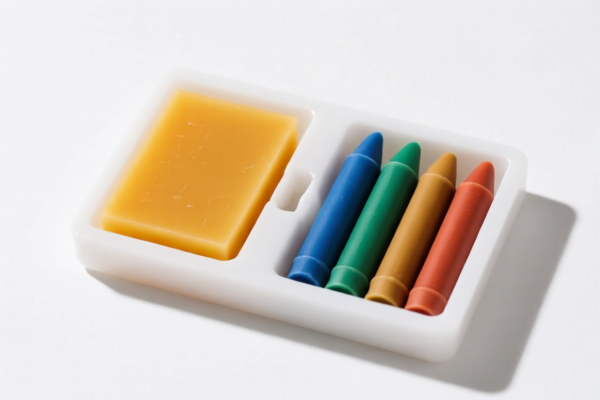
AI Analysis
🕯️ Wax Polish (Surface Polishers & Protective Coatings)
🌐 HS Code Reference & Customs Clearance Guide | 2026 Latest Tariff Analysis | Professional Entry Strategy
📌 I. Product Definition & Classification: Do You Really Understand “Wax Polish”?
Wax Polish is a broad category of products used to clean, protect, and enhance the surface appearance of materials such as wood, leather, marble, metal, and automobiles. In international trade, it is primarily classified under Chapter 34 (Soap, Organic Surface-Active Agents, Washing Preparations, Lubricating Preparations, Artificial Waxes, Prepared Waxes, Polishing Preparations, Candles and Similar Articles).
The critical distinction for customs purposes lies in the chemical composition and intended use:
- Prepared Polishes (Chapter 34): Products primarily composed of waxes (natural or synthetic), oils, solvents, and abrasives, designed specifically for polishing surfaces. These are the most common "wax polishes" (e.g., car wax, furniture wax, shoe polish).
- Perfumed Cosmetics (Chapter 33): If the product is primarily a beauty/cosmetic item (e.g., certain hand creams with wax, though less common as "polish"), it may fall here, but standard "polish" goes to Ch. 34.
- Preparations of a Kind Used in Biometric Identification (Chapter 38): Rare for general wax polish, but relevant for specific forensic or high-tech contexts.
⚠️ Key Distinction Point:
- If the product is a solid or semi-solid wax-based preparation for surface protection/polishing → Chapter 34 (Specifically 3405).
- If the product is a liquid solvent-based cleaner without significant wax content → May fall under 3808 (Insecticides, Rodenticides, Fungicides...) or 3402 (Surface Active Agents), but pure "wax polish" is almost exclusively 3405.
📦 II. HS Code Classification Details (2026 Latest Tariff Authority Match)
| HS Code | Product Description | Application Scenario | Key Component |
|---|---|---|---|
3405.10.00.00 |
Vehicle paint, polish and wax, including porcelain or leather prepars | Car wax, auto body polish, dashboard wax | Wax + Solvents + Abrasives |
3405.21.00.00 |
Floor polishes and creams, liquid or paste, other than hard wax polishes | Floor wax, floor polish cream | Wax + Water + Emulsifiers |
3405.29.00.00 |
Floor polishes and creams, hard wax polishes | Hard wax floor polish (block wax) | Hard Wax (Carnauba, etc.) |
3405.30.00.00 |
Shoe and boot polish, cream, paste, powder, liquid and similar prepars | Shoe wax, boot polish | Wax + Pigments + Solvents |
3405.90.00.00 |
Other polishes and creams, including pre-sensitized films for photography | Furniture wax, metal polish, marble wax, general purpose wax | Wax + Various Additives |
🔍 Critical Reminder:
-3405.10.00.00is the most common code for automotive and general surface wax polishes.
-3405.30.00.00is strictly for footwear care.
-3405.90.00.00is a catch-all for furniture, metal, marble, and other specialized polishes not listed above.
- Do NOT classify wax polish as "Cosmetics" (Ch. 33) or "General Cleaning Agents" (Ch. 3402) unless it lacks wax content entirely.
💰 III. 2026 Latest Tariff Rate Breakdown (Including Surcharges, Policy Add-ons)
✅ Applicable Country: United States (US)
✅ Origin: China (CN)
✅ Effective Date: November 10, 2025 (and subsequent imports)
🎯 1. 3405.10.00.00 —— Vehicle Paint, Polish, and Wax
| Item | Content |
|---|---|
| Base Tariff Rate | 4.2% (ad valorem) |
| USITC Additional Tariff | +25% (from USITC Footnote 9903.88.01, Section 301) |
| IEEPA Additional Tariff | +10% (Targeting China/HK products, effective Nov 10, 2025) |
| Total Tariff Rate | ~41.45% (Calculated: 4.2% base + 25% + 10% on base, compound calculation applies) |
| Tax Calculation | CIF Value × (1 + 4.2%) × (1 + 25%) × (1 + 10%) - 1 ≈ 41.45% |
| De Minimis Eligibility | ❌ Denied (deny_de_minimis) |
| Legal Basis Path | IEEPA:9903.01.25 → IEEPA:9903.01.24 → USITC:3405.10.00.00 → FOOTNOTE:9903.88.01 |
📌 Explanation:
- Vehicle waxes and polishes are considered industrial/consumer chemical preparations under Section 301.
- The 25% USITC tariff is standard for many chemical preparations from China.
- The 10% IEEPA tariff adds an extra layer of cost for Chinese origin.
- Total effective rate is ~41.45%, which is very high. Cost optimization is crucial.
🎯 2. 3405.90.00.00 —— Other Polishes and Creams (Furniture, Metal, Marble)
| Item | Content |
|---|---|
| Base Tariff Rate | 5.7% (ad valorem) |
| USITC Additional Tariff | +25% |
| IEEPA Additional Tariff | +10% |
| Total Tariff Rate | ~43.6%+ |
| De Minimis Eligibility | ❌ Denied |
| Legal Basis Path | IEEPA:9903.01.25 → IEEPA:9903.01.24 → USITC:3405.90.00.00 → FOOTNOTE:9903.88.01 |
📌 Note:
- Furniture wax, metal polish, and marble polish fall here.
- Same high tariff structure applies.
- Do not attempt to misclassify as "cosmetic" (Ch. 33) to avoid tariffs – customs will check chemical composition.
🎯 3. 3405.30.00.00 —— Shoe and Boot Polish
| Item | Content |
|---|---|
| Base Tariff Rate | 6.2% (ad valorem) |
| USITC Additional Tariff | +25% |
| IEEPA Additional Tariff | +10% |
| Total Tariff Rate | ~44.0%+ |
| De Minimis Eligibility | ❌ Denied |
📌 Note:
- Shoe wax/polish is also heavily taxed under Section 301.
- Consistent high tariff across all Ch. 3405 subheadings for Chinese origin.
🛠️ IV. Customs Clearance Practical Advice (Real-World Pitfall Avoidance)
✅ 1. Required Documentation Checklist (None Missing)
| Document | Mandatory | Description |
|---|---|---|
| ✅ Product Specification Sheet | ✔️ | Must list chemical composition (e.g., % Carnauba Wax, % Solvents, % Abrasives) |
| ✅ MSDS / SDS (Safety Data Sheet) | ✔️ | Critical for determining hazard class and proper shipping name |
| ✅ Product Photos | ✔️ | Clear images of container, label, and product texture (solid/liquid/paste) |
| ✅ Commercial Invoice | ✔️ | Must specify "Wax Polish for [Surface Type]", not just "Polish" |
| ✅ Country of Origin Certificate | ✔️ | To prove origin for tariff calculation |
| ✅ Bill of Lading / Air Waybill | ✔️ | Standard shipping docs |
✅ 2. Declaration Tips (Key Mantra)
🔥 "Wax Content is King, Solvent Content is Queen, Declare Both or Face the Scene!"
| Scenario | Correct Declaration | Incorrect Practice |
|---|---|---|
| Car Wax | 3405.10.00.00 "Vehicle Wax Polish" |
Misdeclare as "Cosmetic" → 0% tariff? No, audit risk! |
| Furniture Wax | 3405.90.00.00 "Furniture Wax Polish" |
Misdeclare as "Cleaning Agent" → Delay & Inspection |
| Shoe Polish | 3405.30.00.00 "Shoe Polish" |
Mix with other ch. 34 items → Confusion |
| Liquid Floor Cleaner (No Wax) | 3402.90.00.00 |
Misdeclare as "Wax Polish" → Wrong Code |
📌 Crucial:
- If the product contains flammable solvents (e.g., mineral spirits, acetone), it may be classified as Dangerous Goods (UN 1263, Painting or related material).
- This requires Hazmat Declaration, special packaging, and additional fees.
- Always provide SDS to prove whether it’s hazardous.
✅ 3. Special Case Handling
| Scenario | Handling Advice |
|---|---|
| OEM Branded Wax | Provide client authorization + contract to prove brand licensing |
| Mixed Shipments | Declare each HS Code separately. Do not bundle "Car Wax" + "Floor Wax" under one code unless identical |
| Small Quantities (Gifts) | No De Minimis Exemption for Chinese origin Ch. 3405 items. Even 1 unit may be taxed. |
| Re-exported from Vietnam/Malaysia | Check Rules of Origin. If substantial transformation occurred, may avoid US tariffs. Requires Form D/MAFTA Certificate. |
🌍 V. Global Market Customs Comparison (2026 Latest)
| Country/Region | Recommended HS Code | Tariff (China Origin) | Certification Requirements | Notes |
|---|---|---|---|---|
| 🇺🇸 USA | 3405.10.00.00 |
~41.45% | EPA (for some aerosols), DOT (for hazmat) | High tariffs due to 301/IEEPA |
| 🇨🇳 China | 3405.10.00.00 |
5% - 10% | CCC (if applicable), GB Standards | Low entry barrier |
| 🇪🇺 EU | 3405.10.00.00 |
6.5% | ECHA (REACH), CLP Labeling | No Section 301 equivalent |
| 🇬🇧 UK | 3405.10.00.00 |
6.5% | UKCA, REACH | Post-Brexit alignment with EU |
| 🇦🇺 Australia | 3405.10.00.00 |
5% | NICNAS (now AICIS) Registration | No major surcharges |
| 🇯🇵 Japan | 3405.10.00.00 |
7.5% | PSE (if electrical, but wax is not) | Standard MFN rate |
📌 Conclusion:
- USA is the most expensive market for Chinese Wax Polish due to Section 301 + IEEPA.
- EU, UK, Australia, Japan offer standard MFN rates (5-7.5%) with no additional political tariffs.
- Consider supply chain diversification to Vietnam, Malaysia, or India to avoid US tariffs.
📌 VI. Common Errors & Pitfall Guide (Lessons Learned)
❌ Error 1: Misclassifying Car Wax as Cosmetic (Ch. 33) to avoid tariffs
👉 Consequence: Customs audit → Back taxes + Penalties + Delay
❌ Error 2: Ignoring Hazmat Classification for solvent-based waxes
👉 Consequence: Shipment rejected, returned, or fined for unsafe transport
❌ Error 3: Using generic description "Polish" without specifying surface type
👉 Consequence: Customs may assign highest duty code or require redeclaration
❌ Error 4: Assuming De Minimis applies for small packages
👉 Consequence: Denied for Chinese origin Ch. 3405 → Unexpected tax bill for buyer
✅ Correct Practice:
“Carnauba Wax-Based Car Polish, Solid Block, 400g, Hazard Class 3 (Flammable Liquid) if solvent-based, UN 1263, SDS Available”
🎯 VII. Conclusion: Precise Declaration, Cost Efficiency, Smooth Clearance!
🎯 Remember the Mantra:
🔹 "Wax Content Defines the Code, Solvent Content Defines the Hazmat, Declare Accurately, Save Thousands!"
🔹 "US Tariffs are High, Supply Chain Shift is Smart, Chemical Disclosure is Key!"
📌 Pro Tip:
If your wax polish is originating from Vietnam, Malaysia, or India, check Free Trade Agreements (FTAs) like RCEP or CPTPP. You may claim 0% tariff in the US under certain conditions, or at least avoid the IEEPA surcharge.
Request an Advance Ruling from US CBP if the product has complex composition (e.g., wax + polymer + solvent).
📣 Take Action Now:
📞 Engage a licensed Customs Broker + Provide SDS + Verify Origin Certificate
🚀 Ensure your Wax Polish clears smoothly, complies with safety standards, and maximizes profit margins!
✨ Professional Customs Clearance Starts with Precise Classification!
💼 Every Percent of Tariff Saved is Pure Profit!
Customer Reviews
About HS Code Classification
The Harmonized System (HS) is an internationally standardized nomenclature developed by the World Customs Organization (WCO) to classify traded products. Over 200 countries use the HS system as the basis for customs tariffs, trade statistics, and import/export regulations.
Each HS code follows a hierarchical structure:
- Chapter (2 digits) — Broad category of goods (e.g., Chapter 84: Machinery and Mechanical Appliances)
- Heading (4 digits) — More specific grouping within the chapter
- Subheading (6 digits) — Internationally standardized breakdown, used by all WCO member countries
- National subdivisions (8-10 digits) — Country-specific extensions for further classification, such as US HTSUS 10-digit codes
Correct HS code classification is essential for smooth customs clearance, accurate duty payment, and compliance with trade regulations. Misclassification can lead to customs delays, overpayment of duties, or penalties.
When importing from CN to US, the applicable tariff rates may include:
- Most-Favored-Nation (MFN) rate — The standard duty rate applied to WTO members
- General rate — Applied to countries without trade agreements
- Trade remedy duties — Additional tariffs such as Section 301 (anti-dumping), Section 232 (national security), or countervailing duties
The information provided on this page is for reference purposes only. For official classification, please consult with your local customs authority or a licensed customs broker.