Wax Remover
CN → US| HS Code | Tariff Rate | Origin | Destination | Doc |
|---|---|---|---|---|
| 3811900000 | 41.5% | CN | US | Official Doc |
| 3402422050 | 39.0% | CN | US | Official Doc |
| 3811290000 | 41.5% | CN | US | Official Doc |
| 3824994900 | 41.5% | CN | US | Official Doc |
| 3404905110 | 35.0% | CN | US | Official Doc |
Product Images

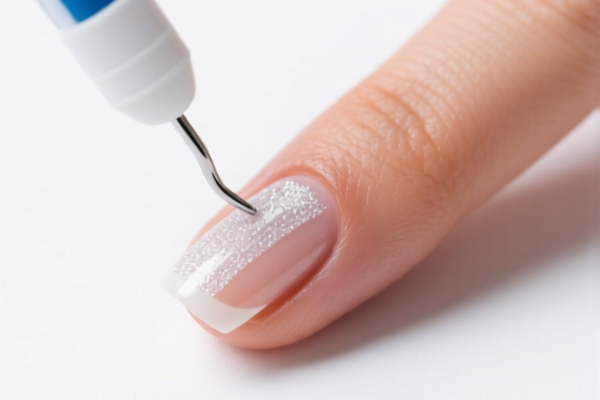


AI Analysis
🕯️ Wax Remover / Oil De-waxing Agent (Chemical Preparations)
🌐 HS Code Reference & Customs Clearance Guide | 2026 Latest Tariff Analysis | Professional Entry Strategy
📌 I. Product Definition & Classification: What Exactly is "Wax Remover"?
In international trade, the term "Wax Remover" (or Oil De-waxing Agent) is ambiguous. It can refer to industrial additives for refining, surface cleaning agents, or polishing compounds. The correct classification depends entirely on the chemical composition, primary function, and application scenario.
There are 5 potential HS Codes identified in the data, ranging from industrial chemical additives to household polishing agents. Misclassification can lead to significant duty discrepancies or customs delays.
⚠️ Key Distinction Points:
- If it is a liquid additive mixed into lubricants or fuels to lower the pour point → Chapter 38 (Miscellaneous Chemical Products).
- If it contains organic surfactants for emulsification/dispersion → Chapter 34 (Soap, Organic Surface-Active Agents).
- If it is a polishing paste/wax itself (not a remover, but often confused) → Chapter 34 (Waxes).
📦 II. HS Code Classification Details (2026 Latest Tariff Authority Comparison)
| HS Code | Product Description | Application Scenario | Tax Detail Breakdown |
|---|---|---|---|
3811.90.00.00 |
Oil De-waxing Agent (Liquid Preparation) Chemical additive for oil treatment; fits "other prepared additives" |
Industrial oil refining, lubricant preparation | Base: 6.5% Add-on: 25.0% (Section 301) 122 Clause: 10% Total: 41.5% |
3402.42.20.50 |
Oil De-waxing Agent (Surfactant-Based) Contains non-ionic organic surfactants for emulsification/dispersion |
Cleaning, degreasing, or emulsifying agents | Base: 4.0% Add-on: 25.0% (Section 301) 122 Clause: 10% Total: 39.0% |
3811.29.00.00 |
Oil Treatment Chemicals (Lubricant Additives) Other prepared lubricant additives |
Lubricant formulation, industrial machinery maintenance | Base: 6.5% Add-on: 25.0% (Section 301) 122 Clause: 10% Total: 41.5% |
3824.99.49.00 |
Chemical Preparation (General) Industrial chemical products/preparations not elsewhere specified |
General industrial chemical cleaning or treatment | Base: 6.5% Add-on: 25.0% (Section 301) 122 Clause: 10% Total: 41.5% |
3404.90.51.10 |
Wax Polishing Agent (Wax-Based) Artificial/modulated wax for surface finishing |
Floor wax, furniture polish, car wax (Note: This is a polish, not a remover) | Base: 0.0% Add-on: 25.0% (Section 301) 122 Clause: 10% Total: 35.0% |
🔍 Critical Reminder:
- Industrial De-waxing Agents (used in oil/rubber processing) generally fall under 3811 or 3824.
- Surfactant-based cleaners fall under 3402.
- Polishing Waxes (products applied to create a wax layer, or containing wax as a base) fall under 3404. Do not confuse a "Wax Remover" with a "Wax Polish"!
💰 III. 2026 Latest Tariff Rate Details (Including Surcharges & Policy Add-ons)
✅ Applicable Country: United States (US)
✅ Origin: China (CN)
✅ Effective Date: Post-November 2025 (including subsequent imports)
🎯 1. 3811.90.00.00 & 3811.29.00.00 & 3824.99.49.00
Category: Industrial Chemical Additives & Preparations
| Item | Detail |
|---|---|
| Base Duty Rate | 6.5% (Ad Valorem) |
| USITC Surcharge (Section 301) | +25.0% |
| 122 Clause Tariff | +10.0% |
| Total Effective Rate | 41.5% |
| Tax Calculation | CIF Value × 41.5% |
| De Minimis Exemption | ❌ Not Eligible (High risk for de minimis claims) |
| Legal Basis Path | USITC:3811.xxxx / USITC:3824.99.49 → Section 301: Footnote 9903.88.01 → 122 Clause |
📌 Explanation:
- These codes are classified as chemical preparations. The 6.5% base duty is standard for many chemicals.
- The +25% is the standard Section 301 tariff for Chinese-origin goods in this category.
- The +10% "122 Clause" tariff applies specifically to certain chemical categories from China.
- Total 41.5% is a significant cost factor. Proper classification is vital to ensure you are not overpaying if a lower rate applies (e.g., 3402).
🎯 2. 3402.42.20.50
Category: Organic Surface-Active Agents (Surfactants)
| Item | Detail |
|---|---|
| Base Duty Rate | 4.0% |
| USITC Surcharge (Section 301) | +25.0% |
| 122 Clause Tariff | +10.0% |
| Total Effective Rate | 39.0% |
| Tax Calculation | CIF Value × 39.0% |
| De Minimis Exemption | ❌ Not Eligible |
| Legal Basis Path | USITC:3402.42 → Section 301 → 122 Clause |
📌 Strategy:
- If your product is primarily a surfactant (non-ionic) used for emulsification, this code offers the lowest total duty (39.0%) among the chemical options.
- Justification Required: You must prove the product's primary function is emulsification/dispersion via surfactants, not just as a general chemical additive.
🎯 3. 3404.90.51.10
Category: Artificial/Modulated Waxes (Polishing Agents)
| Item | Detail |
|---|---|
| Base Duty Rate | 0.0% |
| USITC Surcharge (Section 301) | +25.0% |
| 122 Clause Tariff | +10.0% |
| Total Effective Rate | 35.0% |
| Tax Calculation | CIF Value × 35.0% |
| De Minimis Exemption | ❌ Not Eligible |
| Legal Basis Path | USITC:3404.90 → Section 301 → 122 Clause |
📌 Warning:
- This is the lowest total duty (35.0%), BUT it is only applicable if the product is actually a wax-based polishing agent (e.g., car wax, floor polish).
- DO NOT use this code for an industrial "oil de-waxing agent" (a cleaner/remover). If customs inspectors find that your product is a solvent-based remover and not a wax polish, you will face reclassification, penalties, and back taxes.
- Use only if: The product is a solid/liquid wax used for surface finishing/polishing, not for removing wax from machinery.
🛠️ IV. Customs Clearance Practical Advice (Battle-Tested Pitfall Guide)
✅ 1. Documentation Checklist (Non-Negotiable)
| Document | Required | Purpose |
|---|---|---|
| ✅ Product Specification Sheet | ✔️ | Must clearly state: Chemical Composition (e.g., % Surfactant, % Solvent), Physical State (Liquid/Solid), Primary Function (De-waxing vs. Polishing). |
| ✅ Formula/Composition Report | ✔️ | Critical for distinguishing between 3811 (Additive) and 3402 (Surfactant). |
| ✅ Product Photos | ✔️ | Show label, container, and any usage instructions (e.g., "Add to lubricant" vs. "Apply to floor"). |
| ✅ Safety Data Sheet (SDS) | ✔️ | Confirms hazard class and chemical nature. |
| ✅ Commercial Invoice | ✔️ | Accurate description matching HS Code. Do not just write "Wax Remover"; use "Industrial Oil De-waxing Agent, Liquid, Surfactant-Based". |
| ✅ Customs Ruling (Pre-Ruling) | ✔️ | Highly Recommended. Apply for an advance ruling to lock in the HS Code and avoid disputes. |
✅ 2. Declaration Tips (Critical Keywords)
🔥 Golden Rule: "Function Defines Class, Composition Defines Code, Description Must Match!"
| Scenario | Correct Declaration | Incorrect Declaration | Risk |
|---|---|---|---|
| Industrial Additive (for oil/rubber) | "Liquid Chemical Additive for Oil De-waxing, Code 3811.90.00" | "Wax Cleaner" | Ambiguity → Customs may assign highest duty or delay. |
| Surfactant Cleaner | "Non-ionic Organic Surfactant for Emulsification, Code 3402.42.20" | "Chemical Detergent" | Risk of misclassification into 3824 (41.5% vs 39.0%). |
| Polishing Wax | "Artificial Wax Polishing Paste, Code 3404.90.51" | "Wax Remover" | HIGH RISK: If it's a remover, this code is illegal. Penalty applies. |
| General Chemical Prep | "Prepared Chemical Product for Industrial Cleaning, Code 3824.99.49" | "Miscellaneous Chemicals" | Safe fallback if composition is complex, but higher duty than 3402. |
✅ 3. Special Cases & Handling
| Situation | Advice |
|---|---|
| OEM/Private Label | Provide the manufacturer's formula sheet. Customs relies on chemistry, not brand names. |
| Multi-Function Product | If it both removes wax AND polishes, classify based on essential character. Usually, the cleaning aspect dominates → 3811 or 3402. |
| Small Sample Shipments | Even samples are subject to Section 301 (25%) and 122 Clause (10%). Do not assume de minimis ($800) exemption applies if the value exceeds limits or if prohibited items. |
| Dispute Resolution | If customs challenges your HS Code, provide a chemical analysis report from a third-party lab (e.g., SGS, Intertek) proving the primary ingredient is a surfactant (for 3402) or a specific additive (for 3811). |
🌍 V. Global Market Comparison (2026 Update)
| Market | Recommended HS Code | Total Duty (Approx.) | Key Requirement |
|---|---|---|---|
| 🇺🇸 USA | 3402.42.20.50 (Best Case) |
39.0% | Strict proof of surfactant content. Avoid 3811 unless necessary. |
| 🇺🇸 USA | 3811.90.00.00 (Standard) |
41.5% | Standard industrial additive classification. |
| 🇨🇳 China | 3811.90.00 / 3402.42 |
~6-10% | Lower duties, but export controls may apply. |
| 🇪🇺 EU | 3811.30 / 3402.33 |
~4-6.5% | REACH compliance required. No Section 301. |
| 🇬🇧 UK | 3811.90 / 3402.33 |
~4-6.5% | UK REACH compliance required. |
📌 Conclusion:
- USA is the most challenging market due to Section 301 (25%) + 122 Clause (10%).
- Optimization Strategy: If your product is surfactant-based, insist on 3402.42.20.50 (39.0%) to save 2.5% compared to3811or3824.
- Caution: Do not force3404(35.0%) unless it is genuinely a wax polish. The risk of fraud penalties outweighs the 1.5% savings.
📌 VI. Common Errors & Pitfalls (Lessons Learned)
❌ Error 1: Classifying an oil de-waxing additive as 3404 (Wax Polish) to save 6.5%.
👉 Consequence: Customs rejects the declaration, fines the importer, and demands back taxes + interest.
👉 Correct: Use 3811 (41.5%) or 3402 (39.0%) based on actual composition.
❌ Error 2: Using vague terms like "Chemical Cleaner" on the invoice.
👉 Consequence: Customs flags the shipment for manual examination → Delay of 2-4 weeks.
👉 Correct: Provide precise chemical name and function (e.g., "Non-ionic Surfactant for Emulsification").
❌ Error 3: Assuming De Minimis ($800) exemption applies.
👉 Consequence: Section 301 and 122 Clause tariffs apply even to small shipments. You will still pay 39-41.5%.
👉 Correct: Plan for full duty payment on all shipments, regardless of value.
✅ Pro Tip:
"For industrial de-waxing agents, 3402.42.20.50 (39.0%) is the sweet spot if your product is surfactant-based. Prepare lab reports to prove it. If it's a general additive, accept 3811.90.00.00 (41.5%). Never lie about being a 'wax polish' if you are a 'cleaner'."
🎯 VII. Conclusion: Precision Saves Money!
🎯 Key Takeaway:
🔹 "Surfactant = 39% | Additive = 41.5% | Polish = 35% (But Verify!)"
🔹 "Always pay the 35% tax on 3404 ONLY if it is actually wax. Otherwise, you are cheating yourself into penalties."
📌 Final Advice:
If you are importing Wax Removers/De-waxing Agents into the USA:
1. Analyze your product formula.
2. Choose between 3402.42.20.50 (39%) and 3811.90.00.00 (41.5%) as the most likely candidates.
3. Document your chemical composition thoroughly.
4. Apply for a Customs Ruling before shipment.
🚀 Smart Classification = Lower Duties + Faster Clearance + Peace of Mind!
✨ Professional Customs Compliance Starts with Accurate Classification!
💼 Every 2.5% Saved is Pure Profit!
Customer Reviews
About HS Code Classification
The Harmonized System (HS) is an internationally standardized nomenclature developed by the World Customs Organization (WCO) to classify traded products. Over 200 countries use the HS system as the basis for customs tariffs, trade statistics, and import/export regulations.
Each HS code follows a hierarchical structure:
- Chapter (2 digits) — Broad category of goods (e.g., Chapter 84: Machinery and Mechanical Appliances)
- Heading (4 digits) — More specific grouping within the chapter
- Subheading (6 digits) — Internationally standardized breakdown, used by all WCO member countries
- National subdivisions (8-10 digits) — Country-specific extensions for further classification, such as US HTSUS 10-digit codes
Correct HS code classification is essential for smooth customs clearance, accurate duty payment, and compliance with trade regulations. Misclassification can lead to customs delays, overpayment of duties, or penalties.
When importing from CN to US, the applicable tariff rates may include:
- Most-Favored-Nation (MFN) rate — The standard duty rate applied to WTO members
- General rate — Applied to countries without trade agreements
- Trade remedy duties — Additional tariffs such as Section 301 (anti-dumping), Section 232 (national security), or countervailing duties
The information provided on this page is for reference purposes only. For official classification, please consult with your local customs authority or a licensed customs broker.