Wax Warmer Lamp
CN → US| HS Code | Tariff Rate | Origin | Destination | Doc |
|---|---|---|---|---|
| 9405294010 | 38.7% | CN | US | Official Doc |
| 9405298010 | 38.9% | CN | US | Official Doc |
| 8419819080 | 17.5% | CN | US | Official Doc |
| 9405504000 | 16.0% | CN | US | Official Doc |
| 9405503000 | 40.7% | CN | US | Official Doc |
Product Images
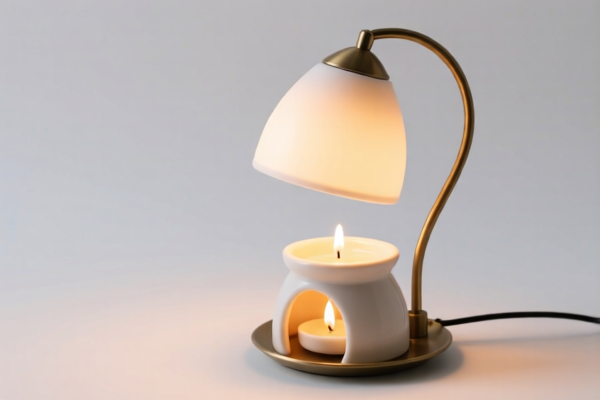
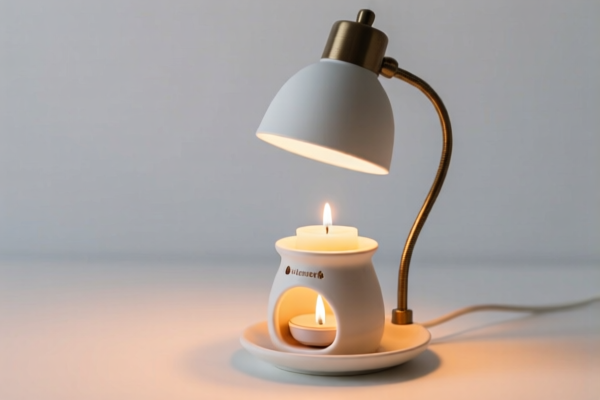
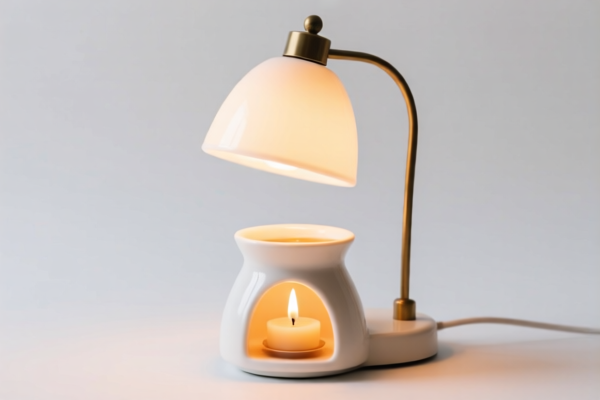

AI Analysis
💡 Wax Warmer Lamps (Wax Melts & Ambient Lighting)
🌐 HS Code Reference & Customs Clearance Guide | 2026 Latest Tariff Analysis | Professional Entry Strategies
📌 1. Product Definition & Classification: Do You Truly Understand "Wax Warmers"?
A Wax Warmer Lamp is a dual-purpose device used in home ambiance and retail settings. It combines lighting (creating atmosphere) with heating (melting scented wax). However, in international trade, its classification is highly controversial because it straddles the line between "Electric Light" and "Heating Appliance."
Core Distinction:
- Lighting-First Devices: If the primary function is illumination, with heating as a secondary or non-existent feature, it is classified as a Lamp/Light Fixture (Heading 9405).
- Heating-First Devices: If the primary function is to melt wax without significant illumination, it might fall under Heating Appliances (Heading 8419), but this is rare for consumer wax warmers.
⚠️ Critical Warning:
- Most consumer wax warmers (electric, plug-in, or battery-operated) are classified under HS 9405.
- Misclassification as a simple "heater" (8419) can lead to severe penalties due to lower duty rates (17.5%) vs. lighting rates (38-40%), triggering customs audits.
📦 2. HS Code Classification Details (2026 Latest Tariff Alignment)
Based on the provided dataset, here are the specific classifications for Wax Warmer Lamps:
| HS Code | Product Description | Applicability | Tax Rate |
|---|---|---|---|
| 9405.29.40.10 | Electric lamp for lighting or heating; Material: Metal or Glass | Standard electric wax warmers made of glass/metal | 38.7% |
| 9405.29.80.10 | Electric lamp for lighting/heating; Classified as Table/Floor Lamp | Wax warmers designed as decorative table/floor lamps | 38.9% |
| 8419.81.90.80 | Heating appliance for food/temperature change; Machinery | Non-lit wax melters (rare for consumer lamps) | 17.5% |
| 9405.50.40.00 | Non-electric lamp/lighting device; Auxiliary heating | Non-electric (e.g., tealight candle-based) warmers | 16.0% |
| 9405.50.30.00 | Other non-electric lamps/lighting devices | General non-electric lighting/heating aids | 40.7% |
🔍 Key Insight:
- Electric Warmers dominate the market and typically fall under 9405.29 (Table/Floor lamps).
- Non-Electric Warmers (using real candles) fall under 9405.50.
- HS 8419 is generally incorrect for consumer wax warmer lamps unless they are industrial heating units without lighting functions.
💰 3. 2026 Tariff Rate Breakdown (Including Surtaxes & Policy Add-ons)
✅ Applicable Country: United States (US)
✅ Origin: China (CN)
✅ Effective Date: 2025/2026 (Current Trade Policies)
🎯 1. 9405.29.40.10 & 9405.29.80.10 – Electric Wax Warmers (Lighting Class)
| Item | Content |
|---|---|
| Base Duty Rate | 3.7% ~ 3.9% (Ad Valorem) |
| Section 301 Surtax | +25.0% (USITC Footnote for Chinese Lighting) |
| Section 122 Tariff | +10.0% (Specific trade restriction) |
| Total Tax Rate | 38.7% / 38.9% |
| Tax Calculation | CIF Value × Total Rate |
| De Minimis Exemption | ❌ Not Applicable (High value threshold) |
| Legal Path | USITC:9405.29.40.10 → 301:25% → 122:10% |
📌 Explanation:
- These are high-duty items. The 25% Section 301 tax is applied because they are classified as "Lamps" from China.
- The additional 10% Section 122 tax may apply depending on specific commodity lists.
- Total landed duty can reach ~39%, significantly impacting profit margins.
🎯 2. 8419.81.90.80 – Heating Appliance (Non-Lighting Class)
| Item | Content |
|---|---|
| Base Duty Rate | 0.0% |
| Section 301 Surtax | +7.5% (Lower surtax for machinery) |
| Section 122 Tariff | +10.0% |
| Total Tax Rate | 17.5% |
| Tax Calculation | CIF Value × 17.5% |
| De Minimis Exemption | ❌ Not Applicable |
| Legal Path | USITC:8419.81.90.80 → 301:7.5% → 122:10% |
📌 Explanation:
- This rate is much lower (17.5%) compared to lighting (38.7%).
- However, Customs may reclassify if the product has any lighting function (LED bulbs, ambient glow). If it emits light, it must be classified under 9405, not 8419.
- Risk: Using this code for an electric lamp with lights is considered misdeclaration.
🎯 3. 9405.50.40.00 & 9405.50.30.00 – Non-Electric Wax Warmers
| Item | Content |
|---|---|
| Base Duty Rate | 5.7% ~ 6.0% |
| Section 301 Surtax | 0.0% ~ 25.0% (Varies by subheading) |
| Section 122 Tariff | +10.0% |
| Total Tax Rate | 16.0% / 40.7% |
| Tax Calculation | CIF Value × Total Rate |
| De Minimis Exemption | ❌ Not Applicable |
📌 Explanation:
- 9405.50.40.00 (16.0%) is the most cost-effective for non-electric (candle-driven) warmers.
- 9405.50.30.00 (40.7%) applies to other non-electric devices with higher surtaxes.
- Strategy: If you can remove the electric bulb and use only tea lights, you may qualify for the 16.0% rate.
🛠️ 4. Customs Clearance Practical Advice (Avoid Pitfalls)
✅ 1. Documentation Checklist (Mandatory)
| Document | Required | Notes |
|---|---|---|
| Product Specification Sheet | ✔️ | Must specify: "Electric" vs. "Non-Electric". If electric, list wattage, bulb type. |
| Photos (Clear Label) | ✔️ | Show if it has a light bulb, plug, or just a candle hole. |
| Commercial Invoice | ✔️ | Description: "Electric Wax Warmer Lamp, Model XYZ, No Heating Elements for Food". |
| Origin Certificate | ✔️ | Confirm China origin for 301/122 tax application. |
| CE/UL/FCC Report | ✔️ | Required for electric models to prove safety compliance. |
✅ 2. Declaration Strategy (Key Mantra)
🔥 "Light First = 9405, Heat Only = 8419, Candle Only = 9405.50!"
| Scenario | Correct HS Code | Risk if Incorrect |
|---|---|---|
| Electric Wax Warmer with LED Light | 9405.29.40.10 / 9405.29.80.10 |
Declaring as 8419 (17.5%) → Penalty + Back Taxes |
| Electric Wax Warmer WITHOUT Light | 8419.81.90.80 (Debated) |
Risk of reclassification to 9405 (38.7%) if any glow is present |
| Candle-Only Warmer (No Electricity) | 9405.50.40.00 |
Declaring as electric → Unnecessary high tax (38.7% vs 16.0%) |
| Multi-Function Device (Light + Heat) | 9405.29.xxxx |
Declaring as 8419 → High audit risk |
💡 Pro Tip:
If your product is electric, even if the main purpose is heating wax, Customs often classifies it as a Lamp (9405) because it is an electrical appliance with a light component. Only declare8419if it is strictly a heater with zero lighting capability.
✅ 3. Special Cases
| Case | Handling Advice |
|---|---|
| OEM Custom Designs | Provide design drawings showing if the light is removable or fixed. |
| Hybrid Devices (USB Heating) | If powered by USB but has no bulb, argue for 8419. If it has an LED, use 9405. |
| Accessories (Wax Cups) | Declare separately as 9619.00.00 (Sanitary articles) to lower overall tax burden. |
🌍 5. Global Market Comparison (2026)
| Country/Region | Recommended HS Code | Est. Duty | Certification | Notes |
|---|---|---|---|---|
| 🇺🇸 USA | 9405.29.40.10 (Electric) |
38.7% | UL, FCC, CDRH | High tax due to 301+122 clauses |
| 🇺🇸 USA | 9405.50.40.00 (Candle) |
16.0% | N/A | Lowest duty for non-electric |
| 🇪🇺 EU | 9405.40.00 |
~1.9% | CE, RoHS | Lower tariffs, but strict safety |
| 🇨🇳 China | 9405.40.00 |
5-12% | CCC | Import tax varies |
📌 Conclusion for US Market:
- Electric Wax Warmers are expensive to import (38.7% duty).
- Non-Electric (Candle) Warmers are cost-effective (16.0% duty).
- Strategy: Consider non-electric designs to save 22%+ in duties.
📌 6. Common Errors & Pitfalls (Lessons Learned)
❌ Error 1: Declaring an electric lamp as 8419.81.90.80 to save taxes.
👉 Consequence: Customs inspection reveals LED bulb → Reclassification + Fine + Back Taxes.
❌ Error 2: Mixing electric and non-electric items in one shipment without clear separation.
👉 Consequence: Entire shipment may be flagged for audit → Delays.
❌ Error 3: Ignoring Section 122 Tariff.
👉 Consequence: Missing 10% surcharge → Short payment penalties.
✅ Correct Declaration Example:
"Electric Wax Warmer Lamp, Glass Body, Metal Base, Includes LED Bulb & Wax Cup, Model XYZ, UL Certified"
HS Code:9405.29.40.10
Duty: 38.7%
🎯 7. Conclusion: Precision in Classification Saves Money!
🎯 Key Takeaway:
🔹 "If it lights up, it's 9405. If it just heats, it's 8419. If it burns candle, it's 9405.50."
🔹 "38.7% vs 16.0% – The difference is ELECTRIC vs. NON-ELECTRIC."📌 Actionable Advice:
- Audit your design: Can you remove the LED to save 22%+ in duties?
- Document clearly: Specify "No Lighting Function" if declaring as8419.
- Apply for Ruling: If unsure, request a Customs Ruling Letter before bulk shipping.
📣 Immediate Action:
📞 Contact Customs Broker → Provide Product Photos → Confirm HS Code → Pre-Declare to avoid delays.
🚀 Optimize your supply chain now to boost margins!
✨ Smart Classification, Smarter Profits!
💼 Every percent of duty counts in the Wax Warmer Market!
Customer Reviews
About HS Code Classification
The Harmonized System (HS) is an internationally standardized nomenclature developed by the World Customs Organization (WCO) to classify traded products. Over 200 countries use the HS system as the basis for customs tariffs, trade statistics, and import/export regulations.
Each HS code follows a hierarchical structure:
- Chapter (2 digits) — Broad category of goods (e.g., Chapter 84: Machinery and Mechanical Appliances)
- Heading (4 digits) — More specific grouping within the chapter
- Subheading (6 digits) — Internationally standardized breakdown, used by all WCO member countries
- National subdivisions (8-10 digits) — Country-specific extensions for further classification, such as US HTSUS 10-digit codes
Correct HS code classification is essential for smooth customs clearance, accurate duty payment, and compliance with trade regulations. Misclassification can lead to customs delays, overpayment of duties, or penalties.
When importing from CN to US, the applicable tariff rates may include:
- Most-Favored-Nation (MFN) rate — The standard duty rate applied to WTO members
- General rate — Applied to countries without trade agreements
- Trade remedy duties — Additional tariffs such as Section 301 (anti-dumping), Section 232 (national security), or countervailing duties
The information provided on this page is for reference purposes only. For official classification, please consult with your local customs authority or a licensed customs broker.