Weak Acid Cation Exchange Resin
CN → US| HS Code | Tariff Rate | Origin | Destination | Doc |
|---|---|---|---|---|
| 3914006000 | 38.9% | CN | US | Official Doc |
| 3914002000 | 35.0% | CN | US | Official Doc |
| 3907995050 | 41.5% | CN | US | Official Doc |
| 3824992900 | 41.5% | CN | US | Official Doc |
| 3907290000 | 41.5% | CN | US | Official Doc |
Product Images
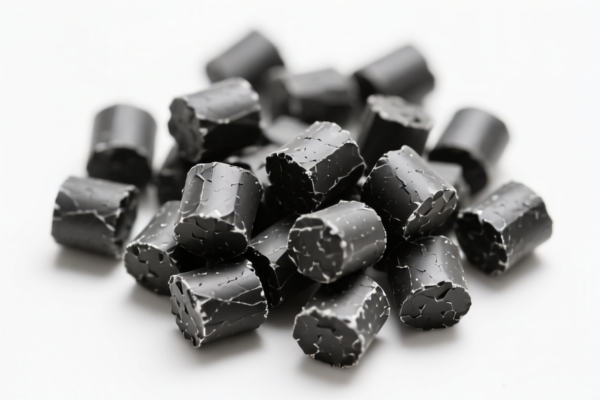
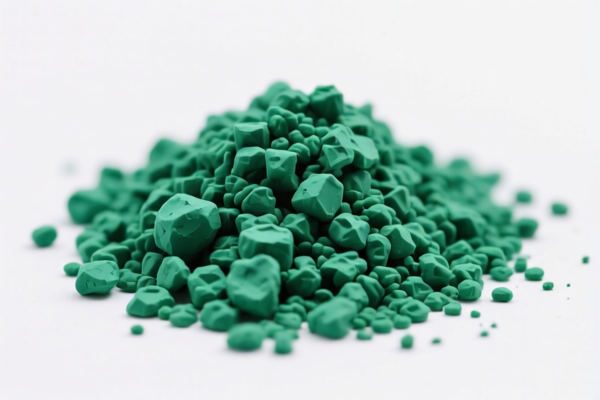


AI Analysis
🧪 Weak Acid Cation Exchange Resin (WAC)
🌐 HS Code Reference & Customs Clearance Guide | 2026 Latest Tariff Analysis for Polymer Ion Exchange Resins
📌 I. Product Definition & Classification: What is "Weak Acid Cation Exchange Resin"?
Weak Acid Cation Exchange (WAC) Resins are specialized polymeric materials used primarily in water treatment to remove alkalinity and temporarily hard cations (like Calcium and Magnesium) by exchanging them for Hydrogen ions (H⁺). Unlike Strong Acid Cation (SAC) resins, WAC resins have functional groups with high pKa values, meaning they only dissociate and exchange ions at pH levels above approximately 4.0–4.5.
In international trade, these resins are classified based on their polymer matrix (e.g., polystyrene, polyacrylic, polyester) and their primary form (usually beads or granules). The key distinction in customs classification lies in whether the resin is recognized as a specific "ion exchange resin" under Chapter 39 or falls under broader chemical categories.
⚠️ Key Distinction:
- If the resin is a polystyrene-based or polyacrylic-based bead specifically for ion exchange → Look at Chapter 39, Heading 3914.
- If the resin is a polyester-based or falls outside specific ion-exchange definitions → Look at Chapter 39, Heading 3907 or Chapter 38.
📦 II. HS Code Classification Details (2026 Latest Tariff Authority Comparison)
Based on the provided data for Polymer Ion Exchange Resins, here are the four potential HS Codes depending on the specific polymer matrix and regulatory interpretation:
| HS Code | Product Description | Applicable Scenario | Tax Burden |
|---|---|---|---|
3914.00.60.00 |
Polymer Ion Exchange Resins Matching polymer material with ion exchange agent use. |
Standard Polystyrene or Polyacrylic WAC resins. The most direct classification for dedicated ion exchange resins. | 38.9% |
3914.00.20.00 |
Polymer Ion Exchange Resins Compliant with polymer material and ion exchange agent requirements. |
Generic polymer resins specifically designated for ion exchange. Often applies to standard cross-linked polymers. | 35.0% |
3907.99.50.50 |
Polymer-Based Ion Exchange Resins Falls under Polyester and Related Polymers category (primary form). |
Polyester-based WAC resins. If the resin matrix is polyester rather than polystyrene/acrylic, it may be classified here. | 41.5% |
3824.99.29.00 |
Polymer-Based Ion Exchange Resins Falls under "Other Chemical Products and Preparations" in Chapter 38. |
Edge case: If the resin is considered a "chemical product/preparation" rather than a primary polymer form, or for specific mixed formulations. | 41.5% |
3907.29.00.00 |
Polymer-Based Ion Exchange Resins Falls under "Other Polyethers" category. |
Rare: Applies if the resin matrix is specifically a polyether-based polymer. Less common for standard WAC. | 41.5% |
🔍 Critical Note:
-3914is the "Golden Code" for most ion exchange resins. It specifically targets "Ion Exchange Resins in Primary Forms."
-3907and3824are used when the resin's polymer base (e.g., polyester, polyether) does not fit the standard polystyrene/acrylic profile, or when customs authorities classify it as a general chemical product.
- Tax Rates Vary Significantly: Between 35.0% and 41.5%. Choosing the wrong code can lead to overpayment or severe penalties for misclassification.
💰 III. 2026 Latest Tariff Rate Breakdown (Including Additional Duties & Policy Surcharges)
✅ Applicable Country: USA (US)
✅ Origin: China (CN)
✅ Effective Date: Ongoing (Subject to 301 Section and IEEPA Regulations)
🎯 1. 3914.00.60.00 —— Polymer Ion Exchange Resin (Standard)
| Item | Detail |
|---|---|
| Base Tariff | 3.9% (ad valorem) |
| Section 301 Surcharge | +25.0% (USITC Footnote for Chinese imports) |
| Section 122 Surcharge | +10.0% (Targeted Chinese import surcharge) |
| Total Tax Rate | 38.9% |
| Tax Calculation | CIF Value × 38.9% |
| De Minimis Exemption | ❌ Not Available (Denied) |
| Legal Basis | HTSUS:3914.00.60.00 → Section 301: Footnote 9903.88.01 → Section 122: 10% Surcharge |
📌 Explanation:
- This is the most favorable rate among the options provided for standard WAC resins.
- The 3.9% base rate is relatively low for plastics/chemicals, but the 35% combined surcharge (25% + 10%) makes it expensive.
- Why 3914? It is the specific heading for "Ion Exchange Resins," which overrides general polymer headings like 3907 unless the polymer type is explicitly different (e.g., polyester).
🎯 2. 3914.00.20.00 —— Polymer Ion Exchange Resin (Generic/Specific Compliance)
| Item | Detail |
|---|---|
| Base Tariff | 0.0% (ad valorem) |
| Section 301 Surcharge | +25.0% |
| Section 122 Surcharge | +10.0% |
| Total Tax Rate | 35.0% |
| Tax Calculation | CIF Value × 35.0% |
| De Minimis Exemption | ❌ Not Available |
| Legal Basis | HTSUS:3914.00.20.00 → Section 301 → Section 122 |
📌 Explanation:
- This is the lowest total tax rate in the dataset.
- It applies if the resin qualifies under the "0% base tariff" subheading for specific polymer ion exchange resins.
- Caution: Ensure your product specifications strictly meet the criteria for3914.00.20.00to avoid rejection by CBP (Customs and Border Protection).
🎯 3. 3907.99.50.50 / 3824.99.29.00 / 3907.29.00.00 —— Alternative Classifications (Higher Tax)
| Item | Detail |
|---|---|
| Base Tariff | 6.5% (ad valorem) |
| Section 301 Surcharge | +25.0% |
| Section 122 Surcharge | +10.0% |
| Total Tax Rate | 41.5% |
| Tax Calculation | CIF Value × 41.5% |
| De Minimis Exemption | ❌ Not Available |
📌 Explanation:
- These codes apply to polyester-based, polyether-based, or general chemical product interpretations.
- The 6.5% base tariff is significantly higher than the 0.0% or 3.9% found in3914codes.
- Risk: Misclassifying a standard polystyrene WAC resin as3907.29.00.00(polyether) or3907.99.50.50(polyester) will result in an additional 6.5% tax burden and potential penalties for misclassification.
🛠️ IV. Customs Clearance Practical Advice (Real-World Pitfall Guide)
✅ 1. Documentation Checklist (Mandatory)
| Document | Required | Explanation |
|---|---|---|
| ✅ Product Specification Sheet | ✔️ | Must detail: Polymer Matrix (e.g., Polystyrene, Polyacrylic, Polyester), Functional Group (Weak Acid Carboxylic), Capacity (meq/mL), Moisture Content, and Particle Size. |
| ✅ Chemical Structure Diagram | ✔️ | Crucial for proving it is an ion exchange resin (Chapter 3914) and not just a generic polymer bead. |
| ✅ Letter of Explanation | ✔️ | Explicitly state: "This product is a Weak Acid Cation Exchange Resin in primary form, used for water softening and dealkalization." |
| ✅ Commercial Invoice | ✔️ | Must clearly describe the item as "Ion Exchange Resin," not just "Plastic Beads" or "Chemical." |
| ✅ HS Code Pre-Ruling Request | ✔️ | Highly Recommended. Apply to CBP for a binding ruling to confirm if 3914.00.20.00 (35%) or 3914.00.60.00 (38.9%) applies. |
| ✅ COO (Certificate of Origin) | ✔️ | Required to prove Chinese origin for surcharge calculation. |
✅ 2. Classification Strategy (Key Rules)
🔥 “Matrix Matters: Polystyrene/Acrylic = 3914; Polyester/Polyether = 3907/3824”
| Scenario | Correct HS Code | Reason |
|---|---|---|
| Standard WAC Resin (Polystyrene or Polyacrylic backbone) | 3914.00.20.00 or 3914.00.60.00 |
Specific heading for Ion Exchange Resins. Lower base tariff. |
| Polyester-Based WAC Resin | 3907.99.50.50 |
Falls under "Polyesters in primary forms." Not specific to ion exchange in Chapter 39. |
| Polyether-Based WAC Resin | 3907.29.00.00 |
Falls under "Other Polyethers." Rare for WAC. |
| Mixed Chemical Formulation | 3824.99.29.00 |
If it contains other chemicals beyond the polymer matrix, or is considered a "preparation." |
📌 Warning:
- Do not use3926.90(Other articles of plastics) or3913(Cellulose derivatives).
- 3914 is the exclusive heading for "Ion Exchange Resins." If your product is an ion exchange resin, it must go here unless it’s explicitly excluded by note.
✅ 3. Special Situations
| Situation | Handling Advice |
|---|---|
| Mixed Resins (WAC + SAC) | If sold as a mix, classify based on the predominant component or value. If separate, classify individually. |
| Regenerated vs. Fresh Resin | Both are classified under 3914 if in primary form. If regenerated, ensure it’s not considered "used goods" (which may have different duties). |
| Small Samples (De Minimis) | NOT ELIGIBLE for $800 de minimis exemption due to Section 301/122 surcharges. All shipments pay duty. |
| Origin Marking | Must clearly mark "Made in China" to avoid additional penalties for unmarked goods. |
🌍 V. Global Market Comparison (2026 Update)
| Country/Region | Recommended HS Code | Total Tariff (China Origin) | Certification Requirements | Remarks |
|---|---|---|---|---|
| 🇺🇸 USA | 3914.00.20.00 |
35.0% | None specific, but COO required | Highest duty burden due to 301 + 122. |
| 🇨🇳 China | 3914.00.60.00 |
3.9% | None | Low base tariff. No surcharges for domestic trade. |
| 🇪🇺 EU | 3914.00.00 |
0% | REACH Registration Mandatory | No anti-dumping duties, but REACH compliance is critical. |
| 🇯🇵 Japan | 3914.00.00 |
6.0% | JIS Standard | Moderate duty. No surcharges. |
| 🇮🇳 India | 3914.00.00 |
~10-15% | BIS Certification | Varies by state. Higher than EU/Japan. |
📌 Conclusion:
- USA is the most challenging market due to 35-41.5% effective tariffs.
- EU & Japan offer much better rates, but REACH (EU) and JIS (Japan) certifications are mandatory.
- China remains the primary manufacturing hub, but export costs to the US are high.
📌 VI. Common Errors & Pitfalls (Lessons Learned)
❌ Error 1: Classifying WAC Resin as 3926.90 (Other Plastic Articles)
👉 Consequence: CBP will reclassify to 3914, resulting in back taxes + penalties. The 35-41% duty is unavoidable for ion exchange resins.
❌ Error 2: Misidentifying Polymer Matrix
👉 Consequence: Using 3914 for a polyester resin. CBP may reclassify to 3907.99.50.50 (41.5%), leading to underpayment.
❌ Error 3: Ignoring Section 122 Surcharge
👉 Consequence: Assuming only 25% (301) tax. The additional 10% brings the total to 35-41.5%. Budget accordingly!
❌ Error 4: Using "Plastic Beads" in Commercial Invoice
👉 Consequence: Customs may delay entry for "misdescription." Always use "Ion Exchange Resin" in the description.
✅ Correct Practice:
"Weak Acid Cation Exchange Resin, Polystyrene-Based, Cross-Linked, 600-1200 Micron Beads, for Water Treatment, HS 3914.00.20.00"
🎯 VII. Conclusion: Precise Classification Saves Money!
🎯 Remember the Golden Rule:
🔹 "Ion Exchange = 3914. Check Matrix: Polyacrylic/Polystyrene = 35-39%. Polyester = 41.5%."
🔹 "Don't guess the matrix. Get a pre-ruling. Avoid the 6.5% base tariff trap."
🔹 "Total Duty is 35-41.5%. Budget for Section 301 + 122."
📌 Pro Tip:
If you are exporting to the USA, consider Supply Chain Diversification (e.g., Vietnam, India, Thailand) to avoid US-China surcharges.
For EU/Japan, focus on REACH/JIS Compliance to unlock 0-6% tariffs.
📣 Immediate Action:
📞 Contact a Customs Broker: Provide your Chemical Structure and Specification Sheet.
📝 Request a CBP Pre-Ruling: Specifically ask about3914.00.20.00vs.3914.00.60.00.
🚀 Optimize Your Tariff: Ensure your polymer matrix is correctly identified to avoid the 41.5% penalty rate.
✨ Professional Customs Clearance Starts with Accurate Classification!
💼 Every Percentage Point of Duty Impacts Your Bottom Line!
Customer Reviews
About HS Code Classification
The Harmonized System (HS) is an internationally standardized nomenclature developed by the World Customs Organization (WCO) to classify traded products. Over 200 countries use the HS system as the basis for customs tariffs, trade statistics, and import/export regulations.
Each HS code follows a hierarchical structure:
- Chapter (2 digits) — Broad category of goods (e.g., Chapter 84: Machinery and Mechanical Appliances)
- Heading (4 digits) — More specific grouping within the chapter
- Subheading (6 digits) — Internationally standardized breakdown, used by all WCO member countries
- National subdivisions (8-10 digits) — Country-specific extensions for further classification, such as US HTSUS 10-digit codes
Correct HS code classification is essential for smooth customs clearance, accurate duty payment, and compliance with trade regulations. Misclassification can lead to customs delays, overpayment of duties, or penalties.
When importing from CN to US, the applicable tariff rates may include:
- Most-Favored-Nation (MFN) rate — The standard duty rate applied to WTO members
- General rate — Applied to countries without trade agreements
- Trade remedy duties — Additional tariffs such as Section 301 (anti-dumping), Section 232 (national security), or countervailing duties
The information provided on this page is for reference purposes only. For official classification, please consult with your local customs authority or a licensed customs broker.