Wear Resistant PVC Wall Covering Film (Synthetic Fiber Backing)
CN → US| HS Code | Tariff Rate | Origin | Destination | Doc |
|---|---|---|---|---|
| 3918103150 | 39.2% | CN | US | Official Doc |
| 3921121100 | 39.2% | CN | US | Official Doc |
| 5903102090 | 35.0% | CN | US | Official Doc |
| 5903102500 | 42.5% | CN | US | Official Doc |
| 3918103250 | 41.5% | CN | US | Official Doc |
Product Images
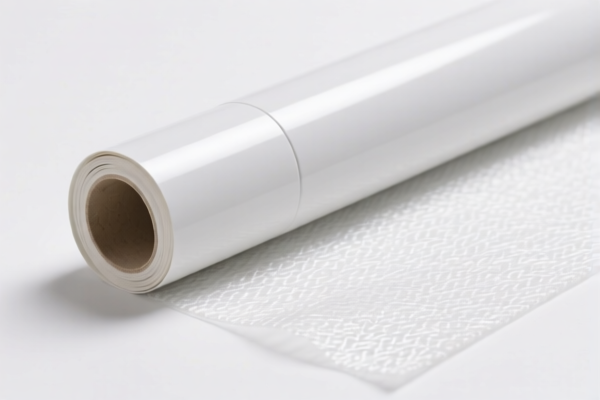
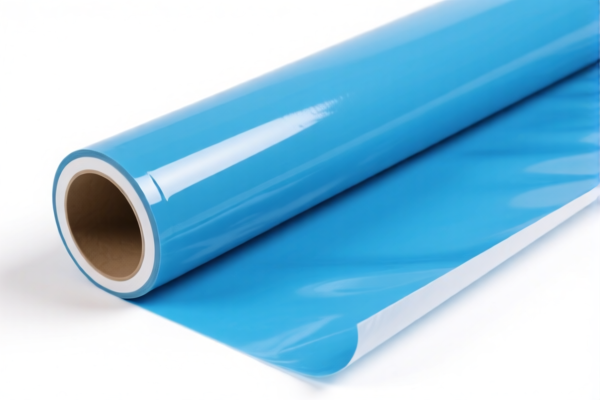


AI Analysis
🧱🛡️ Wear Resistant PVC Wall Covering Film (Synthetic Fiber Backing)
🌐 HS Code Classification & Customs Clearance Strategy | 2026 US Tariff Breakdown | Expert Guidance
📌 I. Product Definition & Core Characteristics: Why This Isn't Just "Plastic"
Wear Resistant PVC Wall Covering Film is a sophisticated composite material designed for high-traffic interior and exterior architectural applications. It is not merely a sheet of plastic; it is a multi-layer engineered product:
- Core Material: Polyvinyl Chloride (PVC) Film – Provides durability, water resistance, and wear resistance.
- Structural Element: Synthetic Fiber Backing (Non-woven or Woven) – Adds tensile strength, dimensional stability, and ease of installation.
- Primary Function: Wall Covering (Decorative & Protective).
⚠️ Critical Customs Distinction:
The classification hinges on the intended use and the specific composition of the backing. * Is it just a generic "film" (Chapter 39)? * Is it a "textile-based" product (Chapter 59)? * Is it a specific "wall covering" (Chapter 39.18)?The Data Provided (DATA) shows 5 distinct HS Codes, all with varying tax rates. Choosing the wrong one can lead to unexpected tax hikes (up to 42.5%) or customs rejection.
📦 II. HS Code Classification Matrix (Based on Provided Data)
Below is the authoritative mapping of your product to the 5 specific HS Codes found in the data, analyzing why each applies and the resulting tax impact.
| # | HS Code | Detailed Description & Classification Logic | Primary Tax Rate | Tax Breakdown (Total) |
|---|---|---|---|---|
| 1 | 3918.10.31.50 |
Wall Covering (Specific) • Material: PVC • Form: Film • Use: Wall Covering • Backing: Fibre-backed 🔹 Logic: This is the most specific code for wall coverings made of PVC with a fibrous backing. It targets the application. |
39.2% | Base (4.2%) + Add'l (25.0%) + Sec 122 (10%) |
| 2 | 3921.12.11.00 |
Other Plastic Sheets/Films (Generic) • Material: PVC • Form: Film • Backing: Synthetic Fiber 🔹 Logic: If the product is treated as a generic "plastic sheet" rather than a specific "wall covering," it falls here. Often used if the "wall covering" status isn't explicitly proven on the commercial invoice. |
39.2% | Base (4.2%) + Add'l (25.0%) + Sec 122 (10%) |
| 3 | 5903.10.20.90 |
Textile + Plastic (Coated Textiles) • Material: PVC (Coated) • Form: Film • Backing: Synthetic Fiber 🔹 Logic: If the backing is considered the "dominant component" and the PVC is viewed as a coating on a textile fabric, it moves to Chapter 59. Lowest Base Tariff (0%)! |
35.0% | Base (0.0%) + Add'l (25.0%) + Sec 122 (10%) |
| 4 | 5903.10.25.00 |
Textile + Plastic (Coated Textiles - Specific) • Material: PVC • Form: Film • Backing: Synthetic Fiber (Specific Sub-heading) 🔹 Logic: Similar to #3 but a more specific sub-category for coated fabrics. Note: Higher base tariff here drives up the total. |
42.5% | Base (7.5%) + Add'l (25.0%) + Sec 122 (10%) |
| 5 | 3918.10.32.50 |
Wall Covering (Alternative Sub-heading) • Material: PVC • Form: Film • Use: Wall Covering • Backing: Synthetic Fiber 🔹 Logic: Another specific "Wall Covering" code, likely differentiated by a slight variation in the fiber type or manufacturing process compared to #1. |
41.5% | Base (6.5%) + Add'l (25.0%) + Sec 122 (10%) |
💰 III. 2026 US Tariff Structure Deep Dive
✅ Origin: China (CN)
✅ Destination: United States (US)
✅ Timeframe: Effective Nov 10, 2025 (Current 2026 Framework)
All the HS Codes listed above share a common tax structure for Chinese imports:
🏗️ The "Triple-Strike" Tax Formula
| Component | Rate | Legal Source | Description |
|---|---|---|---|
| 1. Base Tariff | 0% ~ 7.5% | US Harmonized Tariff Schedule (HTSUS) | The standard duty rate for the specific HS Code. |
| 2. Section 301 / "Add'l" Tariff | +25.0% | US Trade Law (Section 301) | The massive "China Trade War" tariff. Applies to almost all PVC and Textile products from China. |
| 3. Section 122 Tariff | +10.0% | US Trade Action (Sec 122) | Additional punitive tariff often applied to specific strategic categories. |
| TOTAL | 35.0% ~ 42.5% | Combined | The final cost multiplier. |
📊 Analysis of the "Tax Traps"
- The "Base" Variance: While the 301 (25%) and Sec 122 (10%) rates are fixed for these items, the Base Tariff varies between 0% (Code
5903.10.20.90) and 7.5% (Code5903.10.25.00). - The Sweet Spot: HS Code
5903.10.20.90offers the lowest total tax at 35.0% because it qualifies for a 0% Base Tariff. - The Pitfall: If you misclassify as
5903.10.25.00, you pay an extra 7.5% immediately, resulting in a 42.5% total tax burden.
🛠️ IV. Customs Clearance Action Plan & Strategy
✅ 1. Documentation Strategy: The "Proof of Composition"
To secure the lower tariff (Code 5903.10.20.90 at 35%), you must prove the Textile/Coated Fabric nature.
* Technical Data Sheet: Must explicitly state "PVC Coated on Synthetic Fiber Backing."
* Bill of Materials: Break down the weight ratio. Is the fiber backing the structural base?
* Photographic Evidence: Close-ups showing the weave of the synthetic fiber under the PVC layer.
* Commercial Invoice Description:
* Bad: "Plastic Film for Wall" (Risk of being coded as generic PVC).
* Good: "PVC Coated Synthetic Fiber Fabric for Wall Covering, Wear Resistant."
✅ 2. Classification Strategy: How to Pick the Winner
- Strategy A (Lowest Tax): Aim for
5903.10.20.90.- Requirement: Must argue that the product is a "textile" first, coated with plastic.
- Risk: US Customs may challenge if the PVC thickness dominates the product.
- Strategy B (Safe Wall Covering): Use
3918.10.31.50.- Requirement: Standard classification for PVC wall coverings.
- Benefit: Harder to dispute, but higher tax (39.2%).
- Strategy C (Avoid):
5903.10.25.00(42.5%) and3918.10.32.50(41.5%) – These are generally higher and should only be used if the product composition strictly matches these specific sub-headings.
✅ 3. Operational "Golden Rules"
- Do Not Split: Never ship the "PVC" and "Fiber" as separate items. They are a composite.
- Labeling: Ensure the product label states "Wall Covering" and "PVC Coated."
- Pre-Ruling: For high-volume imports, apply for an Advance Ruling from CBP. Ask specifically: "Is this classified under 5903 or 3918?"
⚠️ V. Common Pitfalls & Risk Alert
| ❌ Pitfall | Consequence | Solution |
|---|---|---|
| "Generic PVC" Claim | If you simply say "PVC Film," Customs may default to a generic high-rate code (3921) or miss the textile benefit. | Explicitly state "Synthetic Fiber Backing" and "Wall Covering Use" on the invoice. |
| Confusing Chapter 39 & 59 | Misclassifying a textile-backed product as pure plastic (Chapter 39) can lead to audits if the fiber weight is significant. | Provide a weight ratio test showing the fiber component is integral. |
| Ignoring the Base Tariff | Focusing only on the 25% add-on tariff misses the 0% vs 7.5% base difference. | Always calculate the TOTAL (Base + 25% + 10%) before shipping. |
🌍 VI. Global Market Comparison (US vs. Others)
While the data focuses on US tariffs, here is how this product fares elsewhere:
| Market | Typical HS Code | Estimated Duty | Note |
|---|---|---|---|
| 🇺🇸 USA | 3918.10 / 5903.10 |
35% ~ 42.5% | High Risk due to 301 & Sec 122 tariffs. |
| 🇪🇺 EU | 3918.10 |
~4% - 6% | Lower base tariffs, but VAT (19-25%) applies. No 301 tariffs. |
| 🇨🇦 Canada | 3918.10 |
~4% - 6% | FTA benefits may apply if non-China origin (but here origin is China). |
| 🇦🇺 Australia | 3918.10 |
~5% | No specific punitive tariffs on this category. |
🎯 VII. Final Verdict & Recommendation
The Winner: 5903.10.20.90 (Total Tax: 35.0%)
* Why: It offers the lowest base tariff (0%) among the coated textile options, resulting in the absolute lowest total duty.
* Prerequisite: Your product documentation must strongly support the "Coated Textile" definition (PVC coating on a fiber base).
The Runner Up (Safest): 3918.10.31.50 (Total Tax: 39.2%)
* Why: If Customs challenges the "Textile" argument, this is the most accurate code for "Wall Covering" that is hard to dispute.
🚀 Pro Tip: Prepare a "Technical Classification Memo" for your freight forwarder. Clearly explain the layering: "Synthetic Fiber Base + PVC Coating." This proactive step prevents Customs from guessing and potentially applying the higher 42.5% rate.
📌 Remember: In the world of international trade, one decimal point in the HS Code can save you thousands of dollars. Don't guess—classify precisely!
✨ Your next step: Verify the exact fiber composition with your factory, choose 5903.10.20.90, and prepare the technical docs today! 🚢💨
Customer Reviews
About HS Code Classification
The Harmonized System (HS) is an internationally standardized nomenclature developed by the World Customs Organization (WCO) to classify traded products. Over 200 countries use the HS system as the basis for customs tariffs, trade statistics, and import/export regulations.
Each HS code follows a hierarchical structure:
- Chapter (2 digits) — Broad category of goods (e.g., Chapter 84: Machinery and Mechanical Appliances)
- Heading (4 digits) — More specific grouping within the chapter
- Subheading (6 digits) — Internationally standardized breakdown, used by all WCO member countries
- National subdivisions (8-10 digits) — Country-specific extensions for further classification, such as US HTSUS 10-digit codes
Correct HS code classification is essential for smooth customs clearance, accurate duty payment, and compliance with trade regulations. Misclassification can lead to customs delays, overpayment of duties, or penalties.
When importing from CN to US, the applicable tariff rates may include:
- Most-Favored-Nation (MFN) rate — The standard duty rate applied to WTO members
- General rate — Applied to countries without trade agreements
- Trade remedy duties — Additional tariffs such as Section 301 (anti-dumping), Section 232 (national security), or countervailing duties
The information provided on this page is for reference purposes only. For official classification, please consult with your local customs authority or a licensed customs broker.