Wear Resistant Plastic Elastic Bands
CN → US| HS Code | Tariff Rate | Origin | Destination | Doc |
|---|---|---|---|---|
| 3926909905 | 22.8% | CN | US | Official Doc |
| 3926909989 | 22.8% | CN | US | Official Doc |
| 5604100000 | 41.3% | CN | US | Official Doc |
| 5903102010 | 35.0% | CN | US | Official Doc |
| 5903102090 | 35.0% | CN | US | Official Doc |
Product Images
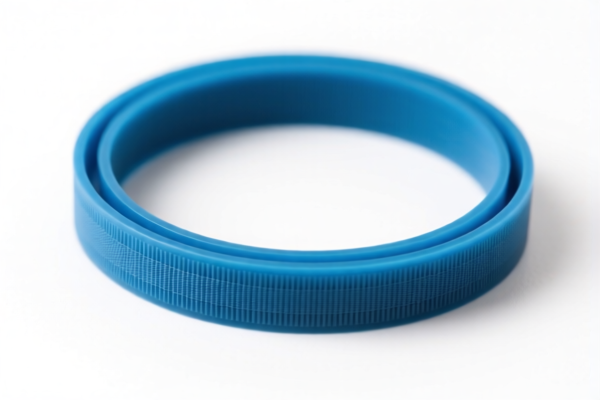
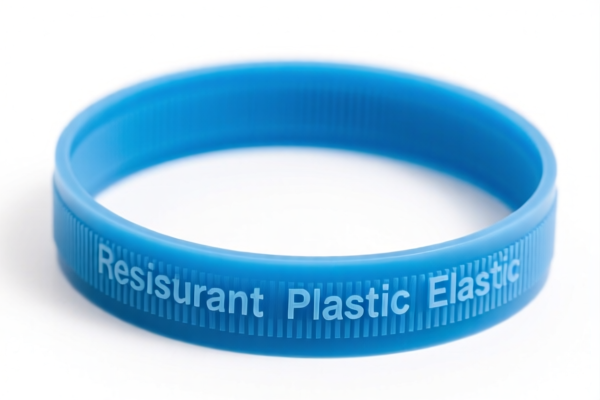
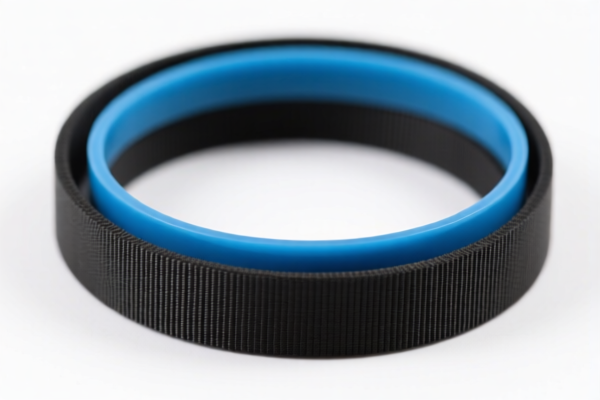
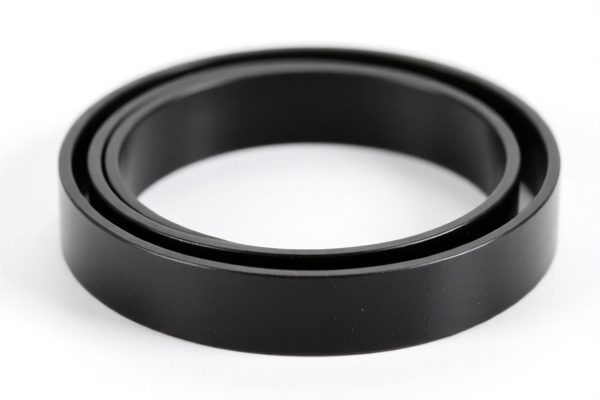
AI Analysis
🛡️ Wear Resistant Plastic Elastic Bands
🌐 HS Code Classification & Clearance Guide | 2026 Tariff Analysis | Strategic Compliance Strategy
📌 I. Product Definition & Classification: Understanding the "Plastic Elastic Band"
"Wear Resistant Plastic Elastic Bands" are specialized industrial components used for securing, bundling, or providing tension in environments requiring corrosion and abrasion resistance. Unlike standard rubber bands, these are engineered from high-performance polymers.
In international trade, the classification depends heavily on the primary material and the manufacturing process:
1. Pure Plastic Elastic Bands: Made entirely of plastic (e.g., nylon, polypropylene) without textile or rubber core wrapping. They fall under Chapter 39 (Plastics). 2. Textile-Based Elastic Bands: Where a textile material (fabric) is impregnated, coated, or covered with rubber or plastic to create elasticity. These fall under Chapter 56 (Wadding, Felt, etc.) or Chapter 59 (Impregnated, Coated, Covered or Laminated Textile Fabrics).
⚠️ Key Distinction Point:
- If the band is 100% plastic in composition and form → Classify under HS 3926
- If the band consists of a textile base covered/impregnated with plastic/rubber → Classify under HS 5604 or HS 5903
📦 II. HS Code Classification Details (2026 Latest Tariff Concordance)
| HS Code | Product Description | Application Scenario | Material Composition |
|---|---|---|---|
3926.90.99.05 |
Wear-resistant plastic elastic bands; material is plastic; form is elastic band; matches all-plastic elastic bands. | Pure plastic industrial straps, chemical-resistant bundling tapes. | ✅ 100% Plastic |
3926.90.99.89 |
Wear-resistant plastic elastic bands; contains plastic material; belongs to other unlisted plastic articles. | General plastic elastic items not specifically listed elsewhere. | ✅ Primarily Plastic |
5604.10.00.00 |
Elastic yarn or strip, typically composed of textile material covered with rubber or elastic fiber, conforming to textile covering characteristics. | Elastic bands where textile is the core, covered by rubber/plastic. | ✅ Textile + Rubber/Plastic Cover |
5903.10.20.10 |
Elastic bands; belongs to textile fabrics, containing PVC or rubber components, conforming to impregnated/coated textile fabric features. | Plastic-impregnated textile elastic strips (e.g., PVC-coated). | ✅ Textile + PVC/Rubber |
5903.10.20.90 |
Elastic bands; belongs to textile fabrics, conforming to the category of impregnated or coated textile fabrics under other headings. | Other plastic/rubber-coated textile elastic bands not specified above. | ✅ Textile + Plastic/Rubber |
🔍 Critical Reminder:
- Pure plastic bands must NOT be declared under Chapter 56/59; doing so leads to misclassification penalties.
- Textile-core bands with plastic coating must NOT be declared under Chapter 39; they require Chapter 59 codes.
- The presence of a textile base is the deciding factor for shifting from HS 3926 to HS 5903/5604.
💰 III. 2026 Latest Tariff Rate Details (Including Surtaxes & Policy Surcharges)
✅ Applicable Country: United States (US)
✅ Country of Origin: China (CN)
✅ Effective Time: Current rates apply (Based on provided data: Section 301 & 122 Tariffs)
🎯 1. 3926.90.99.05 & 3926.90.99.89 —— Pure Plastic Elastic Bands
| Item | Detail |
|---|---|
| Base Tariff | 5.3% (Ad Valorem) |
| Section 301 Surcharge | +7.5% |
| Section 122 Tariff | +10% |
| Total Effective Rate | 22.8% |
| Tax Calculation | CIF Value × 22.8% |
| De Minimis Exemption | ❌ Not Applicable (Subject to full tariff assessment) |
| Legal Basis | Base Tariff + Section 301 (301.03.01) + Section 122 (301.12.01) |
📌 Explanation:
- These codes represent all-plastic elastic bands.
- The 22.8% total rate is a combination of the standard US MFN rate, the ongoing Section 301 tariffs, and the Section 122 tariffs targeting specific Chinese imports.
- No duty-free entry is available for Chinese-origin plastic elastic bands under this code.
🎯 2. 5604.10.00.00 —— Textile-Covered Elastic Bands
| Item | Detail |
|---|---|
| Base Tariff | 6.3% |
| Section 301 Surcharge | +25.0% |
| Section 122 Tariff | +10% |
| Total Effective Rate | 41.3% |
| Tax Calculation | CIF Value × 41.3% |
| De Minimis Exemption | ❌ Not Applicable |
| Legal Basis | Base Tariff + Section 301 (High Rate Category) + Section 122 |
📌 Explanation:
- This code applies to elastic strips where textile is covered by rubber or elastic fiber.
- The Section 301 surcharge is significantly higher (25%) compared to plastic goods (7.5%) in some categories, leading to a much higher total duty.
- Cost Alert: Importing textile-covered elastic bands from China is 18.5% more expensive in tariffs than pure plastic bands.
🎯 3. 5903.10.20.10 & 5903.10.20.90 —— Impregnated/Coated Textile Elastic Bands
| Item | Detail |
|---|---|
| Base Tariff | 0.0% |
| Section 301 Surcharge | +25.0% |
| Section 122 Tariff | +10% |
| Total Effective Rate | 35.0% |
| Tax Calculation | CIF Value × 35.0% |
| De Minimis Exemption | ❌ Not Applicable |
| Legal Basis | Base Tariff + Section 301 + Section 122 |
📌 Explanation:
- These codes are for textile fabrics impregnated or coated with plastic (e.g., PVC) or rubber.
- Although the base tariff is 0%, the 25% Section 301 surcharge drives the total cost to 35.0%.
- This is a middle-ground cost: cheaper than textile-covered bands (41.3%) but more expensive than pure plastic bands (22.8%).
🛠️ IV. Customs Clearance Practical Advice (Avoid Pitfalls)
✅ 1. Documentation Checklist (Essential)
| Document | Required? | Description |
|---|---|---|
| ✅ Product Specification Sheet | ✔️ | Must detail: Material composition (e.g., "100% Nylon" vs. "Polyester core with PVC coating"), width, thickness, elasticity level. |
| ✅ Photos of Product | ✔️ | Clear images showing the cross-section if possible, to distinguish between pure plastic and textile-covered. |
| ✅ Commercial Invoice | ✔️ | Must specify: "Wear Resistant Plastic Elastic Bands" or "Impregnated Textile Elastic Strip" accurately. Avoid vague terms like "Strap." |
| ✅ Certificate of Origin (CO) | ✔️ | Required to prove Chinese origin and apply correct Section 301/122 duties. |
| ✅ Material Composition Statement | ✔️ | Critical for determining if HS 3926 (Plastic) or HS 5903 (Textile) applies. |
✅ 2. Declaration Tips (Key Mnemonic)
🔥 "Pure Plastic = 3926 (22.8%); Textile + Plastic = 5903 (35%); Textile + Rubber = 5604 (41.3%)"
| Scenario | Correct HS Code | Wrong Approach | Consequence |
|---|---|---|---|
| All-plastic band | 3926.90.99.05 |
Declaring as 5903.10.20.10 |
Overpayment of ~12.2% in duties + potential penalty |
| Textile core, PVC coated | 5903.10.20.10 |
Declaring as 3926.90.99.05 |
Underpayment of ~12.2% in duties → Seizure & Fine |
| Textile core, Rubber covered | 5604.10.00.00 |
Declaring as 3926.90.99.89 |
Underpayment of ~18.5% in duties → Seizure & Fine |
✅ 3. Special Cases
| Situation | Handling Advice |
|---|---|
| Composite Materials | If the band has multiple layers, classify based on the essential character (usually the core material). |
| Samples | Even for samples, if shipped commercially, duties apply. Do not rely on "gift" declarations. |
| Packaging | If elastic bands are packaged with non-elastic accessories (e.g., plastic clips), declare the main item only. |
🌍 V. Global Market Clearance Comparison (2026 Latest)
| Country/Region | Recommended HS Code | Tariff Rate (China Origin) | Certification Requirements | Notes |
|---|---|---|---|---|
| 🇺🇸 USA | 3926.90.99.05 (Plastic) |
22.8% | No specific CE/RoHS, but material safety data may be requested | High Section 301/122 impact |
| 🇨🇳 China | 3926.90.99.05 |
5.3% | CCC (if applicable) | Base rate only |
| 🇪🇺 EU | 3926.90.99 |
4.5% | REACH Compliance | Lower base rate, no Section 301 |
| 🇬🇧 UK | 3926.90.99 |
4.5% | UKCA / REACH | Post-Brexit rules apply |
| 🇦🇺 Australia | 3926.90.99 |
5.0% | ACMA (if electrical) | Low base rate |
📌 Conclusion:
- USA has the highest duty burden due to additional tariffs (Section 301 + 122).
- EU/UK/Australia only charge the base MFN rate, making them 17–30% cheaper to import into compared to the US.
- For US-bound goods, material classification is critical to minimize duty exposure.
📌 VI. Common Errors & Pitfalls (Lessons Learned)
❌ Error 1: Declaring a textile-core PVC-coated band as pure plastic.
👉 Consequence: Under-declaration of duty by ~12.2%. Customs may audit, demand back taxes, and impose penalties.
❌ Error 2: Using generic terms like "Elastic Strap" without specifying material.
👉 Consequence: Customs officers may assign the highest possible duty rate or request costly reclassification.
❌ Error 3: Ignoring Section 122 Tariffs.
👉 Consequence: Even if base tariff is low, the 10% Section 122 surcharge is mandatory for many Chinese imports, significantly impacting cost.
✅ Correct Practice:
"Wear Resistant Plastic Elastic Band, 100% Polypropylene, 10mm Width, Chemical Resistant, Model XYZ"
vs.
"Textile Elastic Strip, Polyester Core, PVC Coated, 10mm Width, Model ABC"
🎯 VII. Conclusion: Precision in Classification, Profit in Logistics
🎯 Remember the Mantra:
🔹 "Pure Plastic = 22.8%; PVC-Coated Textile = 35%; Rubber-Covered Textile = 41.3%!"
🔹 "HS Code Determines Cost, Material Determines Code, Misclassification Costs You Thousands!"
📌 Pro Tip:
If you are importing large volumes into the US, consider:
1. Advance Ruling: Apply for a binding ruling from CBP to confirm the correct HS Code.
2. Supply Chain Diversification: Consider sourcing from non-China countries (e.g., Vietnam, India) to avoid Section 301/122 tariffs entirely.
3. Duty Mitigation: Explore FTZ (Foreign Trade Zone) benefits if eligible.
📣 Immediate Action:
📞 Contact a Licensed Customs Broker
📄 Provide Material Composition Details
🚀 Secure Accurate HS Codes Before Shipment
✨ Professional Clearance Starts with Accurate Classification!
💼 Every Percent of Duty Saved is Pure Profit!
Customer Reviews
About HS Code Classification
The Harmonized System (HS) is an internationally standardized nomenclature developed by the World Customs Organization (WCO) to classify traded products. Over 200 countries use the HS system as the basis for customs tariffs, trade statistics, and import/export regulations.
Each HS code follows a hierarchical structure:
- Chapter (2 digits) — Broad category of goods (e.g., Chapter 84: Machinery and Mechanical Appliances)
- Heading (4 digits) — More specific grouping within the chapter
- Subheading (6 digits) — Internationally standardized breakdown, used by all WCO member countries
- National subdivisions (8-10 digits) — Country-specific extensions for further classification, such as US HTSUS 10-digit codes
Correct HS code classification is essential for smooth customs clearance, accurate duty payment, and compliance with trade regulations. Misclassification can lead to customs delays, overpayment of duties, or penalties.
When importing from CN to US, the applicable tariff rates may include:
- Most-Favored-Nation (MFN) rate — The standard duty rate applied to WTO members
- General rate — Applied to countries without trade agreements
- Trade remedy duties — Additional tariffs such as Section 301 (anti-dumping), Section 232 (national security), or countervailing duties
The information provided on this page is for reference purposes only. For official classification, please consult with your local customs authority or a licensed customs broker.