Wear Resistant Rubber Radial Tires
CN → US| HS Code | Tariff Rate | Origin | Destination | Doc |
|---|---|---|---|---|
| 4012194000 | 39.0% | CN | US | Official Doc |
| 4016996010 | 37.5% | CN | US | Official Doc |
| 4012909000 | 37.7% | CN | US | Official Doc |
| 4011101010 | 39.0% | CN | US | Official Doc |
| 4011101020 | 39.0% | CN | US | Official Doc |
Product Images
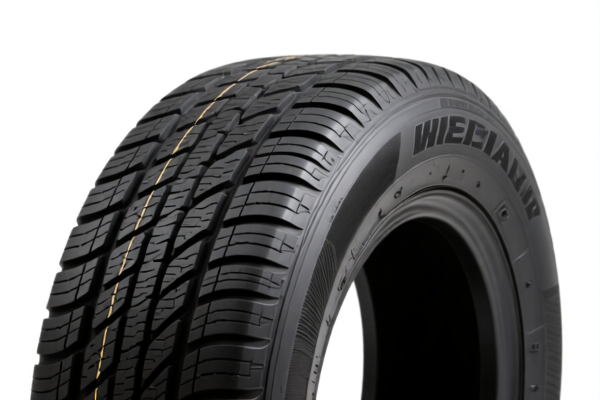
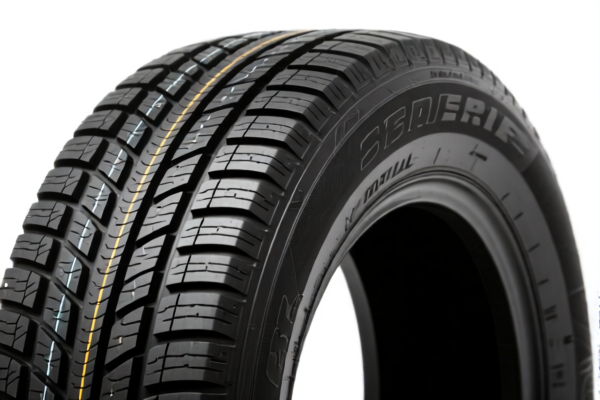
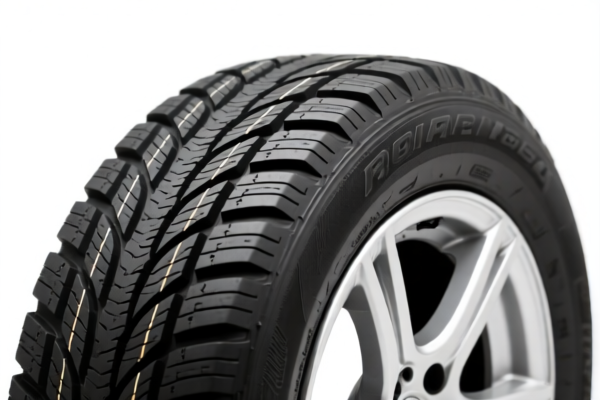
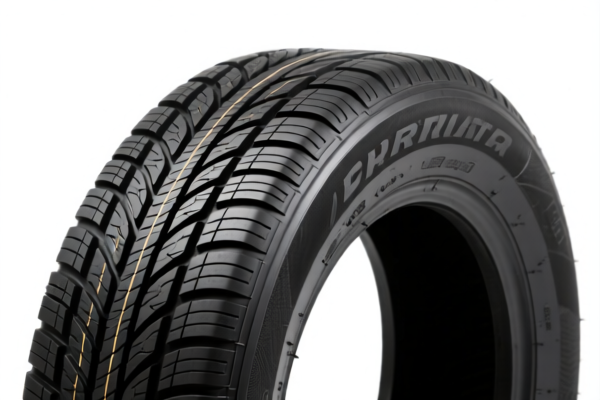
AI Analysis
🚗 Wear Resistant Rubber Radial Tires (Industrial & Automotive Grade)
🌐 HS Code Reference & Customs Clearance Guide | 2026 Tariff Rate Analysis | Professional Entry Strategy for US Imports
📌 I. Product Definition & Classification: Understanding "Wear Resistant Radial Tires"
"Wear Resistant Rubber Radial Tires" are high-performance pneumatic tires designed for vehicles (primarily SUVs, light trucks, or industrial machinery) featuring radial construction and materials engineered for extended tread life.
In international trade, classification depends on three critical factors: 1. Material Origin: Is it new rubber or regenerated/recycled rubber? 2. Application: Is it for passenger vehicles (SUVs/Cars) or general industrial/replacement use? 3. Construction: Radial (R) vs. Bias. (All items below are Radial).
⚠️ Key Distinction Point:
- If the tire is made from Regenerated/Recycled Rubber → It falls under Chapter 40 (Rubber Articles), specifically subheadings 4011 or 4012.
- If the tire is made from New/Virgin Rubber for SUVs → It falls under Chapter 40, Heading 4011.
- Crucial Note: All items in the provided DATA are subject to US Special Tariffs (Section 301, Section 122, IEEPA), resulting in high effective tax rates.
📦 II. HS Code Classification Details (2026 Latest Tariff Schedule)
Based on the provided data, the product is classified into 5 specific HS Codes depending on the exact material composition and specific use case.
| HS Code | Product Description Summary | Application Scenario | Material/Type |
|---|---|---|---|
| 4012.19.40.00 | Industrial Grade Regenerated Rubber Radial Tire | Industrial machinery, heavy-duty replacement | Regenerated Rubber + Radial |
| 4016.99.60.10 | Regenerated Rubber Vulcanized Rubber Products (Tire Form) | Car mechanical parts, non-standard tire shapes | Regenerated Rubber (Vulcanized) |
| 4012.90.90.00 | Regenerated Rubber Tires (Tread/Bead Specific) | General regenerated tire, specific tread/edge category | Regenerated Rubber |
| 4011.10.10.10 | SUV Radial Rubber Tire | Passenger vehicles (SUVs), new rubber material | Virgin Rubber + Radial + SUV |
| 4011.10.10.20 | Pneumatic Rubber Tire for SUV (Passenger Category) | Passenger vehicles (SUVs), no material conflict | Virgin Rubber + Radial + SUV |
🔍 Critical Clarification:
- HS 4012 codes generally apply to used, retreaded, or regenerated rubber tires.
- HS 4011 codes generally apply to new pneumatic tires for motor vehicles.
- HS 4016 is a "catch-all" for other vulcanized rubber articles if the tire doesn't fit standard tire definitions or is a specialized molded product.
💰 III. 2026 Latest Tariff Rate Breakdown (Including Surcharges & Policy Add-ons)
✅ Applicable Country: United States (US)
✅ Origin: China (CN)
✅ Effective Time: Current applicable rates as per 2026 regulations
🎯 1. Industrial/Regenerated Tires (4012.19.40.00 & 4012.90.90.00 & 4016.99.60.10)
These codes involve Regenerated/Recycled Rubber and attract the highest combined tariffs due to Section 301 and IEEPA provisions.
| Item | Content |
|---|---|
| Base Tariff | 2.5% – 4.0% (Varies by specific subheading) |
| Section 301 Surcharge | +25.0% (Standard USITC Additional Duty on Chinese goods) |
| Section 122 Tariff | +10.0% (Specific provision for certain rubber/textile goods or bilateral agreements) |
| IEEPA Surcharge | Included in "Total Tax" calculation (Often overlaps with Section 122 or specific 122 provisions) |
| Total Effective Tax Rate | 37.5% – 39.0% |
| Tax Calculation | CIF Value × Total Tax % |
| De Minimis Exemption | ❌ NOT APPLICABLE (High value goods subject to full duty) |
📌 Detailed Breakdown by Code:
A. 4012.19.40.00 – Industrial Regenerated Radial Tire
* Base Duty: 4.0%
* Add-ons: 25% (Section 301) + 10% (Section 122)
* Total Tax: 39.0%
* Logic: Industrial grade implies heavier duty; classified as regenerated rubber.
B. 4016.99.60.10 – Regenerated Rubber Vulcanized Product
* Base Duty: 2.5%
* Add-ons: 25% (Section 301) + 10% (Section 122)
* Total Tax: 37.5%
* Logic: Classified as a general vulcanized rubber product if not strictly defined as a "tire" in 4011/4012.
C. 4012.90.90.00 – Regenerated Rubber Tire (Tread/Bead Category)
* Base Duty: 2.7%
* Add-ons: 25% (Section 301) + 10% (Section 122)
* Total Tax: 37.7%
* Logic: Specific category for regenerated tires focusing on tread and bead edge compliance.
🎯 2. New SUV Radial Tires (4011.10.10.10 & 4011.10.10.20)
These codes apply to New radial tires specifically for SUVs (Passenger Vehicles).
| Item | Content |
|---|---|
| Base Duty | 4.0% |
| Section 301 Surcharge | +25.0% |
| Section 122 Tariff | +10.0% |
| Total Effective Tax Rate | 39.0% |
| Tax Calculation | CIF Value × 39.0% |
| De Minimis Exemption | ❌ NOT APPLICABLE |
📌 Detailed Breakdown by Code:
D. 4011.10.10.10 – SUV Radial Rubber Tire
* Base Duty: 4.0%
* Add-ons: 25% (Section 301) + 10% (Section 122)
* Total Tax: 39.0%
* Logic: Fits "Passenger Vehicle" radial tire definition.
E. 4011.10.10.20 – Pneumatic Rubber Tire for SUV
* Base Duty: 4.0%
* Add-ons: 25% (Section 301) + 10% (Section 122)
* Total Tax: 39.0%
* Logic: Alternative subheading for SUV tires, no material conflict (Virgin Rubber).
🛠️ IV. Customs Clearance Practical Advice (Avoiding Pitfalls)
✅ 1. Documentation Checklist (Mandatory)
| Document | Requirement | Notes |
|---|---|---|
| Product Specifications | ✔️ Must Include | Material (Regenerated vs. Virgin), Construction (Radial), Application (SUV/Industrial). |
| Commercial Invoice | ✔️ Must Include | Clear description: "Wear Resistant Radial Tire, [Regenerated/Virgin], for SUV/Industrial." |
| Packing List | ✔️ Must Include | Dimensions, Weight, Quantity. |
| Certificate of Origin | ✔️ Recommended | To prove China origin for tariff calculation. |
| Material Declaration | ✔️ Critical | Explicitly state if rubber is Regenerated/Recycled. Misclassification here leads to fines. |
| Tire ID Label | ✔️ Required | DOT code, size, load index, speed rating must match invoice. |
✅ 2. Classification Strategy & Tips
🔥 "Material Defines the Code, Application Defines the Subheading!"
| Scenario | Correct HS Code | Tax Rate | Risk if Misclassified |
|---|---|---|---|
| Regenerated Rubber | 4012.xx.xx or 4016.xx.xx |
37.5% - 39.0% | If declared as New Rubber (4011), customs may reject for material mismatch. |
| New Rubber (SUV) | 4011.10.10.10/20 |
39.0% | If declared as Industrial, base rate might change, but surcharges remain. |
| General Passenger Car | Not in Data | See Data | Ensure it fits SUV criteria for 4011.10.10.xx. |
| Retreaded Tires | 4012.11/12 |
High | Must prove "Regenerated" status. |
📌 Key Reminder:
- All items in the provided data have a Total Tax of ~37.5%–39.0%.
- The 25% Section 301 and 10% Section 122 are non-negotiable for Chinese origin goods in this category.
- "Wear Resistant" is a performance claim, not a classification term. Customs looks at Material and Construction.
✅ 3. Special Handling for "Regenerated" Rubber
- Proof of Regeneration: If using
4012or4016, you may need to provide documentation that the rubber is indeed regenerated/recycled to avoid being classified as "used tires" (which have stricter environmental regulations). - Labeling: Ensure tires are marked with "Regenerated" or similar if required by DOT, to match the HS Code justification.
🌍 V. Global Market Comparison (2026)
| Country/Region | Recommended HS Code | Base Tariff | Additional Duties (China) | Total Approx. | Notes |
|---|---|---|---|---|---|
| 🇺🇸 USA | 4011.10.10.xx / 4012.xx.xx |
2.5% - 4.0% | +25% (Sec 301) + +10% (Sec 122) | 37.5% - 39.0% | Highest cost due to multiple surcharges. |
| 🇨🇳 China | 4011.10.10.xx / 4012.xx.xx |
0% - 15% | None (Import) | 0% - 15% | Lower entry barrier, but different standards. |
| 🇪🇺 EU | 4011.10 / 4012.11 |
4.5% | None (Standard MFN) | ~4.5% | No Section 301/122 equivalents. |
| 🇲🇽 Mexico | 4011.10 / 4012.11 |
20% | None | 20% | Lower than US, but check USMCA rules. |
📌 Conclusion:
- The USA is the most challenging market due to cumulative tariffs (Base + 301 + 122).
- Cost Optimization: Consider sourcing from non-Chinese origins (e.g., Vietnam, Thailand) if possible, as they may be exempt from Section 301 and IEEPA duties, though they may face other trade barriers.
📌 VI. Common Errors & Pitfalls (Blood Lessons)
❌ Error 1: Declaring "Regenerated Rubber Tires" as "New Radial Tires"
👉 Consequence: Customs inspection reveals material mismatch → Seizure + Fines + Delay.
❌ Error 2: Ignoring "Section 122" in the declaration
👉 Consequence: Underpayment of duty → Back Taxes + Penalties (39% vs 4%).
❌ Error 3: Using generic "Tire" description
👉 Consequence: Customs officer may choose the highest duty subheading or request additional docs → Clearance Delay.
❌ Error 4: Assuming "De Minimis" applies
👉 Consequence: Tires are high-value, high-duty items. No de minimis exemption for Section 301/122 goods. Full duty applies even for small shipments.
✅ Correct Approach:
"Radial Pneumatic Tire, Wear-Resistant, [Regenerated/Virgin Rubber], Size 265/70R17, for SUV, HS Code 4011.10.10.10"
🎯 VII. Conclusion: Precision in Classification Saves Money
🎯 Key Takeaway:
🔹 "Material First: Regenerated vs. Virgin determines HS Chapter (4012/4016 vs 4011)."
🔹 "SUV Specific: Ensure HS Code matches SUV/Passenger Vehicle criteria for4011.10.10.xx."
🔹 "Tariff Trap: 25% (Sec 301) + 10% (Sec 122) + Base = ~39%. Budget accordingly!"📌 Pro Tip:
Apply for a Pre-Ruling (Binding Ruling) from US Customs and Border Protection (CBP) before shipping. This locks in the HS Code and duty rate, providing legal certainty and avoiding post-clearance audits.
📣 Immediate Action:
📞 Consult a Licensed Customs Broker
📄 Prepare Material Declaration (Regenerated vs. Virgin)
🚀 Verify HS Code with CBP Pre-Ruling
💼 Ensure your commercial invoice matches the HS Code description EXACTLY.
✨ Professional Clearance Starts with Accurate Classification!
💼 Every percentage point of duty impacts your bottom line. Get it right the first time!
Customer Reviews
About HS Code Classification
The Harmonized System (HS) is an internationally standardized nomenclature developed by the World Customs Organization (WCO) to classify traded products. Over 200 countries use the HS system as the basis for customs tariffs, trade statistics, and import/export regulations.
Each HS code follows a hierarchical structure:
- Chapter (2 digits) — Broad category of goods (e.g., Chapter 84: Machinery and Mechanical Appliances)
- Heading (4 digits) — More specific grouping within the chapter
- Subheading (6 digits) — Internationally standardized breakdown, used by all WCO member countries
- National subdivisions (8-10 digits) — Country-specific extensions for further classification, such as US HTSUS 10-digit codes
Correct HS code classification is essential for smooth customs clearance, accurate duty payment, and compliance with trade regulations. Misclassification can lead to customs delays, overpayment of duties, or penalties.
When importing from CN to US, the applicable tariff rates may include:
- Most-Favored-Nation (MFN) rate — The standard duty rate applied to WTO members
- General rate — Applied to countries without trade agreements
- Trade remedy duties — Additional tariffs such as Section 301 (anti-dumping), Section 232 (national security), or countervailing duties
The information provided on this page is for reference purposes only. For official classification, please consult with your local customs authority or a licensed customs broker.