Wear resistant Polyester Fiber Backpack
CN → US| HS Code | Tariff Rate | Origin | Destination | Doc |
|---|---|---|---|---|
| 4202923120 | 52.6% | CN | US | Official Doc |
| 4202923131 | 52.6% | CN | US | Official Doc |
Product Images
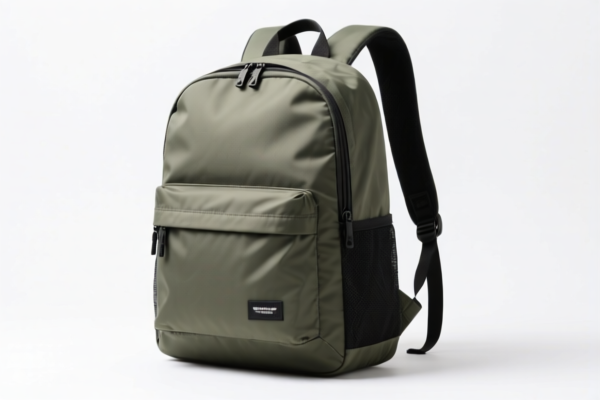
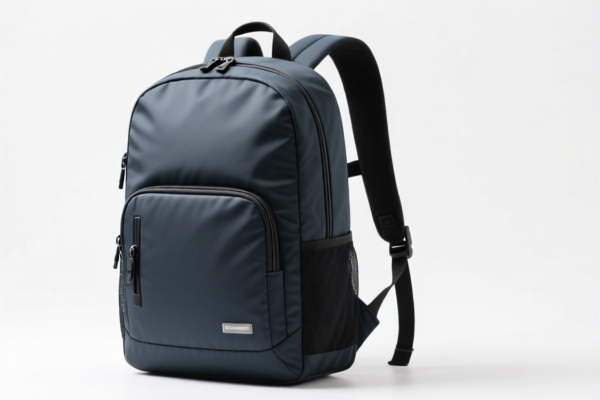
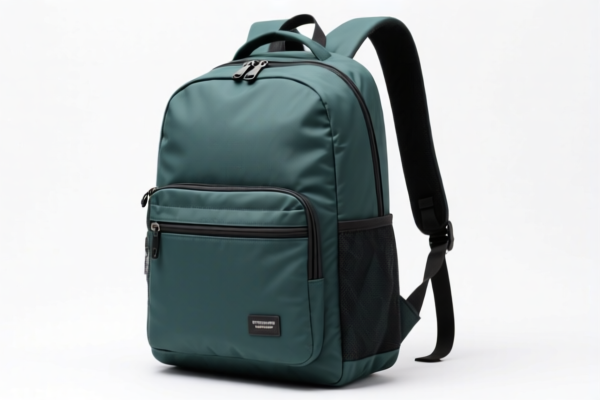
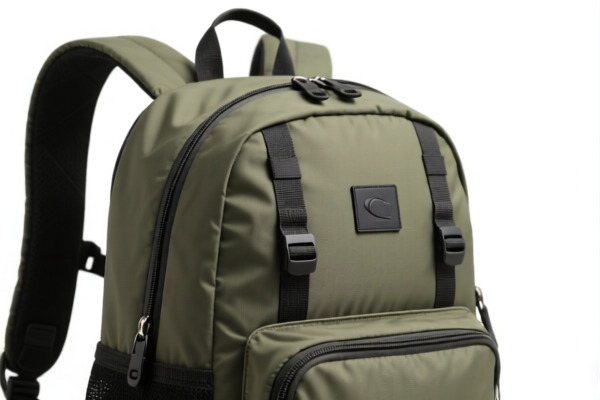
AI Analysis
🎒 Wear-Resistant Polyester Fiber Backpack
🌐 HS Code Reference & Customs Clearance Guide | 2026 Latest Tariff Analysis | Professional Clearance Strategy
📌 I. Product Definition & Classification: What Exactly Is a "Wear-Resistant Polyester Backpack"?
A backpack made of wear-resistant polyester fiber falls squarely under the category of textile bags in international trade. The key identifier here is the outer surface material: if the outer layer is made of synthetic textiles (like polyester), it belongs to Chapter 42, Heading 4202.
Key Distinction Points: * Material: The outer surface must be textile materials (polyester is a man-made fiber/textile). * Function: Designed for carrying items on the back (knapsack/backpack style). * Exclusion: It is not made of leather, plastic sheeting (as the primary outer layer), or paperboard.
⚠️ Critical Identification:
- If the bag is entirely or mainly covered with polyester textile →归入 4202.92.31.20 or 4202.92.31.31
- If the outer surface is plastic-coated but classified as textile in trade terms → Still falls under this chapter, but verify the specific HS definition.
- Do not confuse with luggage or suitcases (which may have different sub-codes); backpacks are specifically categorized under "Knapsacks and backpacks".
📦 II. HS Code Classification Details (2026 Latest Tariff Authority Comparison)
Based on the provided <DATA>, there are two specific HS codes for this product type. Here is the breakdown:
| HS Code | Product Description | Application Scenario | Material Specification |
|---|---|---|---|
4202.92.31.20 |
Backpacks with outer surface of textile materials, of man-made fibers | Standard school, travel, or outdoor backpacks made of polyester | ✅ Outer: Polyester (Man-made Fiber Textile) |
4202.92.31.31 |
Other bags with outer surface of textile materials, of man-made fibers | Non-backpack bags (e.g., handbags, sports bags) made of polyester | ✅ Outer: Polyester (Man-made Fiber Textile) |
🔍 Key Decision Factor:
- Is the item explicitly a Backpack? → Use4202.92.31.20
- Is it a bag but NOT a backpack (e.g., a tote, sling, or duffel)? → Use4202.92.31.31
- Note: The prompt specifies "Backpack," so4202.92.31.20is the primary target. However, some customs systems may group "backpacks" under "Other" if the specific sub-category for backpacks is missing in local nomenclature. Always verify local 8-digit/10-digit HS codes.
💰 III. 2026 Latest Tariff Rate Details (Including Additional Taxes)
✅ Applicable Country: United States (US)
✅ Origin: China (CN) (Assuming standard export context based on typical high-tariff scenarios; adjust if origin differs)
✅ Effective Date: 2025/2026 Tariff Schedule
🎯 1. 4202.92.31.20 —— Backpacks (Textile, Man-Made Fibers)
| Item | Content |
|---|---|
| Basic Tariff | 0.0% |
| Section 301 Additional Tariff | 0.0% |
| IEEPA Additional Tariff | 0.0% |
| Total Tariff Rate | 0.0% |
| Tax Calculation | CIF Value × 0% = $0 |
| De Minimis Eligibility | ✅ Yes (If value < $800, may enter duty-free without formal entry) |
| Legal Basis Path | HTSUS:4202.92.31.20 → No 301/IEEPA footnote applicable for this specific textile bag code |
📌 Explanation:
- Unlike electronics or steel, textile backpacks often enjoy lower or zero additional tariffs under current US trade policies for Chinese origin.
- Base Tariff is 0%: This is a significant cost advantage for apparel and accessory imports.
- No Section 301/IEEPA Add-ons: As of the latest data provided, this specific HS code is not subject to the high additional tariffs (25% or 10%) that apply to many other categories.
🎯 2. 4202.92.31.31 —— Other Textile Bags (Man-Made Fibers)
| Item | Content |
|---|---|
| Basic Tariff | 0.0% |
| Section 301 Additional Tariff | 0.0% |
| IEEPA Additional Tariff | 0.0% |
| Total Tariff Rate | 0.0% |
| Tax Calculation | CIF Value × 0% = $0 |
| De Minimis Eligibility | ✅ Yes |
| Legal Basis Path | HTSUS:4202.92.31.31 → No 301/IEEPA footnote applicable |
📌 Note:
- If your product is misclassified as "Other" instead of "Backpack," the tariff remains 0%, but you risk customs audits for incorrect classification.
- Ensure your commercial invoice clearly states "Backpack" to support the20code.
🛠️ IV. Customs Clearance Practical Advice (Pitfall Avoidance Guide)
✅ 1. Document Checklist (Essential for Smooth Clearance)
| Document | Required | Description |
|---|---|---|
| ✅ Commercial Invoice | ✔️ | Must clearly state: "Wear-Resistant Polyester Fiber Backpack," Material: 100% Polyester, HS Code: 4202.92.31.20 |
| ✅ Packing List | ✔️ | Weight, dimensions, and quantity. Ensure no mixed HS codes in one shipment. |
| ✅ Product Photos | ✔️ | Clear images showing the backpack, zipper, straps, and any labels. Helps prove it's a "backpack" not a "suitcase." |
| ✅ Material Declaration | ✔️ | Specify "Polyester" (Man-made fiber). Avoid vague terms like "Synthetic fabric" without specifying fiber type. |
| ✅ Certification (if applicable) | ✔️ | CPSIA (for children’s items), REACH (for EU), or FDA (if intended for food storage, though rare for backpacks). |
✅ 2. Declaration Tips (Critical Keywords)
🔥 "Clear Material, Correct Type, Zero Tax Benefit!"
| Scenario | Correct Declaration | Incorrect Declaration | Risk |
|---|---|---|---|
| Backpack | "Polyester Backpack, Man-Made Fiber, Outer Surface Textile" | "Bag" or "Luggage" | May be audited, delay clearance, or misclassified |
| Material | "100% Polyester" | "Nylon/Polyester Blend" | If blend >50% is not polyester, may affect HTS |
| Usage | "For Personal/Travel Use" | "Industrial Equipment Case" | Wrong chapter (e.g., Chapter 39 or 86) |
✅ 3. Special Considerations
| Situation | Handling Advice |
|---|---|
| Children’s Backpacks | Ensure compliance with CPSIA (Consumer Product Safety Improvement Act). Lead content and phthalates must be tested. |
| High-End/Branded Goods | Provide authorization letters to avoid IP claims at customs. |
| Mixed Materials | If straps are leather and body is polyester, the outer surface determines the code. If outer is textile, it’s still 4202.92.31.xx. |
| De Minimis (Section 321) | For shipments < $800, you can enter under Section 321, often with no duty and minimal documentation. Ensure the HS code is still correctly declared. |
🌍 V. Global Market Comparison (2026 Latest)
| Country/Region | Recommended HS Code | Tariff Rate | Certification Requirements | Notes |
|---|---|---|---|---|
| 🇺🇸 USA | 4202.92.31.20 |
0% | None (General) | Best for duty-free entry. Watch for CPSIA if for kids. |
| 🇨🇳 China | 4202.92.31.20 |
0% | None | Import duty is 0%. |
| 🇪🇺 EU | 4202.92.31 |
0% - 4% | REACH, CE (if applicable) | Check for anti-dumping duties if originating from specific regions. |
| 🇬🇧 UK | 4202.92.31 |
0% | UKCA | Post-Brexit, ensure UKCA marking if required. |
| 🇨🇦 Canada | 4202.92.31 |
0% | None | FTA benefits if originating from US/Mexico. |
📌 Conclusion:
- USA and China both offer 0% duty for this product, making it highly competitive.
- No Section 301 or IEEPA penalties apply, unlike electronics or metals.
- Focus on compliance: The main risk is not tariff, but product safety (especially for children’s items) and accurate classification.
📌 VI. Common Mistakes & Pitfalls (Lessons Learned)
❌ Mistake 1: Classifying as "Luggage" (8802/8607)
👉 Consequence: Wrong chapter, potential duty difference, and customs seizure.
✅ Correction: Always use Chapter 42 for bags and backpacks.
❌ Mistake 2: Vague Material Description
👉 Consequence: Customs may reclassify to "Other" or demand physical inspection.
✅ Correction: Specify "100% Polyester" or "Man-Made Fiber Textile."
❌ Mistake 3: Ignoring Children’s Product Safety
👉 Consequence: If the backpack is for children (<12 years), CPSIA is mandatory. Lack of test reports = Refusal of Entry.
✅ Correction: Include CPC (Children’s Product Certificate) for children’s items.
❌ Mistake 4: Misidentifying "Backpack" vs. "Other Bag"
👉 Consequence: While tariffs are currently 0% for both, incorrect classification can lead to audits.
✅ Correction: Use 4202.92.31.20 for true backpacks. Use 4202.92.31.31 only for non-backpack bags.
🎯 VII. Conclusion: Professional Declaration, Cost Savings, Efficiency!
🎯 Remember the Rules:
🔹 "Outer Surface is King: If Textile → Chapter 42"
🔹 "Backpack = .20, Other Bag = .31"
🔹 "Tariff is 0%, but Compliance is Non-Negotiable!"
📌 Pro Tip:
- For B2C shipments under $800, leverage De Minimis to simplify entry.
- For B2B bulk shipments, ensure your HS Code is pre-approved with your customs broker to avoid delays.
- If your backpack includes LED lights or smart features, consult additional regulations (FCC, etc.), but the HS code remains 4202.92.31.20 unless the electronics change the essential character.
📣 Act Now:
📞 Contact Your Customs Broker + Provide Product Photos + Confirm Material Composition
🚀 Enjoy 0% Duty, Smooth Clearance, and Maximised Profits!
✨ Professional Clearance, Starting with Accurate Classification!
💼 Every Dollar Saved in Duty is Pure Profit!
Customer Reviews
About HS Code Classification
The Harmonized System (HS) is an internationally standardized nomenclature developed by the World Customs Organization (WCO) to classify traded products. Over 200 countries use the HS system as the basis for customs tariffs, trade statistics, and import/export regulations.
Each HS code follows a hierarchical structure:
- Chapter (2 digits) — Broad category of goods (e.g., Chapter 84: Machinery and Mechanical Appliances)
- Heading (4 digits) — More specific grouping within the chapter
- Subheading (6 digits) — Internationally standardized breakdown, used by all WCO member countries
- National subdivisions (8-10 digits) — Country-specific extensions for further classification, such as US HTSUS 10-digit codes
Correct HS code classification is essential for smooth customs clearance, accurate duty payment, and compliance with trade regulations. Misclassification can lead to customs delays, overpayment of duties, or penalties.
When importing from CN to US, the applicable tariff rates may include:
- Most-Favored-Nation (MFN) rate — The standard duty rate applied to WTO members
- General rate — Applied to countries without trade agreements
- Trade remedy duties — Additional tariffs such as Section 301 (anti-dumping), Section 232 (national security), or countervailing duties
The information provided on this page is for reference purposes only. For official classification, please consult with your local customs authority or a licensed customs broker.