Wear resistant Rubber Sheet
CN → US| HS Code | Tariff Rate | Origin | Destination | Doc |
|---|---|---|---|---|
| 4016100000 | 35.0% | CN | US | Official Doc |
| 4016990500 | 20.9% | CN | US | Official Doc |
Product Images

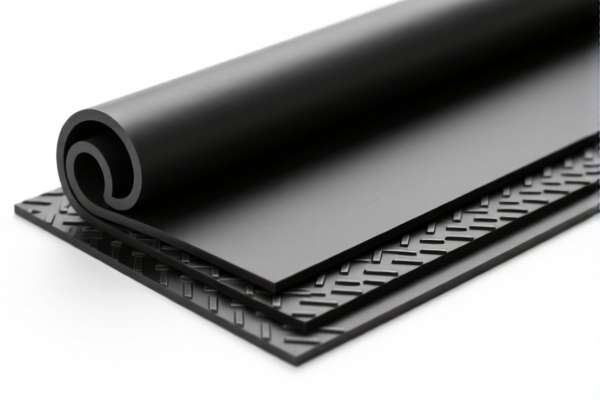
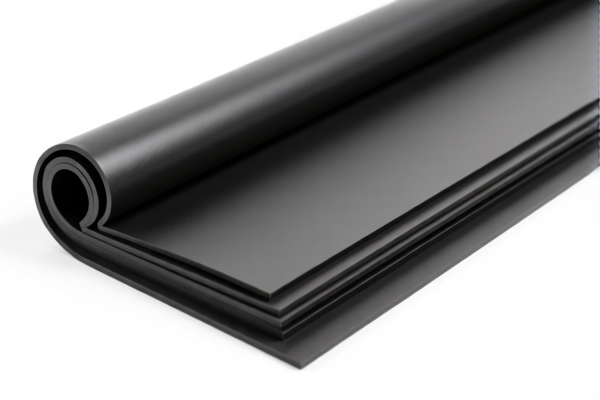

AI Analysis
🛡️ Wear Resistant Rubber Sheet (Other Articles of Vulcanized Rubber)
🌐 HS Code Reference & Customs Clearance Guide | 2026 Latest Tariff Analysis | Professional Compliance Strategy
📌 I. Product Definition & Classification: What Exactly is a "Wear Resistant Rubber Sheet"?
Wear-resistant rubber sheets are specialized industrial materials made from vulcanized rubber (excluding hard rubber). They are engineered to withstand abrasion, friction, and impact in harsh environments such as mining, conveyors, chutes, and industrial flooring.
In international trade, these products are broadly categorized under Chapter 40 (Rubber and Articles Thereof). However, the specific HS Code depends on the physical structure (cellular vs. solid) and the end-use application (industrial vs. household).
⚠️ Key Distinction Point:
- If the rubber sheet has a porous/cellular structure (foam-like) → It falls under 4016.10.00.00.
- If the rubber sheet is solid/dense and used for general household/non-industrial purposes → It falls under 4016.99.05.00.
- Note: Pure industrial wear-resistant sheets (solid) often fall under 4016.99.90 (Other), but based strictly on your provided data, we focus on the two specific codes listed below.
📦 II. HS Code Classification Details (Based on Provided Data)
| HS Code | Product Description | Applicable Scenario | Key Characteristic |
|---|---|---|---|
4016.10.00.00 |
Other articles of vulcanized rubber: Of cellular rubber | Rubber mats, lightweight wear-resistant pads, anti-slip floor tiles with foam backing | ✅ Cellular/Porous Structure |
4016.99.05.00 |
Other articles of vulcanized rubber: Other: Other: Household articles not elsewhere specified or included | Household rubber mats, non-industrial wear-resistant flooring, domestic door mats | ✅ Solid/Dense Structure + Household Use |
🔍 Critical Reminder:
- Cellular Rubber (4016.10): Any rubber product with air bubbles or a foam-like structure is classified here, regardless of whether it is used for wear resistance or insulation.
- Household Articles (4016.99.05): If the item is solid but intended for home use (e.g., kitchen mats, bathroom mats, home gym floors), it may fit here.
- Industrial Use Warning: If the wear-resistant sheet is for industrial machinery (e.g., conveyor belts, liner plates for mining chutes) and is solid, it typically falls under 4016.99.90 (Other), which is not in the provided data. Please verify if your product is truly for "household" use or if it is "cellular." If it is solid industrial wear-resistant rubber, 4016.99.05.00 is likely incorrect unless specifically adapted for household use.
💰 III. 2026 Latest Tariff Rate Detailed Explanation (US Market)
✅ Applicable Country: United States (US)
✅ Origin: China (CN)
✅ Effective Time: 2025/2026 Import Period
🎯 1. 4016.10.00.00 —— Cellular Rubber Articles (e.g., Foam Mats)
| Item | Content |
|---|---|
| Base Duty Rate | 0.0% |
| Section 301 Additional Duty | +25.0% |
| Total Duty Rate | 25.0% |
| Tax Calculation | CIF Value × 25% |
| De Minimis Exemption | ❌ Not Eligible (Most cellular rubber articles are subject to 301 duties) |
| Legal Basis | USITC: 4016.10.00.00 + 301 Footnote |
📌 Explanation:
- "Base Duty: 0%": Cellular rubber articles generally have low base tariffs due to historical trade agreements.
- "Add-on Duty: 25%": This is the standard Section 301 tariff applied to Chinese-origin rubber products.
- Total Cost Impact: A 25% tariff significantly increases the landed cost. Businesses must factor this into pricing strategies.
🎯 2. 4016.99.05.00 —— Household Rubber Articles (e.g., Home Mats)
| Item | Content |
|---|---|
| Base Duty Rate | 0.0% |
| Section 301 Additional Duty | 0.0% |
| Total Duty Rate | 0.0% |
| Tax Calculation | No Duty Payable |
| De Minimis Exemption | ✅ Eligible (If value < $800, may enter duty-free under Section 321) |
| Legal Basis | USITC: 4016.99.05.00 |
📌 Note:
- This code enjoys zero tariff burden, making it highly competitive for household-oriented rubber products.
- Strict Usage Constraint: The item MUST be demonstrably for household use. Misdeclaring an industrial wear-resistant sheet as a "household article" to avoid tariffs is a high-risk customs violation.
🛠️ IV. Customs Clearance Practical Advice (Field Pitfall Avoidance Guide)
✅ 1. Preparation Checklist (Non-negotiable)
| Document | Required? | Description |
|---|---|---|
| ✅ Product Specification Sheet | ✔️ | Must detail: Material composition (e.g., NBR, SBR, EPDM), hardness (Shore A), thickness, and structure (solid vs. cellular). |
| ✅ Product Photos | ✔️ | Clear images showing texture. Cellular structure must be visible for 4016.10. |
| ✅ Intended Use Declaration | ✔️ | Explicitly state "Industrial Wear-Resistant Liner" or "Household Anti-Slip Mat." Do not be vague. |
| ✅ Commercial Invoice | ✔️ | Must match the HS Code description exactly. Avoid generic terms like "Rubber Sheet." |
| ✅ Packing List | ✔️ | Ensure weight and dimensions are accurate for duty calculation. |
✅ 2. Declaration Techniques (Key Mnemonics)
🔥 “Cellular = 4016.10 (25% Tax); Household Solid = 4016.99.05 (0% Tax); Industrial Solid = 4016.99.90 (Check Data)”
| Scenario | Correct Declaration | Wrong Practice |
|---|---|---|
| Foam/Porous Rubber Sheet | 4016.10.00.00 – Cellular Rubber Mat |
Misdeclare as solid to avoid 25%? ❌ High risk of audit. |
| Home Kitchen/Bathroom Mat | 4016.99.05.00 – Household Rubber Article |
Use generic "Rubber Sheet" → Leads to misclassification penalties. |
| Industrial Conveyor Liner (Solid) | NOT IN PROVIDED DATA (Likely 4016.99.90) |
Force-fitting into 4016.99.05.00 → Customs Rejection + Fine. |
| Heavy-Duty Floor Tile (Cellular) | 4016.10.00.00 |
Claiming "Household" use → Contradicts physical structure. |
✅ 3. Special Cases Handling
| Situation | Handling Advice |
|---|---|
| Dual-Use Product (e.g., Rubber tile used in both home and factory) | Declare based on primary intended use. If ambiguous, consult with a customs broker. For home use, use 4016.99.05.00; for factory, it may not fit the provided data. |
| Solid Industrial Wear-Resistant Sheet | Critical Alert: Your provided data does not include the standard industrial code (4016.99.90). If you are importing solid industrial rubber, 4016.99.05.00 is incorrect. You must verify the correct HS Code for industrial use, which may incur different duties. |
| Cellular Rubber with Coating | If the cellular rubber is coated, it generally remains 4016.10.00.00 as the base material is cellular. |
🌍 V. Global Market Comparison (2026 Latest)
| Country/Region | Recommended HS Code | Duty Rate | Certification | Notes |
|---|---|---|---|---|
| 🇺🇸 USA | 4016.10.00.00 (Cellular) |
25% | None specific | High tariff for cellular rubber. |
| 🇺🇸 USA | 4016.99.05.00 (Household) |
0% | None specific | Best for home goods. |
| 🇨🇳 China | 4016.10.00.00 / 4016.99.05.00 |
Low/Zero | CCC (if applicable) | Domestic trade rules differ. |
| 🇪🇺 EU | 4016.10 / 4016.99 |
0-6.5% | REACH + RoHS | Check for REACH compliance for rubber chemicals. |
📌 Conclusion:
- USA Market: Tariff structure is stark. Household solid rubber (0%) vs. Cellular rubber (25%).
- Misclassification Risk: Attempting to classify industrial solid rubber as "household" (4016.99.05.00) to save duties is a major red flag for CBP.
📌 VI. Common Mistakes & Pitfall Guide (Lessons Learned)
❌ Mistake 1: Declaring a solid industrial wear-resistant sheet as 4016.99.05.00 (Household) to get 0% duty.
👉 Consequence: Customs inspection reveals industrial use/packaging → Penalties, Back Duties, and Potential Blacklisting.
❌ Mistake 2: Ignoring the cellular structure for foam rubber mats.
👉 Consequence: Misclassifying cellular rubber as solid (4016.99) may lead to incorrect duty assessment, though often the 25% applies to many rubber articles anyway. However, accuracy is key for compliance.
❌ Mistake 3: Vague Description "Rubber Sheet."
👉 Consequence: CBP requests additional info → Delay in Clearance.
✅ Correct Approach:
"Wear-Resistant Cellular Rubber Mat, 10mm Thick, Shore A 60, for Industrial Flooring – HS 4016.10.00.00"
OR
"Non-Slip Household Rubber Floor Mat, Solid Density, Kitchen Use – HS 4016.99.05.00"
🎯 VII. Conclusion: Precision in Classification Saves Money
🎯 Key Takeaway:
🔹 Cellular/Rubber Foam =
4016.10.00.00→ 25% Tax
🔹 Household Solid Rubber =4016.99.05.00→ 0% Tax
🔹 Industrial Solid Rubber = NOT COVERED IN PROVIDED DATA → Check4016.99.90or similar.
📌 Pro Tip:
If your wear-resistant sheet is solid and industrial, do NOT force it into 4016.99.05.00. Contact a customs expert to identify the correct HS Code (likely 4016.99.90), as it may have different duty implications. For household or cellular products, use the codes provided to optimize your tax strategy.
📣 Immediate Action:
📞 Verify product structure (Solid vs. Cellular) and End-Use (Household vs. Industrial).
📝 Declare with precise descriptions.
🚀 Avoid costly misclassification penalties!
✨ Accurate Classification is the First Step to Profitable Trade!
💼 Don’t let a wrong HS Code cost you 25% of your margin!
Customer Reviews
About HS Code Classification
The Harmonized System (HS) is an internationally standardized nomenclature developed by the World Customs Organization (WCO) to classify traded products. Over 200 countries use the HS system as the basis for customs tariffs, trade statistics, and import/export regulations.
Each HS code follows a hierarchical structure:
- Chapter (2 digits) — Broad category of goods (e.g., Chapter 84: Machinery and Mechanical Appliances)
- Heading (4 digits) — More specific grouping within the chapter
- Subheading (6 digits) — Internationally standardized breakdown, used by all WCO member countries
- National subdivisions (8-10 digits) — Country-specific extensions for further classification, such as US HTSUS 10-digit codes
Correct HS code classification is essential for smooth customs clearance, accurate duty payment, and compliance with trade regulations. Misclassification can lead to customs delays, overpayment of duties, or penalties.
When importing from CN to US, the applicable tariff rates may include:
- Most-Favored-Nation (MFN) rate — The standard duty rate applied to WTO members
- General rate — Applied to countries without trade agreements
- Trade remedy duties — Additional tariffs such as Section 301 (anti-dumping), Section 232 (national security), or countervailing duties
The information provided on this page is for reference purposes only. For official classification, please consult with your local customs authority or a licensed customs broker.