Wear resistant rubber tire treads
CN → US| HS Code | Tariff Rate | Origin | Destination | Doc |
|---|---|---|---|---|
| 4005910000 | 35.0% | CN | US | Official Doc |
| 4006901000 | 35.0% | CN | US | Official Doc |
| 4012904500 | 39.2% | CN | US | Official Doc |
| 4012909000 | 37.7% | CN | US | Official Doc |
| 4005200000 | 35.0% | CN | US | Official Doc |
Product Images

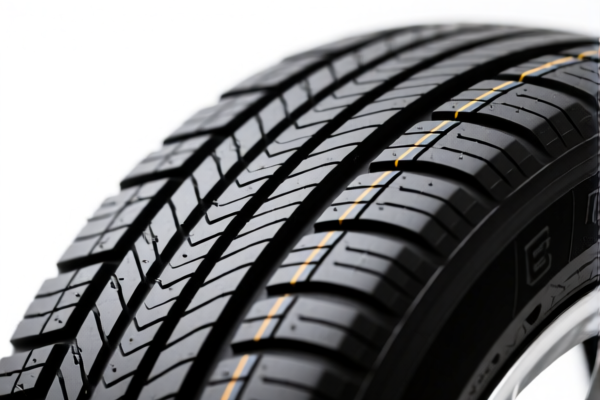
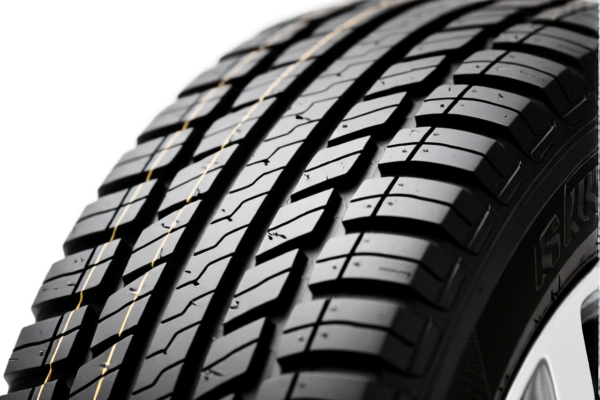
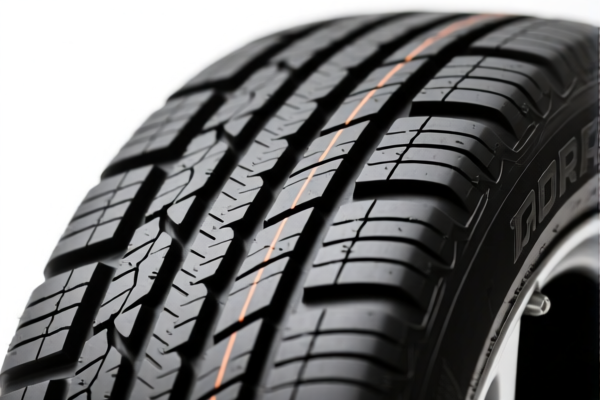
AI Analysis
🚗 Wear Resistant Rubber Tire Treads
🌐 HS Code Reference & Customs Clearance Guide | 2026 Latest Tariff Analysis | Professional Entry Strategy
📌 I. Product Definition & Classification: What Exactly Are "Tire Treads"?
Wear-resistant rubber tire treads are semi-finished products or components specifically designed for the retreading of used tires. They consist of a layer of rubber compound engineered for high abrasion resistance, which is vulcanized (or pre-vulcanized) onto the casing of an old tire to create a new, usable tire. In international trade, the classification hinges on whether the product is considered a "part of a tire" (Chapter 40, Heading 4012) or a "semi-finished rubber product" (Chapter 40, Headings 4005 or 4006).
⚠️ Key Distinction Point:
- If the tread is explicitly stated as being for retreading and has the specific profile of a tire tread → It generally falls under Heading 4012 (Parts of tires).
- If the product is a generic rubber sheet/strip with no specific tire profile, or if customs interprets it as a raw semi-finished good → It may fall under Heading 4005 (Unvulcanized rubber mixtures) or 4006 (Other rubber articles).
- Crucial Note: Most "retread treads" with specific geometry are legally considered parts of tires, not raw rubber materials.
📦 II. HS Code Classification Details (2026 Latest Tariff Authority Cross-Reference)
Based on the provided data, here are the five most likely HS Codes, ranked by relevance and logical fit:
| HS Code | Product Description | Logical Match Justification | Total Tax Rate (CN → US) |
|---|---|---|---|
4012.90.45.00 |
Parts of tires: Treads (retreading) | Best Fit. Explicitly matches the form (tread) and purpose (retreading). The summary confirms: "Form (tread) and purpose (for retreading) match; Material inferred as rubber." | 39.2% |
4012.90.90.00 |
Other parts of used tires or other rubber tires | Matches material (rubber) and purpose (tread/retreading related). Falls under the broader "Other parts" category if 4012.90.45 is deemed too specific or if documentation is vague. |
37.7% |
4005.91.00.00 |
Other mixtures of unvulcanized rubber: Other | Alternative Logic. Matches material (rubber) and form (sheet/strip/bloc of primary form). Inferred as a "semi-finished primary form." Only apply if the tread is unvulcanized and lacks specific tire geometry. | 35.0% |
4006.90.10.00 |
Other rubber articles: Other | Alternative Logic. Matches material (rubber) and form (intermediate product). Used if the product is a shaped rubber article but not strictly a "part of a tire" in the eyes of the specific customs jurisdiction. | 35.0% |
4005.20.00.00 |
Other mixtures of unvulcanized rubber: Plasticized rubber | Matches material (rubber) and form (semi-finished/plate/strip). Inferred as an unvulcanized semi-finished product. Less likely for finished retread treads which are often pre-vulcanized or gummed. | 35.0% |
🔍 Critical Insight:
- HS 4012.90.45.00 is the most accurate classification for retread treads because Chapter 40.12 specifically covers "Parts of tires."
- HS Codes 4005/4006 are lower-rate alternatives but carry a high risk of reclassification by customs if the product clearly has the shape and use of a tire tread.
- The tax difference between 39.2% and 35.0% is small (4.2%), but the legal risk of misclassification is significant.
💰 III. 2026 Latest Tariff Rate Breakdown (Including Surcharges & Policy Add-ons)
✅ Applicable Country: United States (US)
✅ Origin: China (CN)
✅ Effective Date: November 10, 2025 onwards
🎯 1. 4012.90.45.00 —— Tire Treads (Retreading) – Recommended Classification
| Item | Content |
|---|---|
| Base Duty Rate | 4.2% (Ad Valorem) |
| Section 301 Additional Duty | +25.0% (USITC Footnote 9903.88.01) |
| IEEPA Additional Duty (Section 122) | +10.0% (Targeting Chinese/HK products) |
| Total Effective Rate | 39.2% |
| Tax Calculation | CIF Value × 39.2% |
| De Minimis Exemption Available? | ❌ No (deny_de_minimis applies to high-duties) |
| Legal Basis Path | USITC:4012.90.45.00 → FOOTNOTE:9903.88.01 (Section 301) → IEEPA:9903.01.25 (Section 122) |
📌 Explanation:
- Base Duty (4.2%): Standard MFN rate for "parts of tires."
- Section 301 (25%): Applies to nearly all rubber products from China, including tire parts.
- Section 122 (10%): Specific additional duty for certain Chinese imports, including rubber products, effective from late 2025.
- Total (39.2%): High but legally defensible for correctly classified retread treads.
🎯 2. 4012.90.90.00 —— Other Parts of Tires
| Item | Content |
|---|---|
| Base Duty Rate | 2.7% |
| Section 301 Additional Duty | +25.0% |
| IEEPA Additional Duty (Section 122) | +10.0% |
| Total Effective Rate | 37.7% |
| Tax Calculation | CIF Value × 37.7% |
| Legal Basis Path | USITC:4012.90.90.00 → FOOTNOTE:9903.88.01 → IEEPA:9903.01.25 |
📌 Note:
- This is a "catch-all" for tire parts not specifically listed as treads.
- Saves 1.5% vs.4012.90.45.00but may attract more scrutiny if the product is clearly a tread.
🎯 3. 4005.91.00.00 / 4006.90.10.00 / 4005.20.00.00 —— Unvulcanized Rubber / Rubber Articles
| Item | Content |
|---|---|
| Base Duty Rate | 0.0% |
| Section 301 Additional Duty | +25.0% |
| IEEPA Additional Duty (Section 122) | +10.0% |
| Total Effective Rate | 35.0% |
| Legal Basis Path | USITC:4005.xxxxxx or 4006.xxxxxx → FOOTNOTE:9903.88.01 → IEEPA:9903.01.25 |
📌 Warning:
- High Risk of Rejection: Customs may reject this classification for "tire treads" because they are specific parts (Chapter 40.12), not general rubber mixtures.
- If reclassified, you will owe the difference + penalties.
- Only use if the product is raw rubber strips with no tire profile.
🛠️ IV. Customs Clearance Practical Advice (Actionable Pitfall Prevention)
✅ 1. Documentation Checklist (Non-Negotiable)
| Document | Required? | Description |
|---|---|---|
| ✅ Product Specification Sheet | ✔️ | Must clearly state: "Rubber Tire Tread for Retreading," material composition (SBR/NR/BR), and whether pre-vulcanized. |
| ✅ Product Photos | ✔️ | High-res images showing the tread pattern, gum layer, and dimensions. Must prove it is a "tread," not a generic rubber sheet. |
| ✅ Commercial Invoice | ✔️ | Description: "Wear Resistant Rubber Tire Treads for Retreading." Avoid vague terms like "Rubber Sheet." |
| ✅ Packing List | ✔️ | Weight and dimensions. Ensure no "tire casings" are mixed in unless declared separately. |
| ✅ Certificate of Origin | ✔️ | Required to prove origin (China) and subject it to the correct 301/122 duties. |
| ✅ Retreadability Statement | ✔️ | Optional but helpful: Confirm the tread is compatible with standard tire casings. |
✅ 2. Declaration Strategy (Key Mantra)
🔥 “Be Specific, Be Accurate, Avoid ‘Rubber’ Ambiguity!”
| Scenario | Correct Declaration | Incorrect Declaration |
|---|---|---|
| Standard Retread Tread | 4012.90.45.00 – "Rubber Tire Treads for Retreading" |
"Rubber Sheet" → Leads to 4005 (Risk of Rejection) |
| Unvulcanized Gummed Tread | 4012.90.45.00 (Still a part) |
"Unvulcanized Rubber" → 4005.91 (High Risk) |
| Generic Rubber Strip | 4005.91.00.00 |
"Tire Tread" → Leads to 4012 (Higher Duty) |
| Finished Tire | 4011.20.xxxx |
"Tire Tread" → Major Misclassification |
📌 Crucial Tip:
- Do NOT declare "Tire Treads" as "Rubber Sheets" or "Unvulcanized Rubber" to save tax.
- CBP (U.S. Customs and Border Protection) routinely challenges this. If they reclassify, you pay the 39.2% rate + penalties for misdeclaration.
- The 1.5% savings on4012.90.90.00vs4012.90.45.00is negligible compared to the legal risk.
✅ 3. Special Scenarios
| Scenario | Handling Advice |
|---|---|
| Pre-Vulcanized vs. Gummed | Both are usually 4012.90.45.00. Specify "Pre-vulcanized" if applicable, but it does not change the HS Code. |
| Mixed Shipments | If mixing "Tire Treads" with "Casings," declare separately. Casings have different duty rates. |
| Origin Fraud | Ensure the product is not transshipped from a third country to evade Section 301/122 duties. CBP checks origin meticulously. |
| Valuation | Declare the transaction value of the tread only. Do not include the value of the tire casing if the casing is not part of the import. |
🌍 V. Global Market Comparison (2026 Latest)
| Country/Region | Recommended HS Code | Total Duty (CN Origin) | Notes |
|---|---|---|---|
| 🇺🇸 USA | 4012.90.45.00 |
39.2% | Includes 301 (25%) + 122 (10%) + Base (4.2%). |
| 🇨🇳 China | 4012.90.45.00 |
~0% (Most-Favored-Nation) | Import duties on used tire parts are often low or zero, but VAT applies. |
| 🇪🇺 EU | 4012.90.00 |
~0% | Standard MFN duty is often 0% for rubber parts, but check anti-dumping duties. |
| 🇬🇧 UK | 4012.90.00 |
~0% | Post-Brexit UK MFN rates are competitive for rubber parts. |
| 🇯🇵 Japan | 4012.90.00 |
~0-4% | Generally low duties for rubber parts. |
📌 Conclusion:
- The USA is the most expensive market for rubber tire treads due to Section 301 and Section 122 tariffs.
- If exporting to the US, budget 39.2% in landed costs.
- Consider tariff engineering only if the product can be legally defined as a non-tire-specific rubber article (high risk).
📌 VI. Common Mistakes & Pitfall Guide (Lessons Learned)
❌ Mistake 1: Declaring "Tire Treads" as "Rubber Sheets" (4005) to save 4.2%.
👉 Consequence: CBP reclassifies to 4012 + issues penalties for fraud/misdeclaration. Total cost increases by 10%+ due to fines.
❌ Mistake 2: Not disclosing "For Retreading" on the invoice.
👉 Consequence: Customs may classify as "New Tire Parts" or generic rubber, leading to delays and requests for additional info.
❌ Mistake 3: Mixing "Tire Treads" with "Used Tire Casings" in one line item.
👉 Consequence: Incorrect duty calculation. Casings and treads have different values and duties. Split the invoice.
✅ Correct Practice:
Product Name: "Wear Resistant Rubber Tire Treads for Retreading (Pre-Vulcanized)"
HS Code:4012.90.45.00
Origin: China
Duty: 39.2% (4.2% Base + 25% 301 + 10% 122)
🎯 VII. Conclusion: Precision in Classification Saves Money and Time
🎯 Remember the Mantra:
🔹 "Treads are Parts, Not Rubber Sheets!"
🔹 "39.2% is the Real Cost for US Imports."
🔹 "Misclassification Costs More Than the Duty Difference."
📌 Pro Tip:
If your volume is high, consider applying for an Advance Ruling from CBP to lock in the classification (4012.90.45.00) and avoid surprise rejections at the port.
For Section 122 exemptions, check if your specific product code or manufacturer qualifies for any waivers (though rare for rubber products).
📣 Immediate Action:
📞 Consult a licensed customs broker.
📄 Prepare detailed product specs and photos.
🚀 Clear the air on classification before shipping!
✨ Professional Clearance Starts with Accurate HS Codes!
💼 Every cent of duty is predictable when you classify correctly!
Customer Reviews
About HS Code Classification
The Harmonized System (HS) is an internationally standardized nomenclature developed by the World Customs Organization (WCO) to classify traded products. Over 200 countries use the HS system as the basis for customs tariffs, trade statistics, and import/export regulations.
Each HS code follows a hierarchical structure:
- Chapter (2 digits) — Broad category of goods (e.g., Chapter 84: Machinery and Mechanical Appliances)
- Heading (4 digits) — More specific grouping within the chapter
- Subheading (6 digits) — Internationally standardized breakdown, used by all WCO member countries
- National subdivisions (8-10 digits) — Country-specific extensions for further classification, such as US HTSUS 10-digit codes
Correct HS code classification is essential for smooth customs clearance, accurate duty payment, and compliance with trade regulations. Misclassification can lead to customs delays, overpayment of duties, or penalties.
When importing from CN to US, the applicable tariff rates may include:
- Most-Favored-Nation (MFN) rate — The standard duty rate applied to WTO members
- General rate — Applied to countries without trade agreements
- Trade remedy duties — Additional tariffs such as Section 301 (anti-dumping), Section 232 (national security), or countervailing duties
The information provided on this page is for reference purposes only. For official classification, please consult with your local customs authority or a licensed customs broker.