Wearable Breast Pump (2 Pack)
CN → USProduct Images
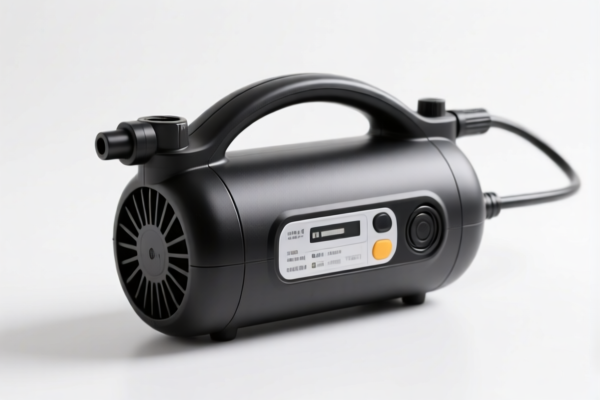
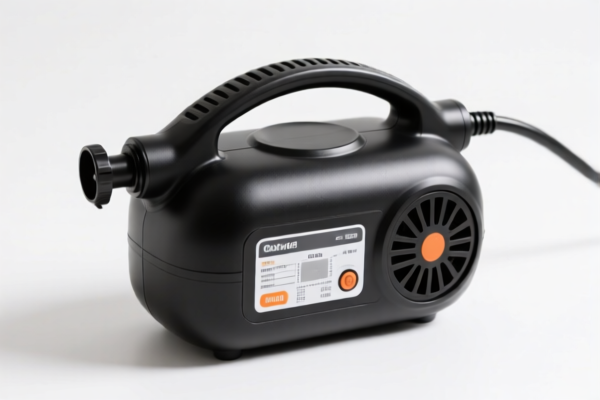


AI Analysis
👶 Wearable Breast Pump (2 Pack) | The Ultimate Guide to 2026 US Customs & Tax Compliance
🌐 HS Code Reference & Clearance Strategy | 2026 Latest Tariff Analysis | Professional Clearance Guide
📌 Part I: Product Definition & Classification: What Exactly is a "Wearable Breast Pump"?
A Wearable Breast Pump (also known as a hands-free breast pump) is a specialized medical device designed to facilitate milk expression while allowing the user to remain mobile. Unlike traditional plug-in pumps that require a stationary base, wearables integrate the motor, collection flange, and milk container into a compact, bra-compatible unit.
In international trade, classification hinges on function and power source: 1. Medical Device Aspect: It is primarily used for the collection of breast milk, a physiological function. 2. Electric/Mechanical Aspect: It operates via a battery-powered motor to create vacuum suction.
⚠️ Critical Distinction:
- Not a general-purpose medical instrument (which might fall under Ch. 90);
- Not a standard household appliance (Ch. 85);
- It is specifically categorized under Electrical Appliances for Personal Care or Household Purposes with specific exemptions for medical use in certain contexts, BUT US Customs typically classifies breast pumps under HS 8509 due to their electric motor-driven nature, unless specifically ruled otherwise by a binding ruling.
- Consensus for 2026: Most US CBP rulings place electric breast pumps under 8509.40 or 8509.80. However, given the "medical" nuance, 8509.40.00.80 (Electro-mechanical appliances with self-contained electric motor, other) is the most common pragmatic classification for clearance, often requiring a specific exemption or careful argumentation if claiming "Medical Instrument" status (Ch. 90).
- Note for this guide: We will analyze the standard commercial classification 8509.40.00.80 as it is the most frequent trade code used for these devices, but flag the medical argument.
📦 Part II: HS Code Classification Details (2026 Latest Tariff Authority)
| HS Code | Product Description | Application Scenario | Key Classification Criteria |
|---|---|---|---|
8509.40.00.80 |
Other electro-mechanical appliances with self-contained electric motor (Other) | Standard wearable breast pumps, battery-operated, hands-free units | ✅ Contains self-contained electric motor; not specifically named elsewhere in Ch. 85. |
9018.90.00.00 |
Instruments and appliances used in medical, surgical, dental, or veterinary sciences | If successfully argued as a "Medical Device" under Ch. 90 (Requires Binding Ruling) | ❌ High Risk of Redirection if not pre-approved. |
8509.80.00.00 |
Other household electro-mechanical appliances | Incorrect classification. Breast pumps are not standard "household" appliances like blenders. | ❌ Avoid. |
3926.90.97.00 |
Other articles of plastic | Parts only (e.g., milk bottles, flanges sold separately) | ✅ Only for non-electronic parts. |
🔍 Key Reminder:
- The "2 Pack" implies two units. Each unit is classified individually, but they are shipped as one shipment.
- Do not classify the entire box as one item unless the packaging itself is the primary value (which it isn't).
- Battery Safety: If the unit contains Lithium-ion batteries, it is classified as Dangerous Goods (DG) for shipping purposes, even if the HS code is 8509.
💰 Part III: 2026 Latest Tariff Rate Breakdown (Including Surcharges)
✅ Applicable Country: United States (US)
✅ Country of Origin: China (CN)
✅ Effective Date: November 10, 2025 (Current Import Cycle)
🎯 1. 8509.40.00.80 —— Electro-mechanical Appliances (Wearable Breast Pump)
| Item | Content |
|---|---|
| Base Duty Rate | 0% (General Rate of Duty for this subheading) |
| USITC Additional Duty | +25% (Under USITC Footnote 9903.01.24 / Section 301) |
| IEEPA Additional Duty | +10% (Against China/HK products, effective Nov 10, 2025) |
| Total Effective Duty Rate | 35% |
| Tax Calculation | CIF Value × 35% |
| De Minimis Exemption | ❌ Denied (deny_de_minimis) for Section 301/IEEPA goods |
| Legal Basis Path | IEEPA:9903.01.24 → USITC:8509.40.00.80 → FOOTNOTE:9903.01.24 |
📌 Explanation:
- While the base duty is 0%, the Section 301 tariffs (25%) and IEEPA tariffs (10%) apply because the product is of Chinese origin and falls under the list of subject goods.
- Total Tax Burden: 35%. This is a significant cost factor for high-volume importers.
- No De Minimis: Items shipped via small parcel (e.g., DHL/FedEx under $800) are NOT exempt from these additional duties. You must pay the 35% on the entire value.
🛠️ Part IV: Clearance Practical Advice (Real-World Pitfall Avoidance)
✅ 1. Documentation Checklist (Non-Negotiable)
| Document | Required? | Description |
|---|---|---|
| ✅ Product Specification Sheet | ✔️ | Must detail: Voltage, Battery Type (Li-ion capacity in mAh/Wh), Motor Power, Material of milk-contact parts (BPA-free). |
| ✅ Battery Safety Report | ✔️ | Critical. MSDS (Material Safety Data Sheet) and UN38.3 test summary for Lithium-ion batteries inside the pump. |
| ✅ FDA Registration Proof | ✔️ | Proof that the manufacturer is registered with the US FDA as a medical device manufacturer (Class II). |
| ✅ Commercial Invoice | ✔️ | Must clearly state: "Wearable Breast Pump, Model XXX, Origin: China." Value must reflect actual transaction price. |
| ✅ Packing List | ✔️ | Detail contents: "2 Units of Wearable Breast Pump, including cases, USB cables, and charging bricks." |
| ✅ FCC ID | ✔️ | Wireless devices often have RF components. FCC ID must be listed on the product and documentation. |
✅ 2. Declaration Strategy (Key Mantra)
🔥 "Battery First, FDA Second, HS Code Accurate, Duty Ready!"
| Scenario | Correct Declaration | Incorrect Practice |
|---|---|---|
| Standard Shipment | HS: 8509.40.00.80 |
HS: 9018.90.00.00 (Risk of penalty if not pre-approved) |
| Parts Only | HS: 3926.90.97.00 (for plastic parts) |
HS: 8509.40.00.80 (if sold as kits without motors) |
| Small Parcel (De Minimis) | Do NOT use De Minimis for CN origin. Pay 35%. | Assume $800 exemption applies → Audit Trigger! |
| Battery Handling | Declare "Contains Lithium Battery, UN3481" | Hide battery info → Shipping Rejection/Fine |
✅ 3. Special Situations
| Situation | Handling Advice |
|---|---|
| OEM Branding | If branding is private label, ensure the manufacturer is FDA registered, not just the importer. |
| Accessories Included | If charging bricks are included, they are part of the "set" and do not change the HS code, but must be listed. |
| B2B vs. B2C | For B2C (individual customers), ensure each unit has FCC labeling. For B2B (retailers), ensure compliance applies to the end-product. |
| Medical Device Exemption | If you are a hospital buying for clinical use, you might argue for Ch. 90, but this requires a CBP Binding Ruling before shipment. Do not guess. |
🌍 Part V: Global Market Clearance Comparison (2026)
| Country/Region | Recommended HS Code | Duty Rate | Certification Required | Notes |
|---|---|---|---|---|
| 🇺🇸 USA | 8509.40.00.80 |
35% (Total) | FDA + FCC + UL (Battery) | Highest friction due to 301/IEEPA. |
| 🇨🇳 China | 8509.40.00.00 |
0% | N/A | No additional surcharges. |
| 🇪🇺 EU | 8509.40.00 |
0% (General) | CE + RoHS + REACH | No Section 301 equivalent. Lower cost. |
| 🇨🇦 Canada | 8509.40.00.90 |
0% (General) | Health Canada (Class I/II) | Similar to US but no 301 tariffs. |
| 🇯🇵 Japan | 8509.40.00 |
0% | PSE + PMDA | Strict on battery safety. |
📌 Conclusion:
- The US market is the most expensive for Chinese-made wearable breast pumps due to the 35% effective duty.
- EU/Canada offer zero or low duty alternatives if supply chain diversification (e.g., Vietnam/Thailand manufacturing) is considered.
📌 Part VI: Common Mistakes & Pitfalls (Lessons Learned)
❌ Mistake 1: Claiming De Minimis ($800) for a $50 pump from China
👉 Consequence: Customs will assess 35% duty + penalties. Rule: Section 301/IEEPA goods are always subject to duty, regardless of value.
❌ Mistake 2: Listing as "Baby Feeding Bottle" (HS 3924)
👉 Consequence: Misclassification. The motor makes it Ch. 85. Fines for undervaluation/misclassification.
❌ Mistake 3: Ignoring FDA Registration
👉 Consequence: CBP may deny entry if the FDA is alerted that the device is marketed as medical without registration. FDA Import Alert risk.
❌ Mistake 4: Shipping with Lithium Batteries Without UN38.3
👉 Consequence: Carrier refusal (FedEx/DHL will reject the package). Hazardous material violation.
✅ Correct Practice:
"Wearable Breast Pump, Model X, 2-Pack.
HS: 8509.40.00.80.
Origin: China.
Contains Lithium Battery (UN3481).
FDA Registered. FCC ID: XXXXX."
🎯 Part VII: Conclusion: Professional Clearance, Cost Optimization
🎯 Key Takeaways:
🔹 "35% is the Number": Base 0% + 25% (301) + 10% (IEEPA) = 35%. Plan your margin accordingly.
🔹 "No De Minimis": Small parcels from China are NOT exempt.
🔹 "Battery Safety": UN38.3 and MSDS are mandatory for air freight.
🔹 "FDA Compliance": Ensure your manufacturer is on the FDA establishment register.
📌 Pro Tip:
If you are importing large volumes, consider Supply Chain Diversification. Sourcing from Vietnam, Thailand, or India can eliminate the 35% tariff burden (subject to local rules of origin verification). This can save $35,000 per $100,000 of goods imported.
📣 Immediate Action:
📞 Pre-clearance: Submit an ACE Advance Ruling Request to CBP if you believe your product qualifies for a different HS code (e.g., Medical Device).
🚀 Document Check: Ensure every unit has FCC and UL/CSA marking on the battery charger.
✨ Professional clearance starts with accurate classification!
💼 Your profit margin depends on tax efficiency.
Customer Reviews
About HS Code Classification
The Harmonized System (HS) is an internationally standardized nomenclature developed by the World Customs Organization (WCO) to classify traded products. Over 200 countries use the HS system as the basis for customs tariffs, trade statistics, and import/export regulations.
Each HS code follows a hierarchical structure:
- Chapter (2 digits) — Broad category of goods (e.g., Chapter 84: Machinery and Mechanical Appliances)
- Heading (4 digits) — More specific grouping within the chapter
- Subheading (6 digits) — Internationally standardized breakdown, used by all WCO member countries
- National subdivisions (8-10 digits) — Country-specific extensions for further classification, such as US HTSUS 10-digit codes
Correct HS code classification is essential for smooth customs clearance, accurate duty payment, and compliance with trade regulations. Misclassification can lead to customs delays, overpayment of duties, or penalties.
When importing from CN to US, the applicable tariff rates may include:
- Most-Favored-Nation (MFN) rate — The standard duty rate applied to WTO members
- General rate — Applied to countries without trade agreements
- Trade remedy duties — Additional tariffs such as Section 301 (anti-dumping), Section 232 (national security), or countervailing duties
The information provided on this page is for reference purposes only. For official classification, please consult with your local customs authority or a licensed customs broker.