Weather Resistant EPDM Rubber Strip
CN → US| HS Code | Tariff Rate | Origin | Destination | Doc |
|---|---|---|---|---|
| 4016931010 | 37.5% | CN | US | Official Doc |
| 4016935010 | 37.5% | CN | US | Official Doc |
Product Images
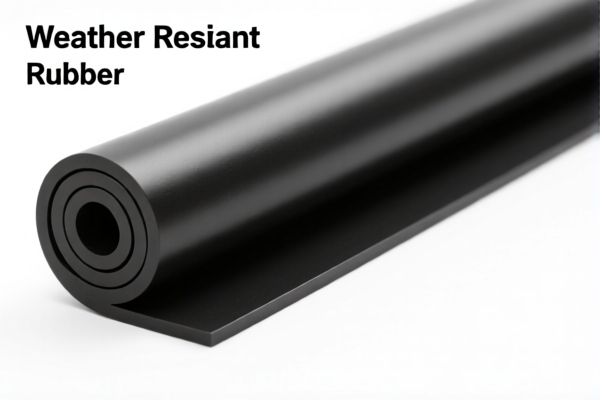
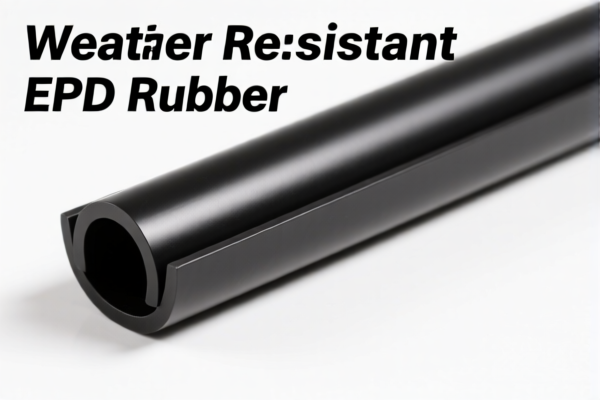


AI Analysis
🌧️ Weather Resistant EPDM Rubber Strip (Gaskets, Washers, Seals)
🌐 HS Code Reference & Customs Clearance Guide | 2026 Latest Tariff Analysis | Professional Entry Strategies
📌 I. Product Definition & Classification: Do You Really Understand "EPDM Seals"?
EPDM (Ethylene Propylene Diene Monomer) rubber is a synthetic rubber known for its exceptional resistance to weather, ozone, UV light, and water. In international trade, specifically under Chapter 40 (Articles of Rubber), these products are primarily classified under "Gaskets, washers, and other seals."
However, the crucial distinction lies in the application: * Automotive Seals: O-Rings and seals designed specifically for vehicles (Chapter 87 goods). * General Industrial Seals: O-Rings and seals for non-automotive machinery, construction, or plumbing.
⚠️ Key Classification Point:
- If the seal is specifically used in automotive goods (Chapter 87) → It falls under 4016.93.10.10.
- If it is a general-purpose seal (not strictly for automotive) → It falls under 4016.93.50.10.
📦 II. HS Code Classification Details (2026 Latest Tariff Authority Comparison)
Based strictly on the provided data, here are the two applicable HS Codes for "Weather Resistant EPDM Rubber Strip" acting as seals/O-Rings:
| HS Code | Product Description | Application Scenario | Tax Rate (Total) |
|---|---|---|---|
4016.93.10.10 |
Other articles of vulcanized rubber other than hard rubber: Other: Gaskets, washers and other seals: Of a kind used in the automotive goods of chapter 87 O-Rings | Automotive engine seals, door/window weatherstripping for cars/trucks, automotive hose seals | 27.5% |
4016.93.50.10 |
Other articles of vulcanized rubber other than hard rubber: Other: Gaskets, washers and other seals: Other O-Rings | Industrial machinery, HVAC systems, plumbing, construction joints, general manufacturing equipment | 27.5% |
🔍 Critical Reminder:
- Both codes carry the exact same total tax rate of 27.5% (2.5% Base + 25% Additional).
- However, misclassification can lead to customs delays, audits, or penalties if the end-use cannot be proven.
- EPDM material itself does not change the HS Code chapter; it is the function/application (Automotive vs. Other) that dictates the subheading.
💰 III. 2026 Latest Tariff Rate Breakdown (Detailed Tax Clauses)
✅ Applicable Country: United States (US)
✅ Origin: China (CN) (Implied by the specific "Additional Tax" structure common in US-China trade data)
✅ Effective Time: Current applicable rates (Subject to USITC adjustments)
🎯 1. 4016.93.10.10 — Automotive O-Rings & Seals
| Item | Content |
|---|---|
| Product | EPDM Rubber Seals for Automotive Use (Chapter 87) |
| Base Duty | 2.5% (Ad Valorem) |
| Additional Duty (Section 301) | +25.0% |
| Total Tax Rate | 27.5% |
| Calculation Basis | CIF Value (Cost, Insurance, and Freight) × 27.5% |
| De Minimis Exemption | ❌ Not Applicable for this HS Code under standard Section 301 rules |
| Legal Basis | HTSUS 4016.93.10.10 + USITC Footnote for Section 301 (List 3/4 items) |
📌 Explanation:
- The 2.5% is the standard Most Favored Nation (MFN) duty for "Other articles of rubber."
- The 25.0% is the retaliatory/additional tariff imposed under Section 301 of the Trade Act of 1974 against Chinese-origin goods.
- Total Cost Impact: For every $10,000 of EPDM seals imported, you must pay $2,750 in duties.
🎯 2. 4016.93.50.10 — Other O-Rings (Non-Automotive)
| Item | Content |
|---|---|
| Product | General Purpose EPDM O-Rings (Industrial/Commercial) |
| Base Duty | 2.5% (Ad Valorem) |
| Additional Duty (Section 301) | +25.0% |
| Total Tax Rate | 27.5% |
| Calculation Basis | CIF Value (Cost, Insurance, and Freight) × 27.5% |
| De Minimis Exemption | ❌ Not Applicable |
| Legal Basis | HTSUS 4016.93.50.10 + USITC Footnote for Section 301 |
📌 Note:
- Despite being "non-automotive," this category still faces the same 27.5% total tariff.
- There is no tariff advantage for switching from automotive to general industrial seals if the origin remains China.
🛠️ IV. Customs Clearance Practical Advice (Avoid Pitfalls)
✅ 1. Required Documentation Checklist
| Document | Mandatory? | Purpose |
|---|---|---|
| ✅ Product Specification Sheet | ✔️ | Must specify: Material (EPDM), Hardness (Shore A), Dimensions, and Intended Use. |
| ✅ Commercial Invoice | ✔️ | Must clearly state "EPDM Rubber Seal" or "O-Ring." Avoid vague terms like "Rubber Part." |
| ✅ Usage Statement | ✔️ | Crucial: Declare whether the seals are for "Automotive Vehicles (Ch. 87)" or "General Industrial Machinery." |
| ✅ Material Test Report | ✔️ | Proves EPDM composition (resistance to weather/ozone) to rule out other rubber types. |
| ✅ Packing List | ✔️ | Detail quantity per box, weight, and dimensions. |
✅ 2. Classification Strategy (Key Tips)
🔥 “Material Defines Chapter, Application Defines Subheading”
| Scenario | Correct HS Code | Reasoning |
|---|---|---|
| Seals for Car Doors/Engines | 4016.93.10.10 |
Explicitly "Of a kind used in automotive goods of Ch. 87." |
| Seals for Hydraulic Presses | 4016.93.50.10 |
"Other O-Rings" (Not specifically for Ch. 87). |
| Strips used as Window Glazing Seals | 4016.93.50.10 |
If not for automotive, classified as "Other." |
| Solid Rubber Bumpers | ❌ Different Code | Do not use seal codes; bumpers may fall under 4016.93.90 or 4016.99. |
⚠️ Warning:
- Do NOT list the product as "Rubber Strip" alone. Customs may classify it under a less specific heading, leading to higher scrutiny or incorrect duty rates.
- Always specify "EPDM" and "O-Ring/Gasket" in the description.
✅ 3. Special Cases & Risk Management
| Situation | Handling Advice |
|---|---|
| Mixed Shipment (Auto + Industrial) | If a single shipment contains both automotive and industrial seals, split the invoice and declare separately to avoid confusion. If mixed, customs may apply the higher scrutiny or question the "automotive" claim. |
| Customs Audit on "Automotive Use" | If you declare 4016.93.10.10, be prepared to show customer orders for auto parts manufacturers or end-use documentation. |
| Tariff Engineering | Since both codes have 27.5%, there is no tariff advantage in changing the HS Code within this dataset. Focus on accurate declaration to avoid penalties. |
🌍 V. Global Market Comparison (2026 Context)
| Market | Recommended HS Code | Est. Tariff (China Origin) | Notes |
|---|---|---|---|
| 🇺🇸 USA | 4016.93.10.10 / .50.10 |
27.5% | High due to Section 301 tariffs. |
| 🇨🇳 China | 4016.93.10 / 4016.93.50 | ~5-10% (Import) | Lower entry barriers for Chinese manufacturers. |
| 🇪🇺 EU | 4016.93.10 / 4016.93.90 | 0-4.5% | No Section 301 equivalent, but anti-dumping duties may apply in some cases. |
| 🇲🇽 Mexico | 4016.93.10 / 4016.93.50 | 0% (Under USMCA) | If manufactured in Mexico, zero duty to USA. |
📌 Strategic Insight:
- US Tariffs are the biggest cost driver.
- Consider sourcing from Vietnam, Thailand, or Mexico if possible, to avoid the 25% additional duty.
- If sourcing from China, the 27.5% total tax is unavoidable for these codes.
📌 VI. Common Mistakes & Pitfalls (Lessons Learned)
❌ Mistake 1: Declaring "Rubber Strip" without specifying "O-Ring" or "Gasket."
👉 Consequence: Customs may classify under a generic, higher-duty, or restricted code, causing delays.
❌ Mistake 2: Misdeclaring non-automotive seals as "Automotive" to seek preferential treatment (if any existed).
👉 Consequence: Fraud penalty, seizure, and blacklisting. Since both codes here have the same tax, this is less of a financial risk but still a compliance risk.
❌ Mistake 3: Ignoring the Chapter 87 link.
👉 Consequence: The HS Code 4016.93.10.10 explicitly requires the seal to be "of a kind used in automotive goods of chapter 87." If it’s for a boat (Chapter 89) or airplane (Chapter 88), it must be 4016.93.50.10 ("Other").
🎯 VII. Conclusion: Precise Classification Saves Time & Money
🎯 Key Takeaway:
🔹 "EPDM Rubber Seal = 27.5% Total Duty (China to US)."
🔹 "Auto Use = 4016.93.10.10 | General Use = 4016.93.50.10."
🔹 "Accuracy is Key: Prove the end-use to avoid audits."
📌 Pro Tip:
If your volume is high, consider Advance Rulings from US Customs and Border Protection (CBP) to get a binding decision on the correct HS Code for your specific EPDM products. This provides legal certainty and protects against future retroactive penalties.
📣 Call to Action:
📞 Contact a Licensed Customs Broker to verify your specific product drawings and usage.
📝 Ensure your Invoice Description Matches the HS Code Definition Exactly.
🚀 Optimize Your Supply Chain to Mitigate the 25% Additional Tariff Impact.
✨ Professional Clearance Starts with Accurate Classification!
💼 Your Cost is Calculated to the Penny — Don’t Leave It to Chance!
Customer Reviews
About HS Code Classification
The Harmonized System (HS) is an internationally standardized nomenclature developed by the World Customs Organization (WCO) to classify traded products. Over 200 countries use the HS system as the basis for customs tariffs, trade statistics, and import/export regulations.
Each HS code follows a hierarchical structure:
- Chapter (2 digits) — Broad category of goods (e.g., Chapter 84: Machinery and Mechanical Appliances)
- Heading (4 digits) — More specific grouping within the chapter
- Subheading (6 digits) — Internationally standardized breakdown, used by all WCO member countries
- National subdivisions (8-10 digits) — Country-specific extensions for further classification, such as US HTSUS 10-digit codes
Correct HS code classification is essential for smooth customs clearance, accurate duty payment, and compliance with trade regulations. Misclassification can lead to customs delays, overpayment of duties, or penalties.
When importing from CN to US, the applicable tariff rates may include:
- Most-Favored-Nation (MFN) rate — The standard duty rate applied to WTO members
- General rate — Applied to countries without trade agreements
- Trade remedy duties — Additional tariffs such as Section 301 (anti-dumping), Section 232 (national security), or countervailing duties
The information provided on this page is for reference purposes only. For official classification, please consult with your local customs authority or a licensed customs broker.