Wedding Banner
CN → US| HS Code | Tariff Rate | Origin | Destination | Doc |
|---|---|---|---|---|
| 4821904000 | 35.0% | CN | US | Official Doc |
| 6307909891 | 24.5% | CN | US | Official Doc |
| 6307908500 | 23.3% | CN | US | Official Doc |
Product Images
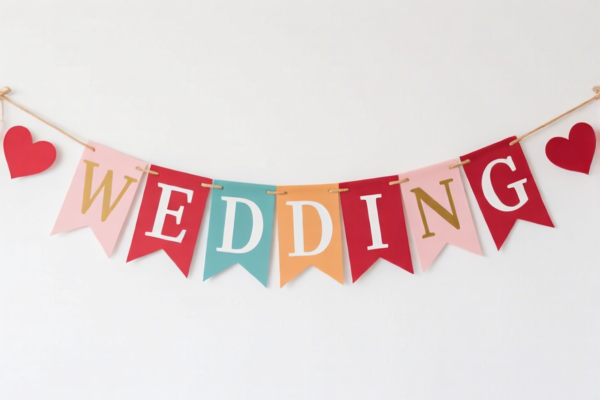
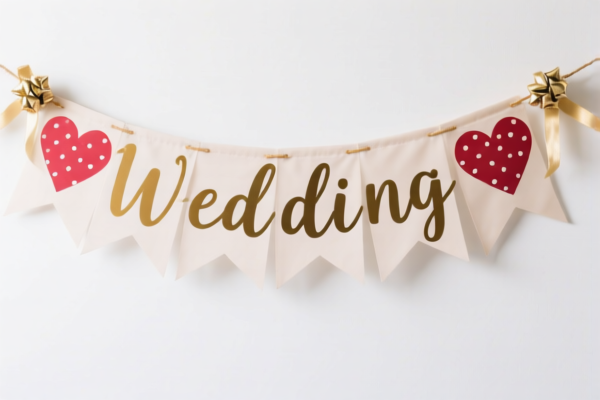

AI Analysis
🎉 Wedding Banner (Marriage Celebration Decor)
🌐 HS Code Reference & Customs Clearance Guide | 2026 Latest Tariff Analysis | Professional Strategy
📌 I. Product Definition & Classification: What Exactly is a "Wedding Banner"?
A wedding banner is a decorative item used for wedding ceremonies, receptions, or related celebrations. Its primary function is aesthetic decoration and branding/announcement. In international trade, its classification depends heavily on its material composition and structural form. It is generally categorized under either Paper Products (Chapter 48) or Textile/Other Finished Goods (Chapter 63).
Key Distinctions:
- Paper/Paperboard Banners: Lightweight, single-layer, or cardstock materials. Often considered "labels" or simple paper goods.
- Fabric/Textile Banners: Made from polyester, cotton, linen, or non-woven fabrics. Often have reinforced edges, grommets, or hanging mechanisms.
- Mixed Material Banners: If it has a plastic backing or frame, it might fall under general finished goods.
⚠️ Critical Classification Point:
- If made of paper/cardboard without significant textile content → Chapter 48
- If made of fabric/textile/non-woven material → Chapter 63
- If it is a finished decorative item not elsewhere specified → Chapter 63
📦 II. HS Code Classification Details (2026 Latest Tariff Authority Comparison)
Based on the provided data, here are the three most likely HS Codes for Wedding Banners, depending on material:
| HS Code | Product Description | Material Inference | Form & Application |
|---|---|---|---|
4821.90.40.00 |
Other paper labels & paperboard tags | Paper/Cardboard | Decorative label/banner shape; simple hanging |
6307.90.98.91 |
Other made-up articles of textiles | Paper or Plastic (or mixed) | Finished consumer good; decorative banner |
6307.90.85.00 |
Other made-up articles of textiles | Fiber/Textile Fabric | Traditional fabric banner; durable, reusable |
🔍 Key Insight:
- The biggest difference is between Paper (4821) and Textile/Finished Goods (6307).
- 6307.90.85.00 is the most accurate for fabric wedding banners (common in high-end decor).
- 4821.90.40.00 applies if it’s a paper-based banner with tag/label characteristics.
- 6307.90.98.91 is a fallback for mixed materials (e.g., paper with plastic backing) or undefined finished goods.
💰 III. 2026 Latest Tariff Rate Breakdown (Including Surcharges & Policy Add-ons)
✅ Applicable Country: United States (US)
✅ Origin: China (CN)
✅ Effective Date: Current rates as per provided data (includes Section 301 & IEEPA)
🎯 1. 4821.90.40.00 — Paper Labels & Tags (Paper Wedding Banners)
| Item | Details |
|---|---|
| Basic Tariff | 0.0% |
| Section 301 Surcharge | 25.0% |
| Section 122 / IEEPA Add-on | 10.0% |
| Total Tax Rate | 35.0% |
| Calculation | CIF Value × 35% |
| De Minimis Eligibility | ❌ Not Eligible (High tariff prevents de minimis benefit) |
| Legal Basis Path | Section 301: Footnote 9903.88.01 → IEEPA: 9903.01.25 → HS: 4821.90.40.00 |
📌 Explanation:
- 25% is the standard Section 301 tariff on Chinese paper products.
- 10% is the additional IEEPA/Section 122 surcharge on Chinese goods.
- Total 35% is relatively high for paper goods. Ensure the product is clearly defined as "paper" to avoid misclassification.
🎯 2. 6307.90.98.91 — Other Made-Up Articles (Mixed/Material-Ambiguous Banners)
| Item | Details |
|---|---|
| Basic Tariff | 7.0% |
| Section 301 Surcharge | 7.5% |
| Section 122 / IEEPA Add-on | 10.0% |
| Total Tax Rate | 24.5% |
| Calculation | CIF Value × 24.5% |
| De Minimis Eligibility | ❌ Not Eligible |
| Legal Basis Path | Section 301: Footnote 9903.88.01 → IEEPA: 9903.01.25 → HS: 6307.90.98.91 |
📌 Explanation:
- This code is often used when the material is not clearly textile (e.g., paper-backed plastic banners).
- Lower total rate (24.5%) compared to pure paper due to lower basic tariff (7% vs 0%) and lower Section 301 (7.5% vs 25%).
- Caution: If customs determines it’s actually paper, they may reclassify to 4821.90.40.00 and charge 35%.
🎯 3. 6307.90.85.00 — Other Textile Articles (Fabric Wedding Banners)
| Item | Details |
|---|---|
| Basic Tariff | 5.8% |
| Section 301 Surcharge | 7.5% |
| Section 122 / IEEPA Add-on | 10.0% |
| Total Tax Rate | 23.3% |
| Calculation | CIF Value × 23.3% |
| De Minimis Eligibility | ❌ Not Eligible |
| Legal Basis Path | Section 301: Footnote 9903.88.01 → IEEPA: 9903.01.25 → HS: 6307.90.85.00 |
📌 Explanation:
- This is the most common code for fabric wedding banners (polyester, cotton, etc.).
- Lowest total rate (23.3%) among the three options.
- Basic tariff 5.8% and Section 301 7.5% are lower than paper products.
- Recommendation: If your banner is fabric-based, always use this code to save costs.
🛠️ IV. Customs Clearance Practical Advice (Actionable Pitfall Guide)
✅ 1. Required Documentation Checklist
| Document | Mandatory | Notes |
|---|---|---|
| ✅ Product Spec Sheet | ✔️ | Specify material (e.g., "100% Polyester", "Cardstock Paper") |
| ✅ Material Composition Report | ✔️ | Crucial for distinguishing between HS 4821 and 6307 |
| ✅ Product Photos | ✔️ | Show texture, edges, hanging mechanism (grommets, ropes) |
| ✅ Commercial Invoice | ✔️ | Clearly state "Wedding Decorative Banner" + Material |
| ✅ Packing List | ✔️ | Show quantity, weight, dimensions |
| ✅ Origin Certificate | ✔️ | If not China, may reduce tariffs |
✅ 2. Classification Strategy (Key Mnemonic)
🔥 “Fabric = 6307, Paper = 4821, Ambiguous = 6307.98”
| Scenario | Recommended HS Code | Why? |
|---|---|---|
| Fabric Banner (Polyester/Cotton) | 6307.90.85.00 |
Lowest tax (23.3%), correct material match |
| Paper/Cardboard Banner | 4821.90.40.00 |
Matches paper tariff structure |
| Mixed Material (Paper + Plastic backing) | 6307.90.98.91 |
Fallback for non-clear textile/paper |
| Reinforced Fabric Banner (with metal grommets) | 6307.90.85.00 |
Grommets don’t change textile classification |
✅ 3. Special Cases & Risk Mitigation
| Situation | Handling Advice |
|---|---|
| OEM Custom Banners | Provide design files + material specs to prove intent |
| Biodegradable/Non-Woven Fabric | Still归类 to 6307.90.85.00 if textile-based |
| Banner with LED Lights | May require separate electrical component classification; consult customs broker |
| Bulk Import for Resale | Ensure commercial invoice reflects "decorative goods" not "industrial labels" |
🌍 V. Global Market Comparison (2026 Latest)
| Country/Region | Recommended HS Code | Tariff (China Origin) | Certification Required | Notes |
|---|---|---|---|---|
| 🇺🇸 USA | 6307.90.85.00 |
23.3% | N/A | Highest tariff market for textiles |
| 🇨🇳 China | 6307.90.85.00 |
5.8% | N/A | No additional surcharges |
| 🇪🇺 EU | 6307.90.85.00 |
0-12% (varies) | CE (if applicable) | No Section 301/IEEPA |
| 🇬🇧 UK | 6307.90.85.00 |
12% | UKCA (if applicable) | Post-Brexit rules apply |
| 🇯🇵 Japan | 6307.90.85.00 |
10.8% | PSE (if applicable) | Moderate tariff |
📌 Conclusion:
- USA has the highest effective tariff due to Section 301 + IEEPA.
- China, EU, and Japan have significantly lower or no surcharges.
- Fabric classification (6307) is more cost-effective than paper (4821) in the US due to lower Section 301 rates.
📌 VI. Common Mistakes & Pitfalls (Lessons Learned)
❌ Mistake 1: Declaring fabric banners as "Paper Labels" (4821.90.40.00)
👉 Result: Incorrect classification, potential penalty, or re-inspection.
👉 Fix: Always specify material in the invoice and provide material test reports.
❌ Mistake 2: Not declaring "Chinese Origin" explicitly when claiming de minimis
👉 Result: High tariff (23.3%-35%) instead of potential exemption.
👉 Fix: If value < $800, verify if de minimis applies (usually not for high-tariff HS codes).
❌ Mistake 3: Using vague terms like "Decorative Item" without material details
👉 Result: Customs may assign a higher default tariff code.
👉 Fix: Use precise terms: "Polyester Wedding Banner, 2m x 1m, with Hanging Ropes."
❌ Mistake 4: Assuming all banners are "Textile"
👉 Result: If it’s paper-based, 6307 may be rejected, leading to 35% tax instead of 24.5%.
👉 Fix: Conduct a material composition analysis before shipping.
✅ Correct Practice:
“Wedding Decorative Banner, Made of 100% Polyester Fabric, Size 200cm x 100cm, with Metal Grommets, Model WB-001”
🎯 VII. Conclusion: Smart Classification, Lower Costs, Faster Clearance
🎯 Remember the Golden Rule:
🔹 “Fabric = 6307.85 (23.3%), Paper = 4821.40 (35%), Mixed = 6307.98 (24.5%)”
🔹 “Material defines the code, code defines the cost!”
📌 Pro Tip:
If your wedding banners are fabric-based, always use 6307.90.85.00. It offers the lowest total tariff (23.3%) and is the most accurate for textile decor.
For paper banners, accept the 35% tariff or consider repackaging/exporting from a non-China origin if feasible.
📣 Immediate Action:
📞 Contact a licensed customs broker
📄 Prepare Material Composition Report + Product Photos
🚀 Apply for Pre-Ruling (Advance Ruling) from CBP if importing large volumes
✨ Professional Customs Clearance Starts with Accurate Classification!
💼 Every percent saved on tariff is profit earned!
Customer Reviews
About HS Code Classification
The Harmonized System (HS) is an internationally standardized nomenclature developed by the World Customs Organization (WCO) to classify traded products. Over 200 countries use the HS system as the basis for customs tariffs, trade statistics, and import/export regulations.
Each HS code follows a hierarchical structure:
- Chapter (2 digits) — Broad category of goods (e.g., Chapter 84: Machinery and Mechanical Appliances)
- Heading (4 digits) — More specific grouping within the chapter
- Subheading (6 digits) — Internationally standardized breakdown, used by all WCO member countries
- National subdivisions (8-10 digits) — Country-specific extensions for further classification, such as US HTSUS 10-digit codes
Correct HS code classification is essential for smooth customs clearance, accurate duty payment, and compliance with trade regulations. Misclassification can lead to customs delays, overpayment of duties, or penalties.
When importing from CN to US, the applicable tariff rates may include:
- Most-Favored-Nation (MFN) rate — The standard duty rate applied to WTO members
- General rate — Applied to countries without trade agreements
- Trade remedy duties — Additional tariffs such as Section 301 (anti-dumping), Section 232 (national security), or countervailing duties
The information provided on this page is for reference purposes only. For official classification, please consult with your local customs authority or a licensed customs broker.