Welding Electrode Coating
CN → US| HS Code | Tariff Rate | Origin | Destination | Doc |
|---|---|---|---|---|
| 3810905000 | 40.0% | CN | US | Official Doc |
| 8311900000 | 35.0% | CN | US | Official Doc |
| 3810100000 | 40.0% | CN | US | Official Doc |
| 8311100000 | 10.0% | CN | US | Official Doc |
Product Images
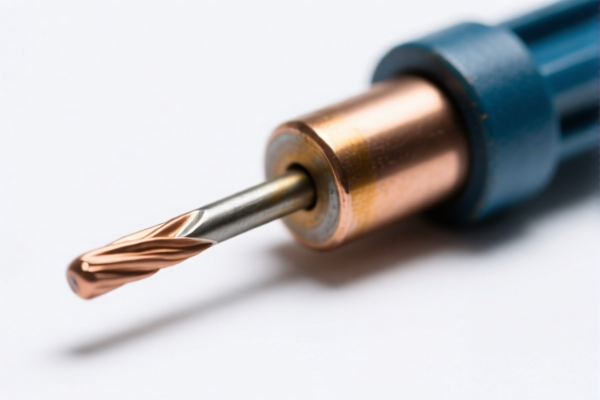
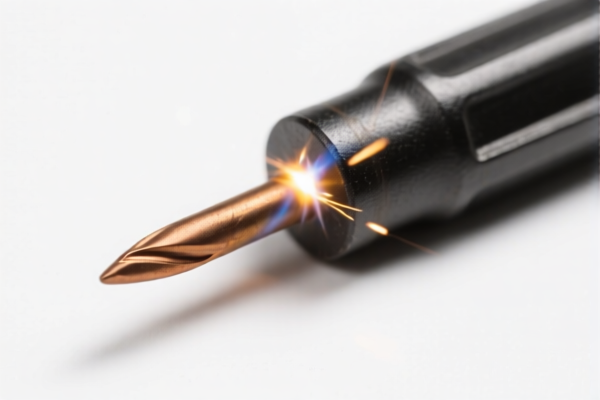
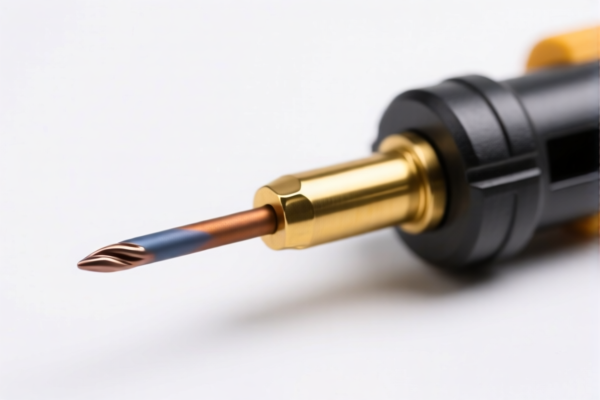
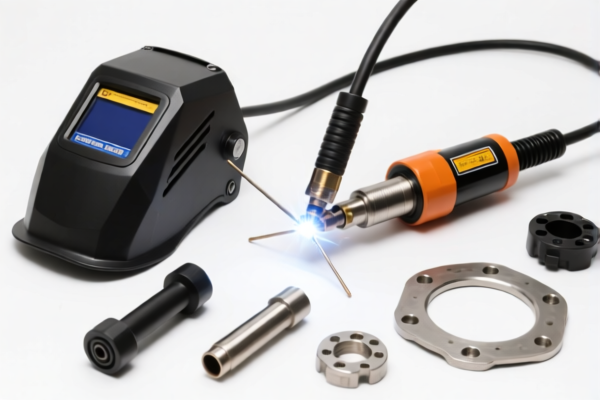
AI Analysis
🔥 Welding Electrode Coating (焊条药皮)
🌐 HS Code Reference & Customs Clearance Guide | 2026 Latest Tariff Breakdown | Strategic Classification for Metallurgical Products
📌 I. Product Definition & Classification: What Exactly is "Welding Electrode Coating"?
"Welding Electrode Coating" (commonly known as Flux Coating or Electrode Coating) is a critical component of covered welding rods. It is a specialized paste, powder, or ceramic-like substance applied to the metal core of a welding electrode.
Its primary functions are: 1. Shielding: Creates a gas shield to protect the molten weld pool from atmospheric contamination. 2. Slag Formation: Forms a protective slag layer that solidifies on the weld, controlling cooling rates and removing impurities. 3. Arc Stabilization: Ensures a stable electric arc during the welding process. 4. Alloying: Introduces specific metals to enhance the chemical properties of the weld bead.
⚠️ Critical Classification Distinction:
- If classified as a "Chemical Preparation" (Flux/Paste): It falls under Chapter 38 (Miscellaneous Chemical Products). This applies when the focus is on the coating material composition itself, often used separately or as a generic flux.
- If classified as a "Welding Electrode" (Assembled): It falls under Chapter 83 (Miscellaneous Articles of Base Metal). This applies when the coating is already applied to a metal core, forming a complete electrode ready for use.
The Tax Impact is Massive: Chapter 38 items often attract 40% total tax, while Chapter 83 (Chapter 8311) items can be as low as 10% depending on the specific subtype!
📦 II. HS Code Classification Breakdown (2026 Tariff Authority)
Based on the specific material composition and assembly state, the product falls into four distinct categories with significantly different tax liabilities.
| HS Code | Product Description (As per Data) | Material/Feature Focus | Total Tax Rate |
|---|---|---|---|
3810.90.50.00 |
Welding Electrode Coating (Chemical Flux Preparation) | Coating agent form, used as core or coating formulation for electrodes. | 40.0% |
3810.10.00.00 |
Welding Electrode Coating (Paste/Powder Flux) | Metallic & other material paste/powder for welding/brazing. | 40.0% |
8311.90.00.00 |
Welding Electrode Coating (General Assembly) | Metal core + Coated flux, suitable for welding/brazing. | 35.0% |
8311.10.00.00 |
Welding Electrode (Assembled Electrode) | Base metal electrode with coating (Fully Assembled). | 10.0% |
🔍 Key Insight:
- The distinction between 3810 (Chemical Flux) and 8311 (Metal Electrode) is the difference between paying 40% vs 10% tax.
- 8311.10.00.00 is the most tax-efficient classification if the product is a fully assembled electrode (core + coating).
- 3810.90.50.00 and 3810.10.00.00 apply if you are importing loose flux/paste or coating materials intended for application after import, or if the core metal is not yet integrated.
💰 III. 2026 Latest Tariff Rate Analysis (Detailed Breakdown)
✅ Applicable Context: General International Trade (China Export Focus)
✅ Tax Structure: Base Duty + Trade War/Add-on Duties + Specific Section 122 Tariffs
🎯 1. 3810.90.50.00 — Welding Electrode Coating (Chemical Preparation)
- Scenario: Importing the coating material as a raw chemical substance or a formulation not yet on a metal rod. | Tax Component | Rate | Legal/Policy Basis | | :--- | :--- | :--- | | Base Duty | 5.0% | Standard MFN (Most Favored Nation) Tariff | | Add-on Duty (Section 301) | +25.0% | US "Section 301" Trade War Tariff (China) | | Section 122 Tariff | +10.0% | Specific Section 122 Retaliatory Tariff | | TOTAL EFFECTIVE RATE | 40.0% | High Tariff Tier |
📌 Explanation:
This classification treats the item as a chemical reagent. Even though it is for welding, the customs view focuses on the material composition rather than the finished tool. The combination of Base (5%) + Trade War (25%) + Section 122 (10%) results in a 40% levy.
🎯 2. 3810.10.00.00 — Welding Flux (Paste/Powder)
- Scenario: Importing welding flux paste or powder used for gas metal arc welding (GMAW) or manual flux coating. | Tax Component | Rate | Legal/Policy Basis | | :--- | :--- | :--- | | Base Duty | 5.0% | Standard MFN Tariff | | Add-on Duty (Section 301) | +25.0% | US "Section 301" Trade War Tariff (China) | | Section 122 Tariff | +10.0% | Specific Section 122 Retaliatory Tariff | | TOTAL EFFECTIVE RATE | 40.0% | High Tariff Tier |
📌 Explanation:
Similar to the above, this is classified under "Welding, Brazing, or Soldering Powders and Pastes." The 40% total is unavoidable unless a specific tariff exemption (like a 301 exclusion) is granted for this specific chemical formulation.
🎯 3. 8311.90.00.00 — Welding Electrode Coating (General Assembly)
- Scenario: A finished or semi-finished electrode where the coating is applied, but it may not fit the "specific metal arc electrode" definition of 8311.10. | Tax Component | Rate | Legal/Policy Basis | | :--- | :--- | :--- | | Base Duty | 0.0% | Duty-Free for General Base Metal Articles | | Add-on Duty (Section 301) | +25.0% | US "Section 301" Trade War Tariff (China) | | Section 122 Tariff | +10.0% | Specific Section 122 Retaliatory Tariff | | TOTAL EFFECTIVE RATE | 35.0% | Medium-High Tariff Tier |
📌 Explanation:
The Base Duty drops to 0% because it is a base metal article (Chapter 83). However, the 35% total remains high due to the叠加 (叠加 = stacking) of the 25% Trade War tariff and 10% Section 122 tariff.
🎯 4. 8311.10.00.00 — Welding Electrode (Base Metal Core + Coating)
- Scenario: The Most Common & Cost-Effective Scenario. Fully assembled welding rods (stick electrodes) used for manual arc welding. | Tax Component | Rate | Legal/Policy Basis | | :--- | :--- | :--- | | Base Duty | 0.0% | Duty-Free for Base Metal Articles | | Add-on Duty (Section 301) | 0.0% | Exempt from Section 301 (Specific Subheading Exclusion) | | Section 122 Tariff | +10.0% | Specific Section 122 Retaliatory Tariff | | TOTAL EFFECTIVE RATE | 10.0% | Low Tariff Tier ✅ |
📌 Explanation:
This is the golden classification. By proving the product is a complete electrode (Metal Core + Coating), the Base Duty is 0% AND the Section 301 Add-on Duty (25%) is waived. Only the Section 122 Tariff (10%) applies. This saves 30% compared to the chemical classification!
🛠️ IV. Customs Clearance Practical Advice (Avoiding Pitfalls)
✅ 1. Documentation Checklist (Critical for 8311 vs 3810)
To successfully claim 8311.10.00.00 (10% tax) instead of 3810 (40% tax), you must prove the product is an assembled electrode.
| Document | Requirement | Why it Matters |
|---|---|---|
| Product Spec Sheet | Must state: "Diameter," "Length," "Core Metal Type," "Coating Thickness." | Proves it is a finished tool, not raw material. |
| Photographs | Must show the metal core protruding from the coating. | Visual proof of "Base Metal + Coating" structure. |
| Composition Statement | Explicitly state: "Coating is pre-applied during manufacturing." | Prevents misclassification as "loose flux" (3810). |
| Commercial Invoice | Description: "Welding Electrode (Covered Electrode)" not "Welding Flux." | Keywords matter! "Flux" triggers 3810; "Electrode" triggers 8311. |
| Packing List | Must show individual rods, not bulk powder/paste. | Bulk powder = 3810; Individual rods = 8311. |
✅ 2. Declaration Strategy (The "Keyword" Rule)
🔥 Golden Rule:
"Call it an Electrode, not a Coating!"
| Scenario | Correct Declaration (Safe) | Wrong Declaration (Dangerous) |
|---|---|---|
| Finished Rods | "Welding Electrode, Covered, Diameter 3.2mm, E6013" | "Welding Coating / Flux Powder" |
| Tariff Applied | 8311.10.00.00 (10%) |
3810.10.00.00 (40%) |
| Risk | Low Risk | High Risk (Audit/Seizure) |
Warning: If you declare "Welding Electrode Coating" (literally translating the Chinese term) without specifying the core metal, customs may assume it is a chemical supply and assign it to 3810.
✅ 3. Special Scenarios & Mitigation
| Situation | Advice |
|---|---|
| Importing Loose Flux Powder | You cannot avoid 40% tax if importing powder. Ensure the HS Code is correct (3810). Do not try to force 8311 on powder. |
| Importing Semi-Finished Rods | If the rod is "core only" but packaged with flux, declare separately. If "fully coated," declare as 8311. |
| Section 122 Tariff (10%) | This is currently unavoidable for Chinese origin goods under this classification. Do not expect it to be waived unless a specific exemption list is active. |
| Origin Proof | If the core metal is sourced from Vietnam/Mexico, the 301 tariff might be avoided, but you must prove origin. |
🌍 V. Global Market Comparison (2026 Context)
| Region | Recommended HS Code | Tax Rate | Key Requirement |
|---|---|---|---|
| 🇺🇸 USA | 8311.10.00.00 |
10% (Section 122 only) | Must prove "Base Metal Core" presence. |
| 🇪🇺 EU | 8311.10.00.00 |
0-2% | CE Certification + REACH Compliance. |
| 🇨🇳 China | 8311.10.00.00 |
0-5% | No Section 122/301 applicable (Domestic trade). |
| 🇯🇵 Japan | 8311.10.00.00 |
0% | PSE/Quality Standards. |
Conclusion:
The USA is the most aggressive market regarding this product due to Section 301 and Section 122.
Strategy: Always declare as8311.10.00.00(Welding Electrode) to secure the 10% rate instead of 40%.
Do not declare as "Flux" or "Coating" unless you are actually importing the chemical powder without a core.
📌 VI. Common Mistakes & "Red Flags"
❌ Mistake 1: Literal Translation
Error: Declaring "Welding Electrode Coating" (focus on the coating material).
Result: Customs assigns 3810.90.50.00 → 40% Tax.
Fix: Declare as "Welding Electrodes*" or "Covered Welding Rods".
❌ Mistake 2: Missing Core Metal
Error: Declaring a product where the metal core is hidden or the product looks like a powder bag.
Result: High probability of audit for misclassification.
Fix: Ensure photos show the metal wire* inside the coating.
❌ Mistake 3: Mixing "Flux" and "Electrodes"
Error: Packing loose flux powder in the same box as electrodes.
Result: Customs may tax the entire shipment at the highest rate (Flux rate = 40%).
Fix: Separate shipments*. Do not mix loose flux with electrodes.
🎯 VII. Final Verdict & Action Plan
🎯 The Bottom Line:
For Welding Electrodes (Rods with coating), the difference between 3810 and 8311 is the difference between 40% and 10% tax.
Action:
1. Verify Structure: Is it a metal rod with coating? Yes → Use 8311.
2. Adjust Description: Change invoice to "Welding Electrode" (not Coating).
3. Check Origin: If US-China trade, accept the 10% Section 122 duty; it's the best possible rate.
💡 Pro Tip:
If you are importing Loose Flux (powder/paste for self-application), you must use3810and pay 40%. Do not try to force it into8311.
📌 Quick Summary Table
| HS Code | Product Form | Total Tax (China Origin) | Strategy |
|---|---|---|---|
3810.90.50.00 |
Chemical Coating/Flux | 40% | Declare only for raw flux. |
3810.10.00.00 |
Welding Paste/Powder | 40% | Declare only for consumable flux. |
8311.90.00.00 |
Assembled (Non-Arc) | 35% | Secondary option for special assemblies. |
8311.10.00.00 |
Welding Electrode (Rod) | 10% | BEST OPTION - Declare as Electrode. |
✨ Professional Customs Clearing Starts with Precise Classification!
💼 Your cost savings are hidden in the HS Code description!
Customer Reviews
About HS Code Classification
The Harmonized System (HS) is an internationally standardized nomenclature developed by the World Customs Organization (WCO) to classify traded products. Over 200 countries use the HS system as the basis for customs tariffs, trade statistics, and import/export regulations.
Each HS code follows a hierarchical structure:
- Chapter (2 digits) — Broad category of goods (e.g., Chapter 84: Machinery and Mechanical Appliances)
- Heading (4 digits) — More specific grouping within the chapter
- Subheading (6 digits) — Internationally standardized breakdown, used by all WCO member countries
- National subdivisions (8-10 digits) — Country-specific extensions for further classification, such as US HTSUS 10-digit codes
Correct HS code classification is essential for smooth customs clearance, accurate duty payment, and compliance with trade regulations. Misclassification can lead to customs delays, overpayment of duties, or penalties.
When importing from CN to US, the applicable tariff rates may include:
- Most-Favored-Nation (MFN) rate — The standard duty rate applied to WTO members
- General rate — Applied to countries without trade agreements
- Trade remedy duties — Additional tariffs such as Section 301 (anti-dumping), Section 232 (national security), or countervailing duties
The information provided on this page is for reference purposes only. For official classification, please consult with your local customs authority or a licensed customs broker.