Welding Machine Accessories
CN → US| HS Code | Tariff Rate | Origin | Destination | Doc |
|---|---|---|---|---|
| 8515904000 | 35.0% | CN | US | Official Doc |
| 7312107000 | 85.0% | CN | US | Official Doc |
| 8515902000 | 86.6% | CN | US | Official Doc |
| 7312900000 | 85.0% | CN | US | Official Doc |
| 8311100000 | 35.0% | CN | US | Official Doc |
Product Images
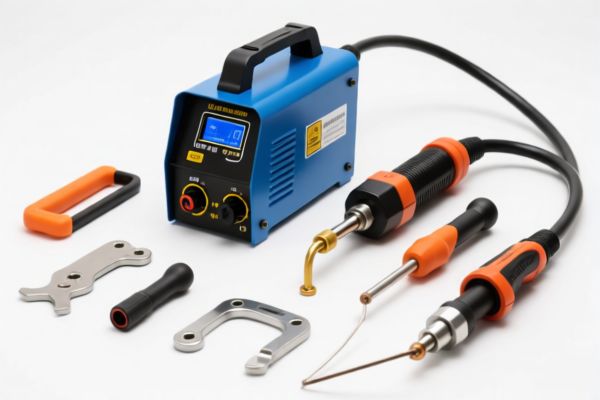
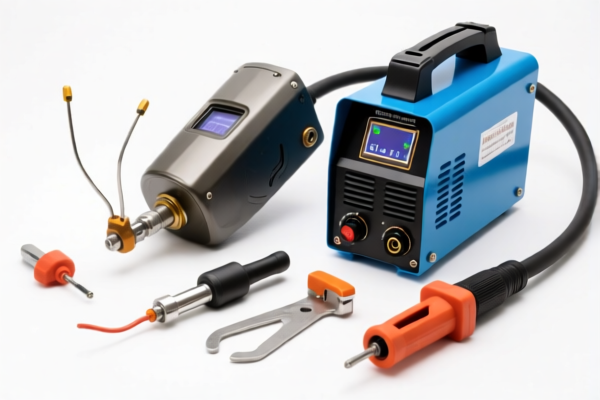
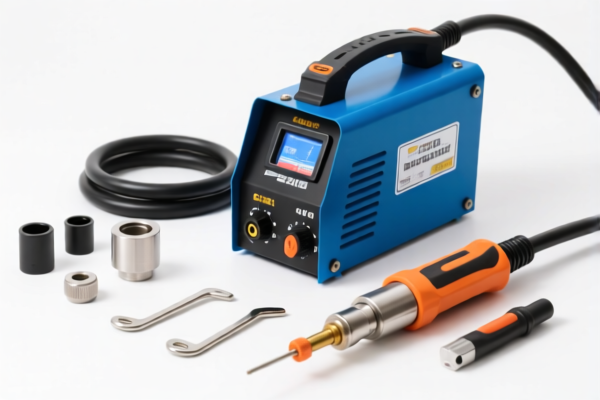
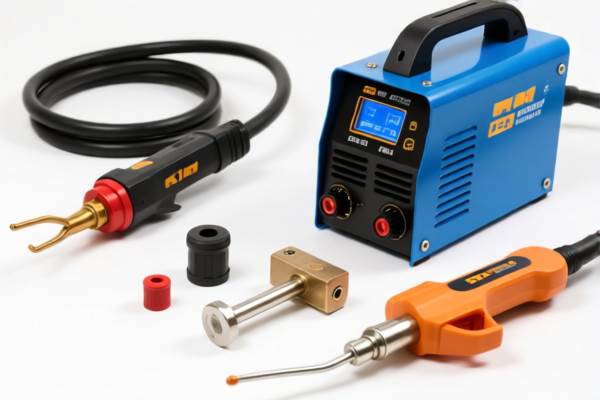
AI Analysis
🛠️ Welding Machine Accessories (Welding Consumables & Parts)
🌐 HS Code Reference & Customs Clearance Guide | 2026 Latest Tariff Analysis | Professional Clearance Strategy
📌 I. Product Definition & Classification: What Are "Welding Accessories"?
"Welding Machine Accessories" is a broad category in international trade, typically covering components used in welding equipment or the consumables directly involved in the welding process. In customs classification, the distinction often lies between parts of the machine itself (electrical/mechanical components) and consumable materials (electrodes, wires, metals).
Key Distinction: * Machine Parts (Electrical/Mechanical): Components like power supply units, control panels, torches, or wire feeders that are integral to the operation of the welding machine but are not consumables. These usually fall under Chapter 85. * Consumables/Metal Products: Items like welding electrodes, wires, or metal cables used during the welding process. These may fall under Chapter 73 (Iron/Steel articles) or Chapter 83 (Base metal articles) depending on their specific form and function.
⚠️ Critical Classification Risk:
- If the item is a non-consumable part of a welding machine (e.g., a transformer, cable assembly not meant for immediate consumption, or a replacement part), it generally aligns with Heading 8515.
- If the item is a metal cable or consumable electrode made of steel/copper, it may be classified under Chapter 73 or Chapter 83, triggering significantly higher tariffs due to specific "Steel, Aluminum, Copper" surcharges.
📦 II. HS Code Classification Details (2026 Latest Tariff Authority Comparison)
Based on the provided data, here are the potential HS Codes for "Welding Machine Accessories," ranging from machine parts to metal components:
| HS Code | Product Description | Application Scenario | Classification Logic |
|---|---|---|---|
8515.90.40.00 |
Parts of Electric Welding Machines (Other) | Non-consumable accessories, replacement parts, machine-specific components | ✅ Best Match: Explicitly "Other parts" of welding equipment. No material conflict. |
8311.10.00.00 |
Electrodes for Arc Welding (Base Metal) | Consumable welding electrodes or coated rods | ✅ Special Rule: Classified as "parts/components" for welding purposes, made of base metal. |
8515.90.20.00 |
Parts of Electric Welding Machines (Specific Subset) | Metal-based welding accessories (e.g., copper contacts, connectors) | ✅ Inference: Based on common metal materials in welding. Slightly higher base tax. |
7312.10.70.00 |
Stranded Steel Wire/Cables | Steel welding cables, ground cables, or steel-based consumables | ⚠️ Material Conflict?: Classified as steel wire. High surcharge due to "Steel" surcharge. |
7312.90.00.00 |
Other Stranded Steel Wire/Cables | General steel wire products not specified elsewhere | ⚠️ Material Conflict?: Similar to above, relies on steel material assumption. |
🔍 Key Insight:
- The lowest tariff risk is found in8515.90.40.00, which directly addresses "Other parts" of welding machines without triggering additional "Base Metal" surcharges.
- Codes under Chapter 73 (7312...) and Chapter 83 (8311...) incur much higher taxes due to Section 301 and Section 232/122 specific surcharges on steel, aluminum, and copper products.
💰 III. 2026 Latest Tariff Rate Breakdown (Including Surcharges & Policy Add-ons)
✅ Applicable Country: United States (US)
✅ Country of Origin: China (CN)
✅ Effective Date: 2025 November 10 onwards (for subsequent imports)
🎯 1. 8515.90.40.00 —— Parts of Electric Welding Machines (Other)
| Item | Content |
|---|---|
| Base Tariff | 0% (ad valorem) |
| USITC Surcharge (Section 301) | +25% |
| IEEPA Surcharge (Section 122/301 Add-on) | +10% |
| Total Tariff Rate | 35% |
| Tax Calculation | CIF Value × 35% |
| De Minimis Exemption? | ❌ No (deny_de_minimis) |
| Legal Basis Path | IEEPA:9903.01.25 → USITC:8515.90.40.00 |
📌 Explanation:
- This is the most favorable classification for "Welding Accessories" if they are clearly defined as machine parts and not consumable metal goods.
- It avoids the heavy "Steel/Aluminum/Copper" surcharges that apply to Chapter 73/83 products.
- Total 35% is high, but significantly lower than the 85%+ rates for steel-based classifications.
🎯 2. 8311.10.00.00 —— Electrodes for Arc Welding (Base Metal)
| Item | Content |
|---|---|
| Base Tariff | 0% |
| USITC Surcharge (Section 301) | +25% |
| IEEPA Surcharge | +10% |
| Total Tariff Rate | 35% |
| Tax Calculation | CIF Value × 35% |
| De Minimis Exemption? | ❌ No |
| Legal Basis Path | IEEPA:9903.01.25 → USITC:8311.10.00.00 |
📌 Note:
- Although this is a "base metal" product, it benefits from a special rule for welding electrodes/components, keeping the rate at 35% instead of the higher rates for general steel products.
- Only applicable if the "accessories" are specifically electrodes or similar consumable metal items.
🎯 3. 8515.90.20.00 —— Parts of Electric Welding Machines (Specific)
| Item | Content |
|---|---|
| Base Tariff | 1.6% |
| USITC Surcharge (Section 301) | +25% |
| IEEPA Surcharge | +10% |
| Base Metal Surcharge | +50% (Steel, Aluminum, Copper Products) |
| Total Tariff Rate | 86.6% |
| Tax Calculation | CIF Value × 86.6% |
| De Minimis Exemption? | ❌ No |
| Legal Basis Path | IEEPA:9903.01.25 → IEEPA:9903.01.24 → USITC:8515.90.20.00 |
⚠️ Critical Warning:
- This code includes a +50% surcharge for "Steel, Aluminum, Copper Products."
- Even though it's a "part," if customs authorities deem it to be made of base metal subject to Section 232/301 add-ons, the rate skyrockets.
- Avoid this classification unless the product is strictly non-metallic or specifically exempted.
🎯 4. & 5. 7312.10.70.00 & 7312.90.00.00 —— Steel Wire/Cable Products
| Item | Content |
|---|---|
| Base Tariff | 0% |
| USITC Surcharge (Section 301) | +25% |
| IEEPA Surcharge | +10% |
| Base Metal Surcharge | +50% (Steel, Aluminum, Copper Products) |
| Total Tariff Rate | 85.0% |
| Tax Calculation | CIF Value × 85.0% |
| De Minimis Exemption? | ❌ No |
| Legal Basis Path | IEEPA:9903.01.25 → IEEPA:9903.01.24 → USITC:7312.10.70.00 |
⚠️ High Risk:
- These codes classify the items as steel wire or cable.
- The +50% surcharge for base metals applies heavily here.
- Only appropriate if the "accessories" are literally steel cables (e.g., ground cables) and not general machine parts.
🛠️ IV. Customs Clearance Practical Advice (Real-World Pitfall Avoidance Guide)
✅ 1. Essential Documentation Checklist (No Exceptions)
| Document | Required | Explanation |
|---|---|---|
| ✅ Product Specification Sheet | ✔️ | Must clearly state if the item is a "machine part" or "consumable." |
| ✅ Product Photos | ✔️ | Show the item in context (e.g., attached to a welding machine vs. loose metal coil). |
| ✅ Bill of Materials (BOM) | ✔️ | List materials (plastic, metal, electronic components) to justify Chapter 85 vs. Chapter 73. |
| ✅ Commercial Invoice | ✔️ | Use precise language: "Replacement Part for Welding Machine Model XYZ" NOT "Metal Wire." |
| ✅ Proof of Origin (CO) | ✔️ | Required for surcharge verification. |
| ✅ Certification (CE/FCC/UL) | ✔️ | Proves it's an electrical component, supporting Chapter 85 classification. |
✅ 2. Declaration Strategy (Key Mantra)
🔥 "Define as Part, Not as Metal; Specify Machine Use, Lower the Rate!"
| Scenario | Correct Declaration | Wrong Declaration |
|---|---|---|
| Welding Torch, Connector, Power Cable (Part) | 8515.90.40.00 |
Misdeclare as 7312... (Steel Wire) → 85% Tax |
| Welding Electrodes (Consumable) | 8311.10.00.00 |
Misdeclare as 8515... → Potential audit risk |
| General Metal Bracket for Welder | 8515.90.40.00 (if integral) |
Misdeclare as 7312... → 85% Tax |
| Loose Steel Cable | 7312.10.70.00 |
Misdeclare as 8515... → Customs may reclassify & penalize |
✅ 3. Special Handling Cases
| Case | Handling Advice |
|---|---|
| Mixed Shipment (Parts + Consumables) | Split the Declaration! Do not bundle steel cables with electronic parts. |
| OEM Custom Parts | Provide customer design specs to prove they are "parts" of a specific machine. |
| "Accessories" Ambiguity | If it plugs in, it's likely 8515. If it melts/consumes, it's likely 8311 or 7312. |
| High-Value Claims | For values over $800, ensure precise classification to avoid large back-taxes. |
🌍 V. Global Market Clearance Comparison (2026 Latest)
| Country/Region | Recommended HS Code | Tariff Rate | Certification Requirements | Notes |
|---|---|---|---|---|
| 🇺🇸 USA | 8515.90.40.00 |
35% (Best Case) | FCC, UL | Highest risk due to 301/IEEPA surcharges. Avoid 7312 unless necessary. |
| 🇨🇳 China | 8515.90.40.00 |
0-5% | CCC | No additional surcharges. |
| 🇪🇺 EU | 8515.90.40.00 |
0-4% | CE | No Section 301-style surcharges. |
| 🇨🇦 Canada | 8515.90.40.00 |
0% (CUSMA) | CSA | Preferential rates for North American trade. |
📌 Conclusion:
- The US market is the most challenging due to the layered surcharges.
- Correctly identifying the product as "Machine Part" (8515) rather than "Steel Product" (7312) is the single most important factor in saving 50% in duties.
📌 VI. Common Errors & Pitfall Guide (Blood & Tears Lessons)
❌ Error 1: Declaring "Welding Cables" as 8515.90.40.00 when they are just plain steel wire.
👉 Consequence: Customs reclassifies to 7312 → Back taxes of ~50% + penalties.
❌ Error 2: Using vague terms like "Welding Parts" on the invoice without detail.
👉 Consequence: CBP (Customs and Border Protection) may apply the highest possible duty rate due to lack of information.
❌ Error 3: Assuming all "accessories" are low-tax.
👉 Consequence: Ignoring the Base Metal Surcharge (+50%) for Chapter 73/83 items leads to 85%+ total tax.
✅ Correct Action:
"Welding Machine Replacement Torch Assembly, Model ABC, Including Copper Contact Tips and Plastic Housing, For Use with Welding Machine DEF"
🎯 VII. Conclusion: Precision Classification Saves Money!
🎯 Remember the Mantra:
🔹 "Part is 35%, Steel is 85%!"
🔹 "If it's a metal wire, expect the 50% surcharge!"
🔹 "Describe it as a 'Machine Part' with 'Electrical Function' to stay in Chapter 85!"
📌 Pro Tip:
If your "accessories" include electronic control boxes or non-consumable connectors, strictly use 8515.90.40.00.
For purely metallic consumables (like electrodes), use 8311.10.00.00.
Never use 7312 codes for machine parts unless they are literally steel cables intended for power grounding, and even then, expect the high tax.
📣 Immediate Action:
📞 Consult a licensed customs broker with product photos and spec sheets.
📋 Apply for an Advance Ruling if shipping high volumes.
🚀 Accurate classification is your best defense against 85% tariffs!
✨ Professional Clearance Starts with Accurate Classification!
💼 Every percentage point saved is pure profit!
Customer Reviews
About HS Code Classification
The Harmonized System (HS) is an internationally standardized nomenclature developed by the World Customs Organization (WCO) to classify traded products. Over 200 countries use the HS system as the basis for customs tariffs, trade statistics, and import/export regulations.
Each HS code follows a hierarchical structure:
- Chapter (2 digits) — Broad category of goods (e.g., Chapter 84: Machinery and Mechanical Appliances)
- Heading (4 digits) — More specific grouping within the chapter
- Subheading (6 digits) — Internationally standardized breakdown, used by all WCO member countries
- National subdivisions (8-10 digits) — Country-specific extensions for further classification, such as US HTSUS 10-digit codes
Correct HS code classification is essential for smooth customs clearance, accurate duty payment, and compliance with trade regulations. Misclassification can lead to customs delays, overpayment of duties, or penalties.
When importing from CN to US, the applicable tariff rates may include:
- Most-Favored-Nation (MFN) rate — The standard duty rate applied to WTO members
- General rate — Applied to countries without trade agreements
- Trade remedy duties — Additional tariffs such as Section 301 (anti-dumping), Section 232 (national security), or countervailing duties
The information provided on this page is for reference purposes only. For official classification, please consult with your local customs authority or a licensed customs broker.