Welding Machine Control Board
CN → US| HS Code | Tariff Rate | Origin | Destination | Doc |
|---|---|---|---|---|
| 8537109160 | 37.7% | CN | US | Official Doc |
| 8537109130 | 37.7% | CN | US | Official Doc |
Product Images
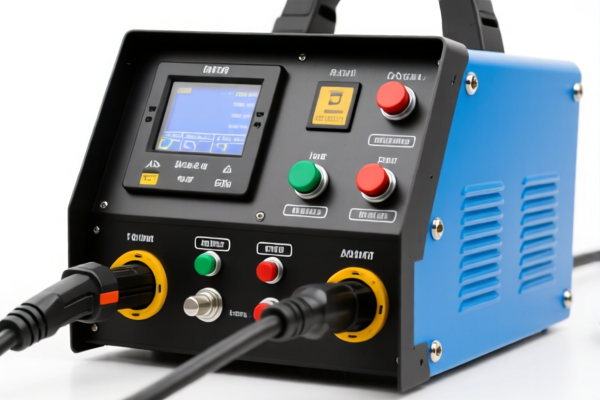
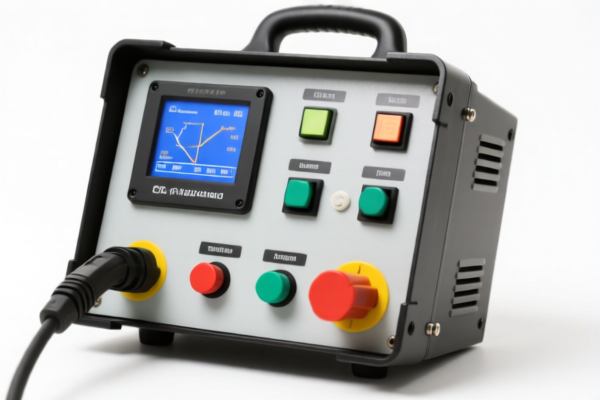
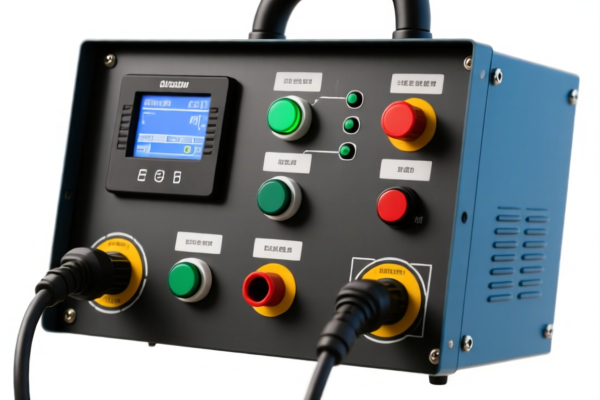
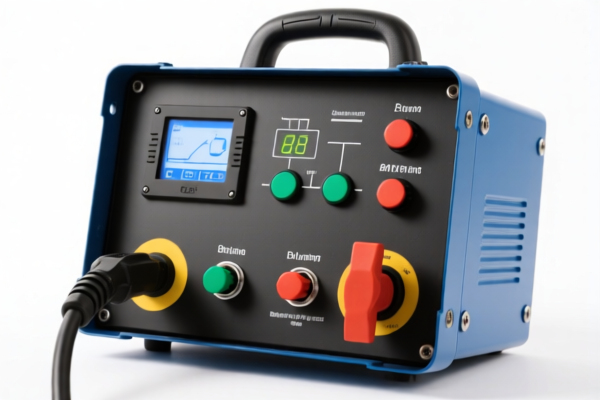
AI Analysis
🛠️ Welding Machine Control Boards (Industrial Control Panels)
🌐 HS Code Reference & Customs Clearance Guide | 2026 Latest Tariff Analysis | Professional Clearance Strategy
📌 I. Product Definition & Classification: What Exactly is a "Welding Machine Control Board"?
A Welding Machine Control Board (often categorized as part of a control panel, console, or base) is an integrated electrical assembly used to regulate, distribute, and control the power supply for welding equipment. In international trade, it is not classified as a standalone welding machine (Heading 8515) nor as a simple switch (Heading 8536). Instead, it falls under Heading 8537: Boards, panels, consoles, desks, cabinets and other bases, equipped with two or more apparatus of heading 8535 or 8536, for electric control or the distribution of electricity...
The critical distinction lies in whether the device contains Programmable Logic Controllers (PLCs) or Numerical Control (NC) units:
- Programmable Controllers (PLCs): General-purpose industrial controllers used for logic sequencing, monitoring, and automated control of the welding process.
- Numerical Controls (NC): Specialized computerized controls used to automate machine tools, often integrated into high-end CNC welding robots or automated welding systems.
⚠️ Key Distinction Point:
- If the board acts as a general programmable logic controller (PLC) for machine automation → HS Code: 8537.10.91.60
- If the board is specifically a Numerical Control (NC) unit for controlling machine tools (e.g., CNC welding robots) → HS Code: 8537.10.91.30
📦 II. HS Code Classification Details (2026 Latest Tariff Authority Comparison)
| HS Code | Product Description | Application Scenario | Control Type |
|---|---|---|---|
8537.10.91.60 |
Programmable controllers | General industrial welding machines, automated welding cells, PLC-based control panels | ✅ Programmable Logic Controller (PLC) |
8537.10.91.30 |
Numerical controls for machine tools | CNC welding robots, automated welding production lines, computerized machine tool controls | ✅ Numerical Control (NC) |
🔍 Important Reminder:
- Both codes fall under "For a voltage not exceeding 1,000 V".
- The classification depends entirely on the functional nature of the control apparatus.
- Do not misclassify as "Parts of Welding Machines" (8515) unless the control board cannot function independently as a control unit.
💰 III. 2026 Latest Tariff Rate Breakdown (Detailed Tax Clauses)
✅ Applicable Country: United States (US)
✅ Country of Origin: China (CN)
✅ Effective Date: Current Trade Regulations (Section 301 / IEEPA)
🎯 1. 8537.10.91.60 —— Programmable Controllers (PLCs)
| Item | Content |
|---|---|
| Base Tariff Rate | 2.7% (Ad Valorem) |
| Additional Tariff (Section 301) | +25.0% (Specific to China-origin goods) |
| Total Tax Rate | 27.7% |
| Tax Calculation Basis | CIF Value × 27.7% |
| De Minimis Exemption | ❌ Not Eligible (Subject to all applicable duties) |
| Legal Authority Path | HTSUS: 8537.10.91.60 → USITC Footnote 9903.88.01 (Section 301) |
📌 Explanation:
- The 2.7% is the standard Most Favored Nation (MFN) rate for general programmable controllers under 1,000V.
- The 25.0% is the additional tariff imposed under Section 301 of the Trade Act of 1974, targeting Chinese-manufactured electronic control equipment.
- Total Liability: 27.7% on the declared customs value.
🎯 2. 8537.10.91.30 —— Numerical Controls for Machine Tools
| Item | Content |
|---|---|
| Base Tariff Rate | 2.7% (Ad Valorem) |
| Additional Tariff (Section 301) | +0.0% (Exempt from Section 301 additional duties in this specific subheading) |
| Total Tax Rate | 2.7% |
| Tax Calculation Basis | CIF Value × 2.7% |
| De Minimis Exemption | ❌ Not Eligible (Standard MFN rate applies) |
| Legal Authority Path | HTSUS: 8537.10.91.30 → Exempt from 301 Additional Duties |
📌 Crucial Note:
- Despite being Chinese-origin, Numerical Controls (NC) under HS 8537.10.91.30 are exempt from the 25% Section 301 additional tariff.
- This results in a massive 25% tax savings compared to Programmable Controllers (PLCs).
- Classification Accuracy is Critical: Misclassifying an NC as a PLC increases tax burden from 2.7% to 27.7%.
🛠️ IV. Customs Clearance Practical Advice (Real-World Pitfall Avoidance)
✅ 1. Documentation Checklist (Essential for Clearance)
| Document | Required | Purpose |
|---|---|---|
| ✅ Product Specification Sheet | ✔️ | Must detail if the controller is PLC-based or Numerical Control (NC). Include CPU type, programming language, and application (e.g., "CNC Robot Controller" vs. "General Purpose PLC"). |
| ✅ Circuit Diagram / Schematic | ✔️ | Proves the integration of multiple apparatus (8535/8536) for electric control. |
| ✅ Product Photos (Front/Rear/Internal) | ✔️ | Shows labels, model numbers, and interface types. |
| ✅ Commercial Invoice | ✔️ | Must clearly describe the item as "Control Board for Welding Machine" or "Numerical Control Unit," not just "Electrical Part." |
| ✅ Packing List | ✔️ | Ensure no separate charging of cables/accessories if they are part of the main unit. |
✅ 2. Declaration Tips (Key Mnemonic)
🔥 "NC is Cheap, PLC is Expensive; Classify Right, Save Big Money!"
| Scenario | Correct HS Code | Tax Rate | Common Mistake |
|---|---|---|---|
| CNC Welding Robot Controller | 8537.10.91.30 |
2.7% | Misclassified as PLC → 27.7% |
| General PLC for Welding Line | 8537.10.91.60 |
27.7% | Misclassified as NC → Risk of Penalty |
| Simple Relay Panel (No Programmable Logic) | 8537.10.99.xx |
Varies | Over-complex classification |
📌 Warning:
- If your product is a Numerical Control (NC) system, you MUST provide evidence (datasheets, software manuals) proving it controls machine tools.
- If it is a standard PLC (e.g., Siemens S7, Allen-Bradley CompactLogix) used for general automation, it falls under 8537.10.91.60.
✅ 3. Special Cases & Handling
| Situation | Handling Advice |
|---|---|
| Hybrid Units (PLC + NC) | If the unit combines both, customs may classify based on the principal function. If primarily for machine tool control, argue for 8537.10.91.30. |
| Imported as "Parts" | Do not declare as "Parts of Welding Machines" (8515). Control boards with integrated switching/apparatus are classified under 8537. |
| Voltage > 1,000V | Different HS code applies (8537.10.99.xx). Ensure voltage rating is correctly stated in documentation. |
| Origin Marking | Ensure "Made in China" is clearly marked. This triggers the Section 301 analysis. |
🌍 V. Global Market Comparison (2026 Latest)
| Country/Region | Recommended HS Code | Tariff Rate (CN Origin) | Key Requirement |
|---|---|---|---|
| 🇺🇸 USA | 8537.10.91.30 (NC) |
2.7% | Must prove NC function |
| 🇺🇸 USA | 8537.10.91.60 (PLC) |
27.7% | Standard PLC classification |
| 🇪🇺 EU | 8537.10.91 |
~2.7% | No Section 301 equivalent, but check VAT |
| 🇨🇳 China | 8537.10.91 |
~2.7-3% | Standard MFN rate |
| 🇬🇧 UK | 8537.10.91 |
~2.7% | Post-Brexit rules apply |
📌 Conclusion:
- USA is the most complex market due to the 25% Section 301 tariff on Programmable Controllers (PLCs).
- Numerical Controls (NC) remain at a low 2.7% even from China, offering a significant cost advantage.
- Accurate functional classification is the single most important factor in minimizing tax liability.
📌 VI. Common Errors & Pitfall Guide (Lessons Learned)
❌ Error 1: Declaring a CNC Controller as "Welding Machine Part"
👉 Consequence: Customs may reclassify to 8537, but if misclassified as PLC, you face 25% retroactive duty + penalties.
❌ Error 2: Using "Control Board" as the sole description without specifying PLC vs. NC
👉 Consequence: Customs officers may default to the higher-tax category (PLC 8537.10.91.60) for safety, resulting in 27.7% tax.
❌ Error 3: Ignoring the "Voltage" specification
👉 Consequence: If voltage exceeds 1,000V, the HS code changes entirely, leading to wrong duty calculation.
✅ Correct Practice:
"Numerical Control Unit for CNC Welding Robot, Model XYZ, Input Voltage: 220V, DC Control, Chinese Origin"
🎯 VII. Conclusion: Precision Classification for Cost Efficiency
🎯 Remember the Rule:
🔹 "NC is 2.7%, PLC is 27.7% — One Word Difference, 25% Tax Gap!"
🔹 "If it controls a machine tool via code, fight for HS 8537.10.91.30."
📌 Pro Tip:
If your welding control system is a CNC-based Numerical Control, provide software manuals, interface diagrams, and application notes to customs brokers to justify the 8537.10.91.30 classification and avoid the 25% surcharge.
📣 Immediate Action:
📞 Consult a Licensed Customs Broker
📄 Prepare Detailed Technical Specifications
🚀 Ensure Correct HS Code Declaration to Save 25% in Duties!
✨ Professional Clearance, Starting with Accurate Classification!
💼 Every Percentage Point Matters in Global Trade!
Customer Reviews
About HS Code Classification
The Harmonized System (HS) is an internationally standardized nomenclature developed by the World Customs Organization (WCO) to classify traded products. Over 200 countries use the HS system as the basis for customs tariffs, trade statistics, and import/export regulations.
Each HS code follows a hierarchical structure:
- Chapter (2 digits) — Broad category of goods (e.g., Chapter 84: Machinery and Mechanical Appliances)
- Heading (4 digits) — More specific grouping within the chapter
- Subheading (6 digits) — Internationally standardized breakdown, used by all WCO member countries
- National subdivisions (8-10 digits) — Country-specific extensions for further classification, such as US HTSUS 10-digit codes
Correct HS code classification is essential for smooth customs clearance, accurate duty payment, and compliance with trade regulations. Misclassification can lead to customs delays, overpayment of duties, or penalties.
When importing from CN to US, the applicable tariff rates may include:
- Most-Favored-Nation (MFN) rate — The standard duty rate applied to WTO members
- General rate — Applied to countries without trade agreements
- Trade remedy duties — Additional tariffs such as Section 301 (anti-dumping), Section 232 (national security), or countervailing duties
The information provided on this page is for reference purposes only. For official classification, please consult with your local customs authority or a licensed customs broker.