Welding Machine Parts
CN → US| HS Code | Tariff Rate | Origin | Destination | Doc |
|---|---|---|---|---|
| 8515904000 | 35.0% | CN | US | Official Doc |
| 7312107000 | 85.0% | CN | US | Official Doc |
| 8515902000 | 86.6% | CN | US | Official Doc |
| 7312900000 | 85.0% | CN | US | Official Doc |
| 8311100000 | 35.0% | CN | US | Official Doc |
Product Images
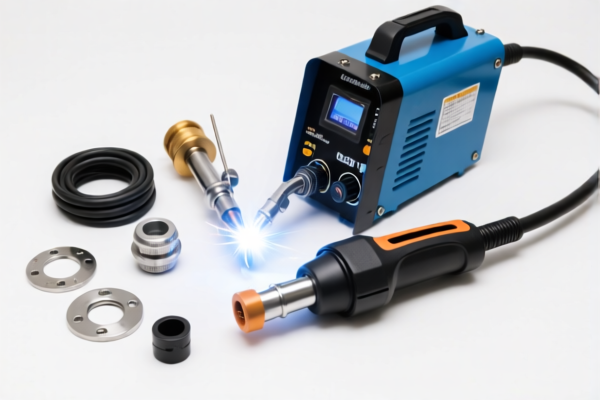
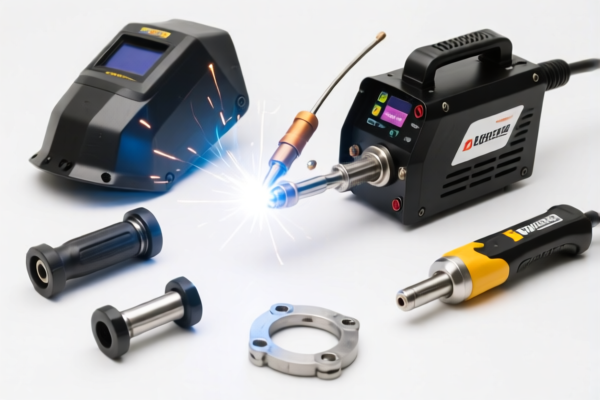
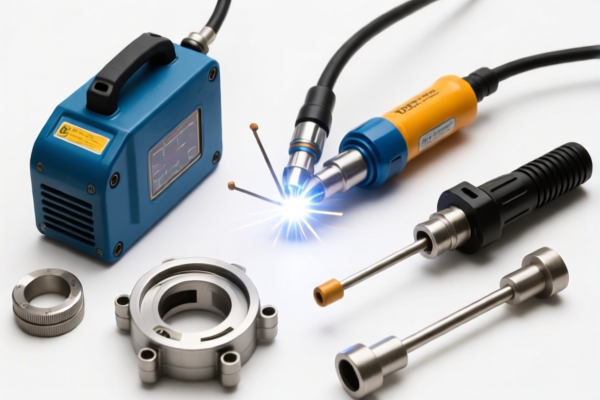
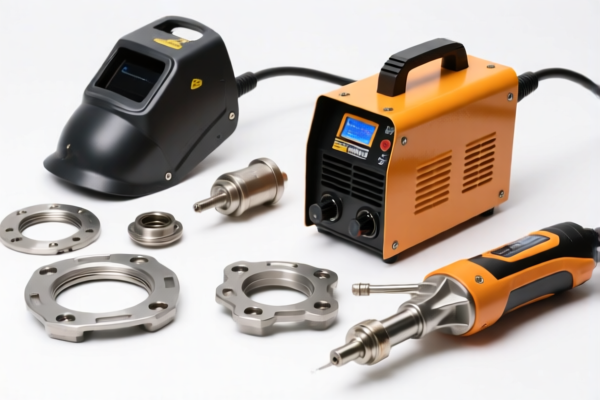
AI Analysis
🔧 Welding Machine Parts: Ultimate HS Code Guide & Customs Clearance Strategy (2026)
🌐 HS Code Reference & Customs Clearance Guide | 2026 Latest Tariff Analysis | Professional Compliance Strategy
📌 I. Product Definition: What Exactly Are "Welding Machine Parts"?
In international trade, "Welding Machine Parts" is not a single, specific commodity but a broad category that varies significantly based on material composition and specific function. Misclassification here can lead to massive tariff differences (from 35% to 86.6%) and customs delays.
The items in the reference data fall into two main competing categories: 1. Spares/Parts of Electrical Machinery (HS 85): Focuses on the functional role as part of a welding machine. 2. Articles of Iron/Steel (HS 73): Focuses on the material (metal cables, rods, structural components), overriding function if not specifically recognized as "machinery parts."
⚠️ Critical Distinction:
- If the item is a component specifically designed for a welding machine (e.g., torch parts, control modules, electrodes) and is recognized as such → HS 85 applies (Lower Tax).
- If the item is a generic metal product (e.g., steel cables, wires, rods) used in welding but classified as a raw metal good → HS 73 applies (Higher Tax due to steel/aluminum surcharges).
📦 II. HS Code Classification Details (2026 Latest Tariff Data)
Based on the provided data, here are the 5 most relevant HS Codes for "Welding Machine Parts," ranked by cost-efficiency (Lowest Tax to Highest Tax).
| HS Code | Product Description & Rationale | Application Scenario | Material/Feature |
|---|---|---|---|
| 8515.90.40.00 | Other Parts of Welding Machines (Best Option) |
Specific spares, nooks, crannies, or specialized components for arc/gas welding machines. | Matches function perfectly; no material conflict. |
| 8311.10.00.00 | Metallurgical Arc/Gas Welding Electrodes | Coated or uncoated metal rods/wires specifically for arc welding. | 贱金属 (Base Metal) property aligns with electrode function. |
| 8515.90.20.00 | Other Parts of Electrical Machinery | Components inferred as metal/related assemblies where material is secondary to electrical function. | Inferred metal/assembly; no direct conflict. |
| 7312.10.70.00 | Stranded Iron/Steel Cables | Metal cables, ropes, or wire bundles used in welding setups. | Classified as Steel Cable due to material inference. |
| 7312.90.00.00 | Other Stranded Cables/Ropes | Generic metal cables not specifically for data transmission or other specific uses. | Inferred metal; categorized as general steel articles. |
🔍 Key Insight:
- HS 8515.90.40.00 is the winner for most "welding parts" because it explicitly covers "other parts" of welding equipment with no material conflict. - HS 8311.10.00.00 is the winner if you are shipping electrodes (welding rods/wires), as it specifically targets metallurgical welding consumables. - HS 73xx Codes are losers for pure "parts" unless you are importing raw steel cables/wires used in welding, as they trigger heavy steel/aluminum surcharges.
💰 III. 2026 Latest Tariff Rate Breakdown (US Import from China)
✅ Applicable Country: USA
✅ Origin: China
✅ Effective Date: Post-2025 Policies (Including 301 Tariffs & IEEPA)
🎯 1. 8515.90.40.00 —— Other Parts of Welding Machines (RECOMMENDED)
| Item | Content |
|---|---|
| Base Tariff | 0.0% |
| Section 301 Surcharge | +25.0% |
| IEEPA (122 Clause) | +10.0% |
| Steel/Aluminum Surcharge | ❌ NOT APPLICABLE (Not classified as base metal article) |
| Total Tax Rate | 35.0% |
| Tax Calculation | CIF Value × 35% |
| De Minimis Exemption | ❌ Not Eligible (Commercial shipment) |
| Legal Basis Path | USITC:8515.90.40.00 → FOOTNOTE:301 → IEEPA:122 |
📌 Explanation:
- This is the most cost-effective classification for welding machine components. - It avoids the 50% steel/aluminum surcharge because it is classified as machinery parts (HS 85), not steel articles (HS 73). - Total Burden: 35%.
🎯 2. 8311.10.00.00 —— Metallurgical Electrodes (GOOD FOR RODS/WIRES)
| Item | Content |
|---|---|
| Base Tariff | 0.0% |
| Section 301 Surcharge | +25.0% |
| IEEPA (122 Clause) | +10.0% |
| Steel/Aluminum Surcharge | ❌ NOT APPLICABLE (Specifically covered under welding electrode category) |
| Total Tax Rate | 35.0% |
| Tax Calculation | CIF Value × 35% |
| De Minimis Exemption | ❌ Not Eligible |
| Legal Basis Path | USITC:8311.10.00.00 → FOOTNOTE:301 → IEEPA:122 |
📌 Explanation:
- Ideal for welding rods, wires, and electrodes. - Same low tax burden (35%) as HS 8515.90.40.00. - Do not classify welding wires as steel cables (HS 73) to avoid higher taxes.
🎯 3. 8515.90.20.00 —— Other Parts of Electrical Machinery (RISKY/AMBIGUOUS)
| Item | Content |
|---|---|
| Base Tariff | 1.6% |
| Section 301 Surcharge | +25.0% |
| IEEPA (122 Clause) | +10.0% |
| Steel/Aluminum Surcharge | +50.0% ⚠️ (High Risk) |
| Total Tax Rate | 86.6% |
| Tax Calculation | CIF Value × 86.6% |
| De Minimis Exemption | ❌ Not Eligible |
| Legal Basis Path | USITC:8515.90.20.00 → FOOTNOTE:301 → IEEPA:122 → USITC:SteelSurcharge |
📌 Explanation:
- AVOID this code if possible. - Although it starts with 1.6% base, it triggers the 50% steel/aluminum surcharge because the summary notes "inferred metal/assembly." - Total Burden: 86.6% (Over double the recommended rate!).
🎯 4. 7312.10.70.00 & 7312.90.00.00 —— Steel Cables/Ropes (HIGHEST TAX)
| Item | Content |
|---|---|
| Base Tariff | 0.0% |
| Section 301 Surcharge | +25.0% |
| IEEPA (122 Clause) | +10.0% |
| Steel/Aluminum Surcharge | +50.0% ⚠️ (Mandatory) |
| Total Tax Rate | 85.0% |
| Tax Calculation | CIF Value × 85.0% |
| De Minimis Exemption | ❌ Not Eligible |
| Legal Basis Path | USITC:7312.10.70.00 → FOOTNOTE:301 → IEEPA:122 → USITC:SteelSurcharge |
📌 Explanation:
- These codes apply if you are shipping steel cables, ropes, or wire bundles that are not specifically "welding machine parts" but are made of steel. - The 50% steel surcharge is triggered because HS 73 is a "Steel/Article of Iron/Steel" category. - Total Burden: 85.0%. Only use if the item is genuinely a steel cable and cannot be classified as a welding part.
🛠️ IV. Customs Clearance Practical Advice (Pitfall Avoidance Guide)
✅ 1. Documentation Checklist (Mandatory)
| Document | Required? | Note |
|---|---|---|
| ✅ Product Specification Sheet | ✔️ | Must clearly state: "Part of Welding Machine," model compatibility, and function. |
| ✅ Technical Diagrams | ✔️ | Show how the part fits into the welding machine (proves it's a "part," not a raw material). |
| ✅ Commercial Invoice | ✔️ | Description: "Welding Machine Spare Part, Model XYZ, for [Machine Type]." Avoid vague terms like "Metal Component." |
| ✅ Certificate of Origin | ✔️ | Essential for proving origin (China) to apply correct tariffs. |
| ✅ Packaging List | ✔️ | Clearly list items as "Parts" not "Steel Cables" or "Raw Materials." |
✅ 2. Classification Strategy (Key Tips)
🔥 “Function First, Material Second, Name Precise, Tax Low!”
| Situation | Correct HS Code | Wrong HS Code | Consequence |
|---|---|---|---|
| Specific Torch Parts, Nozzles, Tips | 8515.90.40.00 |
7326.90.00 (Other Steel Articles) |
Saving ~50% tax |
| Welding Electrodes/Rods | 8311.10.00.00 |
7314.40 (Steel Cloth/Wire) |
Saving ~50% tax |
| Generic Steel Cables used in Welding | 7312.10.70.00 |
8515.90.40.00 |
Risk of penalty if misdeclared as "part" |
| Control Boards, Power Units | 8515.90.40.00 |
8537.10 (Control Panels) |
Ensure it's clearly a "part" not a "complete panel" |
📌 Warning:
- Do NOT declare "Welding Wire" as "Steel Cable" (HS 73) if it is intended for welding. Use8311.10.00.00. - Do NOT declare "Welding Machine Parts" as "Other Steel Articles" (HS 73) unless they are generic structural steel items. Use8515.90.40.00.
✅ 3. Special Case Handling
| Situation | Recommendation |
|---|---|
| Mixed Shipment | Separate "Welding Parts" (HS 85/83) from "Steel Cables/Ropes" (HS 73) in the invoice. |
| OEM Parts | Provide the OEM machine manual showing the part number. |
| Used Parts | Declare as "Used Welding Machine Parts" with condition report. Same HS Code applies, but value declaration must be accurate. |
| Small Samples | Check if De Minimis ($800) applies. If yes, tax may be 0% for low-value shipments, but proper HS code must still be declared. |
🌍 V. Global Market Comparison (2026)
| Market | Recommended HS Code | Tax Rate (China Origin) | Key Certification | Note |
|---|---|---|---|---|
| 🇺🇸 USA | 8515.90.40.00 |
35% (Lowest) | FCC, UL (if applicable) | Avoid HS 73 to save 50% surcharge. |
| 🇨🇳 China | 8515.90.40.00 |
~0-10% | CCC (if applicable) | Lower tariffs, no IEEPA surcharge. |
| 🇪🇺 EU | 8515.90.40.00 |
~4-6% | CE, RoHS | No steel surcharge, but verify origin rules. |
| 🇬🇧 UK | 8515.90.40.00 |
~3.5% | UKCA, CE | Post-Brexit rules apply. |
| 🇯🇵 Japan | 8515.90.40.00 |
~0-3% | PSE, JIS | Low tariffs, high quality standards. |
📌 Conclusion:
- USA is the most critical market due to IEEPA + 301 Tariffs. - Choosing the wrong HS Code (HS 73) in the US can increase taxes by 50% instantly. - HS 8515.90.40.00 and HS 8311.10.00.00 are your best friends for cost savings.
📌 VI. Common Mistakes & Pitfalls (Blood & Tears Lessons)
❌ Mistake 1: Declaring "Welding Wire" as "Steel Cable" (HS 73)
👉 Result: Tax jumps from 35% to 85%. Loss: 50%!
❌ Mistake 2: Declaring "Welding Torch Parts" as "Other Steel Articles" (HS 7326)
👉 Result: Triggers 50% steel surcharge. Loss: ~50%!
❌ Mistake 3: Vague Description "Metal Parts" on Invoice
👉 Result: Customs holds shipment, demands proof of function, causes delays + storage fees.
❌ Mistake 4: Using "Other Parts" (HS 8515.90.20.00) for metal parts
👉 Result: Triggers 50% steel surcharge due to material inference. Total Tax: 86.6%!
✅ Correct Approach:
"Welding Machine Spare Parts, Nozzle & Tip, Model ABC, for Gas Tungsten Arc Welder" → HS 8515.90.40.00
🎯 VII. Conclusion: Professional Classification Saves Money!
🎯 Remember the Golden Rules:
🔹 "Function First, Steel Second, HS 85 is King!"
🔹 "Welding Rods? HS 8311. Cables? HS 73. Parts? HS 8515!"
🔹 "Avoid HS 73 for Parts, Save 50% Tax, Happy Customs Clearance!"
📌 Pro Tip:
If you are unsure whether your item is a "part" or a "steel article," provide technical drawings and function descriptions to your customs broker. Consider applying for an Advance Ruling from US Customs (CBP) to lock in the correct HS Code and avoid surprise taxes.
📣 Immediate Action:
📞 Consult a licensed customs broker.
📄 Provide detailed product specs.
🚀 Classify correctly, pay less tax, clear faster!
✨ Professional Customs Clearance Starts with Accurate Classification!
💼 Every percentage point of tax is profit lost!
Customer Reviews
About HS Code Classification
The Harmonized System (HS) is an internationally standardized nomenclature developed by the World Customs Organization (WCO) to classify traded products. Over 200 countries use the HS system as the basis for customs tariffs, trade statistics, and import/export regulations.
Each HS code follows a hierarchical structure:
- Chapter (2 digits) — Broad category of goods (e.g., Chapter 84: Machinery and Mechanical Appliances)
- Heading (4 digits) — More specific grouping within the chapter
- Subheading (6 digits) — Internationally standardized breakdown, used by all WCO member countries
- National subdivisions (8-10 digits) — Country-specific extensions for further classification, such as US HTSUS 10-digit codes
Correct HS code classification is essential for smooth customs clearance, accurate duty payment, and compliance with trade regulations. Misclassification can lead to customs delays, overpayment of duties, or penalties.
When importing from CN to US, the applicable tariff rates may include:
- Most-Favored-Nation (MFN) rate — The standard duty rate applied to WTO members
- General rate — Applied to countries without trade agreements
- Trade remedy duties — Additional tariffs such as Section 301 (anti-dumping), Section 232 (national security), or countervailing duties
The information provided on this page is for reference purposes only. For official classification, please consult with your local customs authority or a licensed customs broker.