Welding Table
CN → US| HS Code | Tariff Rate | Origin | Destination | Doc |
|---|---|---|---|---|
| 7326190080 | 87.9% | CN | US | Official Doc |
| 7326908688 | 87.9% | CN | US | Official Doc |
| 8485800000 | 37.5% | CN | US | Official Doc |
| 8485909000 | 35.0% | CN | US | Official Doc |
| 9403200090 | 85.0% | CN | US | Official Doc |
| 9403100040 | 85.0% | CN | US | Official Doc |
Product Images
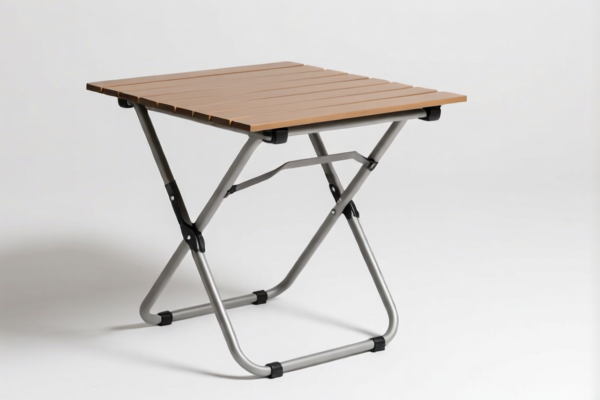
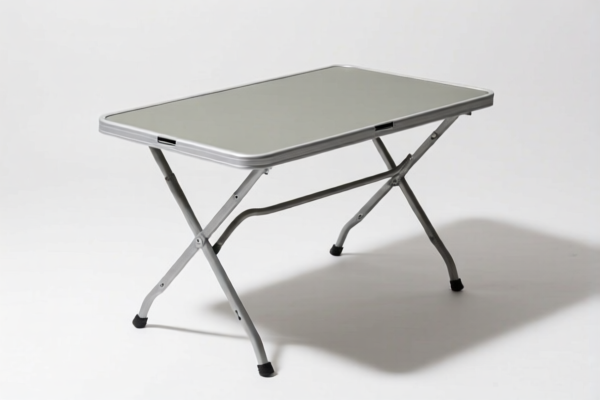
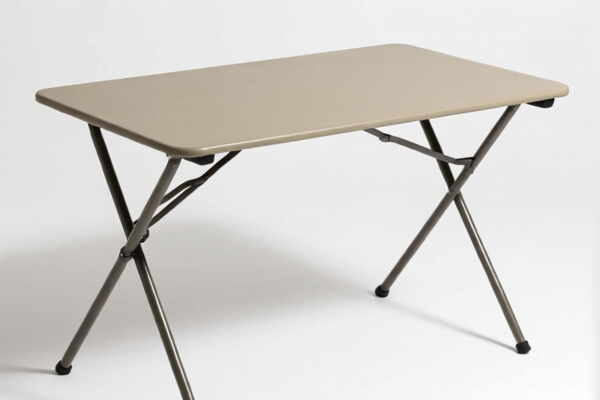
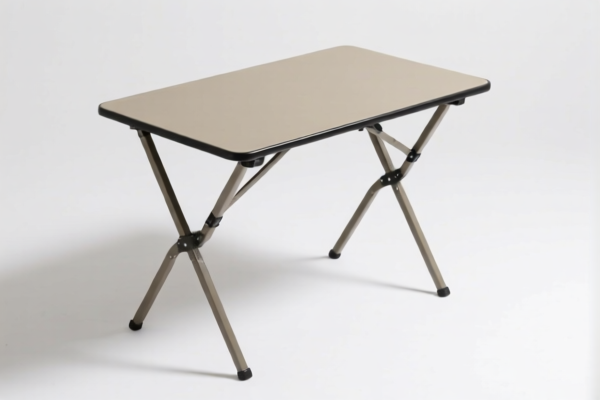
AI Analysis
🔨 Welding Table (Metal Furniture of a Kind Used in Offices... Other)
🌐 HS Code Reference & Customs Clearance Guide | 2026 Latest Tariff Analysis | Pro-Level Import Strategy
📌 One, Product Definition & Classification: Do You Really Know What a "Welding Table" Is?
A welding table is a heavy-duty, precision-engineered metal workbench designed specifically for welding, assembly, and fabrication tasks in industrial workshops, manufacturing plants, and automotive repair facilities. It serves as a stable, durable, and often modular platform to hold metal components during welding operations.
⚠️ Key Differentiator:
- If it's a standalone metal frame with a flat surface, used for welding, cutting, or assembling metal parts → classified as metal furniture
- If it's part of a robotic welding cell or automated system → may fall under machinery (e.g., 8456.10.00)
- If it's a simple steel platform without fixed structure → may be misclassified as "other iron/steel articles"✅ Correct Classification:
A welding table used in industrial settings — typically made of steel, with a flat top, bolted legs, and sometimes adjustable clamps — is not a machine, but rather metal furniture designed for industrial use.
📦 Two, HS Code Classification Details (2026 Latest Tariff Authority Match)
| HS Code | Product Description | Applicable Use Case | Is It a Machine? |
|---|---|---|---|
9403.10.00.40 |
Metal furniture of a kind used in offices... Other | Industrial welding tables, fabrication benches, workshop worktables | ❌ No — furniture, not machinery |
9403.20.00.90 |
Other furniture and parts thereof: Other metal furniture Other | Non-office metal workbenches, welding tables, tool storage racks | ❌ No — furniture, not machinery |
8485.80.00.00 |
Machines for additive manufacturing: Other | 3D printers, laser sintering machines, metal deposition systems | ❌ No — not a welding table |
8485.90.90.00 |
Machines for additive manufacturing: Parts: Other | Spare parts for 3D printers, build plates, nozzles, etc. | ❌ No — parts, not full tables |
🔍 Critical Insight:
- Do NOT classify a welding table as a "machine" — even if it's used in automated welding cells.
- The key factor is function and structure: if it’s a support platform for work, not a processing machine, it’s furniture.
- "Welding table" ≠ "welding machine" — this is a common misclassification leading to severe tariff overpayment.
💰 Three, 2026 Latest Tariff Breakdown (With附加 Taxes & Policy Clauses)
✅ Applicable Country: United States (US)
✅ Origin: China (CN)
✅ Effective Date: November 10, 2025 (and ongoing)
🎯 1. 9403.10.00.40 — Metal Furniture of a Kind Used in Offices... Other
| Item | Detail |
|---|---|
| Base Tariff | 0.0% (ad valorem) |
| Additional Tariff (USITC 301) | +25.0% |
| Steel, Aluminum, Copper Products Additional Tariff | +50.0% |
| Total Effective Tariff | 75.0% |
| Tax Calculation | CIF Value × 75.0% |
| De Minimis Threshold | ❌ Not applicable (denied) |
| Legal Basis Path | IEEPA:9903.01.25 → USITC:9403.10.00.40 → FOOTNOTE:9903.88.01 |
📌 Explanation:
- The 25% USITC 301 tariff applies to all goods from China under Section 301 of the Trade Act of 1974.
- The 50% steel/aluminum/copper product tariff is triggered because the welding table is made of iron/steel and falls under the "steel, aluminum, copper products" category.
- Total: 75% — extremely high for a non-machine item.
🎯 2. 9403.20.00.90 — Other Furniture and Parts Thereof: Other Metal Furniture Other
| Item | Detail |
|---|---|
| Base Tariff | 0.0% |
| Additional Tariff (USITC 301) | +25.0% |
| Steel, Aluminum, Copper Products Additional Tariff | +50.0% |
| Total Effective Tariff | 75.0% |
| Tax Calculation | CIF Value × 75.0% |
| De Minimis Threshold | ❌ Not applicable |
| Legal Basis Path | IEEPA:9903.01.25 → USITC:9403.20.00.90 → FOOTNOTE:9903.88.01 |
📌 Note:
- This code applies to non-office metal furniture, such as industrial workbenches, welding tables, tool cabinets.
- Same tax treatment as9403.10.00.40— 75% total tariff.
- No difference in rate — only the description differs.
🛠️ Four, Customs Clearance Practical Tips (Pro-Level Avoidance Guide)
✅ 1. Required Documentation (No Exceptions)
| Document | Must Provide | Purpose |
|---|---|---|
| ✅ Product Specification Sheet | ✔️ | Include material (steel grade), dimensions, weight, load capacity |
| ✅ Structural Diagram / CAD Drawing | ✔️ | Prove it's a workbench, not a machine |
| ✅ High-Resolution Product Photos | ✔️ | Show welding table with no motors, no control panels, no sensors |
| ✅ Third-Party Test Report | ✔️ | ASTM, SGS, or CE (if applicable) |
| ✅ Commercial Invoice | ✔️ | Clearly state: "Welding Table, Industrial Metal Workbench, Steel Frame, No Moving Parts" |
| ✅ Certificate of Origin (CO) | ✔️ | If from Vietnam, Mexico, or Thailand — can avoid 301 tariffs |
| ✅ Packing List | ✔️ | Show no internal electronics or machinery |
✅ 2.申报技巧 (Key Pro Tips)
🔥 "No motors, no circuits, no control — it’s furniture, not machine!"
| Scenario | Correct HS Code | Wrong Code | Risk |
|---|---|---|---|
| Welding table with steel frame, flat top, adjustable clamps | 9403.10.00.40 or 9403.20.00.90 |
8485.80.00.00 (machine) |
+75% tax |
| Table with built-in hydraulic lift or motorized adjustment | 8479.89.90.00 (other machinery) |
9403.20.00.90 |
under-declared |
| Table used in robotic welding cell | 9403.20.00.90 (if standalone) |
8456.10.00.00 (robotic welding machine) |
audit risk |
✅ Best Practice:
Use clear, precise language in invoice:"Industrial Welding Table, Steel Frame, 2000mm x 1000mm, 1000kg Load Capacity, No Motors, No Electronics, Used for Metal Fabrication"
✅ 3. Special Cases & Solutions
| Situation | Recommended Action |
|---|---|
| Table with built-in clamps or vices | Still 9403.20.00.90 — mechanical parts, not electronics |
| Table with integrated leveling feet or casters | Still furniture — no change in HS code |
| Table with modular design (interchangeable panels) | Still 9403.20.00.90 — not a machine |
| Table from Vietnam/Mexico/Thailand | Apply for CO → avoid 301 + 50% steel tariffs → 0% or 5% total |
| Table used in military/aviation workshops | May qualify for non-commercial exemption — requires prior approval |
🌍 Five, Global Market Customs Comparison (2026 Latest)
| Country/Region | Recommended HS Code | Tariff | Certification | Notes |
|---|---|---|---|---|
| 🇺🇸 USA | 9403.10.00.40 or 9403.20.00.90 |
75.0% (China origin) | None required | Highest tariff |
| 🇨🇳 China | 9403.20.00.90 |
5% | CCC | No additional tariffs |
| 🇪🇺 EU | 9403.20.00.90 |
0% (if CE) | CE | No 301 or steel tariffs |
| 🇦🇺 Australia | 9403.20.00.90 |
5% | RCM | No extra tariffs |
| 🇯🇵 Japan | 9403.20.00.90 |
0% | PSE | No extra tariffs |
📌 Conclusion:
- The USA is the only market imposing 75% total tariff on welding tables from China.
- Vietnam/Mexico/Thailand origin can avoid 75% tariff — critical for cost control.
📌 Six, Common Mistakes & Risk Avoidance (Real-World Pitfalls)
❌ Mistake 1: Classifying a welding table as 8485.80.00.00 (machine)
👉 Result: 75% tariff instead of 0% — overpayment by 75%
👉 Risk: Customs audit, penalties, delays
❌ Mistake 2: Not providing structural drawings
👉 Result: Customs assumes it's a machine → higher tariff
👉 Risk: Refusal of entry or seizure
❌ Mistake 3: Using vague description like "workbench" or "steel table"
👉 Result: Misclassification → 75% tariff
👉 Risk: Rejection, refund issues
❌ Mistake 4: Shipping from China without CO from a non-China country
👉 Result: Full 75% tariff — no relief
👉 Risk: High cost, poor ROI
✅ Correct Approach:
Use exact, precise language in invoice and customs declaration:
"Welding Table, Industrial Metal Workbench, Steel Frame, 2000x1000mm, 1000kg Capacity, No Motors, No Electronics, For Metal Fabrication Use"
🎯 Seven, Conclusion: Accurate Classification = Cost Control
🎯 Remember the Rule:
🔹 "If it’s not a machine, it’s furniture — and furniture gets hit by steel tariffs!"
🔹 "No motors? No circuits? No control panel? Then it’s not a machine — it’s a welding table!"
🔹 "75% tariff in the USA — only if from China. Change origin, save 75%!"
📌 Pro Tip:
📞 Apply for a Pre-Clearance Ruling (Advance Ruling) with U.S. Customs before shipment.
🚀 Get your HS code confirmed in writing — avoid disputes, delays, and penalties.
📣 Take Action Now:
✅ Contact a licensed customs broker
✅ Provide product photos, drawings, specs
✅ Request HS Code pre-approval
✅ Consider shifting origin to Vietnam/Mexico/Thailand
✨ Professional Customs Starts with Accurate Classification!
💼 Your profit margin depends on the right HS code — don’t gamble with 75% tariffs!
Customer Reviews
About HS Code Classification
The Harmonized System (HS) is an internationally standardized nomenclature developed by the World Customs Organization (WCO) to classify traded products. Over 200 countries use the HS system as the basis for customs tariffs, trade statistics, and import/export regulations.
Each HS code follows a hierarchical structure:
- Chapter (2 digits) — Broad category of goods (e.g., Chapter 84: Machinery and Mechanical Appliances)
- Heading (4 digits) — More specific grouping within the chapter
- Subheading (6 digits) — Internationally standardized breakdown, used by all WCO member countries
- National subdivisions (8-10 digits) — Country-specific extensions for further classification, such as US HTSUS 10-digit codes
Correct HS code classification is essential for smooth customs clearance, accurate duty payment, and compliance with trade regulations. Misclassification can lead to customs delays, overpayment of duties, or penalties.
When importing from CN to US, the applicable tariff rates may include:
- Most-Favored-Nation (MFN) rate — The standard duty rate applied to WTO members
- General rate — Applied to countries without trade agreements
- Trade remedy duties — Additional tariffs such as Section 301 (anti-dumping), Section 232 (national security), or countervailing duties
The information provided on this page is for reference purposes only. For official classification, please consult with your local customs authority or a licensed customs broker.