Western Hemlock Construction Grade Timber
CN → US| HS Code | Tariff Rate | Origin | Destination | Doc |
|---|---|---|---|---|
| 4418300100 | 38.2% | CN | US | Official Doc |
| 4407190068 | 35.0% | CN | US | Official Doc |
| 4407190076 | 35.0% | CN | US | Official Doc |
| 9403910080 | 35.0% | CN | US | Official Doc |
Product Images
AI Analysis
🌲 Western Hemlock Construction Grade Timber
🌐 HS Code Reference & Customs Clearance Guide | 2026 Latest Tariff Analysis | Professional Clearance Strategy
📌 I. Product Definition & Classification: What is "Western Hemlock"?
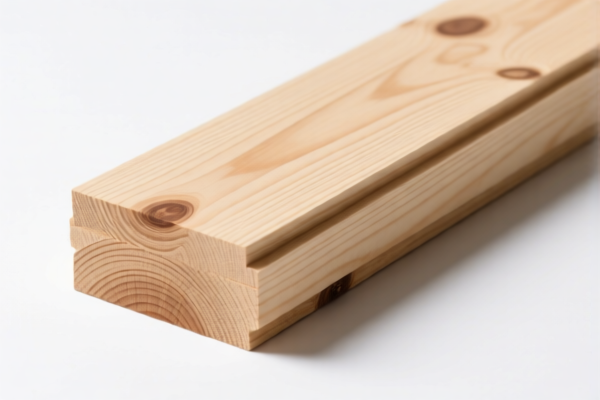
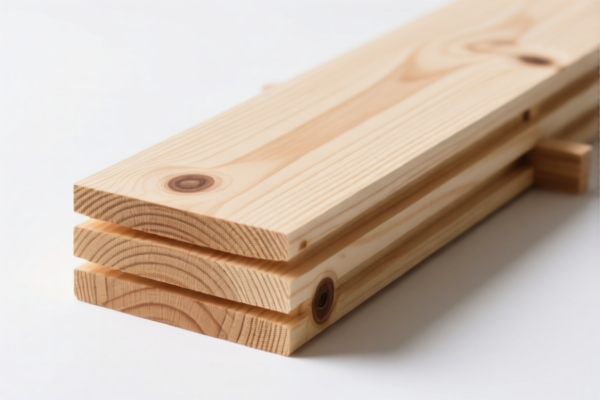
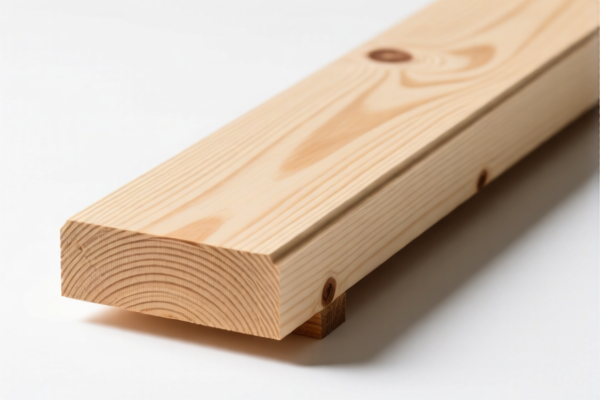
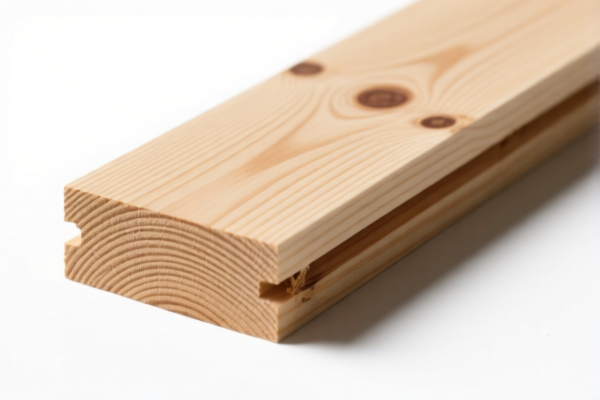
Western Hemlock (Tsuga heterophylla) is a premium softwood native to the Pacific Northwest of North America. In international trade, it is classified primarily as coniferous wood, suitable for construction, structural framing, and general timber usage.
Key Characteristics: * Material: Coniferous wood (Softwood). * Form: Typically sawn, planed, or dressed to specific dimensions for construction use. * Usage: Residential/commercial framing, beams, joists, and structural components.
⚠️ Critical Classification Distinction:
- If the wood is sawed or chipped lengthwise, it generally falls under Chapter 44 (Wood and articles of wood), specifically 4407 (Sawn wood) or 4418 (Builders' joinery and carpentry).
- The exact code depends on whether it is considered a "basic sawn product" (4407) or a "construction component" (4418).
📦 II. HS Code Classification Details (2026 Latest Tariff Reference)
Based on the provided data, here are the potential HS Code classifications for Western Hemlock Construction Grade Timber:
| HS Code | Product Description | Applicability | Key Justification |
|---|---|---|---|
4418.30.01.00 |
Cedar construction timber (Note: Data specifies Cedar, but often grouped by "Construction Timber" in broader contexts) | Builders' joinery; framed construction panels | Matches material and purpose for construction timber. Meets Chapter 4418 requirements for wooden building components. |
4407.19.00.68 |
Sawn wood of other conifers | Sawn/ched wood, not cedar | Western Hemlock is a conifer. If processed longitudinally, it fits the "sawn wood" category for non-deciduous/non-conifer exceptions (or other conifers). |
4407.19.00.76 |
Sawn wood of other conifers | Sawn/ched wood, processed | Similar to above, fits the classification for processed coniferous wood under Chapter 4407. |
9403.91.00.80 |
Parts of wooden furniture | Furniture components | If the "construction timber" is specifically cut for use as parts of wooden furniture, it may fall under this category. No material conflict with wood. |
🔍 Key Reminder:
-4407Series: Applies to sawn wood (basic processing).
-4418Series: Applies to builders' joinery (more processed, specific construction components).
-9403Series: Only applies if intended for furniture parts, not general construction.
💰 III. 2026 Latest Tariff Rate Breakdown (Including Surcharges & Policy Add-ons)
✅ Applicable Country: United States (US)
✅ Origin: China (CN) [Note: Western Hemlock is typically North American, but tariffs apply based on import origin in this context]
✅ Effective Date: November 10, 2025 onwards
🎯 1. 4418.30.01.00 — Construction Timber (Cedar/General)
| Item | Detail |
|---|---|
| Base Tariff | 3.2% |
| Section 301 Surcharge | +25.0% |
| Section 122 Tariff | +10.0% |
| Total Tariff Rate | 38.2% |
| Calculation Basis | CIF Value × 38.2% |
| De Minimis Eligibility | ❌ Not Eligible |
| Legal Basis Path | Base Tariff → Section 301 → Section 122 |
📌 Explanation:
- This code attracts the highest rate due to the combination of base tariff and all applicable surcharges.
- Section 301 (25%) and Section 122 (10%) are critical cost drivers.
🎯 2. 4407.19.00.68 & 4407.19.00.76 — Sawn Coniferous Wood
| Item | Detail |
|---|---|
| Base Tariff | 0.0% |
| Section 301 Surcharge | +25.0% |
| Section 122 Tariff | +10.0% |
| Total Tariff Rate | 35.0% |
| Calculation Basis | CIF Value × 35.0% |
| De Minimis Eligibility | ❌ Not Eligible |
| Legal Basis Path | Base Tariff → Section 301 → Section 122 |
📌 Note:
- These codes have no base tariff, resulting in a lower total rate (35.0%) compared to4418(38.2%).
- Suitable for raw or semi-processed sawn wood.
🎯 3. 9403.91.00.80 — Parts of Wooden Furniture
| Item | Detail |
|---|---|
| Base Tariff | 0.0% |
| Section 301 Surcharge | +25.0% |
| Section 122 Tariff | +10.0% |
| Total Tariff Rate | 35.0% |
| Calculation Basis | CIF Value × 35.0% |
| De Minimis Eligibility | ❌ Not Eligible |
| Legal Basis Path | Base Tariff → Section 301 → Section 122 |
📌 Warning:
- Only use this code if the timber is explicitly for furniture parts. Misclassification can lead to penalties.
🛠️ IV. Customs Clearance Practical Advice (Real-World Pitfall Guide)
✅ 1. Required Documentation Checklist (All Mandatory)
| Document | Mandatory? | Description |
|---|---|---|
| ✅ Commercial Invoice | ✔️ | Must clearly state "Western Hemlock Construction Timber" or "Sawn Coniferous Wood". |
| ✅ Packing List | ✔️ | Details quantity, weight, and packaging type. |
| ✅ Certificate of Origin | ✔️ | Proof of origin (critical for tariff calculation). |
| ✅ Phytosanitary Certificate | ✔️ | Essential for wood products to prove freedom from pests/diseases. |
| ✅ Fumigation Certificate | ✔️ | If required by destination country regulations. |
| ✅ Product Specification | ✔️ | Dimensions, treatment type (KD, HT), and end-use. |
✅ 2. Declaration Tips (Key Mantras)
🔥 "Be Precise: Material, Form, and End-Use Define the Code!"
| Scenario | Correct Declaration | Incorrect Practice |
|---|---|---|
| Raw Sawn Lumber | 4407.19.00.68 or 4407.19.00.76 |
Declaring as "Furniture Parts" → Wrong Code |
| Framed Components | 4418.30.01.00 |
Declaring as "Raw Sawn Wood" → Possible Penalty |
| Furniture Components | 9403.91.00.80 |
Declaring as "Construction Timber" → Wrong Code |
| Mixed Shipments | Separate declarations per HS Code | Lump sum declaration → High Audit Risk |
✅ 3. Special Handling
| Situation | Recommendation |
|---|---|
| Heat-Treated (HT) Wood | Ensure HT mark is visible on each piece; supports 4407 classification. |
| Kiln-Dried (KD) | Provide moisture content certification; helps avoid rejection for damp wood. |
| North American Origin | If imported from USA/Canada, check for USMCA benefits (though this data reflects US import tariffs). |
| Misclassification Risk | If unsure between 4407 and 4418, consult a customs broker. 4407 is safer for generic sawn wood. |
🌍 V. Global Market Comparison (2026 Latest)
| Country/Region | Recommended HS Code | Tariff Rate | Certification | Notes |
|---|---|---|---|---|
| 🇺🇸 United States | 4407.19.00.68 / 4418.30.01.00 |
35.0% - 38.2% | Phytosanitary | High tariffs due to Section 301 & 122. |
| 🇨🇳 China | 4407.19.00.68 |
Varies (Check Local) | Phytosanitary | Lower base tariffs, no Section 301. |
| 🇪🇺 European Union | 4407.19.00.68 |
Varies (Check Local) | Phytosanitary + IPPC | Strict phytosanitary rules. |
| 🇬🇧 United Kingdom | 4407.19.00.68 |
Varies | Phytosanitary | Post-Brexit tariff schedule applies. |
📌 Conclusion:
- US Market has the highest tariff burden for this product due to multiple surcharges.
- Phytosanitary compliance is universal and critical for all markets.
📌 VI. Common Errors & Pitfall Guide (Lessons Learned)
❌ Error 1: Declaring "Construction Timber" as "Furniture Parts" to avoid higher tariffs
👉 Consequence: Customs audit, penalty, and potential back-tariff charges.
❌ Error 2: Failing to provide Phytosanitary Certificate
👉 Consequence: Shipment held, fumigation at owner’s cost, or rejected.
❌ Error 3: Incorrectly identifying Wood Type
👉 Consequence: Misclassification under 4407 vs 4418 leads to tariff discrepancies.
❌ Error 4: Ignoring Section 301 & 122 Surcharges
👉 Consequence: Unexpected cost increase of 35-38% instead of estimated 3-5%.
✅ Best Practice:
"Western Hemlock, Sawn, Heat-Treated, Construction Grade, Origin: [Country], HT Marked"
🎯 VII. Conclusion: Professional Declaration, Cost Control, Efficiency!
🎯 Remember the Mantra:
🔹 "Sawn Wood = 4407 (35%), Construction Component = 4418 (38.2%), Furniture Part = 9403 (35%)."
🔹 "Tariffs are High: 35-38%, so Accurate Declaration is Key!"
📌 Pro Tip:
If your Western Hemlock timber is sourced from the USA or Canada, check for USMCA/FTA benefits to potentially reduce tariffs. However, based on the provided data (which reflects US import tariffs from China), the rates remain high.
Recommendation: Apply for a Pre-Ruling from Customs if unsure about the exact classification between 4407 and 4418.
📣 Immediate Action:
📞 Contact a Licensed Customs Broker + Provide Product Specs + Verify Phytosanitary Requirements
🚀 Ensure smooth clearance, avoid delays, and manage costs effectively!
✨ Professional Clearance Starts with Accurate Classification!
💼 Every Percentage Point Matters in Wood Product Trade!
Customer Reviews
About HS Code Classification
The Harmonized System (HS) is an internationally standardized nomenclature developed by the World Customs Organization (WCO) to classify traded products. Over 200 countries use the HS system as the basis for customs tariffs, trade statistics, and import/export regulations.
Each HS code follows a hierarchical structure:
- Chapter (2 digits) — Broad category of goods (e.g., Chapter 84: Machinery and Mechanical Appliances)
- Heading (4 digits) — More specific grouping within the chapter
- Subheading (6 digits) — Internationally standardized breakdown, used by all WCO member countries
- National subdivisions (8-10 digits) — Country-specific extensions for further classification, such as US HTSUS 10-digit codes
Correct HS code classification is essential for smooth customs clearance, accurate duty payment, and compliance with trade regulations. Misclassification can lead to customs delays, overpayment of duties, or penalties.
When importing from CN to US, the applicable tariff rates may include:
- Most-Favored-Nation (MFN) rate — The standard duty rate applied to WTO members
- General rate — Applied to countries without trade agreements
- Trade remedy duties — Additional tariffs such as Section 301 (anti-dumping), Section 232 (national security), or countervailing duties
The information provided on this page is for reference purposes only. For official classification, please consult with your local customs authority or a licensed customs broker.