Western Hemlock Flooring Logs
CN → US| HS Code | Tariff Rate | Origin | Destination | Doc |
|---|---|---|---|---|
| 4407140000 | 35.0% | CN | US | Official Doc |
| 4407190065 | 35.0% | CN | US | Official Doc |
Product Images
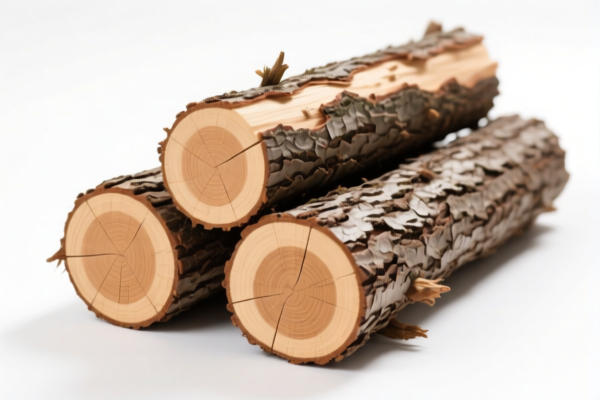
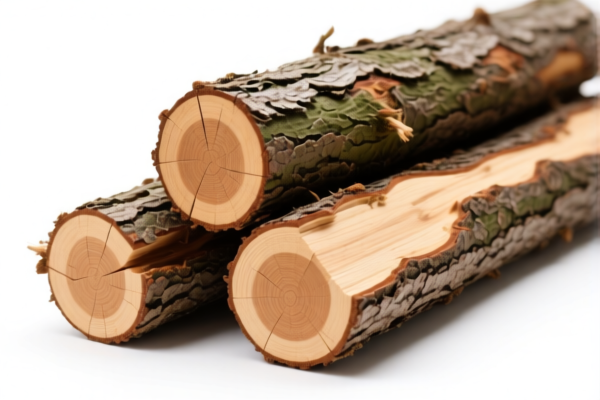
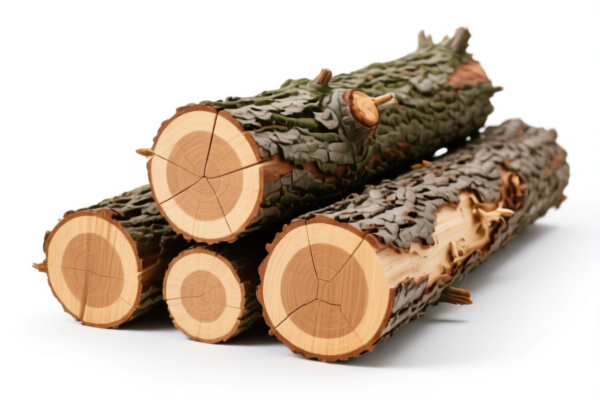
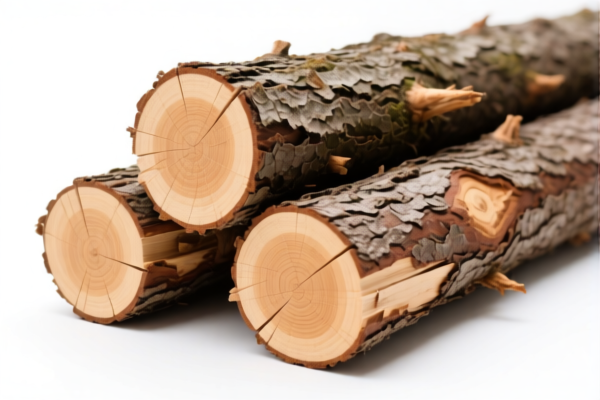
AI Analysis
🌲 Western Hemlock Flooring Logs (Raw Timber)
🌐 HS Code Reference & Customs Clearance Guide | 2026 Latest Tariff Analysis | Professional-Level Strategy for Sawn Wood
📌 1. Product Definition & Classification: Do You Really Understand "Western Hemlock Logs"?
The term "Western Hemlock Flooring Logs" is a common trade misnomer that requires immediate correction for customs purposes. In international trade and HS Code classification, there is a critical distinction between logs (raw timber) and sawn wood (processed lumber).
- Logs (Raw): Unprocessed tree trunks, debarked or not, intended for conversion into lumber. These generally fall under Chapter 44, heading 4403 (Wood in the rough).
- Sawn Wood (Processed): Wood that has been cut lengthwise, sliced, or peeled, with a thickness >6mm. This falls under Chapter 44, heading 4407.
⚠️ CRITICAL ALERT:
If you import actual logs (round wood), the HS Codes in <DATA> (4407.14.00.00 / 4407.19.00.65) are INCORRECT for the raw material. Those codes apply ONLY to sawn lumber.
However, if your "Flooring Logs" are actually pre-cut planks/lumber intended for flooring (which is common in trade parlance where "logs" refers to the source species), then the <DATA> codes ARE applicable.
Assumption for this guide: Based on the provided
<DATA>, we will assume the goods being imported are Sawn Wood (Lumber/Planks) derived from Western Hemlock, NOT raw round logs. If you are importing raw logs, you must classify under 4403.24 or 4403.94, which is a different tariff structure.
📦 2. HS Code Classification Details (2026 Latest Tariff Authority)
The <DATA> provided specifies two specific HS Codes for Coniferous Wood, thickness >6mm. Both are heavily taxed due to trade measures.
| HS Code | Product Description | Species/Type | Thickness Requirement |
|---|---|---|---|
4407.14.00.00 |
Wood sawn or chipped lengthwise, sliced or peeled...: Coniferous: Of Hem-fir (Western hemlock (Tsuga heterophylla) and fir (Abies spp.)) | Hem-fir (Specifically Western Hemlock & Fir) |
>6 mm |
4407.19.00.65 |
Wood sawn or chipped lengthwise...: Coniferous: Other Other: Not treated: Hemlock (Tsuga spp.): Other | Hemlock (Tsuga spp.) (Other Hemlock varieties not classified as "Hem-fir") |
>6 mm |
🔍 Key Distinction: - 4407.14.00.00: Used if the wood is explicitly identified as "Hem-fir" (a mix of Western Hemlock and Fir), which is a standard grading combination in North America. - 4407.19.00.65: Used if the wood is pure Hemlock (Tsuga spp.) but does not meet the specific "Hem-fir" definition or is categorized under "Other" coniferous wood in the 4407.19 subheading.
❗ Important Note on "Flooring":
The description in <DATA> does not specify "for flooring." It only specifies "sawn wood." If the wood is profiled (e.g., tongue-and-groove specifically for flooring), it might still fall under 4407, but if it is further manufactured into finished flooring planks with specific profiles, it could potentially move to 4409 (Wood continuously shaped...). However, based strictly on the provided <DATA>, we stick to 4407.
💰 3. 2026 Latest Tariff Rate Breakdown
✅ Applicable Country: United States (US)
✅ Origin: China (CN) (Assumed based on typical 25%+ tariff context)
✅ Effective Date: 2025/2026 (Current Trade Measures)
🎯 1. 4407.14.00.00 – Hem-fir (Western Hemlock & Fir)
| Item | Content |
|---|---|
| Base Tariff | 0.0% |
| Additional Tariff (Section 301 / USITC) | +25.0% |
| Total Tax Rate | 25.0% |
| Tax Calculation | CIF Value × 25.0% |
| De Minimis Exemption | ❌ Not Applicable (Wood products from China are generally subject to full duties) |
| Legal Reference Path | HTSUS:4407.14.00.00 → USITC Footnote: 301 Tariff List |
📌 Explanation:
- Base Rate: 0% for most sawn wood.
- Section 301 Tariff: 25% additional duty imposed on specific Chinese-origin products, including many wood products.
- Total: 25%. This is a significant cost adder.
🎯 2. 4407.19.00.65 – Other Hemlock (Tsuga spp.)
| Item | Content |
|---|---|
| Base Tariff | 0.0% |
| Additional Tariff (Section 301 / USITC) | +25.0% |
| Total Tax Rate | 25.0% |
| Tax Calculation | CIF Value × 25.0% |
| De Minimis Exemption | ❌ Not Applicable |
| Legal Reference Path | HTSUS:4407.19.00.65 → USITC Footnote: 301 Tariff List |
📌 Explanation:
- Even though this is categorized as "Other," it falls under the same 25% additional tariff bracket for Chinese-origin coniferous wood.
- No tariff advantage over4407.14.00.00.
🛠️ 4. Customs Clearance Practical Advice (Avoid Pitfalls)
✅ 1. Documentation Checklist (Must-Have)
| Document | Required? | Details |
|---|---|---|
| Commercial Invoice | ✔️ | Must clearly state: "Sawn Wood," Species (Western Hemlock/Hem-fir), Dimensions (Thickness >6mm). |
| Packing List | ✔️ | Include total volume (CBM) and weight. |
| Species Declaration | ✔️ | Must specify if it is Hem-fir (for 4407.14) or Tsuga spp. (for 4407.19). Misclassification here can lead to penalties. |
| Phytosanitary Certificate | ✔️ | CRITICAL. Wood from China requires strict phytosanitary certification to prove freedom from pests (e.g., Asian Longhorned Beetle). |
| Fumigation Certificate | ✔️ | Proof of treatment (ISPM 15 standard) is mandatory for wood packaging and often for the wood itself. |
| Bill of Lading | ✔️ | Clean bill of lading with accurate HS Code. |
✅ 2. Classification Strategy
| Scenario | Correct HS Code | Reason |
|---|---|---|
| Sawn Planks >6mm thick, Western Hemlock | 4407.14.00.00 |
Classified as Hem-fir (common North American grade). |
| Sawn Planks >6mm thick, Pure Hemlock (Tsuga) | 4407.19.00.65 |
Classified as other coniferous wood. |
| Raw Logs (Round Wood) | 4403.24.00.00 or 4403.94.00.00 | NOT 4407. Logs are "wood in the rough." If you declare logs as sawn wood, Customs will reject or reclassify, causing delays. |
| Finished Flooring (Tongue & Groove) | 4409.29 (potentially) | If the wood is continuously shaped, it may fall under 4409. Check if 4407 still applies based on specific profiling. |
✅ 3. Special Handling Tips
- Thickness Verification: Ensure all pieces are >6mm. If any pieces are ≤6mm, they fall under heading 4408 (Veneer Sheets), which has different tariffs and regulatory requirements.
- Species Accuracy: "Hem-fir" is a specific commercial grading term. If your supplier labels it "Hemlock," ensure it matches the scientific Tsuga genus to avoid disputes.
- Phytosanitary Compliance: Wood from China is subject to strict anti-smuggling and pest control measures. A missing phytosanitary certificate can result in quarantine treatment, destruction, or return of cargo.
🌍 5. Global Market Comparison (2026)
| Market | HS Code | Tariff Rate | Notes |
|---|---|---|---|
| 🇺🇸 USA | 4407.14.00.00 / 4407.19.00.65 |
25% (Additional) | Base 0% + 25% Section 301. |
| 🇨🇳 China | 4407 | ~20-25% | Import duty for foreign wood. |
| 🇪🇺 EU | 4407 | ~6.5% | No Section 301 equivalent, but anti-dumping duties may apply to certain origins. |
| 🇨🇦 Canada | 4407 | 0% | FTA agreement with many origins. |
📌 Conclusion: The US market is the most expensive for Chinese-origin sawn wood due to the 25% additional tariff. Consider sourcing from non-China origins (e.g., Canada, Russia) to mitigate costs if possible.
📌 6. Common Mistakes & Pitfalls
❌ Mistake 1: Declaring Raw Logs as Sawn Wood (4407)
👉 Consequence: Customs will reclassify to 4403, potentially leading to different duty rates, penalties, and seizure if phytosanitary docs don't match.
❌ Mistake 2: Not specifying Species
👉 Consequence: Customs cannot determine if it's Hem-fir (4407.14) or Other Hemlock (4407.19), leading to examination delays and potential misclassification penalties.
❌ Mistake 3: Ignoring Phytosanitary Requirements
👉 Consequence: Cargo held in quarantine, fumigation costs, or destruction. Wood is high-risk for pests.
❌ Mistake 4: Assuming "Flooring" means 4409
👉 Consequence: If the wood is just sawn planks without continuous shaping (tongue/groove), it remains 4407. Misdeclaring can lead to audits.
✅ Correct Practice:
"Sawn Wood, Western Hemlock (Tsuga heterophylla), Hem-fir Grade, Thickness 20mm, Fumigated, ISPM 15 Compliant"
🎯 7. Conclusion: Precision Classification Saves Money
🎯 Key Takeaway:
🔹 "Logs ≠ Sawn Wood."
🔹 "Hem-fir vs. Hemlock" determines the subheading.
🔹 "25% Tariff" is unavoidable for China-origin in the US.
📌 Pro Tip:
If you are importing raw logs, do NOT use 4407 codes. Use 4403 codes.
If you are importing sawn lumber, ensure you have the Phytosanitary Certificate and accurate Species Declaration to clear customs smoothly under 4407.14 or 4407.19.
✨ Professional Clearance Starts with Accurate Classification!
💼 Every percentage point matters in timber trade.
Customer Reviews
About HS Code Classification
The Harmonized System (HS) is an internationally standardized nomenclature developed by the World Customs Organization (WCO) to classify traded products. Over 200 countries use the HS system as the basis for customs tariffs, trade statistics, and import/export regulations.
Each HS code follows a hierarchical structure:
- Chapter (2 digits) — Broad category of goods (e.g., Chapter 84: Machinery and Mechanical Appliances)
- Heading (4 digits) — More specific grouping within the chapter
- Subheading (6 digits) — Internationally standardized breakdown, used by all WCO member countries
- National subdivisions (8-10 digits) — Country-specific extensions for further classification, such as US HTSUS 10-digit codes
Correct HS code classification is essential for smooth customs clearance, accurate duty payment, and compliance with trade regulations. Misclassification can lead to customs delays, overpayment of duties, or penalties.
When importing from CN to US, the applicable tariff rates may include:
- Most-Favored-Nation (MFN) rate — The standard duty rate applied to WTO members
- General rate — Applied to countries without trade agreements
- Trade remedy duties — Additional tariffs such as Section 301 (anti-dumping), Section 232 (national security), or countervailing duties
The information provided on this page is for reference purposes only. For official classification, please consult with your local customs authority or a licensed customs broker.