Western Hemlock Grade Logs
CN → US| HS Code | Tariff Rate | Origin | Destination | Doc |
|---|---|---|---|---|
| 4403250150 | 35.0% | CN | US | Official Doc |
| 4403260150 | 35.0% | CN | US | Official Doc |
Product Images
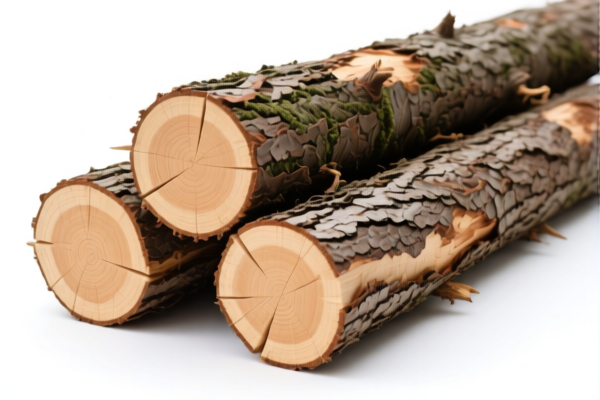
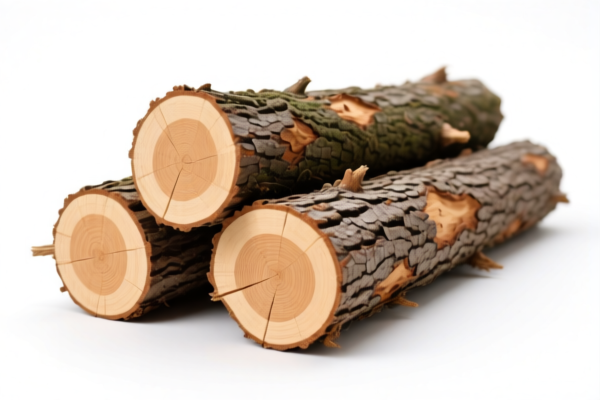
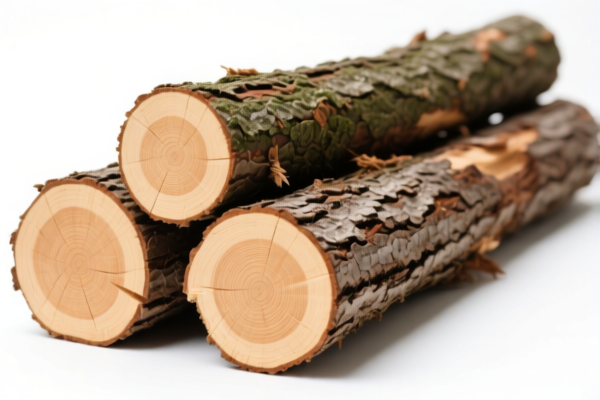
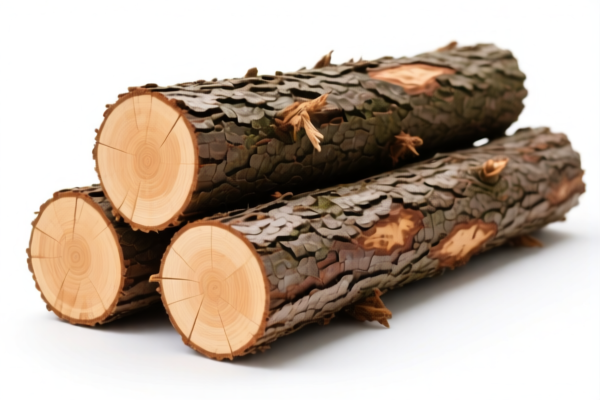
AI Analysis
🌲 Western Hemlock Grade Logs (Raw Timber)
🌐 HS Code Reference & Customs Clearance Guide | 2026 Latest Tariff Analysis | Professional Logistics Strategy
📌 I. Product Definition & Classification: What Exactly Are "Western Hemlock Logs"?
Western Hemlock (Tsuga heterophylla) is a softwood species native to the Pacific Northwest of North America. In international trade, "Logs" refer to wood in the rough state. This is the most basic form of timber, before it is sawn, planed, or processed into lumber.
The classification hinges on two critical factors: 1. Species: Must be Western Hemlock. 2. Physical Dimension: The smallest cross-sectional dimension (diameter for round logs, width/thickness for squared logs) must be 15 cm or more.
⚠️ Key Distinction:
- If the wood is stripped of bark or sapwood but remains rough (not sawn flat) → Still considered "Logs" (HS 4403).
- If the wood is squared or sawn into planks/beams → It moves to HS 4407 (Sawn Wood), which has different tariffs.
- If the smallest dimension is less than 15 cm (e.g., small poles or saplings) → It may fall under different subcategories, but the provided data specifically addresses logs ≥ 15 cm.
📦 II. HS Code Classification Details (2026 Latest Tariff Alignment)
Based on the provided data, Western Hemlock logs fall under two specific HS Codes depending on slight variations in description (e.g., stripped vs. unstripped, or slight regulatory sub-categorization). Both carry the exact same tax implications.
| HS Code | Product Description | Key Characteristics | Smallest Dimension |
|---|---|---|---|
4403.25.01.50 |
Wood in the rough, coniferous, Western Hemlock (Tsuga heterophylla), smallest cross-section ≥ 15 cm | Rough-squared or round; may be stripped of bark/sapwood | ≥ 15 cm |
4403.26.01.50 |
Wood in the rough, coniferous, Western Hemlock (Tsuga heterophylla), Logs and timber | Similar to above; often used for general "logs and timber" designation | ≥ 15 cm |
🔍 Important Note:
- Both codes fall under Chapter 44: Wood and articles of wood; wood charcoal.
- Both fall under Heading 4403: Wood in the rough, whether or not stripped of bark or sapwood, or roughly squared.
- Why two codes? Sometimes customs systems distinguish between "roughly squared" (4403.25) and general "logs and timber" (4403.26) based on the exact physical shape or import documentation, but for tariff purposes, the rate is identical.
💰 III. 2026 Latest Tariff Rate Breakdown (Including Surcharge)
✅ Applicable Market: United States (US)
✅ Origin: China (CN) [Assumed based on "Additional Tariff" context in data]
✅ Effective Date: As per latest USITC regulations (Section 301)
🎯 1. HS Code 4403.25.01.50 & 4403.26.01.50
| Item | Content |
|---|---|
| Base Tariff (MFN) | 0.0% (Most Favored Nation rate for timber logs is typically duty-free) |
| Section 301 Surcharge | +25.0% (Additional tariff on Chinese-origin goods under USITC Footnote) |
| Total Effective Tax Rate | 25.0% |
| Tax Calculation | CIF Value × 25% |
| De Minimis Exemption | ❌ Not Applicable (Section 301 tariffs usually do not apply to de minimis shipments; if they do, they are fully taxable) |
| Legal Basis Path | USITC:4403.25.01.50 / 4403.26.01.50 → Section 301: 25% Surcharge |
📌 Explanation:
- The 0% base tariff reflects the US policy to encourage raw material imports.
- The 25% additional tariff is a punitive trade measure targeting specific Chinese exports.
- Total Cost Impact: For every $10,000 CIF value, you pay $2,500 in duties. This is a significant cost factor that must be included in your landed cost calculation.
🛠️ IV. Customs Clearance Practical Advice (Avoid Pitfalls)
✅ 1. Required Documentation Checklist
| Document | Must Provide? | Description |
|---|---|---|
| ✅ Commercial Invoice | ✔️ | Clearly state "Western Hemlock Logs", species name (Tsuga heterophylla), and HS Code. |
| ✅ Packing List | ✔️ | Detail quantity, volume (cubic meters/board feet), and wood treatment status. |
| ✅ Phytosanitary Certificate | ✔️ | Critical for Wood! Issued by the exporting country's plant protection agency to confirm the wood is free from pests/diseases. |
| ✅ Fumigation Certificate | ✔️ | Proof that logs have been treated against insects (ISPM 15 standard if packed, but logs often need specific treatment). |
| ✅ Bill of Lading | ✔️ | Original clean-on-board B/L. |
| ✅ Species Verification | ✔️ | Laboratory test or manufacturer declaration confirming Tsuga heterophylla (not mixed with other species). |
✅ 2. Declaration Tips (Key Mnemonics)
🔥 "Be Specific, Be Rough, Be Treated!"
| Scenario | Correct Declaration | Error to Avoid |
|---|---|---|
| Logs ≥ 15 cm | "Western Hemlock Logs, Rough, Tsuga heterophylla, Dim ≥ 15cm" | Calling them "Lumber" or "Planks" → Wrong HS Code (4407) & Potential Penalty |
| Mixed Species | Declare separately or reject if mixed | Mixed species cannot use specific HS 4403.2x codes → May be misclassified |
| Dimension < 15 cm | Check other HS Codes | Using 4403.2x codes for small wood → Rejection |
| Sawn Wood | Use HS 4407 | Using 4403 for sawn boards → Wrong classification |
✅ 3. Special Considerations for Wood Products
| Issue | Handling Advice |
|---|---|
| Bark Status | Clearly state if bark is stripped or retained. Both are covered under 4403, but consistency is key. |
| Treatment | Ensure phytosanitary certificate matches the declaration. USDA APHIS (US) is strict on wood imports. |
| Volume Measurement | Customs may verify volume via survey. Ensure your invoice volume matches B/L volume. |
| Origin Fraud | Do not misdeclare origin to avoid the 25% tariff. Customs has advanced tracking and testing for wood origins. |
🌍 V. Global Market Comparison (2026)
| Country/Region | Recommended HS Code | Tariff (China Origin) | Certification | Notes |
|---|---|---|---|---|
| 🇺🇸 USA | 4403.25.01.50 / 4403.26.01.50 |
25.0% (0% Base + 25% Surcharge) | Phytosanitary + Fumigation | High tariff, strict biosecurity |
| 🇨🇳 China | 4403.25.01.50 (Import) | Variable (Check latest) | Phytosanitary | Major importer of softwood logs |
| 🇪🇺 EU | 4403.25.00 (General) | 0% - 3% (Varies by FTA) | FLEGT/EUTR Compliance | Strict illegal logging regulations |
| 🇯🇵 Japan | 4403.25.00 | 0% - 1.7% | Phytosanitary | High quality standards |
📌 Conclusion:
- USA imposes a 25% surcharge on Chinese-origin Western Hemlock logs.
- Biosecurity is the biggest non-tariff barrier. Ensure all phytosanitary documents are perfect to avoid delays at USDA.
- If you are sourcing from Canada (major producer of Western Hemlock), check if USMCA duties apply (likely 0% if originating in US/Canada/Mexico).
📌 VI. Common Mistakes & Pitfalls (Lessons Learned)
❌ Mistake 1: Calling "Logs" "Lumber" or "Planks"
👉 Consequence: Wrong HS Code, potential penalty for misdeclaration. Logs are rough; lumber is sawn.
❌ Mistake 2: Ignoring the 15 cm dimension rule
👉 Consequence: If < 15 cm, the code is wrong, leading to rejection or reclassification.
❌ Mistake 3: Missing Phytosanitary Certificate
👉 Consequence: Detention at port, possible destruction of cargo by USDA. Wood is high-risk for pests.
❌ Mistake 4: Not declaring "Rough" status
👉 Consequence: If wood is planed/sanded, it’s not "logs." Misclassification risk.
✅ Correct Practice:
"Western Hemlock Logs, Tsuga heterophylla, Rough, Stripped of Bark, Smallest Cross-Section 18 cm, Origin: Canada/USA/China, Fumigated"
🎯 VII. Conclusion: Professional Classification, Cost Control, Risk Management
🎯 Remember:
🔹 "Logs are Rough, 15 cm is the Rule, 25% is the Tax (for CN), Phytosanitary is King!"
🔹 "HS 4403 for Logs, 4407 for Sawn, Mix them up and you lose!"
📌 Tip:
If your Western Hemlock logs are originating from Canada or the USA, you may qualify for 0% duty under USMCA (for US-origin) or other trade agreements. Check the certificate of origin!
If originating from China, the 25% surcharge is mandatory. Consider if the margin allows for this cost.
📣 Immediate Action:
📞 Contact a customs broker + Provide Phytosanitary Cert + Verify Origin
🚀 Ensure your logs are rough, ≥15cm, and properly documented for smooth clearance!
✨ Professional Customs, Starts with Accurate Classification!
💼 Your timber investment deserves precision!
Customer Reviews
About HS Code Classification
The Harmonized System (HS) is an internationally standardized nomenclature developed by the World Customs Organization (WCO) to classify traded products. Over 200 countries use the HS system as the basis for customs tariffs, trade statistics, and import/export regulations.
Each HS code follows a hierarchical structure:
- Chapter (2 digits) — Broad category of goods (e.g., Chapter 84: Machinery and Mechanical Appliances)
- Heading (4 digits) — More specific grouping within the chapter
- Subheading (6 digits) — Internationally standardized breakdown, used by all WCO member countries
- National subdivisions (8-10 digits) — Country-specific extensions for further classification, such as US HTSUS 10-digit codes
Correct HS code classification is essential for smooth customs clearance, accurate duty payment, and compliance with trade regulations. Misclassification can lead to customs delays, overpayment of duties, or penalties.
When importing from CN to US, the applicable tariff rates may include:
- Most-Favored-Nation (MFN) rate — The standard duty rate applied to WTO members
- General rate — Applied to countries without trade agreements
- Trade remedy duties — Additional tariffs such as Section 301 (anti-dumping), Section 232 (national security), or countervailing duties
The information provided on this page is for reference purposes only. For official classification, please consult with your local customs authority or a licensed customs broker.