Western Red Cedar Construction Timber
CN → US| HS Code | Tariff Rate | Origin | Destination | Doc |
|---|---|---|---|---|
| 4407190068 | 35.0% | CN | US | Official Doc |
| 4407190069 | 35.0% | CN | US | Official Doc |
Product Images
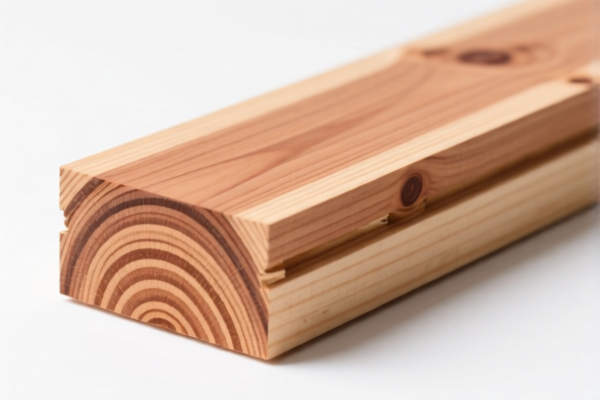
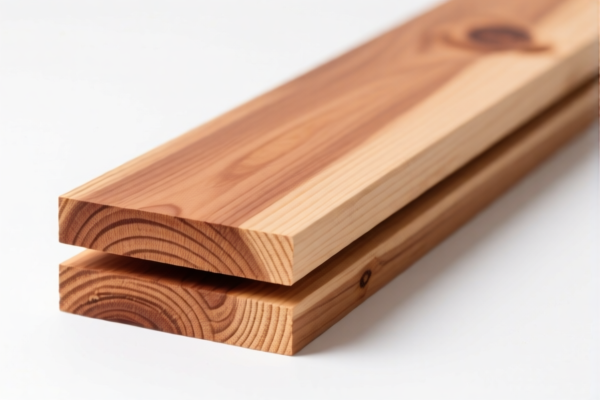
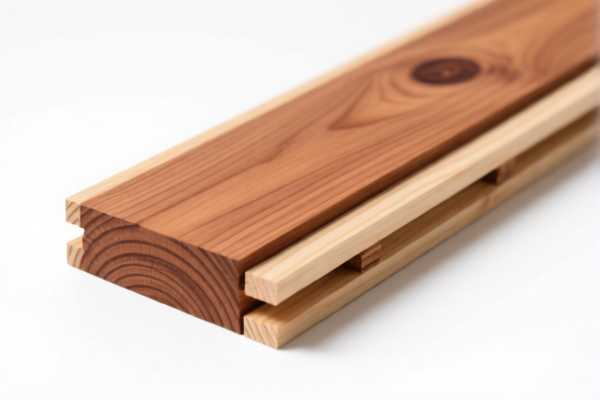
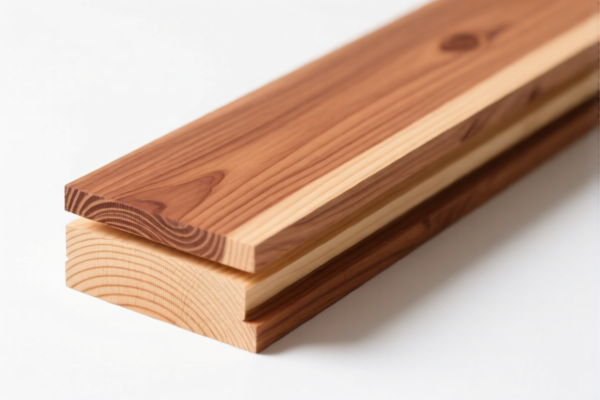
AI Analysis
🌲 Western Red Cedar Construction Timber (Sawn, >6mm)
🌐 HS Code Reference & Customs Clearance Guide | 2026 Latest Tariff Analysis | Professional Clearance Strategy
📌 I. Product Definition & Classification: Is it "Rough" or "Other"?
Western Red Cedar (Thuja plicata) is a premium coniferous wood widely used in construction, siding, decking, and roofing due to its natural resistance to decay and insects. In international trade, sawn wood of this species is classified under Chapter 44 (Wood and articles of wood...).
Specifically, for wood of a thickness exceeding 6 mm, the classification hinges on the surface finish:
1. Rough Sawn (Unplaned/Unsanded):
- Wood that has been sawn, chipped, sliced, or peeled but has not been planed, sanded, or end-jointed.
- It retains the natural texture from the saw blade.
2. Other (Planed/Sanded/End-Jointed):
- Wood that has undergone further processing such as planing (smoothing surfaces), sanding, or end-joining.
- Even if slightly smoothed, if it’s not "rough," it falls here.
⚠️ Key Distinction:
- If the wood has a rough, sawn surface → Use 4407.19.00.68
- If the wood is planed, sanded, or end-jointed → Use 4407.19.00.69
📦 II. HS Code Classification Details (2026 Latest Tariff Authority)
| HS Code | Product Description | Key Characteristics | Surface Finish Status |
|---|---|---|---|
4407.19.00.68 |
Western red cedar: Rough | Sawn, sliced, or peeled; thickness >6mm; not treated, planed, sanded, or end-jointed. | ❌ No Planing/Sanding |
4407.19.00.69 |
Western red cedar: Other | Sawn, sliced, or peeled; thickness >6mm; treated (planed, sanded, end-jointed) or otherwise finished beyond rough sawn. | ✅ Planed/Sanded/Jointed |
🔍 Important Note:
- Both codes apply to Western Red Cedar specifically.
- Both codes require the wood to be coniferous and have a thickness exceeding 6 mm.
- "Not treated" in the HS description refers to surface preparation (planing/sanding), NOT chemical treatment (preservatives). If chemically treated, different subheadings may apply, but based on your input, we focus on the physical state.
💰 III. 2026 Latest Tariff Rate Breakdown (US Imports from China)
✅ Applicable Country: United States (US)
✅ Origin: China (CN)
✅ Effective Time: 2025/2026 (Current Trade Environment)
🎯 1. 4407.19.00.68 — Western Red Cedar: Rough
| Item | Detail |
|---|---|
| Base Tariff | 0.0% |
| Section 301 Tariff | +25.0% |
| Total Tax Rate | 25.0% |
| Tax Calculation | CIF Value × 25.0% |
| Legal Basis | USITC Tariff Schedule + Section 301 List |
📌 Explanation:
- The base tariff for most sawn wood is 0%.
- However, due to Section 301 trade measures, Chinese-origin Western Red Cedar faces an additional 25% tariff.
- No IEEPA extra surcharge is listed for this specific HS code in your data (unlike electronics), so the total is 25%.
🎯 2. 4407.19.00.69 — Western Red Cedar: Other (Planed/Sanded)
| Item | Detail |
|---|---|
| Base Tariff | 0.0% |
| Section 301 Tariff | +25.0% |
| Total Tax Rate | 25.0% |
| Tax Calculation | CIF Value × 25.0% |
| Legal Basis | USITC Tariff Schedule + Section 301 List |
📌 Explanation:
- Even though this wood is more processed (planed/sanded), it still falls under the same 25% Section 301 surcharge.
- The processing adds value but does not change the tariff rate for this specific HS code pair.
🛠️ IV. Customs Clearance Practical Advice (Best Practices)
✅ 1. Documentation Checklist (Essential for Smooth Clearance)
| Document | Required? | Notes |
|---|---|---|
| ✅ Commercial Invoice | ✔️ | Must clearly state: "Western Red Cedar," "Sawn Wood," "Thickness >6mm," and "Rough/Planed." |
| ✅ Packing List | ✔️ | Detail dimensions, volume (board feet or cubic meters), and weight. |
| ✅ Certificate of Origin (CO) | ✔️ | Crucial to prove origin. If from China, 25% tariff applies. If from Canada/US, different rules. |
| ✅ Phytosanitary Certificate | ✔️ | Mandatory for wood products. Confirms free from pests/diseases. Issued by the exporting country’s agricultural authority. |
| ✅ Wood Species Declaration | ✔️ | Explicitly state "Western Red Cedar (Thuja plicata)" to avoid misclassification as generic "Coniferous Wood." |
| ✅ Treatment Certificate | ✔️ | If chemically treated, provide proof. If only physically planed/sanded, declare "Not Chemically Treated." |
✅ 2. Classification Tips (Key to Avoid Penalties)
🔥 “Define the Surface, Declare the Species, Check the Thickness!”
| Scenario | Correct HS Code | Common Mistake |
|---|---|---|
| Logs just cut, bark removed, rough sawn | 4407.19.00.68 |
Misclassifying as "lumber" (processed) → No direct penalty but wrong description. |
| Wood planed on all 4 sides, smooth finish | 4407.19.00.69 |
Declaring as "Rough" → Customs may reject for false description. |
| Wood thickness ≤6mm | NOT 4407.xx | Falls under 4409 (Continuously Shaped), different tariff! |
| Non-Western Red Cedar (e.g., Spruce) | Different Subheading | Do NOT use 4407.19.00.68/69. Use generic "Coniferous: Other" codes. |
✅ 3. Special Considerations
| Issue | Recommendation |
|---|---|
| ISPM 15 Compliance | Ensure all wood packaging (pallets, crates) is heat-treated or fumigated and marked with the IPPC logo. Non-compliant packaging leads to rejection/destroy. |
| FSC/PEFC Certification | If marketing as sustainable, provide chain-of-custody certificates. Some buyers/customs require proof of legal harvesting. |
| Moisture Content | Declare moisture content (e.g., "KD" for Kiln-Dried). While not affecting HS code, it affects value and phytosanitary risk. |
| Origin Misdeclaration | Western Red Cedar is primarily grown in North America (Canada/USA). If declared as "Made in China" but actually from Canada, it may trigger fraud investigations. Ensure origin is accurate. |
🌍 V. Global Market Comparison (2026)
| Market | HS Code | Base Tariff | Additional Tariff (China) | Notes |
|---|---|---|---|---|
| 🇺🇸 USA | 4407.19.00.68/.69 |
0% | +25% (Section 301) | High cost for Chinese origin. |
| 🇨🇳 China | 4407.19.00.68/.69 |
~6-8% | 0% | Imports Western Red Cedar, often for construction/decking. |
| 🇪🇺 EU | 4407.19.00 |
0% | 0% | Generally duty-free for wood, but strict phytosanitary rules. |
| 🇨🇦 Canada | 4407.19.00 |
0% | 0% | Major exporter of Western Red Cedar. |
📌 Conclusion:
- The 25% Section 301 tariff significantly impacts the cost of Chinese-origin Western Red Cedar entering the US.
- Most Western Red Cedar is sourced from Canada or the USA, which may enjoy 0% tariffs under USMCA.
- Verify Origin: If you are exporting from China, expect 25%. If sourcing from Canada, ensure proper USMCA documentation.
📌 VI. Common Errors & Pitfalls (Lessons Learned)
❌ Mistake 1: Using generic "Lumber" or "Wood Planks" in description.
👉 Result: Customs request for clarification, potential delay.
✅ Fix: Use precise terminology: "Sawn Western Red Cedar, Rough, >6mm."
❌ Mistake 2: Ignoring Phytosanitary Certificate.
👉 Result: Shipment quarantined or destroyed at port.
✅ Fix: Obtain certificate from origin country’s agricultural department before shipment.
❌ Mistake 3: Confusing "Rough" with "Untreated."
👉 Result: Wrong HS code. "Rough" refers to mechanical processing. Chemical treatment is separate.
✅ Fix: Clearly state surface state (Rough/Planed) AND chemical status (Treated/Untreated).
❌ Mistake 4: Misdeclaring Origin (e.g., Canadian wood labeled as Chinese).
👉 Result: Fraud penalties, loss of duty-free benefits.
✅ Fix: Match origin with Certificate of Origin and supplier evidence.
🎯 VII. Conclusion: Smart Classification, Cost Efficiency
🎯 Remember These Rules:
🔹 “Surface Defines the Code” – Rough = .68, Planed/Sanded = .69.
🔹 “Thickness Matters” – Must be >6mm for this chapter.
🔹 “Origin Dictates Tax” – China origin = 25% tariff in US; Canadian = 0%.
🔹 “Phytosanitary is Non-Negotiable” – No certificate = No entry.
📌 Pro Tip:
If you are importing into the US from China, consider re-routing through a third country (if legally permissible) or switching suppliers to Canadian sources to save 25% in tariffs. Always apply for a Binding Ruling from US Customs if unsure about the "Rough" vs. "Planed" status.
📣 Take Action Now:
📞 Consult a licensed customs broker.
📄 Prepare Phytosanitary Certificate + Commercial Invoice with precise HS codes.
🚀 Ensure smooth, compliant, and cost-effective clearance!
✨ Professional Customs Clearance Starts with Accurate Classification!
💼 Your Profit Margin Depends on Your HS Code Strategy!
Customer Reviews
About HS Code Classification
The Harmonized System (HS) is an internationally standardized nomenclature developed by the World Customs Organization (WCO) to classify traded products. Over 200 countries use the HS system as the basis for customs tariffs, trade statistics, and import/export regulations.
Each HS code follows a hierarchical structure:
- Chapter (2 digits) — Broad category of goods (e.g., Chapter 84: Machinery and Mechanical Appliances)
- Heading (4 digits) — More specific grouping within the chapter
- Subheading (6 digits) — Internationally standardized breakdown, used by all WCO member countries
- National subdivisions (8-10 digits) — Country-specific extensions for further classification, such as US HTSUS 10-digit codes
Correct HS code classification is essential for smooth customs clearance, accurate duty payment, and compliance with trade regulations. Misclassification can lead to customs delays, overpayment of duties, or penalties.
When importing from CN to US, the applicable tariff rates may include:
- Most-Favored-Nation (MFN) rate — The standard duty rate applied to WTO members
- General rate — Applied to countries without trade agreements
- Trade remedy duties — Additional tariffs such as Section 301 (anti-dumping), Section 232 (national security), or countervailing duties
The information provided on this page is for reference purposes only. For official classification, please consult with your local customs authority or a licensed customs broker.