Western Red Cedar Furniture Wood
CN → US| HS Code | Tariff Rate | Origin | Destination | Doc |
|---|---|---|---|---|
| 4407190069 | 35.0% | CN | US | Official Doc |
| 4403250155 | 35.0% | CN | US | Official Doc |
| 4403260155 | 35.0% | CN | US | Official Doc |
| 4408100145 | 35.0% | CN | US | Official Doc |
Product Images
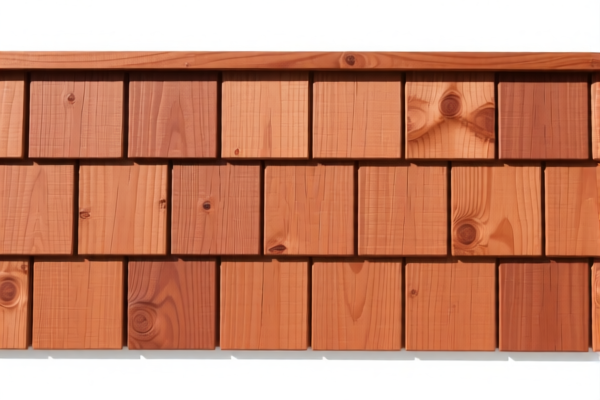
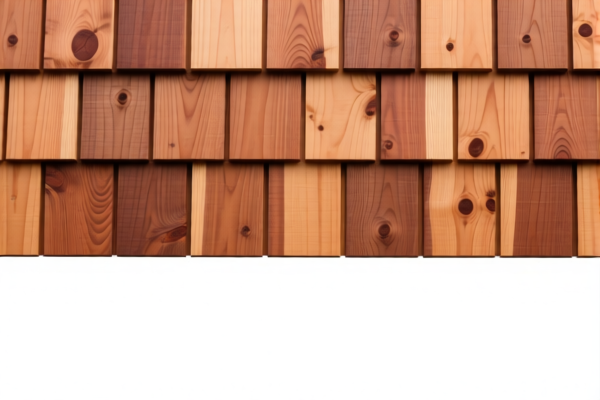
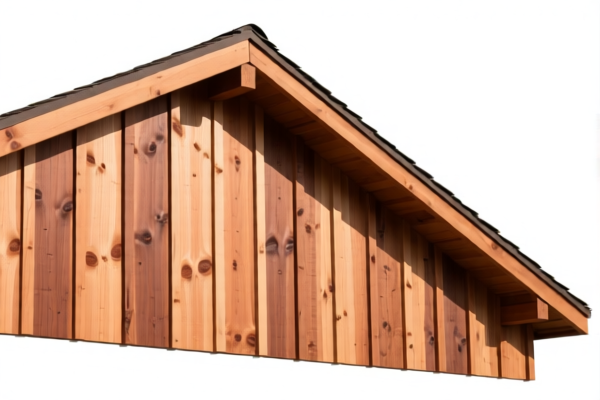
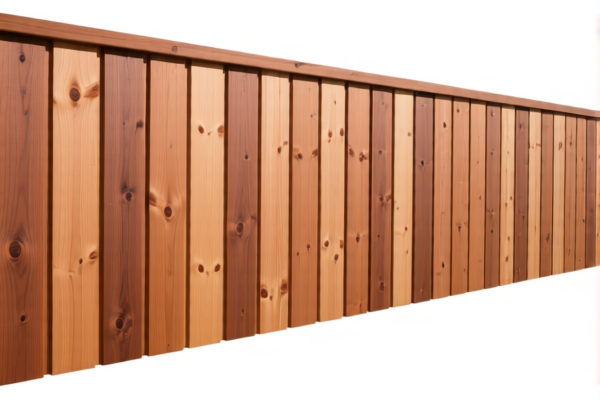
AI Analysis
🌲 Western Red Cedar Furniture Wood
🌐 HS Code Reference & Customs Clearance Guide | 2026 Latest Tariff Analysis | Professional Transit Strategy
📌 I. Product Definition & Classification: Do You Really Understand "Western Red Cedar"?
Western Red Cedar (Thuja plicata) is a premium softwood renowned for its natural resistance to rot, insects, and weathering. In international trade, it is primarily categorized under Chapter 44 (Wood and articles of wood; wood charcoal). Depending on the processing stage—whether it is raw timber, sawn timber, or simply processed wood for furniture—it falls under specific subheadings.
Key Distinction:
- Logs (Round Wood): Raw, unprocessed timber → Classified under 4403
- Sawn/Chipped Wood: Processed for construction, furniture, or cladding → Classified under 4407
- Veneers/Sheathing: Thin sheets for laminating → Classified under 4408
⚠️ Critical Note:
- If the wood is in its natural cylindrical shape (roughly trimmed), it is 4403.
- If it has been sawn to dimension (planks, boards), it is 4407.
- If it is sliced into thin sheets for veneer, it is 4408.
- All these categories for Western Red Cedar from China face significant additional tariffs.
📦 II. HS Code Classification Details (2026 Latest Tariff Authority Mapping)
| HS Code | Product Description | Application Scenario | Processing Stage |
|---|---|---|---|
4403.25.01.55 |
Western Red Cedar Wood, in the rough | Raw logs, unprocessed timber for export | ✅ Logs |
4403.26.01.55 |
Other Coniferous Wood, in the rough | Slightly processed coniferous timber (bark removed) | ✅ Rough Timber |
4407.19.00.69 |
Western Red Cedar Wood, Sawn | Planks, boards, furniture-grade lumber | ✅ Sawn Wood |
4408.10.01.45 |
Western Red Cedar Wood, Veneer | Thin slices for laminating furniture surfaces | ✅ Veneer |
🔍 Key Reminder:
- Western Red Cedar is explicitly identified as a Coniferous Wood (Softwood).
- Even though it is used for furniture, it is not classified under Chapter 94 (Furniture). It is classified as raw material (Wood).
- All listed HS Codes above attract the same total tariff rate of 35.0% due to US trade policies.
💰 III. 2026 Latest Tariff Rate Breakdown (Including Additional Taxes & Policy Add-ons)
✅ Applicable Country: United States (US)
✅ Origin: China (CN)
✅ Effective Date: Current enforcement includes all section tariffs
🎯 1. All Listed HS Codes (4403.25/26, 4407.19, 4408.10)
| Item | Content |
|---|---|
| Base Duty Rate | 0.0% (Ad Valorem) |
| Section 301 Additional Duty | +25.0% (Under USITC Footnote related to Chinese imports) |
| Section 122 Duty | +10.0% (Specific trade remedy/section 122 application) |
| Total Effective Rate | 35.0% |
| Tax Calculation | CIF Value × 35% |
| De Minimis Exemption? | ❌ Not Applicable (High-risk category for de minimis) |
| Legal Basis Path | Base Tariff: 0.0% → Additional Tariff: 25.0% → Section 122: 10.0% |
📌 Explanation:
- The 0.0% base rate is misleadingly low; the real cost comes from add-on tariffs.
- 25% Additional Tariff: Applies to most Chinese wood products under trade remedy measures.
- 10% Section 122 Duty: Often applied to specific raw material imports subject to trade reviews.
- Total 35%: This is a high-cost entry barrier. Importers must calculate this into the FOB/Landed cost immediately.
🛠️ IV. Customs Clearance Practical Advice (Real-World Pitfall Avoidance)
✅ 1. Documentation Checklist (Non-Negotiable)
| Document | Required | Explanation |
|---|---|---|
| ✅ Commercial Invoice | ✔️ | Must clearly state "Western Red Cedar" and specify form (Log/Sawn/Veneer). |
| ✅ Packing List | ✔️ | Detail dimensions, weight, and quantity. Differentiate between raw logs and processed wood. |
| ✅ Phytosanitary Certificate | ✔️ | Critical! Wood imports require proof of treatment (heat treatment or fumigation) to prevent pest introduction. |
| ✅ Bill of Lading | ✔️ | Standard shipping document. |
| ✅ Fumigation Certificate | ✔️ | Issued by authorized agency, confirming ISPM 15 compliance. |
| ✅ Species Declaration | ✔️ | Explicitly state "Thuja plicata" (Western Red Cedar) to avoid misclassification penalties. |
✅ 2. Classification Strategy (Key Mnemonics)
🔥 "Form Determines Code, Origin Determines Tax!"
| Scenario | Correct HS Code | Consequence of Error |
|---|---|---|
| Raw Logs (Cylindrical, bark on/removed) | 4403.25.01.55 |
Misclassifying as sawn wood may trigger inspection delays. |
| Sawn Planks (Rectangular, for furniture) | 4407.19.00.69 |
Misclassifying as logs may lead to tax underpayment penalties. |
| Veneer Sheets (Thin, for laminating) | 4408.10.01.45 |
Cannot be mixed with sawn wood in one shipment declaration. |
| Furniture Made from Cedar | Chapter 94 (Not in DATA) | Do NOT use 44xx codes for finished furniture. Use correct furniture HS codes. |
📌 Note: The DATA provided only covers wood materials, not finished furniture. If you are importing finished chairs/tables, do not use these HS codes. Use Chapter 94 codes instead.
✅ 3. Special Situation Handling
| Situation | Handling Advice |
|---|---|
| Mixed Shipment (Logs + Sawn Wood) | Separate declarations! Do not combine 4403 and 4407 in one entry unless allowed by specific customs rulings. |
| Heat Treated vs. Untreated | Untreated wood will be rejected or re-exported. Ensure ISPM 15 stamp is visible on pallets/logs. |
| Value Declaration | Declare accurate CIF value. Under-declaration leads to audits and fines. |
| Origin Labeling | Clearly mark "Made in China" to ensure accurate tariff application. Mislabeling origin can lead to severe penalties. |
🌍 V. Global Market Comparison (2026 Latest)
| Country/Region | Recommended HS Code | Tariff Rate (China Origin) | Certification | Remarks |
|---|---|---|---|---|
| 🇺🇸 USA | 4407.19.00.69 etc. |
35.0% (Total) | ISPM 15 + Phytosanitary | High tariff impact on cost |
| 🇨🇳 China | 4407.19.00.69 etc. |
0%~5% (Import) | N/A | Major exporter, low import barrier |
| 🇪🇺 EU | 4407.19.00.00 etc. |
0% (If FLEGT compliant) | FLEGT / EUTR | Strict wood legality checks |
| 🇯🇵 Japan | 4407.19.00.00 etc. |
0%~5% | Phytosanitary | Quality inspection required |
📌 Conclusion:
- The US market imposes a 35% total duty on Western Red Cedar wood products from China.
- No de minimis exemption applies.
- Phytosanitary compliance is as critical as tariff accuracy.
📌 VI. Common Mistakes & Pitfall Guide (Lessons Learned)
❌ Mistake 1: Classifying finished cedar furniture under 4407 (Sawn Wood)
👉 Consequence: Customs may reclassify to Chapter 94 (Furniture) + assess penalties for misdeclaration.
👉 Fix: Use correct furniture HS code (e.g., 9403.30.00) if it is a finished product.
❌ Mistake 2: Ignoring Phytosanitary Certificates
👉 Consequence: Shipment held at port, potential destruction or re-export.
👉 Fix: Ensure wood is heat-treated (HT) or fumigated (MB) and certified.
❌ Mistake 3: Assuming 0% base duty = No Tax
👉 Consequence: Surprise bill of 35% at customs clearance.
👉 Fix: Calculate landed cost including 25% + 10% additional duties upfront.
❌ Mistake 4: Mixing Logs and Sawn Wood in one declaration
👉 Consequence: Confusion in classification, potential delay.
👉 Fix: Separate shipments or declare on separate lines with clear descriptions.
✅ Correct Practice:
"Western Red Cedar Sawn Timber, Heat Treated, ISPM 15 Certified, for Furniture Manufacturing, CIF Value USD XXX"
🎯 VII. Conclusion: Precision Classification, Cost Control, Smooth Transit!
🎯 Remember the Mantra:
🔹 "Wood Form Dictates Code, Origin Dictates Tax!"
🔹 "35% Total Duty is the Reality for US Imports from China!"
🔹 "Phytosanitary Paperwork is as Important as the Invoice!"
📌 Pro Tip:
- If you are importing finished furniture (chairs, tables, cabinets) made from Western Red Cedar, do not use the HS codes in the DATA above. Instead, look up Chapter 94 (e.g., 9403.30.00 for wood furniture).
- For wood materials, always verify the processing stage (Log vs. Sawn vs. Veneer) to select the correct 4-digit HS code prefix.
📣 Immediate Action:
📞 Engage a licensed customs broker + Provide Phytosanitary Certificates + Pre-calculate 35% tariff impact
🚀 Ensure your Western Red Cedar imports pass customs smoothly, avoid delays, and protect your margins!
✨ Professional Customs Clearance Starts with Accurate Classification!
💼 Your Cost Efficiency Depends on Precision!
Customer Reviews
About HS Code Classification
The Harmonized System (HS) is an internationally standardized nomenclature developed by the World Customs Organization (WCO) to classify traded products. Over 200 countries use the HS system as the basis for customs tariffs, trade statistics, and import/export regulations.
Each HS code follows a hierarchical structure:
- Chapter (2 digits) — Broad category of goods (e.g., Chapter 84: Machinery and Mechanical Appliances)
- Heading (4 digits) — More specific grouping within the chapter
- Subheading (6 digits) — Internationally standardized breakdown, used by all WCO member countries
- National subdivisions (8-10 digits) — Country-specific extensions for further classification, such as US HTSUS 10-digit codes
Correct HS code classification is essential for smooth customs clearance, accurate duty payment, and compliance with trade regulations. Misclassification can lead to customs delays, overpayment of duties, or penalties.
When importing from CN to US, the applicable tariff rates may include:
- Most-Favored-Nation (MFN) rate — The standard duty rate applied to WTO members
- General rate — Applied to countries without trade agreements
- Trade remedy duties — Additional tariffs such as Section 301 (anti-dumping), Section 232 (national security), or countervailing duties
The information provided on this page is for reference purposes only. For official classification, please consult with your local customs authority or a licensed customs broker.