Western Red Cedar Logs Rough Sawn
CN → US| HS Code | Tariff Rate | Origin | Destination | Doc |
|---|---|---|---|---|
| 4407190068 | 35.0% | CN | US | Official Doc |
Product Images
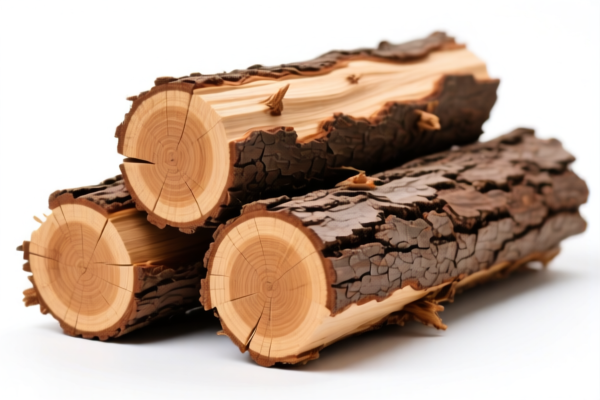
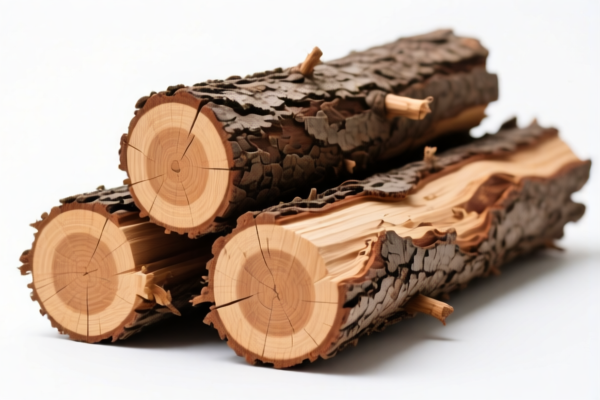
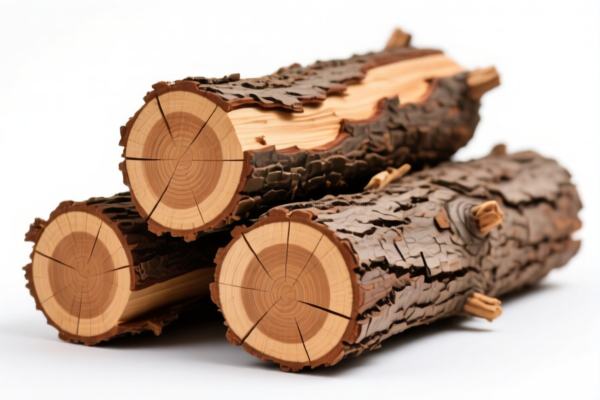
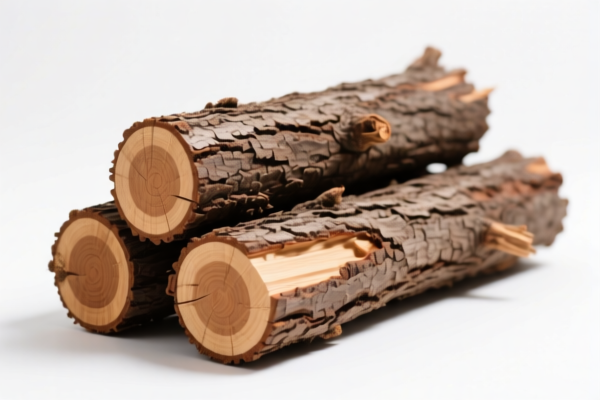
AI Analysis
🌲 Western Red Cedar Logs – Rough Sawn (4407.19.00.68)
🌐 HS Code Classification & Customs Clearance Guide | 2026 Tariff Analysis | Strategic Compliance Strategy
📌 I. Product Definition & Classification: Understanding "Western Red Cedar Rough Sawn"
Western Red Cedar (Thuja plicata) is a premium softwood renowned for its natural durability, resistance to decay, and aromatic properties. In international trade, it is processed through sawing, chipping, slicing, or peeling along the grain. When classified under HS Code 4407, it refers to wood that has been processed longitudinally but retains a "rough" or unplaned surface, with a thickness exceeding 6mm.
⚠️ Key Distinction:
- "Rough": The surface is not planed, sanded, or finished. It retains the natural saw marks from the initial cutting process.
- "Thickness > 6mm": Thin veneers or chips (< 6mm) fall under different headings (e.g., 4408 or 4401).
- "Not Treated": The wood has not been impregnated, painted, or chemically treated. If treated, it may fall under Chapter 44 but with different sub-headings or Chapter 38 (chemical products).
📦 II. HS Code Classification Details (2026 Latest Tariff)
| HS Code | Product Description | Application Scenario | Processing State |
|---|---|---|---|
4407.19.00.68 |
Wood, sawn or chipped lengthwise, of a thickness exceeding 6 mm: Coniferous: Other Other: Not treated: Western red cedar: Rough | Construction framing, outdoor decking, siding, musical instrument blanks, furniture rough stock | ✅ Rough-sawn, untreated, >6mm thick |
🔍 Critical Note:
- This specific code (4407.19.00.68) is tailored for Western Red Cedar that is coniferous, not planed/sanded, and untreated.
- If the wood is treated (e.g., with preservatives), it may be reclassified under4407.19.00.69or other treated wood categories, potentially altering tariff implications.
- If the thickness is ≤ 6mm, it is classified as veneer sheets (4408) or wood chips (4401), not rough-sawn lumber.
💰 III. 2026 Tariff Rate Breakdown (Including Additional Duties)
✅ Applicable Country: United States (US)
✅ Country of Origin: China (CN)
✅ Effective Date: 2025–2026 (Subject to USITC and IEEPA regulations)
🎯 1. 4407.19.00.68 —— Western Red Cedar, Rough, Untreated
| Item | Details |
|---|---|
| Base Tariff Rate | 0% (ad valorem) |
| Section 301 Additional Duty | +25% |
| Total Effective Tariff | 25% |
| Calculation Basis | CIF Value × 25% |
| De Minimis Exemption | ❌ Not Eligible (deny_de_minimis) |
| Legal Authority | USITC Tariff Schedule, Section 301 List 4A, IEEPA Footnotes |
📌 Explanation:
- The base tariff of 0% reflects the US’s general preference for untreated timber imports.
- The 25% additional duty is imposed under Section 301 of the Trade Act of 1974, targeting specific Chinese-origin wood products due to trade tensions.
- No IEEPA 10% surcharge applies to this specific HS code as of 2026 (unlike electronics or display modules).
- Total rate = 25%. This is a significant cost factor for exporters.
🛠️ IV. Customs Clearance Practical Advice (Pitfall Avoidance)
✅ 1. Required Documentation Checklist
| Document | Mandatory? | Purpose |
|---|---|---|
| ✅ Commercial Invoice | ✔️ | Must clearly state: "Western Red Cedar, Rough Sawn, Untreated, >6mm Thickness" |
| ✅ Packing List | ✔️ | Specify gross/net weight, number of bundles, and dimensions |
| ✅ Bill of Lading/Air Waybill | ✔️ | Proof of shipment and carrier details |
| ✅ Phytosanitary Certificate | ✔️ | Issued by the exporting country’s plant protection agency to confirm pest-free status |
| ✅ Certificate of Origin | ✔️ | Required to claim origin status; if not China-origin, may qualify for lower tariffs |
| ✅ Wood Species Declaration | ✔️ | Confirm species (Thuja plicata) and processing state (rough, untreated) |
| ✅ ISPM 15 Compliance Proof | ✔️ | If wood is packaged in solid wood pallets, they must be heat-treated or fumigated and marked |
✅ 2. Declaration Tips (Key Mnemonics)
🔥 “Rough, Untreated, >6mm, Western Red Cedar”
| Scenario | Correct Declaration | Incorrect Practice |
|---|---|---|
| Rough-sawn, untreated | 4407.19.00.68 |
Misdeclare as “planed” → Higher tariff or rejection |
| Treated cedar | 4407.19.00.69 (or relevant treated code) |
Declare as untreated → Customs seizure & fines |
| Thickness ≤ 6mm | 4408.90.00.00 (Veneer) |
Declare as 4407 → Incorrect classification |
| Non-coniferous wood | Different HS Code (e.g., 4407.24 for hardwood) |
Declare as “coniferous” → Audit risk |
✅ 3. Special Cases & Handling
| Scenario | Recommendation |
|---|---|
| OEM Custom Cuts | Provide cut lists and dimensions; ensure they remain “rough” and >6mm |
| Mixed Shipments | Declare each HS code separately; do not bundle treated/untreated |
| Origin Fraud | If transshipped via Vietnam/Malaysia, ensure substantial transformation occurs; otherwise, US Customs will trace back to China |
| Phytosanitary Issues | Any sign of bark, pests, or rot → Rejection or destruction |
🌍 V. Global Customs Comparison (2026)
| Country/Region | Recommended HS Code | Tariff Rate | Certification Requirements | Notes |
|---|---|---|---|---|
| 🇺🇸 USA | 4407.19.00.68 |
25% (China origin) | Phytosanitary + ISPM 15 | High tariff; strict origin checks |
| 🇨🇳 China | 4407.19.00.68 |
0% (Import) | Fumigation Certificate | No additional duties |
| 🇪🇺 EU | 4407.19.00.68 |
0% (if FSC-certified) | FLEGT/EUTR Compliance | Wood Regulation strictness |
| 🇬🇧 UK | 4407.19.00.68 |
0% | UK Wood Procurement Standards | Post-Brexit rules apply |
| 🇯🇵 Japan | 4407.19.00.68 |
0% | Phytosanitary + ISPM 15 | No anti-dumping duties |
📌 Conclusion:
- USA imposes a 25% tariff on Chinese-origin Western Red Cedar;
- Other major markets (EU, UK, Japan, China) generally apply 0% tariffs, making them more cost-effective for exporters;
- Compliance with phytosanitary and ISPM 15 standards is universal.
📌 VI. Common Errors & Pitfalls (Lessons Learned)
❌ Error 1: Declaring "treated" cedar as "untreated"
👉 Consequence: Customs audit, fines, or shipment rejection
❌ Error 2: Misdeclaring thickness as >6mm when it is ≤6mm
👉 Consequence: Incorrect HS code → Additional duties or penalties
❌ Error 3: Ignoring ISPM 15 for wooden pallets
👉 Consequence: Rejection at port; costly re-palleting or destruction
❌ Error 4: Using generic descriptions like "cedar lumber"
👉 Consequence: Customs cannot verify species → Delays or seizure
✅ Correct Declaration Example:
"Western Red Cedar (Thuja plicata), Rough Sawn, Untreated, Thickness 25mm, for Construction Use, Batch No. XYZ, Phytosanitary Certificate Attached"
🎯 VII. Conclusion: Precision Classification for Cost Savings
🎯 Remember the Rule:
🔹 “Rough, Untreated, >6mm, Western Red Cedar = 4407.19.00.68”
🔹 “25% Duty from China, 0% from Others”
🔹 “Phytosanitary & ISPM 15 are Non-Negotiable”
📌 Pro Tip:
If your Western Red Cedar is sourced from Canada, USA, or Europe, the tariff is 0% (no Section 301 duty). Consider supplier diversification to avoid the 25% US surcharge.
For China-origin goods, apply for an Advance Ruling from US Customs to confirm classification and avoid disputes.
📣 Immediate Action:
📞 Engage a licensed customs broker + Provide product specs + Request HS Code Pre-Ruling
🚀 Ensure smooth clearance, minimize duties, and maximize profit!
✨ Professional classification starts with precision!
💼 Every percentage point matters in global trade!
Customer Reviews
About HS Code Classification
The Harmonized System (HS) is an internationally standardized nomenclature developed by the World Customs Organization (WCO) to classify traded products. Over 200 countries use the HS system as the basis for customs tariffs, trade statistics, and import/export regulations.
Each HS code follows a hierarchical structure:
- Chapter (2 digits) — Broad category of goods (e.g., Chapter 84: Machinery and Mechanical Appliances)
- Heading (4 digits) — More specific grouping within the chapter
- Subheading (6 digits) — Internationally standardized breakdown, used by all WCO member countries
- National subdivisions (8-10 digits) — Country-specific extensions for further classification, such as US HTSUS 10-digit codes
Correct HS code classification is essential for smooth customs clearance, accurate duty payment, and compliance with trade regulations. Misclassification can lead to customs delays, overpayment of duties, or penalties.
When importing from CN to US, the applicable tariff rates may include:
- Most-Favored-Nation (MFN) rate — The standard duty rate applied to WTO members
- General rate — Applied to countries without trade agreements
- Trade remedy duties — Additional tariffs such as Section 301 (anti-dumping), Section 232 (national security), or countervailing duties
The information provided on this page is for reference purposes only. For official classification, please consult with your local customs authority or a licensed customs broker.