Western Red Cedar Timber 15cm+
CN → US| HS Code | Tariff Rate | Origin | Destination | Doc |
|---|---|---|---|---|
| 4407190068 | 35.0% | CN | US | Official Doc |
| 4407190069 | 35.0% | CN | US | Official Doc |
| 4407190068 | 35.0% | CN | US | Official Doc |
| 4407190069 | 35.0% | CN | US | Official Doc |
| 4407190069 | 35.0% | CN | US | Official Doc |
Product Images
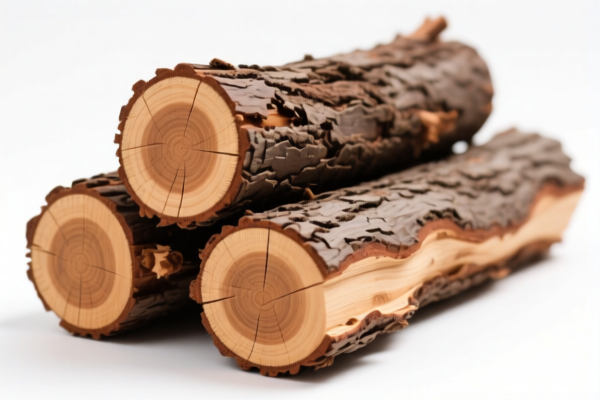
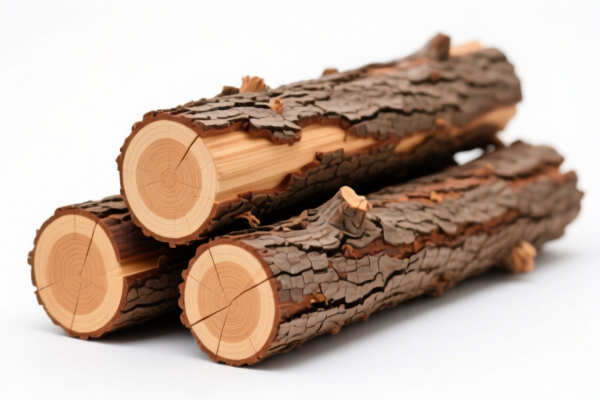
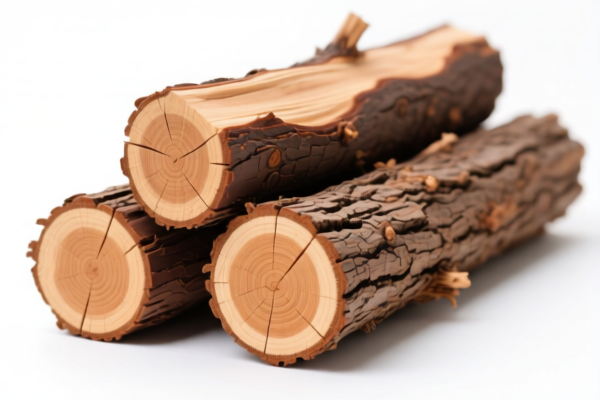
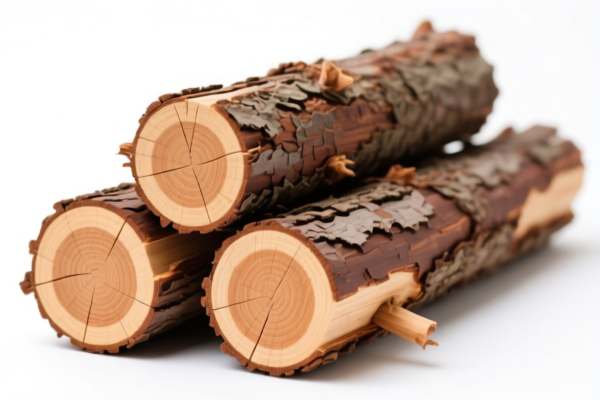
AI Analysis
🌲 Western Red Cedar Timber (15cm+)
🌐 HS Code Reference & Customs Clearance Guide | 2026 Latest Tariff Analysis | Professional Entry Strategies
📌 I. Product Definition & Classification: What Exactly is "Western Red Cedar"?
Western Red Cedar (Thuja plicata) is a premium softwood renowned for its natural resistance to rot, insects, and weathering. In international trade, specifically under the US Harmonized Tariff Schedule (HTSUS), it falls under Chapter 44 (Wood and articles of wood; wood charcoal).
The classification depends heavily on two factors:
1. Form: Is it raw timber, sawn, or further worked? (The data specifies "Sawn" or "Longitudinally sawn").
2. Thickness: The prompt specifies >15cm. This is a critical threshold. Timber over 15cm often triggers specific subheadings for "Other timber, sawn or chipped lengthwise... of a thickness exceeding 6 mm".
⚠️ Key Distinction:
- If the wood is sawn longitudinally and meets the specific species definition for Western Red Cedar, it is classified under 4407.19.
- The specific 8-digit subheadings (4407.19.00.68 and 4407.19.00.69) differentiate based on precise dimensional or morphological criteria (e.g., exact thickness bands or specific usage definitions like "building materials").
📦 II. HS Code Classification Details (2026 Latest Tariff Authority Alignment)
Based on the provided data, the product is strictly classified into two closely related HS Codes. Both carry the identical tax structure.
| HS Code | Product Description | Applicable Scenario | Key Differentiator |
|---|---|---|---|
4407.19.00.68 |
Western Red Cedar Timber, Thickness >15cm, Longitudinally Sawn | Raw sawn timber meeting specific morphological standards | Focuses on Physical Morphology (Longitudinal sawing + thickness) |
4407.19.00.69 |
Western Red Cedar Timber, Thickness >15cm, Coniferous Classification | Building materials or specific coniferous definitions | Focuses on Species/Usage Definition (Coniferous/Building grade) |
🔍 Critical Reminder:
- Both codes belong to 4407.19 (Other wood, sawn or chipped lengthwise... of a thickness exceeding 6 mm).
- The suffix .68 vs .69 is an administrative subdivision often used for statistical tracking or specific trade remedy applicability.
- Do not confuse with Planed/Slanted Wood (4409): Since the summary specifies "Sawn" (锯切) and "Timber" (木材) without mentioning planing or tongue-and-groove, it remains in 4407.
💰 III. 2026 Latest Tariff Rate Breakdown (Including Additional Taxes & Policy Add-ons)
✅ Applicable Country: United States (US)
✅ Origin: China (CN) [Implied by "122 Clause" and 35% total, typical of US-China trade context]
✅ Effective Time: Current 2026 Trade Policy
🎯 1. 4407.19.00.68 & 4407.19.00.69 —— Western Red Cedar Timber (>15cm)
| Item | Content |
|---|---|
| Base Tariff Rate | 0.0% (Most Favored Nation / General Rate for Wood) |
| Section 301 Add-on | +25.0% (Added tariff under US Trade Law Section 301) |
| Section 122 Tariff | +10.0% (Specific provision under Section 122 of the Trade Expansion Act) |
| Total Tariff Rate | 35.0% |
| Tax Calculation | CIF Value × 35% |
| De Minimis Exemption? | ❌ No (deny_de_minimis). Wood products over certain values or specific origins do not qualify for the $800 de minimis exception in this context. |
| Legal Basis Path | USITC:4407.19.00.68/69 → SECTION301:25% → SECTION122:10% |
📌 Explanation:
- Base Rate 0%: Wood products generally have low base duties to encourage raw material import.
- Section 301 (25%): This is the primary punitive tariff imposed on Chinese goods during the trade war. Most wood products from China fall under this.
- Section 122 (10%): This is a less common but significant add-on, often applied to specific strategic materials or under particular executive orders related to national security or economic adjustment.
- Total 35%: This is a high tariff burden. Importers must calculate landed costs carefully.
🛠️ IV. Customs Clearance Practical Advice (Combat Pitfalls Guide)
✅ 1. Required Documentation Checklist (Non-negotiable)
| Document | Mandatory? | Description |
|---|---|---|
| ✅ Commercial Invoice | ✔️ | Must clearly state: "Western Red Cedar Timber, Sawn, Thickness >15cm". |
| ✅ Packing List | ✔️ | Detail dimensions, weight, and number of planks/beams. |
| ✅ Phytosanitary Certificate | ✔️ | Critical for Wood. Issued by the exporting country's plant protection agency, confirming no pests/diseases. |
| ✅ Fumigation Certificate | ✔️ | Proof of heat treatment or methyl bromide fumigation (ISPM 15 compliant if in packaging, but for solid timber, phytosanitary is key). |
| ✅ Bill of Lading | ✔️ | Clean on-board bill. |
| ✅ Certificate of Origin | ✔️ | To prove Chinese origin (triggering the 35% tariff) or other origin if applicable. |
| ✅ Product Specifications | ✔️ | Confirm thickness (>15cm) and sawing method (longitudinal). |
✅ 2. Declaration Tips (Key Mnemonics)
🔥 “Species Accurate, Thickness Clear, Phytosanitary First!”
| Situation | Correct Declaration Method | Incorrect Practice |
|---|---|---|
| Timber >15cm, Sawn | 4407.19.00.68 or .69 + "Sawn Western Red Cedar" |
Mislabel as "Lumber" (too vague) or "Furniture Parts" |
| Timber <6mm (Veneer) | Different HS Code (4408) | Applying 4407 rates to veneer → Classification Error |
| Planed/Grooved Wood | 4409 series |
Declaring as "Sawn" → Penalty for Undeclared Processing |
| Wood in Pallets | Ensure pallets are ISPM 15 marked | Undeclared wooden packaging → Quarantine Detention |
⚠️ Note on
.68vs.69:
If your customs broker asks which code to use, provide the exact physical specifications (e.g., exact thickness band, whether it is intended for construction vs. general use). If unsure,.69(Coniferous/Building) is often the broader catch-all for structural timber, while.68may apply to specific metric thicknesses. Consult a licensed customs broker for the final selection based on the exact bill of lading description.
✅ 3. Special Circumstances Handling
| Situation | Handling Advice |
|---|---|
| Mixed Shipments | If the container holds both >15cm and <15cm cedar, split the declaration. Do not combine them under one code. |
| Moisture Content | Declare dryness level if specified in contract. Wet wood may require different phytosanitary handling. |
| Treatments | If chemically treated (e.g., pressure-treated for outdoor use), additional environmental declarations may be needed. |
| Valuation | Ensure CIF value includes freight and insurance. The 35% tax is applied to the CIF value, not just the product cost. |
🌍 V. Global Market Customs Comparison (2026 Latest)
| Country/Region | Recommended HS Code | Tariff (China Origin) | Certification | Notes |
|---|---|---|---|---|
| 🇺🇸 United States | 4407.19.00.68/69 |
35% (0% Base + 25% Sec301 + 10% Sec122) | Phytosanitary Cert. | High Tariff. Plan for landed cost impact. |
| 🇨🇳 China | 4407.19.00.68/69 |
5% (Import Duty) | Phytosanitary | Lower barrier for import into China. |
| 🇪🇺 European Union | 4407.10.00 |
0% (Most Countries) | EASL / FSC | EU has different 8-digit structure; no US-style Sec 301. |
| 🇨🇦 Canada | 4407.10 |
0% - 5% | Phytosanitary | Close proximity, often lower logistics costs. |
📌 Conclusion:
- The US market is the most expensive for Chinese Western Red Cedar due to the 35% total tariff.
- EU and Canada are more tariff-friendly but have strict Phytosanitary and Environmental (FSC/PEFC) regulations.
📌 VI. Common Errors & Pitfalls (Blood & Tears Lessons)
❌ Error 1: Declaring "Cedar Wood" without specifying thickness or sawing method.
👉 Consequence: Customs may reject the classification or apply a higher "Other Wood" rate (potentially higher than 0% base, plus full 35% add-ons).
❌ Error 2: Ignoring the Phytosanitary Certificate.
👉 Consequence: Immediate quarantine hold, potential destruction of cargo, or heavy fines. US Customs and Border Protection (CBP) and USDA are extremely strict on wood imports.
❌ Error 3: Calculating tax on FOB Value instead of CIF.
👉 Consequence: Underpayment of duty. The 35% is applied to CIF (Cost + Insurance + Freight). Under-declaring value leads to penalties and interest.
❌ Error 4: Confusing "Sawn" with "Planed".
👉 Consequence: Wrong HS Code (4407 vs 4409). 4409 often has different duty structures and regulations. Misclassification = Audit risk.
✅ Correct Practice:
"Western Red Cedar, Sawn Longitudinally, Thickness >15cm, Phytosanitary Certificate Attached, Origin: China, CIF Value: $XX,XXX"
🎯 VII. Conclusion: Professional Declaration Saves Money!
🎯 Remember the Mnemonic:
🔹 "Sawn & Thick, Sec 301 + Sec 122, 35% is the key!"
🔹 "No Phytosanitary, No Entry!"
🔹 "Check Thickness, Avoid Classification Error!"
📌 Tips:
- Pre-Submission Consultation: Given the 35% tariff, consider filing a Binding Ruling Request with US CBP if this is a high-volume, ongoing shipment. This locks in the classification and tariff rate.
- Supply Chain Diversification: If possible, explore sourcing from Canada or the Pacific Northwest (US domestic) to avoid the 35% import duty entirely.
- Insurance: Ensure cargo insurance covers potential customs delays or seizures due to documentation errors.
📣 Immediate Action:
📞 Contact a licensed US Customs Broker.
📄 Prepare Phytosanitary Certs and precise dimensions.
🚀 Budget for 35% landed cost to ensure profitability.
✨ Professional Clearance Starts with Accurate Classification!
💼 Every percentage point of tariff affects your bottom line!
Customer Reviews
About HS Code Classification
The Harmonized System (HS) is an internationally standardized nomenclature developed by the World Customs Organization (WCO) to classify traded products. Over 200 countries use the HS system as the basis for customs tariffs, trade statistics, and import/export regulations.
Each HS code follows a hierarchical structure:
- Chapter (2 digits) — Broad category of goods (e.g., Chapter 84: Machinery and Mechanical Appliances)
- Heading (4 digits) — More specific grouping within the chapter
- Subheading (6 digits) — Internationally standardized breakdown, used by all WCO member countries
- National subdivisions (8-10 digits) — Country-specific extensions for further classification, such as US HTSUS 10-digit codes
Correct HS code classification is essential for smooth customs clearance, accurate duty payment, and compliance with trade regulations. Misclassification can lead to customs delays, overpayment of duties, or penalties.
When importing from CN to US, the applicable tariff rates may include:
- Most-Favored-Nation (MFN) rate — The standard duty rate applied to WTO members
- General rate — Applied to countries without trade agreements
- Trade remedy duties — Additional tariffs such as Section 301 (anti-dumping), Section 232 (national security), or countervailing duties
The information provided on this page is for reference purposes only. For official classification, please consult with your local customs authority or a licensed customs broker.