Western Red Cedar Wood (for carving)
CN → US| HS Code | Tariff Rate | Origin | Destination | Doc |
|---|---|---|---|---|
| 4407190068 | 35.0% | CN | US | Official Doc |
| 4407190069 | 35.0% | CN | US | Official Doc |
| 4421999300 | 35.0% | CN | US | Official Doc |
| 4421999880 | 38.3% | CN | US | Official Doc |
| 4407990263 | 35.0% | CN | US | Official Doc |
Product Images
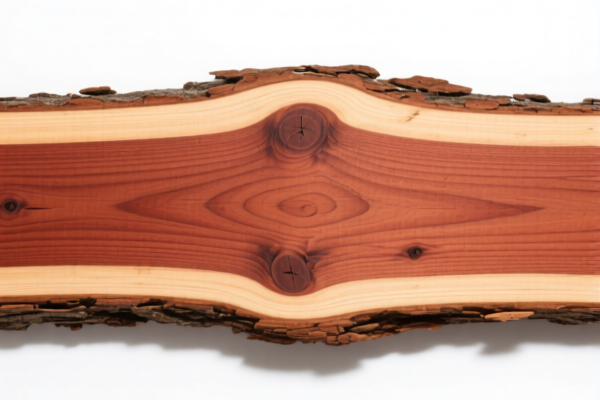
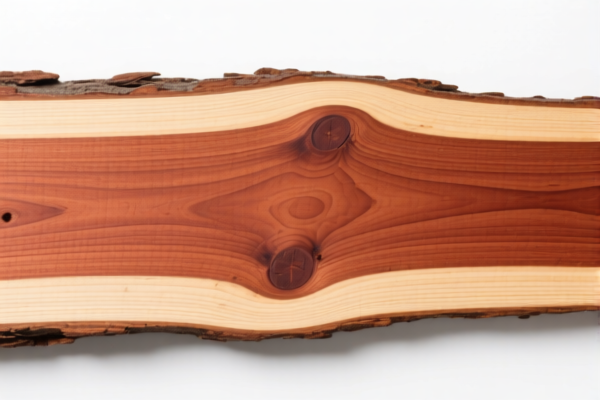
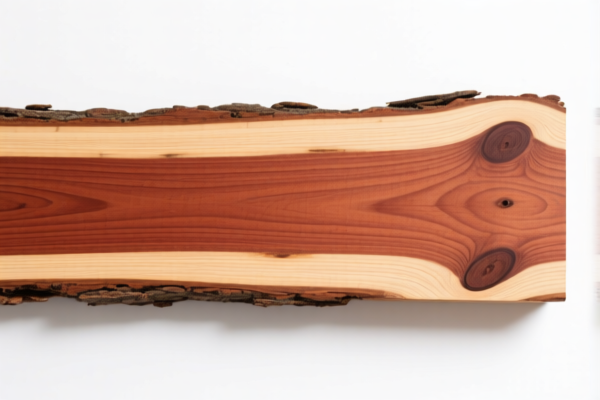
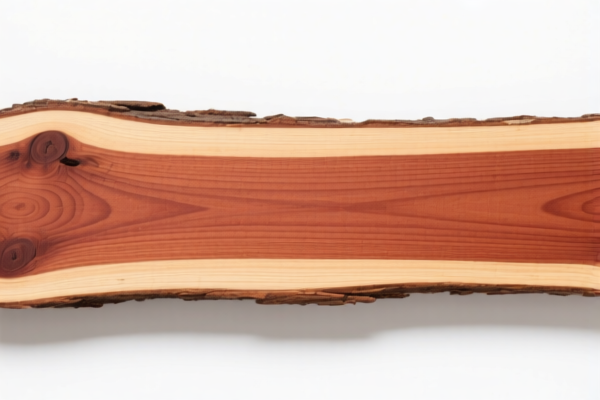
AI Analysis
🪵 Western Red Cedar Wood (For Carving)
🌐 HS Code Reference & Customs Clearance Guide | 2026 Tariff Schedule Analysis | Professional Strategy
📌 I. Product Definition & Classification: Is it "Wood" or "Artwork"?
Western Red Cedar (Thuja plicata) is a prized softwood known for its aromatic oils, natural resistance to rot, and fine grain, making it a premium material for outdoor construction, musical instruments, and hand carving.
In international trade, the classification depends entirely on the degree of processing:
- Raw/Primary Wood: Logs, planks, or sawn timber that have been cut to size but not yet shaped into a specific artistic form.
- Classification: Chapter 44, Heading 4407.
- Finished/Artistic Wood: Carvings, sculptures, or decorative items that have been shaped into a specific article of use or ornament.
- Classification: Chapter 44, Heading 4421.
⚠️ Key Distinction Point:
- If the wood is merely sawn, planed, or sanded into planks/boards, even if labeled "for carving," it remains raw wood → Go to 4407.19.00.68 / 4407.19.00.69.
- If the wood is carved into shapes (e.g., figures, bowls, decorative panels), it is an "article of wood" → Go to 4421.99.98.80 (general) or 4421.99.93.00 (if theatrical/operatic properties).
📦 II. HS Code Classification Details (2026 Latest Tariff Authority Match)
Based strictly on your provided <DATA>, here are the applicable HS Codes for Western Red Cedar and general wooden articles.
| HS Code | Product Description | Applicable Scenario | Processing Level |
|---|---|---|---|
4407.19.00.68 |
Sawn wood, >6mm thick, Coniferous, Western Red Cedar: Rough | Raw planks, logs sliced for carving but not yet shaped | ⛏️ Raw/Sawn |
4407.19.00.69 |
Sawn wood, >6mm thick, Coniferous, Western Red Cedar: Other (Planed/Sanded) | Smoother boards, ready for workshop use, not yet carved | 🔨 Prepared |
4421.99.98.80 |
Other articles of wood: Other: Other: Other | Finished carved items (figurines, boxes, decorative art) | 🎨 Finished Article |
4421.99.93.00 |
Other articles of wood: Theatrical, ballet, and operatic scenery/properties | Wood props for theater, stage sets, or performance costumes made of wood | 🎭 Specialized Use |
🔍 Critical Reminder:
- "For Carving" is a usage description, not a processing description. If you are importing blocks of wood to carve later, use 4407. If you are importing already carved items, use 4421.
- Western Red Cedar is specifically identified under Coniferous wood in subheading 4407.19.
💰 III. 2026 Latest Tariff Rate Breakdown (Including Additional Duties)
✅ Applicable Country: United States (US)
✅ Origin: China (CN)
✅ Effective Time: 2025–2026 (Current Trade War Context)
🎯 1. 4407.19.00.68 & 4407.19.00.69 — Raw Western Red Cedar Wood
| Item | Content |
|---|---|
| Basic Tariff | 0.0% (ad valorem) – Note: Coniferous sawn wood often has low base rates |
| Section 301 Additional Duty | +25.0% (Mandatory for Chinese-origin wood products) |
| Total Tax Rate | 25.0% |
| Tax Calculation | CIF Value × 25% |
| De Minimis Exemption | ❌ Not Applicable (Wood products generally excluded from de minimis benefits due to phytosanitary and trade restrictions) |
| Legal Basis | Section 301 Tariff List; USITC 4407.19 |
📌 Explanation:
- Although the base duty is 0%, the 25% Section 301 tariff is unavoidable for Chinese Western Red Cedar.
- Why? These are considered "wood products" subject to US-China trade tensions.
- Total Cost Impact: For every $10,000 CIF value, expect $2,500 in additional customs duties.
🎯 2. 4421.99.98.80 — Other Finished Wood Articles (Carvings/Souvenirs)
| Item | Content |
|---|---|
| Basic Tariff | 3.3% (ad valorem) |
| Section 301 Additional Duty | +25.0% |
| Total Tax Rate | 28.3% |
| Tax Calculation | CIF Value × 28.3% |
| De Minimis Exemption | ❌ Not Applicable |
| Legal Basis | Section 301 Tariff List; USITC 4421.99 |
📌 Explanation:
- Finished wooden articles carry a 3.3% base duty, which is higher than raw wood (0%).
- Plus the 25% Section 301 duty.
- Total: 28.3%. This is 3.3% higher than raw wood due to the "manufactured" nature of the goods.
🎯 3. 4421.99.93.00 — Theatrical/Ballet/Operatic Wood Properties
| Item | Content |
|---|---|
| Basic Tariff | 0.0% (ad valorem) |
| Section 301 Additional Duty | +25.0% |
| Total Tax Rate | 25.0% |
| Tax Calculation | CIF Value × 25% |
| De Minimis Exemption | ❌ Not Applicable |
| Legal Basis | Section 301 Tariff List; USITC 4421.99 |
📌 Explanation:
- If the carved wood is specifically for theater, ballet, or opera sets/props, it enjoys the 0% base duty.
- Total: 25.0% (same as raw wood).
- Caution: Must prove "theatrical" use. General carvings do not qualify.
🛠️ IV. Customs Clearance Practical Advice (Pitfall Avoidance Guide)
✅ 1. Preparation Checklist (Essential Documents)
| Document | Mandatory? | Purpose |
|---|---|---|
| ✅ Phytosanitary Certificate | ✔️ YES | Critical for Wood! Issued by origin country's agricultural authority to prove no pests/diseases. Without it, shipment will be quarantined or destroyed. |
| ✅ Fumigation Certificate | ✔️ YES | Often required alongside phytosanitary cert. Proves wood has been heat-treated or fumigated per ISPM 15 standards. |
| ✅ Commercial Invoice | ✔️ YES | Must clearly state: "Western Red Cedar Sawn Wood" or "Wooden Carvings," value, and country of origin. |
| ✅ Packing List | ✔️ YES | Detail dimensions, weight, and number of pieces. |
| ✅ Certificate of Origin (CO) | ✔️ YES | To confirm Chinese origin for tariff calculation. |
| ✅ Product Photos | ✔️ YES | Show grain, cuts, and any markings. Helps customs verify HS Code. |
✅ 2. Declaration Tips (Golden Rules)
🔥 "Wood Needs Phytosanitary, Carving Needs Precision!"
| Scenario | Correct HS Code | Wrong Code | Consequence |
|---|---|---|---|
| Raw planks "for carving" | 4407.19.00.68/69 |
4421.99.98.80 |
Overpay by 3.3% base duty + potential misclassification penalty |
| Finished carvings | 4421.99.98.80 |
4407.19.00.69 |
Under-declare tax. Customs may assess 28.3% + penalties |
| Theatrical wood props | 4421.99.93.00 |
4421.99.98.80 |
Overpay by 3.3% base duty if not proven theatrical |
| Any wood without Phytosanitary Cert | N/A | N/A | Shipment Rejected/Destroyed |
✅ 3. Special Cases
| Case | Handling Advice |
|---|---|
| Lumber vs. Carving | If importing a mix of raw lumber and finished carvings, separate shipments or clear separate lines to avoid ambiguity. Mixing can lead to higher scrutiny. |
| ISPM 15 Marking | Raw wood must have the IPPC stamp (heat-treated mark). If missing, customs will demand re-treatment or return shipment. |
| EPA/FSC Certification | Optional but recommended. If wood is FSC-certified (sustainable), it may help with retailer compliance in the US/EU, though not a customs requirement for tariff. |
🌍 V. Global Market Comparison (2026)
| Country/Region | Recommended HS Code | Tariff Rate (China Origin) | Key Requirements | Notes |
|---|---|---|---|---|
| 🇺🇸 USA | 4407.19.00.68 / 4421.99.98.80 |
25.0% (Wood) / 28.3% (Carving) | Phytosanitary Cert, ISPM 15 | Section 301 applies to all wood articles |
| 🇨🇳 China | 4407.19.00 |
5-10% | Standard Import Formalities | No Section 301 |
| 🇪🇺 EU | 4407.10 |
0% (if FSC certified) | EUTR (European Timber Regulation) | Strict legality proof required |
| 🇬🇧 UK | 4407.10 |
0-5% | Post-Brexit Rules | Similar to EU EUTR |
📌 Conclusion:
- USA is the most expensive market for Chinese wood due to the 25% Section 301 tariff.
- Phytosanitary compliance is non-negotiable. No certificate = No entry.
📌 VI. Common Mistakes & Pitfalls (Lessons Learned)
❌ Mistake 1: Importing raw wood without Phytosanitary Certificate.
👉 Result: Shipment held at port, fumigation costs incurred, or cargo destroyed.
❌ Mistake 2: Declaring "Wood Carvings" as "Sawn Wood" to save 3.3% base duty.
👉 Result: Customs inspection reveals finished goods. Penalty for misdeclaration + back taxes.
❌ Mistake 3: Ignoring ISPM 15 stamp on packaging.
👉 Result: Pallets destroyed, wood detained until treated.
❌ Mistake 4: Using "Theatrical" HS Code (4421.99.93.00) for general souvenirs.
👉 Result: Customs rejects the special 0% base rate, charges 3.3%, and flags for fraud.
✅ Correct Approach:
"Western Red Cedar Sawn Wood, Heat-Treated (ISPM 15), Raw Planks for Artisan Carving"
OR
"Hand-Carved Western Red Cedar Figurines, Finished Wood Articles"
🎯 VII. Conclusion: Precision in Wood Trade
🎯 Remember the Formula:
🔹 "Raw Wood = 25% Total Duty (0% Base + 25% S301)"
🔹 "Finished Carvings = 28.3% Total Duty (3.3% Base + 25% S301)"
🔹 "Theatrical Props = 25% Total Duty (0% Base + 25% S301)"
🔹 "No Phytosanitary Cert = NO ENTRY"
📌 Pro Tip:
If your business involves high-value carvings, consider pre-ruling from US Customs (CBP) to lock in the HS Code. For raw wood, ensure your supplier provides ISPM 15-compliant packaging before shipment.
📣 Immediate Action:
📞 Verify Phytosanitary Requirements with your supplier today.
📄 Prepare Commercial Invoice with clear HS Code and Origin.
🚀 Ensure ISPM 15 Marking on all wooden pallets and crates.
✨ Customs Compliance Starts with Accurate Wood Classification!
💼 Don't let a missing certificate delay your shipment!
Customer Reviews
About HS Code Classification
The Harmonized System (HS) is an internationally standardized nomenclature developed by the World Customs Organization (WCO) to classify traded products. Over 200 countries use the HS system as the basis for customs tariffs, trade statistics, and import/export regulations.
Each HS code follows a hierarchical structure:
- Chapter (2 digits) — Broad category of goods (e.g., Chapter 84: Machinery and Mechanical Appliances)
- Heading (4 digits) — More specific grouping within the chapter
- Subheading (6 digits) — Internationally standardized breakdown, used by all WCO member countries
- National subdivisions (8-10 digits) — Country-specific extensions for further classification, such as US HTSUS 10-digit codes
Correct HS code classification is essential for smooth customs clearance, accurate duty payment, and compliance with trade regulations. Misclassification can lead to customs delays, overpayment of duties, or penalties.
When importing from CN to US, the applicable tariff rates may include:
- Most-Favored-Nation (MFN) rate — The standard duty rate applied to WTO members
- General rate — Applied to countries without trade agreements
- Trade remedy duties — Additional tariffs such as Section 301 (anti-dumping), Section 232 (national security), or countervailing duties
The information provided on this page is for reference purposes only. For official classification, please consult with your local customs authority or a licensed customs broker.