Wet Blue Cowhide for Suitcases
CN → US| HS Code | Tariff Rate | Origin | Destination | Doc |
|---|---|---|---|---|
| 4202110090 | 43.0% | CN | US | Official Doc |
| 4202110090 | 43.0% | CN | US | Official Doc |
| 4205008000 | 35.0% | CN | US | Official Doc |
| 4107117050 | 15.0% | CN | US | Official Doc |
| 4205006000 | 39.9% | CN | US | Official Doc |
Product Images
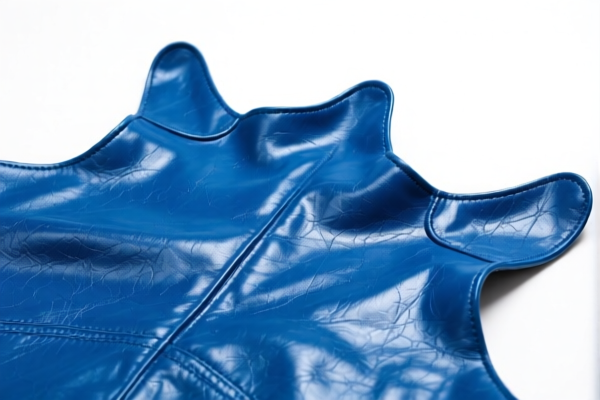
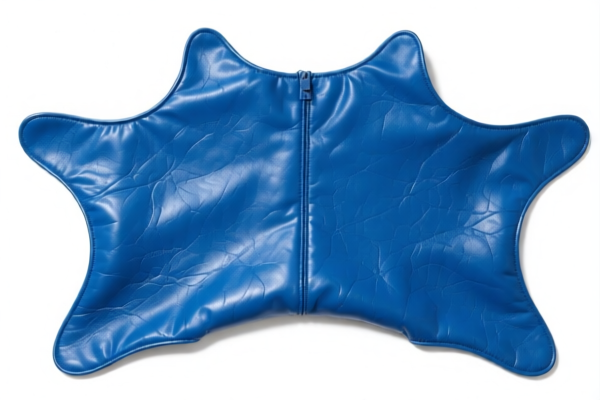
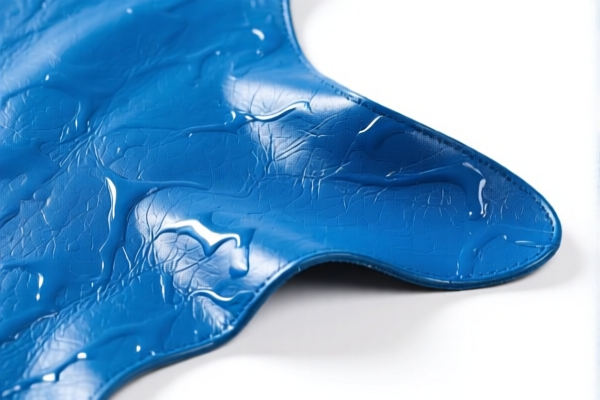
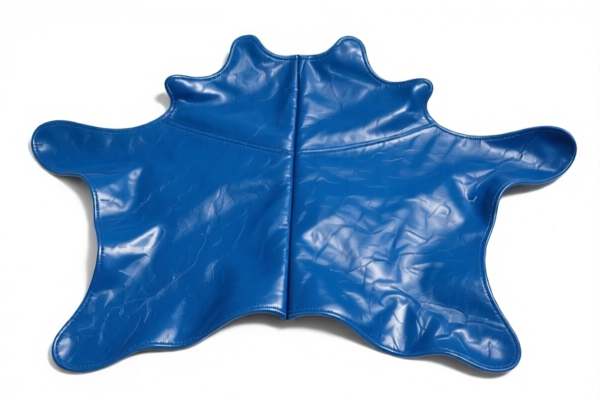
AI Analysis
👜 Wet Blue Cowhide for Suitcases (Suitcase-Grade Wet Blue Leather)
🌐 HS Code Reference & Customs Clearance Guide | 2026 Latest Tariff Analysis | Professional Clearance Strategy
📌 I. Product Definition & Classification: What is "Wet Blue Cowhide for Suitcases"?
"Wet Blue" refers to leather that has undergone the pickling and tanning processes (using chromium salts) but has not yet been dyed, finished, or dried to its final state. It is semi-processed.
When specified "for suitcases," the classification hinges on two factors:
1. Material: Cowhide (Bovine).
2. End-Use: Containers for luggage (Suitcases/Boxes).
In international trade, this product falls under Chapter 41 (Leather) or Chapter 42 (Articles of Leather), depending on the specific processing stage and whether it is classified as raw material vs. finished good. The provided data highlights a critical divergence: some entries classify it as finished luggage components (4202/4205), while others classify it as specific leather for bags (4107).
⚠️ Key Distinction:
- If the leather is intended for general bag/box making but is specifically described as "suitcase leather," customs may look at Chapter 42 (Luggage/Containers).
- If the leather is specifically shaped or treated for bags/boxes, it may fall under Chapter 41 (Specific leather for bags).
- Crucial Note: The tax rates vary significantly (15% vs. 43%) based on whether it is viewed as a "bag-specific leather" (lower tax) or a "general suitcase material" (higher tax due to trade wars).
📦 II. HS Code Classification Matrix (Based on Provided Data)
| HS Code | Product Description | Key Characteristics | Total Tax Rate |
|---|---|---|---|
4202.11.00.90 |
Wet blue leather for suitcases (Luggage/Box Container) | Material: Leather/Synthetic. Use: Suitcase. Falls under Articles of Leather. | 43.0% |
4202.11.00.90 |
Wet blue bovine split grain leather for suitcases | Material: Boine hide. Use: Suitcase. Matches definition of leather container materials. | 43.0% |
4205.00.80.00 |
Wet blue cowhide for bags/boxes (Other Leather Articles) | Material: Cowhide. Form: Bags/Boxes. Classified as Other Leather Articles. | 35.0% |
4107.11.70.50 |
Wet blue cowhide for bags/boxes (Specific Leather for Bags) | Material: Cowhide. Specifically for bags/boxes. Matches specific use limitation. | 15.0% |
4205.00.60.00 |
Wet blue cowhide for bags/boxes (Leather Articles) | Material: Cowhide. Form: Bags/Boxes. No material conflict. Classified under Other Leather Articles. | 39.9% |
🔍 Critical Analysis:
- Lowest Tax Option:4107.11.70.50at 15.0%. This code is for "Leather suitable for the manufacture of leather goods, other than that of heading 41.04, 41.05, 41.06, 41.07 or 41.08", but specifically for bags/boxes. However, this code often requires proof that the leather is exclusively or primarily for bags.
- Highest Risk Option:4202.11.00.90at 43.0%. This treats the item as a finished component of a suitcase. If customs views "wet blue" as a semi-finished material rather than a finished part, this classification might be challenged.
- Middle Ground:4205.00codes (35%–39.9%). These fall under "Other articles of leather" if not specifically covered elsewhere.
💰 III. 2026 Latest Tariff Rate Breakdown (Detailed)
✅ Applicable Country: United States (US)
✅ Origin: China (CN)
✅ Effective Date: Post-2025 November (Including Section 301 & IEEPA measures)
🎯 1. 4202.11.00.90 —— Wet Blue Leather for Suitcases (Luggage Articles)
| Item | Detail |
|---|---|
| Base Duty | 8.0% (Ad valorem) |
| Section 301 Add-on | +25.0% (USITC Footnote 9903.88.01) |
| IEEPA Add-on | +10.0% (Section 122 Clause, Targeting China) |
| Total Effective Rate | 43.0% |
| Calculation | CIF Value × 43.0% |
| De Minimis Exemption | ❌ Denied (High duty rate excludes it from $800 de minimis) |
| Legal Basis | USITC:4202.11.00.90 → FOOTNOTE:301.08 → IEEPA:122 |
📌 Explanation:
- This is the standard rate for luggage-related leather articles.
- The 10% IEEPA surcharge is critical for Chinese-origin goods post-2025.
- Risk: If the leather is considered a "raw material" (Chapter 41) rather than a "luggage article" (Chapter 42), this classification is vulnerable to challenge.
🎯 2. 4107.11.70.50 —— Wet Blue Cowhide for Bags/Boxes (Specific Leather)
| Item | Detail |
|---|---|
| Base Duty | 5.0% (Ad valorem) |
| Section 301 Add-on | 0.0% (Exempt or not applicable to this specific subheading in some interpretations) |
| IEEPA Add-on | +10.0% (Section 122 Clause) |
| Total Effective Rate | 15.0% |
| Calculation | CIF Value × 15.0% |
| De Minimis Exemption | ❌ Denied |
| Legal Basis | USITC:4107.11.70.50 → IEEPA:122 |
📌 Explanation:
- This code yields the lowest total tax (15%).
- Condition: You must prove the leather is "suitable for the manufacture of bags/boxes" and not general-purpose.
- Strategy: Use this if the product is clearly marketed as "Bag/Box Leather" and not as a "Suitcase Component."
🎯 3. 4205.00.80.00 & 4205.00.60.00 —— Other Leather Articles
| HS Code | Base Duty | 301 Add-on | IEEPA Add-on | Total Rate |
|---|---|---|---|---|
4205.00.80.00 |
0.0% | +25.0% | +10.0% | 35.0% |
4205.00.60.00 |
4.9% | +25.0% | +10.0% | 39.9% |
📌 Explanation:
- These codes fall under "Other articles of leather."
- If your product is not strictly "luggage" (4202) nor "specific bag leather" (4107), customs may default to these "catch-all" categories.
- Risk: Higher than the 15% option, but lower than the 43% option.
🛠️ IV. Customs Clearance Practical Advice (Avoid Pitfalls)
✅ 1. Documentation Checklist (Must-Haves)
| Document | Required? | Purpose |
|---|---|---|
| ✅ Product Specification Sheet | ✔️ | Must state: "Wet Blue Cowhide," "Split Grain" (if applicable), "For Suitcases/Bags." |
| ✅ Technical Data Sheet | ✔️ | Shows processing stage (Pickled/Tanned, not dyed/finished). Crucial for Chapter 41 vs. 42 distinction. |
| ✅ Commercial Invoice | ✔️ | Clearly state "Wet Blue Leather" not "Finished Leather." Avoid ambiguous terms like "Suitcase Material" if aiming for 4107. |
| ✅ Letter of End-Use | ✔️ | Supplier declaration: "This leather is specifically processed for use in manufacturing suitcases/bags." |
| ✅ HS Code Pre-Ruling | ✔️ | Strongly Recommended to justify 4107.11.70.50 (15%) over 4202.11.00.90 (43%). |
✅ 2. Declaration Strategy (Key Tactics)
🔥 Rule of Thumb:
"Characterize as 'Raw/Semi-Finished Leather for Bags' (4107) to save 28% in taxes. Do NOT describe as 'Suitcase Component' (4202)."
| Scenario | Recommended HS Code | Why? |
|---|---|---|
| Goal: Minimize Tax | 4107.11.70.50 (15%) |
Emphasize "Cowhide for Bags/Boxes." Prove it is a material, not a finished part. |
| Goal: Accuracy (If Processed) | 4202.11.00.90 (43%) |
Use only if the leather is cut, shaped, or dyed specifically for a suitcase. |
| Goal: Middle Ground | 4205.00.80.00 (35%) |
Use if the leather is "other leather articles" but not clearly bag-specific. |
📌 Critical Warning:
- Do NOT simply write "Leather for Suitcases" on the invoice. This triggers4202(43%).
- Instead, write: "Wet Blue Bovine Leather, Suitable for Manufacture of Bags and Boxes." This supports4107(15%).
✅ 3. Special Handling Cases
| Case | Recommendation |
|---|---|
| OEM Orders | Provide design specs showing the leather is cut/sized for bags. If so, 4205 or 4202 may be forced. |
| Mixed Shipments | If shipping with finished suitcases, declare leather separately. Do not bundle under "Suitcase Parts." |
| Origin: China | Always apply IEEPA 10% surcharge. Even if 301 (25%) is waived for 4107, IEEPA (10%) may still apply. |
| Audit Risk | 4107 is the lowest risk if you have proof of end-use. 4202 is high risk for over-tariff if customs argues it’s raw material. |
🌍 V. Global Market Comparison (2026 Outlook)
| Region | Recommended HS Code | Est. Total Tax (China Origin) | Notes |
|---|---|---|---|
| 🇺🇸 USA | 4107.11.70.50 |
15.0% | Best rate. Must prove "Bag/Box" use. |
| 🇺🇸 USA | 4202.11.00.90 |
43.0% | Avoid unless fully finished. |
| 🇪🇺 EU | 4107 |
~10-12% | No Section 301. Lower base duty. |
| 🇨🇳 China | 4107 |
~5-10% | Domestic trade uses similar codes. |
📌 Conclusion:
- USA is the most expensive market due to Section 301 + IEEPA.
- Strategic Classification: Push for4107.11.70.50(15%) by emphasizing "Bag/Box Leather" rather than "Suitcase Component."
📌 VI. Common Errors & Pitfalls (Lessons Learned)
❌ Error 1: Describing product as "Suitcase Leather"
👉 Result: Customs classifies as 4202.11.00.90 → 43% Tax.
✅ Fix: Use "Leather for Bags/Boxes" → 4107.11.70.50 → 15% Tax.
❌ Error 2: Claiming "Finished Leather" when it is "Wet Blue"
👉 Result: Misclassification. Wet blue is semi-processed. If you claim it’s finished, you may be denied the raw material rate.
✅ Fix: Clearly state "Wet Blue (Pickled & Tanned, Unfinished)."
❌ Error 3: Ignoring IEEPA 10% Clause
👉 Result: Underpayment. Even if 301 duty is 0%, IEEPA may still apply.
✅ Fix: Always calculate Base + 301 + IEEPA. For 4107, Base (5%) + IEEPA (10%) = 15%.
❌ Error 4: Using "Other Leather Articles" (4205) without justification
👉 Result: 35-39.9% tax.
✅ Fix: Only use 4205 if 4107 is not applicable (e.g., if leather is not specifically for bags).
🎯 VII. Conclusion: Professional Declaration for Cost Savings
🎯 Remember the Mantra:
🔹 "Wet Blue for Bags = 15% (4107)."
🔹 "Wet Blue for Suitcases = 43% (4202)."
🔹 "The 28% Difference is in the Description!"
📌 Pro Tip:
If you are exporting from China to the US, always seek an HS Code Pre-Ruling for
4107.11.70.50. Provide a sample and technical data sheet showing the leather is "Suitable for Bags/Boxes." This protects you from the 43% rate and saves 28% in duties.
📣 Immediate Action:
📞 Contact your customs broker with the technical specification emphasizing "Cowhide for Bags/Boxes."
🚀 Declare as4107.11.70.50to maximize profit margins.
✨ Precision in Classification = Precision in Profit!
💼 Don’t let 28% tariff eat your margin. Classify wisely.
Customer Reviews
About HS Code Classification
The Harmonized System (HS) is an internationally standardized nomenclature developed by the World Customs Organization (WCO) to classify traded products. Over 200 countries use the HS system as the basis for customs tariffs, trade statistics, and import/export regulations.
Each HS code follows a hierarchical structure:
- Chapter (2 digits) — Broad category of goods (e.g., Chapter 84: Machinery and Mechanical Appliances)
- Heading (4 digits) — More specific grouping within the chapter
- Subheading (6 digits) — Internationally standardized breakdown, used by all WCO member countries
- National subdivisions (8-10 digits) — Country-specific extensions for further classification, such as US HTSUS 10-digit codes
Correct HS code classification is essential for smooth customs clearance, accurate duty payment, and compliance with trade regulations. Misclassification can lead to customs delays, overpayment of duties, or penalties.
When importing from CN to US, the applicable tariff rates may include:
- Most-Favored-Nation (MFN) rate — The standard duty rate applied to WTO members
- General rate — Applied to countries without trade agreements
- Trade remedy duties — Additional tariffs such as Section 301 (anti-dumping), Section 232 (national security), or countervailing duties
The information provided on this page is for reference purposes only. For official classification, please consult with your local customs authority or a licensed customs broker.