Wet Blue Full Grain Leather for Furniture Upholstery
CN → US| HS Code | Tariff Rate | Origin | Destination | Doc |
|---|---|---|---|---|
| 4107115000 | 12.8% | CN | US | Official Doc |
| 4107117090 | 15.0% | CN | US | Official Doc |
Product Images
AI Analysis
🐂 Furniture Upholstery Leather (Wet Blue / Full Grain)
🌐 HS Code Reference & Customs Clearance Guide | 2026 Latest Tariff Analysis | Professional Strategy
📌 1. Product Definition & Classification: What is "Wet Blue" Leather?
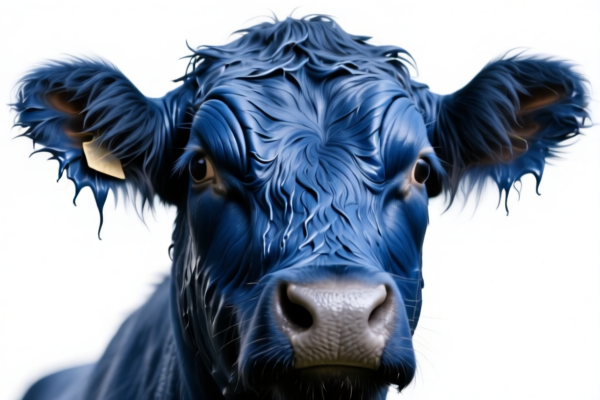
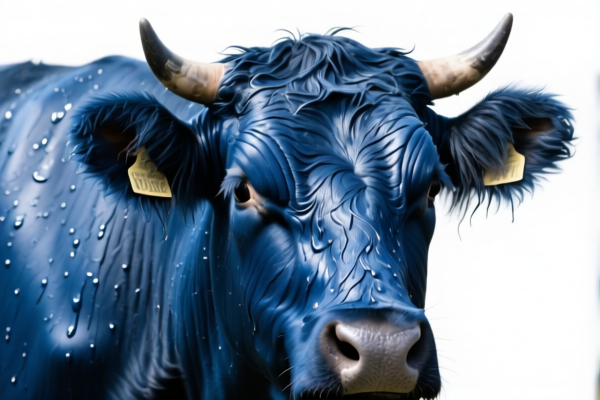
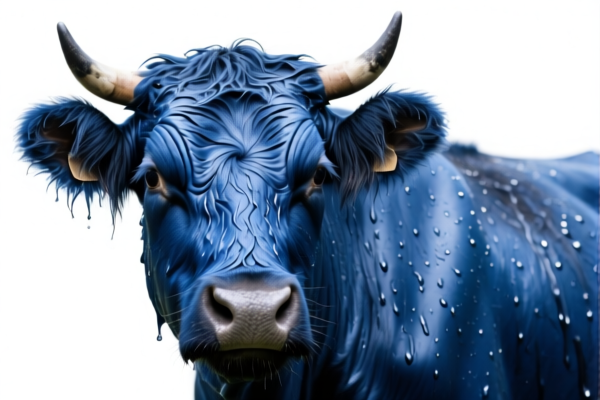
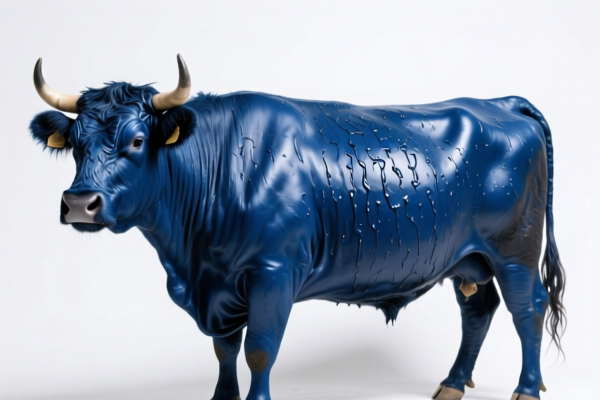
Wet Blue Leather is an intermediate stage in the leather manufacturing process. It is cattle hide (bovine) that has been tanned using chromium salts (hence the blueish tint) but has not yet been finished, colored, or dried. It is typically exported in a moist, rolled state.
Despite being "unfinished," it is still classified as leather further prepared after tanning under Chapter 41.
⚠️ Key Distinction Point:
- If the leather is dyed, finished, and dried for final upholstery → It falls under Headings 4107.11 or 4107.19 (depending on split/full grain).
- If it is "Wet Blue" (tanned but not fully finished/crust-ready) → It is still classified under Headings 4107.11 or 4107.19 because it is "leather further prepared after tanning."
- Crucial Note: The provided<DATA>specifies "Upholstery Leather" and "Other: Other: Not fancy Other". This implies the specific commercial intent and physical state (full grain, unsplit) for furniture use.
📦 2. HS Code Classification Details (2026 Authoritative Alignment)
Based strictly on the provided <DATA>, here are the applicable HS Codes for Bovine/Equine Leather, Full Grain, Unsplit, for Upholstery:
| HS Code | Product Description | Applicable Scenario | Grain Status | Hair Status |
|---|---|---|---|---|
| 4107.11.50.00 | Upholstery leather, full grain, unsplit, bovine/equine, without hair | Furniture upholstery, high-end sofas, chairs | ✅ Full Grain | ❌ Without hair |
| 4107.11.70.90 | Other leather, full grain, unsplit, bovine/equine, without hair (Not fancy) | Standard furniture leather, non-decorative, general upholstery | ✅ Full Grain | ❌ Without hair |
🔍 Key Clarification:
- Both codes fall under Heading 4107: Leather further prepared after tanning or crusting... of bovine or equine animals, without hair on, whether or not split.
- 4107.11 specifically refers to Full grains, unsplit.
- 4107.11.50.00 is explicitly defined as "Upholstery leather".
- 4107.11.70.90 is the catch-all for "Other: Other: Not fancy Other" under the same full-grain, unsplit category.
- "Wet Blue" is a processing stage, not a separate HS category. Since it is tanned (chromium tanned), it is covered under 4107. The final destination (upholstery) determines the subheading.
💰 3. 2026 Tariff Rate Breakdown
✅ Applicable Country: United States (US)
✅ Origin: China (CN)
✅ Effective Date: 2025–2026 (Current Policy)
🎯 1. HS Code 4107.11.50.00 – Upholstery Leather (Full Grain, Unsplit)
| Item | Detail |
|---|---|
| Base Tariff Rate | 0.0% (Ad Valorem) |
| Section 301 Additional Tariff | 0.0% |
| IEEPA Additional Tariff | 0.0% |
| Total Tax Rate | 0.0% |
| Tax Calculation | CIF Value × 0.0% = $0 |
| De Minimis Eligibility | ❌ Not Applicable (Leather is generally excluded from de minimis if it meets the definition of "textile/leather article," but since tariff is 0%, it doesn't matter). |
| Legal Basis | HTSUS 4107.11.50.00 |
📌 Explanation:
- Leather products, particularly raw or semi-processed hides (Wet Blue), enjoy zero duty status in the US under current trade policies.
- Even with Section 301 and IEEPA tariffs, leather is often exempt or has a 0% rate for these specific subheadings.
- This is a highly favorable classification for importers.
🎯 2. HS Code 4107.11.70.90 – Other Full Grain, Unsplit Leather (Not Fancy)
| Item | Detail |
|---|---|
| Base Tariff Rate | 0.0% (Ad Valorem) |
| Section 301 Additional Tariff | 0.0% |
| IEEPA Additional Tariff | 0.0% |
| Total Tax Rate | 0.0% |
| Tax Calculation | CIF Value × 0.0% = $0 |
| De Minimis Eligibility | ❌ Not Applicable |
| Legal Basis | HTSUS 4107.11.70.90 |
📌 Explanation:
- Same tax treatment as 4107.11.50.00.
- The distinction between "Upholstery" (50) and "Other" (70) is primarily for statistical tracking and customs verification, not tax liability.
- Both are 0% total tax.
🛠️ 4. Customs Clearance Practical Advice (Avoiding Pitfalls)
✅ 1. Essential Documentation Checklist
| Document | Required | Notes |
|---|---|---|
| ✅ Commercial Invoice | ✔️ | Must clearly state: "Wet Blue Full Grain Bovine Leather, for Furniture Upholstery" |
| ✅ Packing List | ✔️ | Specify weight (gross/net), number of hides/rolls, and dimensions |
| ✅ Certificate of Origin | ✔️ | Required to prove Chinese origin for potential future tariff changes |
| ✅ Product Photos | ✔️ | Show the "wet" state, color (blue tint), and grain texture |
| ✅ Technical Data Sheet | ✔️ | Specify tanning process (Chromium III), thickness, and intended use |
✅ 2. Declaration Best Practices
🔥 Golden Rule: "Describe the Physical State, Not Just the End Use!"
| Scenario | Correct Declaration | Incorrect Declaration |
|---|---|---|
| Wet Blue Leather | "Full grain bovine leather, wet blue, tanned with chromium, for upholstery" | "Raw hides" (Wrong: Hides are unprocessed; this is tanned) |
| Split vs. Full Grain | "Full grain, unsplit" | "Split leather" (If misdeclared, it may fall under a different, potentially taxed category) |
| End Use | "For furniture upholstery" | "For shoes" (If actually for upholstery, this is misclassification) |
✅ 3. Common Mistakes & Risks
❌ Mistake 1: Declaring as "Raw Hides" (0401/4101)
👉 Consequence: Incorrect classification. Raw hides are untanned. Wet blue is tanned. Misclassification can lead to audit penalties or misdeclaration fines.
❌ Mistake 2: Not specifying "Full Grain"
👉 Consequence: If the leather is actually split (suede-like), it may fall under 4107.21 or 4107.29. While still 0% in many cases, the statistical and regulatory tracking is different. Customs may request proof of grain structure.
❌ Mistake 3: Vague Description: "Leather for furniture"
👉 Consequence: Customs may detain the shipment for additional classification review. Provide specific details: "Chromium-tanned, wet blue, full grain, bovine, without hair."
🌍 5. Global Market Comparison (2026)
| Country/Region | Recommended HS Code | Tariff Rate | Notes |
|---|---|---|---|
| 🇺🇸 USA | 4107.11.50.00 or 4107.11.70.90 |
0.0% | No additional tariffs on this specific leather classification |
| 🇨🇳 China | 4107.11 |
~5–10% | Import duties apply for raw materials |
| 🇪🇺 EU | 4107.11 |
0% | If under certain quotas or agreements; otherwise check specific national rules |
| 🇬🇧 UK | 4107.11 |
0% | Post-Brexit tariffs generally align with old EU rates for raw leather |
📌 Conclusion:
- USA offers 0% duty for Wet Blue Full Grain Leather, making it a cost-effective import.
- Ensure the physical state (wet, tanned, full grain) is clearly documented to avoid customs delays.
📌 6. Pro Tips for Importers
- Pre-Arrival Notification: Submit advance data for ISF (Importer Security Filing) if shipping by ocean.
- Sample Retention: Keep samples of the "Wet Blue" leather for potential customs inspection.
- Environmental Compliance: Ensure the tanning process complies with REACH (if exporting to EU) or US EPA regulations for chromium usage.
- Packaging: Use waterproof packaging to prevent the leather from drying out or developing mold during transit.
🎯 Final Summary
- HS Codes:
4107.11.50.00(Upholstery) &4107.11.70.90(Other) - Tariff Rate: 0.0% (No base, no additional taxes)
- Key Requirement: Clearly describe as "Wet Blue, Full Grain, Tanned Leather".
- Action: Prepare detailed invoices and technical specs to avoid customs queries.
📣 Next Steps:
📞 Consult with a licensed customs broker to confirm the exact physical characteristics match the HS code.
📄 Prepare all documentation in advance to ensure smooth clearance.
✨ Leather Trade Made Simple: Accurate Classification = Zero Duty!
💼 Protect Your Margin with Precision!
Customer Reviews
About HS Code Classification
The Harmonized System (HS) is an internationally standardized nomenclature developed by the World Customs Organization (WCO) to classify traded products. Over 200 countries use the HS system as the basis for customs tariffs, trade statistics, and import/export regulations.
Each HS code follows a hierarchical structure:
- Chapter (2 digits) — Broad category of goods (e.g., Chapter 84: Machinery and Mechanical Appliances)
- Heading (4 digits) — More specific grouping within the chapter
- Subheading (6 digits) — Internationally standardized breakdown, used by all WCO member countries
- National subdivisions (8-10 digits) — Country-specific extensions for further classification, such as US HTSUS 10-digit codes
Correct HS code classification is essential for smooth customs clearance, accurate duty payment, and compliance with trade regulations. Misclassification can lead to customs delays, overpayment of duties, or penalties.
When importing from CN to US, the applicable tariff rates may include:
- Most-Favored-Nation (MFN) rate — The standard duty rate applied to WTO members
- General rate — Applied to countries without trade agreements
- Trade remedy duties — Additional tariffs such as Section 301 (anti-dumping), Section 232 (national security), or countervailing duties
The information provided on this page is for reference purposes only. For official classification, please consult with your local customs authority or a licensed customs broker.