Wet Blue Semi Leather
CN → US| HS Code | Tariff Rate | Origin | Destination | Doc |
|---|---|---|---|---|
| 4115100000 | 35.0% | CN | US | Official Doc |
| 4113903000 | 38.3% | CN | US | Official Doc |
| 4201006000 | 37.8% | CN | US | Official Doc |
Product Images
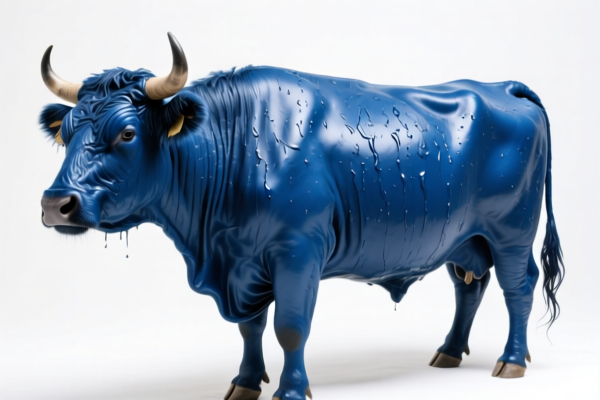


AI Analysis
🐎 Wet Blue Semi-Leather (Equestrian Semi-Finished Goods)
🌐 HS Code Reference & Customs Clearance Guide | 2026 Latest Tariff Analysis | Professional-Level Strategy for Equestrian Accessories
📌 I. Product Definition & Classification: What Exactly is "Wet Blue Semi-Leather"?
Wet Blue Semi-Leather refers to leather that has undergone the tanning process (specifically chrome-tanning) but has not yet undergone the final finishing stages (such as dyeing, pigment coating, or embossing). In the context of equestrian equipment, these are semi-finished raw materials specifically matched for horse tack (saddles, bridles, straps, etc.).
In international trade, the classification depends heavily on the state of processing and specific intended use. It is not a single product category but a range of semi-finished goods that must be classified based on their physical form and preparation level.
⚠️ Key Distinction Point:
- Raw/Basic Tanned Skin (Minimal processing, no further surface treatment) → Often falls under 4115.10.00.00
- Further Processed Semi-Product (Slightly more refined, e.g., split or drummed, but not finished) → May fall under 4113.90.30.00
- Specific Equestrian Semi-Products (Identifiable as parts for horse gear) → May fall under 4201.00.60.00
📦 II. HS Code Classification Details (2026 Latest Tariff Authority Comparison)
| HS Code | Product Description | Applicable Scenario | Processing Stage |
|---|---|---|---|
4115.10.00.00 |
Semi-leather goods for horses, matched material is leather, in semi-finished form | Basic wet-blue hides/skins ready for further cutting/working in equestrian goods | ✅ Basic Tanned (Wet Blue) |
4113.90.30.00 |
Semi-leather goods for horses, matched material is leather, in semi-finished form after further processing | Further processed semi-finished leather (e.g., split, re-tanned, or prepped) | ✅ Further Processed |
4201.00.60.00 |
Semi-leather goods for horses, matched use is equestrian, material is leather, in other category semi-finished form | Specific equestrian semi-products that do not fit the general "tanned leather" definition but are clearly for horse use | ✅ Specific Use (Equestrian) |
🔍 Important Reminder:
- "Wet Blue" is a specific chemical state (chrome-tanned, not dried/finished). If the leather is dried or finished, it does not belong here. - Customs will scrutinize the "Semi-Finished" claim. If the goods are cut into specific saddle shapes, they might be reclassified as articles of leather (4201.xx.xx) rather than raw semi-leather. - Misclassification Risk: Declaring a finished saddle part as "semi-leather" to evade higher tariffs on finished goods is a common audit target.
💰 III. 2026 Latest Tariff Rate Breakdown (Including Additional Taxes & Policy Surcharges)
✅ Applicable Country: United States (US)
✅ Country of Origin: China (CN)
✅ Effective Date: 2025-11-10 onwards (for subsequent imports)
🎯 1. 4115.10.00.00 —— Basic Semi-Leather for Horses
| Item | Detail |
|---|---|
| Base Tariff Rate | 0.0% (ad valorem) |
| USITC Additional Tax | +25.0% (from USITC Footnote 9903.88.01 / Section 301) |
| IEEPA Additional Tax | +10.0% (Targeting China/HK products, effective 2025-11-10) |
| Total Tax Rate | 35.0% |
| Tax Calculation | CIF Value × 35% |
| De Minimis Exemption | ❌ Not Available (deny_de_minimis) |
| Legal Basis Path | IEEPA:9903.01.25 → USITC:4115.10.00.00 → FOOTNOTE:9903.88.01 |
📌 Explanation:
- The 25% Section 301 tariff applies to most Chinese-origin leather products. - The 10% IEEPA tariff is a new layer for Chinese imports starting late 2025. - Total 35% is significant. While the base rate is 0%, the political tariffs make this expensive.
🎯 2. 4113.90.30.00 —— Further Processed Semi-Leather for Horses
| Item | Detail |
|---|---|
| Base Tariff Rate | 3.3% |
| USITC Additional Tax | +25.0% |
| IEEPA Additional Tax | +10.0% |
| Total Tax Rate | 38.3% |
| Tax Calculation | CIF Value × 38.3% |
| De Minimis Exemption | ❌ Not Available (deny_de_minimis) |
| Legal Basis Path | IEEPA:9903.01.25 → USITC:4113.90.30.00 → FOOTNOTE:9903.88.01 |
📌 Note:
- This code has a base rate of 3.3%, making it slightly more expensive than4115.10.00.00in total impact. - Use this only if the leather has undergone significant further processing beyond basic wet-blue stage (e.g., splitting, drumming with specific chemicals) that aligns with HS 4113.
🎯 3. 4201.00.60.00 —— Other Semi-Products for Equestrian Use
| Item | Detail |
|---|---|
| Base Tariff Rate | 2.8% |
| USITC Additional Tax | +25.0% |
| IEEPA Additional Tax | +10.0% |
| Total Tax Rate | 37.8% |
| Tax Calculation | CIF Value × 37.8% |
| De Minimis Exemption | ❌ Not Available (deny_de_minimis) |
| Legal Basis Path | IEEPA:9903.01.25 → USITC:4201.00.60.00 → FOOTNOTE:9903.88.01 |
📌 Critical Warning:
- This code is for semi-products specifically identifiable as equestrian items. - Risk: If customs determines these are finished goods (e.g., pre-cut saddle panels), they may reclassify them under 4201.xx.xx (Finished Goods), which could have different or higher tariffs. - Best For: Items that are clearly "semi-finished" but have equestrian-specific features (e.g., pre-punched hole patterns for bridles).
🛠️ IV. Customs Clearance Operational Advice (Real-World Pitfall Avoidance)
✅ 1. Required Documentation Checklist (Non-Negotiable)
| Document | Required? | Explanation |
|---|---|---|
| ✅ Product Specification Sheet | ✔️ | Must detail tanning process (chrome-wet blue), moisture content, and dimensions. |
| ✅ Photos of Goods | ✔️ | Must show the "wet" or "damp" state if applicable, or clearly indicate "semi-finished." Must show texture and lack of final finish (dye/paint). |
| ✅ Commercial Invoice | ✔️ | Clearly state "Wet Blue Semi-Leather for Equestrian Use" — NOT "Finished Leather Goods" or "Saddle Parts." |
| ✅ Packing List | ✔️ | Specify net/gross weight. Leather is heavy; accurate weight is crucial for duty calculation. |
| ✅ Certificate of Origin | ✔️ | Essential for proving China origin and applying (or challenging) additional tariffs. |
| ✅ Supplier Declaration | ✔️ | Confirming the goods are semi-finished and not pre-cut into final shapes. |
✅ 2. Declaration Strategy (Key Mantra)
🔥 “State Semi, Not Semi-Finished Goods; Specify Use, Avoid Finished Trap!”
| Situation | Correct Declaration | Wrong Practice |
|---|---|---|
| Basic Wet Blue Hides | 4115.10.00.00 |
Misdeclare as finished leather → 25%+ base |
| Split/Drummed Semi-Leather | 4113.90.30.00 |
Declare as 4115 → Risk of reclassification |
| Pre-Cut Equestrian Parts | 4201.00.60.00 |
Declare as 4115 → High risk of audit/penalty |
| Finished Saddles/Straps | Do Not Use Semi-Leather Codes | Misdeclare finished goods as semi-leather → Fraud risk |
✅ 3. Special Case Handling
| Scenario | Handling Advice |
|---|---|
| Moisture Content High | Declare as "Wet Blue" and provide humidity test reports if requested. Avoid mold issues during transit. |
| Pre-Cut Patterns | If cut into saddle shapes, use 4201.00.60.00 but be prepared for customs to question if it’s a "finished article." |
| Mixed Shipments | Do not mix semi-leather with finished leather goods in one shipment. Keep them separate to avoid misclassification of the entire lot. |
| Origin Marking | Ensure all packages are marked "Made in China" to comply with IEEPA requirements. |
🌍 V. Global Market Comparison for Equestrian Semi-Leather (2026)
| Country/Region | Recommended HS Code | Total Tariff (China Origin) | Certification/Notes |
|---|---|---|---|
| 🇺🇸 USA | 4115.10.00.00 / 4201.00.60.00 |
35.0% - 38.3% | High tariffs due to Section 301 + IEEPA. Strict on "semi-finished" definition. |
| 🇨🇳 China | 4115.10.00.00 |
Low/None | Domestic trade, no import duty. |
| 🇪🇺 EU | 4115.10.00.00 |
~2.4% + Anti-Dumping? | Check for anti-dumping duties on Chinese leather. No Section 301 equivalent. |
| 🇬🇧 UK | 4115.10.00.00 |
~2.4% | Post-Brexit tariffs may vary. Verify UKCA/CE for any finished accessories. |
| 🇦🇺 Australia | 4115.10.00.00 |
~5% | No major additional tariffs. |
📌 Conclusion:
- USA is the most expensive market for Chinese semi-leather due to the 35-38% total tariff. - EU/UK/Australia offer more favorable rates but require strict compliance with environmental (REACH) and safety standards. - Strategy: If exporting to the US, ensure precise classification to avoid higher "finished goods" tariffs (which can exceed 10-15% base + 25% Section 301 = 40%+).
📌 VI. Common Errors & Pitfall Guide (Lessons Learned)
❌ Error 1: Declaring finished saddle parts as "semi-leather" (4115.10.00.00)
👉 Consequence: Customs reclassifies as finished goods (4201.xx), leading to back taxes, penalties, and shipment delays.
❌ Error 2: Ignoring the 10% IEEPA tariff for China-origin goods
👉 Consequence: Underpayment of duties. The IEEPA 10% is mandatory for Chinese imports starting 2025-11-10.
❌ Error 3: Mixing wet blue with dry finished leather in one shipment
👉 Consequence: Entire shipment may be held for inspection, leading to demurrage charges and potential misclassification of the whole batch.
❌ Error 4: Using vague descriptions like "Leather Parts"
👉 Consequence: Customs lacks data to classify. Will use "Best Evidence" rule, likely assigning a higher duty code.
✅ Correct Practice:
"Wet Blue Semi-Leather, Chrome-Tanned, Unfinished, Cut to Blank Size for Equestrian Saddle Making, Country of Origin: China"
🎯 VII. Conclusion: Precision Classification Saves Money!
🎯 Remember the Mantra:
🔹 "Wet Blue is Semi, Not Finished; Base 0% or 3%, Plus 35% Total!"
🔹 "HS Code 4115 vs 4201: Know the Difference, Avoid the Audit Trap!"
📌 Pro Tip:
- If your wet blue leather is imported in bulk and cut domestically in the US, ensure you have the supply chain proof to justify "semi-finished" status.
- Consider Advance Ruling from US Customs if your product is on the borderline between
4115and4201.
📣 Immediate Action:
📞 Engage a licensed customs broker before shipping.
📦 Provide detailed photos and specifications.
🚀 Minimize duty liability through accurate, compliant classification!
✨ Professional Clearance Starts with Accurate Classification!
💼 Your Profit Margin Depends on Precise Tariff Calculation!
Customer Reviews
About HS Code Classification
The Harmonized System (HS) is an internationally standardized nomenclature developed by the World Customs Organization (WCO) to classify traded products. Over 200 countries use the HS system as the basis for customs tariffs, trade statistics, and import/export regulations.
Each HS code follows a hierarchical structure:
- Chapter (2 digits) — Broad category of goods (e.g., Chapter 84: Machinery and Mechanical Appliances)
- Heading (4 digits) — More specific grouping within the chapter
- Subheading (6 digits) — Internationally standardized breakdown, used by all WCO member countries
- National subdivisions (8-10 digits) — Country-specific extensions for further classification, such as US HTSUS 10-digit codes
Correct HS code classification is essential for smooth customs clearance, accurate duty payment, and compliance with trade regulations. Misclassification can lead to customs delays, overpayment of duties, or penalties.
When importing from CN to US, the applicable tariff rates may include:
- Most-Favored-Nation (MFN) rate — The standard duty rate applied to WTO members
- General rate — Applied to countries without trade agreements
- Trade remedy duties — Additional tariffs such as Section 301 (anti-dumping), Section 232 (national security), or countervailing duties
The information provided on this page is for reference purposes only. For official classification, please consult with your local customs authority or a licensed customs broker.