Wet Blue Sheep Skins
CN → USProduct Images
AI Analysis
🐑 Wet Blue Sheep Skins (Tanned but Not Finished)
🌐 HS Code Reference & Customs Clearance Guide | 2026 Latest Tariff Analysis | Professional-Level Clearance Strategy
📌 Part 1: Product Definition & Classification: Do You Really Understand "Wet Blue"?
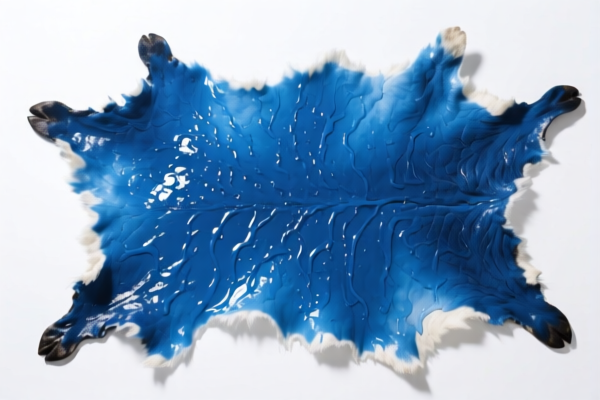
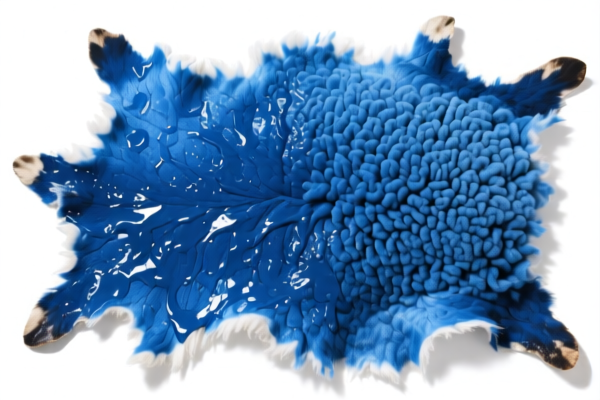
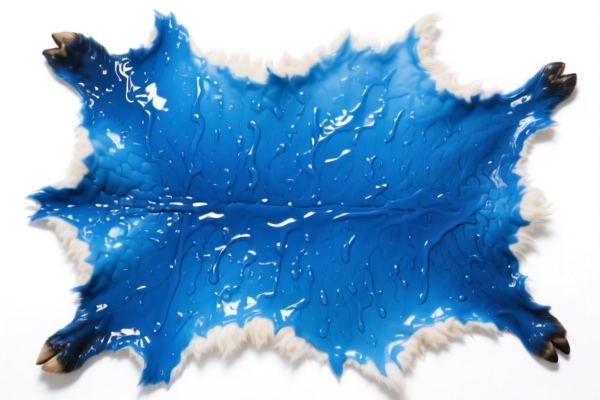
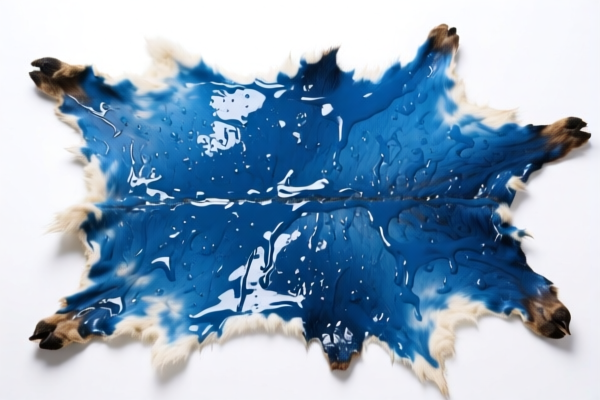
Wet Blue Sheep Skins are intermediate semi-finished products in the leather industry. They are sheepskins that have undergone the tanning process (specifically using chromium salts, hence "blue" due to the color of chromium tannins) but have not yet undergone the post-tanning processes of dyeing, fatliquoring, drying, or finishing (buffing/splitting for final texture).
In international trade, they are distinct from: * Raw Hides/Skins: Untreated, raw animal skin. * Crust Leather: Tanned, dyed, and dried, but not yet finished with coatings. * Finished Leather: Fully processed and ready for footwear, apparel, or upholstery use.
⚠️ Key Distinction Point:
- If it is wet, soft, and chromium-tanned, it is Wet Blue.
- If it is dried, stiff, and unbated, it is a Raw Skin.
- If it is dyed and finished, it is Finished Leather (Chapter 41).
📦 Part 2: HS Code Classification Details (2026 Latest Tariff Authority Comparison)
| HS Code | Product Description | Applicable Scenario | State of Processing |
|---|---|---|---|
4104.42.00.00 |
Sheep or Lamb Skins, Tanned (Wet Blue), Not Further Tanned or Dressed | Wet Blue Sheep Skins | ✅ Tanned (Chromium) |
4104.42.10.00 |
Sheep or Lamb Skins, Tanned, Further Processed (Crust/Finished) | Crust or Finished Sheep Leather | ✅ Tanned + Dyed/Finished |
4106.22.00.00 |
Skins of Other Bovines, Tanned (Wet Blue) | Wet Blue Cow/Calf Skins | ✅ Tanned |
4106.31.00.00 |
Skins of Other Bovines, Tanned (Crust/Finished) | Finished Bovine Leather | ✅ Tanned + Finished |
🔍 Key Reminder:
- Wet Blue Sheep Skins fall strictly under Heading 4104, specifically Subheading 4104.42 (Sheep or Lamb Skins, Tanned).
- Since they are "Wet Blue," they are not yet "finished" or "dyed" in the final sense, so they do not fall under 4104.42.10 (which is often for further processed) but rather 4104.42.00 (Tanned but not further dressed).
- Note on 8-Digit Codes: The exact 8-digit code may vary by country (e.g., US uses 4104.42.00, while other countries may have more granular sub-codes). The global 6-digit code 4104.42 is universal for Tanned Sheep Skins.
💰 Part 3: 2026 Latest Tariff Rate Details (Including Surtaxes & Policy Add-ons)
✅ Applicable Country: United States (US)
✅ Country of Origin: China (CN)
✅ Effective Date: November 10, 2025 onwards (including subsequent imports)
🎯 1. 4104.42.00.00 —— Sheep/Lamb Skins, Tanned (Wet Blue)
| Item | Content |
|---|---|
| Base Duty Rate | 1.2% (ad valorem, from USITC General Section 1) |
| USITC Section 301 Surtax | +7.5% (Footnote 9903.88.01 applies to certain leather products) |
| IEEPA Surtax | +10% (China-specific IEEPA tariff) |
| Total Effective Duty Rate | ~18.7% |
| Tax Calculation | CIF Value × 18.7% |
| De Minimis Exemption Eligibility | ❌ No (Deny De Minimis) |
| Legal Basis Path | IEEPA:9903.01.25 → USITC:4104.42.00.00 → FOOTNOTE:9903.88.01 |
📌 Explanation:
- Leather products, especially raw and semi-finished, are subject to Section 301 tariffs if they fall under specific HTS codes.
- While base duty for tanned sheep skins is low (1.2%), the Section 301 surtax (7.5%) and IEEPA surtax (10%) significantly increase the cost.
- Total ~18.7% is a moderate-to-high burden compared to finished leather (which may have different classifications) or raw hides.
- No De Minimis: These goods cannot enter under $800 without duty.
🛠️ Part 4: Customs Clearance Practical Advice (Battle-Tested Pitfall Avoidance Guide)
✅ 1. Required Documentation Checklist (None Omitted)
| Document | Must Provide | Explanation |
|---|---|---|
| ✅ Product Specification Sheet | ✔️ | Must state: "Wet Blue Sheep Skins," Chromium Tanned, Weight, Size, Quantity |
| ✅ Tanning Process Description | ✔️ | Confirm it is chromium-tanned (not vegetable-tanned) |
| ✅ Photos of Goods | ✔️ | Must show the blueish tint, wetness, and no dyeing/finishing |
| ✅ Commercial Invoice | ✔️ | Clearly state "Wet Blue Sheep Skins" – Do NOT use "Leather" |
| ✅ Packing List | ✔️ | Weight (net/gross), number of skins, bale dimensions |
| ✅ Certificate of Origin | ✔️ | Essential for determining country-specific tariffs |
✅ 2. Declaration Tips (Key Mnemonic)
🔥 "Wet Blue is Tanned, Not Finished; Declare as 'Sheep Skins,' Not 'Leather'!"
| Situation | Correct Declaration | Wrong Practice |
|---|---|---|
| Wet Blue Sheep Skins | 4104.42.00.00 – "Sheep Skins, Tanned" |
Declaring as "Finished Leather" → Wrong HS, Penalty |
| Raw Sheep Skins | 4103.20.00.00 – "Sheep Skins, Not Tanned" |
Declaring as "Wet Blue" → Over-reporting duties |
| Dyed/Finished Sheep Leather | 4104.42.10.00 – "Sheep Skins, Further Processed" |
Declaring as "Wet Blue" → Under-reporting duties |
✅ 3. Special Cases Handling
| Situation | Handling Advice |
|---|---|
| Mixed Bales (Wet Blue + Raw) | Must separate and declare separately. Mixed bales risk rejection or reclassification. |
| Chemical Safety (SDS) | Wet Blue skins contain chromium residues. Provide SDS (Safety Data Sheet) to prove compliance with environmental standards. |
| Animal Product Regulations | Ensure compliance with USDAAPHIS regulations for animal skins. Some regions may require quarantine or specific treatment certificates. |
| OEM Custom Skins | Provide buyer’s specification sheet to prove they are standard "Wet Blue" and not unique "finished" goods. |
🌍 Part 5: Global Main Market Clearance Comparison (2026 Latest)
| Country/Region | Recommended HS Code | Duty Rate (China Origin) | Certification Requirements | Notes |
|---|---|---|---|---|
| 🇺🇸 USA | 4104.42.00.00 |
~18.7% (Base + Surtaxes) | USDAAPHIS + SDS | Section 301 applies |
| 🇨🇳 China | 4104.42.00.00 |
5% | None | Standard import |
| 🇪🇺 EU | 4104.42.00.00 |
0% (if GSP applies, check origin) | CE (for finished goods), REACH (chemicals) | Wet Blue is intermediate |
| 🇬🇧 UK | 4104.42.00.00 |
5% | UKCA (if applicable) | Post-Brexit tariffs |
| 🇯🇵 Japan | 4104.42.00.00 |
0% | Phytosanitary Certificate | Free trade agreement |
📌 Conclusion:
- USA has the highest duty burden due to Section 301 and IEEPA.
- EU and Japan have lower or zero duties for semi-finished leather, but strict chemical/environmental standards apply.
- Always provide SDS for Wet Blue products due to chromium content.
📌 Part 6: Common Mistakes & Pitfall Avoidance (Blood & Tears Lessons)
❌ Mistake 1: Declaring "Wet Blue Sheep Skins" as "Finished Sheep Leather"
👉 Consequence: Under-declaration of duties → Back taxes + Fines (Finished leather may have different surtaxes).
❌ Mistake 2: Using "Leather" in the HS Code description for Wet Blue
👉 Consequence: Customs may classify as "Tanned and Dressed" (4104.42.10) if not specified as "Not Further Dressed" → Higher duty.
❌ Mistake 3: Ignoring Chromium Content Documentation
👉 Consequence: Customs may detain goods for environmental compliance checks → Delays + Storage Fees.
❌ Mistake 4: Mixing Wet Blue with Raw Hides in one shipment without separation
👉 Consequence: Classification confusion → Whole shipment held for inspection.
✅ Correct Practice:
"Wet Blue Sheep Skins, Chromium Tanned, Unfinished, Baled, Model: WB-SHP-001, SDS Provided"
🎯 Part 7: Conclusion: Professional Declaration, Save Time, Reduce Costs!
🎯 Remember the Mnemonic:
🔹 "Wet Blue = Tanned, Not Finished; Declare 'Skins,' Not 'Leather'!"
🔹 "HS Code 4104.42, Duty ~18.7% in USA; SDS is a Must!"
📌 Tips:
- If your Wet Blue Sheep Skins are imported from Vietnam, Cambodia, or Bangladesh, they may benefit from preferential tariffs under GSP or FTAs, reducing the Section 301 burden.
- Pre-arrival Notification: For large shipments, consult with a customs broker before the vessel departs to ensure correct documentation.
📣 Take Action Now:
📞 Contact a Customs Broker + Provide SDS + Confirm HS Code
4104.42.00.00
🚀 Ensure smooth clearance, avoid delays, and protect your profit margin!
✨ Professional Clearance Starts with Accurate Classification!
💼 Every Penny of Duty is Worth Precise Calculation!
Customer Reviews
About HS Code Classification
The Harmonized System (HS) is an internationally standardized nomenclature developed by the World Customs Organization (WCO) to classify traded products. Over 200 countries use the HS system as the basis for customs tariffs, trade statistics, and import/export regulations.
Each HS code follows a hierarchical structure:
- Chapter (2 digits) — Broad category of goods (e.g., Chapter 84: Machinery and Mechanical Appliances)
- Heading (4 digits) — More specific grouping within the chapter
- Subheading (6 digits) — Internationally standardized breakdown, used by all WCO member countries
- National subdivisions (8-10 digits) — Country-specific extensions for further classification, such as US HTSUS 10-digit codes
Correct HS code classification is essential for smooth customs clearance, accurate duty payment, and compliance with trade regulations. Misclassification can lead to customs delays, overpayment of duties, or penalties.
When importing from CN to US, the applicable tariff rates may include:
- Most-Favored-Nation (MFN) rate — The standard duty rate applied to WTO members
- General rate — Applied to countries without trade agreements
- Trade remedy duties — Additional tariffs such as Section 301 (anti-dumping), Section 232 (national security), or countervailing duties
The information provided on this page is for reference purposes only. For official classification, please consult with your local customs authority or a licensed customs broker.