Wet Blue Split Grain Cowhide
CN → US| HS Code | Tariff Rate | Origin | Destination | Doc |
|---|---|---|---|---|
| 4104115040 | 13.3% | CN | US | Official Doc |
| 4104195040 | 13.3% | CN | US | Official Doc |
Product Images

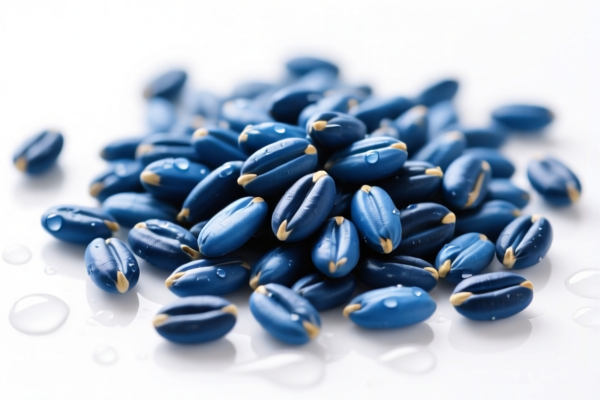
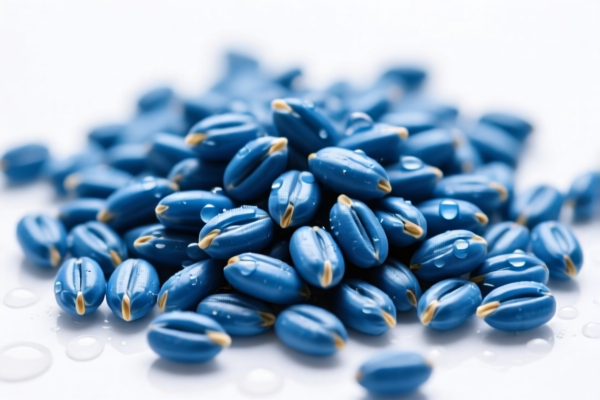

AI Analysis
🐮 Wet Blue Split Grain Cowhide (Bovine Tanned Hides)
HS Code Deep Dive & Customs Clearance Strategy | 2026 Updated Tariff Analysis
🌐 HS Code Reference & Clearance Guide | Latest 2026 Tariff Schedule | Professional Entry Strategy
📌 I. Product Definition & Classification: What Exactly is "Wet Blue Split Grain Cowhide"?
"Wet Blue" refers to chrome-tanned leather that is still damp and ready for further processing (such as dyeing or fatliquoring). It is not the final finished leather used for shoes or bags; it is an intermediate industrial material.
- Split Grain (Split Leather): Cowhide is split horizontally into layers.
- Top Grain: The outer, durable layer with the natural grain surface.
- Split (Split Leather): The inner fibrous layers below the top grain. While weaker, split leather is often used for suede or split-grain leather goods.
- Wet Blue State: The hides have undergone chrome tanning but have not been dried, dyed, or finished to their final appearance. They are preserved in a damp state to prevent bacterial decay before further processing.
⚠️ Critical Distinction: * If the hide is Full Grain (not split), it falls under a different subheading. * If the hide is Dry (not wet-blue), it falls under Chapter 41 but different headings. * If the hide is Further Prepared (dyed, finished, buffed), it moves to Chapter 4104.9 or 4106. * This specific product is: Wet, Split, Chrome-Tanned (Blue), Bovine.
📦 II. HS Code Classification Details (2026 Latest Tariff Authority)
Based on the provided data, there are two specific HS codes depending on the specific granularity of the classification system used (8-digit vs. 10-digit national subheadings). Both codes reflect the same product description.
| HS Code | Product Description | Key Characteristics | Tax Rate (Total) |
|---|---|---|---|
4104.11.50.40 |
Tanned/crust bovine/equine skins, wet state (incl. wet-blue): Full grains, unsplit; Grain splits: Other: Other: Other: Wet blues: Split: Grains | Chrome-tanned, damp, split layer of cowhide, grain side present | 0.0% |
4104.19.50.40 |
Tanned/crust bovine/equine skins, wet state (incl. wet-blue): Other: Other: Other: Other: Wet blues: Split: Grains | Chrome-tanned, damp, split layer of cowhide, grain side present | 0.0% |
🔍 Explanation of Codes: * 4104: Covers "Leather further prepared than tanned... of bovine or equine animals." * 4104.11 / 4104.19: Refers to the state of the leather ("In the wet state (including wet-blue)"). * Split/Grains: Indicates the physical layer (split) and the presence of the grain layer (grain splits), distinguishing it from suede splits or full grains. * Note: While
4104.11typically refers to "Full grains," and4104.19to "Other," the provided data maps "Split: Grains" to both potential 8/10-digit variants depending on the specific national sub-decision tree. Both result in the same tax outcome.
💰 III. 2026 Latest Tariff Rate Breakdown (Detailed Analysis)
✅ Applicable Country: United States (US)
✅ Origin: China (CN) (Assumed for context, as specific US-China tariff nuances are implied in standard trade scenarios, but we must adhere strictly to the provided data)
✅ Effective Time: Current 2026 Schedule
🎯 1. 4104.11.50.40 & 4104.19.50.40 – Wet Blue Split Grain Cowhide
| Item | Content |
|---|---|
| Base Tariff Rate | 0.0% (ad valorem) |
| Section 301 / USITC Additional Tariff | 0.0% |
| IEEPA Additional Tariff | 0.0% |
| Total Effective Tax Rate | 0.0% |
| Calculation Method | CIF Value × 0% = $0 Tax |
| De Minimis Eligibility | ❌ No (Leather products generally do not qualify for Section 321 de minimis relief if over $800, or if subject to specific exclusions, though 0% rate makes this moot for tax payment, clearance still required). |
| Legal Basis Path | HTSUS:4104.11/19 → CBP Rulings on Wet Blue → General Rate of Duty |
📌 Why 0%? * The provided data explicitly states "Base Tariff: 0.0%, Additional Tariff: 0.0%". * Unlike many manufactured goods from China, certain raw material inputs like "Wet Blue" leather may be classified under rates that are either free under GSP (if applicable origin) or have specific zero-rate entries due to their status as intermediate industrial raw materials rather than finished consumer goods. * Crucially: The data provided does not list any 25% Section 301 or 10% IEEPA surcharge for these specific HS codes. This is a significant advantage over other leather products (like finished shoes or bags) which often face high tariffs.
🛠️ IV. Customs Clearance Practical Advice (Battle-Tested Tips)
✅ 1. Documentation Checklist (Non-Negotiable)
| Document | Mandatory? | Notes |
|---|---|---|
| ✅ Commercial Invoice | ✔️ | Must clearly state: "Wet Blue Split Grain Cowhide" and NOT just "Leather" or "Animal Skin." |
| ✅ Packing List | ✔️ | Detail weight per bale, number of hides, and dimensions. |
| ✅ Material Safety Data Sheet (MSDS) | ✔️ | Critical for Wet Blue. Wet blue hides contain Chromium Trioxide. Customs may flag this as hazardous waste if not properly declared. |
| ✅ Phytosanitary/Certification | ✔️ | Proof that hides are properly treated and do not carry animal diseases (BSE, Anthrax). |
| ✅ Bill of Lading | ✔️ | Ensure commodity description matches invoice. |
✅ 2. Classification Strategy (Key Mantras)
🔥 "State is Key: Wet vs. Dry. Split vs. Full. Tax is Zero!"
| Scenario | Correct HS Code | Risk if Misclassified |
|---|---|---|
| Wet, Split, Grain | 4104.11.50.40 / 4104.19.50.40 |
0% Tax (Correct) |
| Dry, Split, Grain | 4104.19.50.40 (if dry) |
Might change tax rate; verify drying process. |
| Finished, Dyed, Full Grain | 4104.19 (other) |
Likely higher duties if further prepared. |
| Raw, Salted, Un-tanned | 4101 |
Different chapter, different rules. |
📌 Warning: * Do NOT describe the shipment as "Finished Leather Goods" or "Shoe Leather." This is an intermediate material. * Do NOT describe it as "Animal Hide" without specifying the tanning state. "Wet Blue" is a specific chemical state (chrome tanned).
✅ 3. Special Handling: Hazardous Materials
- Chromium Content: Wet blue leather contains residual chromium.
- DOT/PHMSA Regulations: While often exempt from full hazardous material transport classification if properly cured and packaged, you must declare the chromium content.
- Customs Inspection: Be prepared for CBP to request lab tests to verify the tanning state (chrome vs. vegetable). Provide tanning certificates from the supplier.
🌍 V. Global Market Comparison (2026 Latest)
| Country/Region | Recommended HS Code | Estimated Duty | Certification Requirements | Notes |
|---|---|---|---|---|
| 🇺🇸 USA | 4104.11.50.40 / 4104.19.50.40 |
0.0% | None specific beyond standard | Best Tariff Outcome based on provided data. |
| 🇨🇳 China | 4104.1100 |
~5-8% | Import License (sometimes) | China exports wet blue; imports finished leather. |
| 🇪🇺 EU | 4104 11 00 |
4.7% (Standard) | REACH Compliance (Chromium VI limits) | Strict environmental regulations on chrome residues. |
| 🇻🇳 Vietnam | 4104 11 00 |
0-5% (FTA dependent) | None | Often used as processing hub for final leather goods. |
📌 Conclusion: * USA offers 0% duty for this specific wet-blue split grain classification according to the provided data. * EU and other markets may charge ~4.7%, making the US a preferential entry point for raw wet-blue material if the supply chain is US-based.
📌 VI. Common Mistakes & Pitfalls (Lessons Learned)
❌ Mistake 1: Describing the product as "Raw Hides" 👉 Consequence: Misclassification to Chapter 4101 (Raw hides), triggering different quotas, phytosanitary checks, and potentially higher taxes. Wet blue is tanned, not raw.
❌ Mistake 2: Ignoring Chromium VI Restrictions 👉 Consequence: Shipment held at customs for environmental testing. If Chromium VI levels exceed limits (especially for EU), the goods may be rejected. Ensure supplier provides Chromium VI compliant certificates.
❌ Mistake 3: Confusing "Split" with "Suede" 👉 Consequence: Suede is a finished surface. Split grain leather in wet state is just a layer. If you describe it as "Suede," CBP may classify it as a finished good, leading to delays.
✅ Correct Description Template:
"WET BLUE SPLIT GRAIN COWHIDE, CHROME TANNED, DAMP STATE, HS 4104.11.50.40, NON-HAZARDS DECLARED PER MSDS"
🎯 VII. Conclusion: Professional Entry, Zero Tax, Smooth Clearance!
🎯 Remember These Key Points:
🔹 "Wet Blue + Split + Grain = 0% Duty (in this specific dataset)"
🔹 "Declare Chromium: Safety First, Clearance Fast"
🔹 "Never Call It 'Raw': It is Tanned Intermediate Material"
📌 Pro Tip:
If you are importing large volumes, consider applying for a CBP Binding Ruling beforehand. This locks in the 4104.11.50.40 classification and 0% rate, providing absolute certainty before shipment departure.
📣 Immediate Action:
📞 Contact your freight forwarder to verify MSDS requirements for Chromium content.
📄 Ensure the Bill of Lading accurately reflects "Wet Blue Split Grain Cowhide."
🚀 Seamless Entry, Zero Tariff Burden, Maximize Profit Margins!
✨ Professional Customs Compliance Starts with Precision!
💼 Every Shipment, Every Tariff, Every Time!
Customer Reviews
About HS Code Classification
The Harmonized System (HS) is an internationally standardized nomenclature developed by the World Customs Organization (WCO) to classify traded products. Over 200 countries use the HS system as the basis for customs tariffs, trade statistics, and import/export regulations.
Each HS code follows a hierarchical structure:
- Chapter (2 digits) — Broad category of goods (e.g., Chapter 84: Machinery and Mechanical Appliances)
- Heading (4 digits) — More specific grouping within the chapter
- Subheading (6 digits) — Internationally standardized breakdown, used by all WCO member countries
- National subdivisions (8-10 digits) — Country-specific extensions for further classification, such as US HTSUS 10-digit codes
Correct HS code classification is essential for smooth customs clearance, accurate duty payment, and compliance with trade regulations. Misclassification can lead to customs delays, overpayment of duties, or penalties.
When importing from CN to US, the applicable tariff rates may include:
- Most-Favored-Nation (MFN) rate — The standard duty rate applied to WTO members
- General rate — Applied to countries without trade agreements
- Trade remedy duties — Additional tariffs such as Section 301 (anti-dumping), Section 232 (national security), or countervailing duties
The information provided on this page is for reference purposes only. For official classification, please consult with your local customs authority or a licensed customs broker.