Wet Salt/Other Pickled Fish
CN → US| HS Code | Tariff Rate | Origin | Destination | Doc |
|---|---|---|---|---|
| 1604126030 | 35.0% | CN | US | Official Doc |
| 1604126010 | 35.0% | CN | US | Official Doc |
Product Images

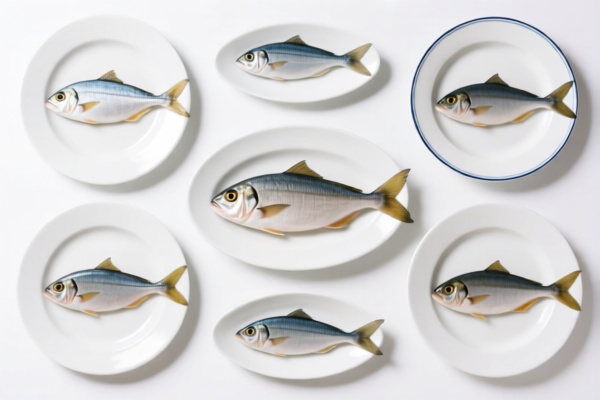


AI Analysis
🐟 Wet Salt / Other Pickled Fish (Prepared Herrings)
🌐 HS Code Reference & Customs Clearance Guide | 2026 Latest Tariff Analysis | Professional Clearance Strategy
📌 I. Product Definition & Classification: Do You Really Understand "Pickled Fish"?
Pickled fish, particularly herrings preserved in brine or salt solutions ("Wet Salt"), falls under the broader category of Prepared or Preserved Fish. In international trade, precision is critical. Misclassifying "wet salt" pickled fish as dry-salted or canned products can lead to severe customs penalties.
The provided specifically addresses Herrings that are: 1. Whole or in pieces (but not minced); 2. Other Pickled (covering wet salt/brine preservation methods other than standard vinegar pickling); 3. Distinguished by physical form: Fillets vs. Other (Whole/Pieces).
⚠️ Key Distinction Points:
- "Wet Salt" vs. Dry Salt: "Wet Salt" implies preservation in brine or saline solution. If the product is dry-salted without liquid brine, it may fall under different chapters (e.g., Chapter 03). However, once "prepared" or "preserved" for long-term storage as a finished good, it moves to Chapter 16. - Minced vs. Not Minced: If the fish is minced, it is excluded from these codes and would likely fall under1604.13. These codes strictly require whole or chunky pieces. - Fillets vs. Other: "Fillets" (boneless slices) have a distinct subheading from "Other" (which includes whole fish, heads/tails, or irregular pieces).
📦 II. HS Code Classification Details (2026 Latest Tariff Authority)
Based on the provided , there are two specific HS Codes for this product type. The classification depends entirely on the physical form of the herring.
| HS Code | Product Description | Applicable Scenario | Form Factor |
|---|---|---|---|
1604.12.60.10 |
Other Pickled: Fillets | Herrings preserved in wet salt/brine, sold as boneless fillets or steaks | ✅ Boneless Fillets |
1604.12.60.30 |
Other Pickled: Other | Herrings preserved in wet salt/brine, sold as whole fish, heads/tails, or chunks | ❌ Not Fillets (Whole/Pieces) |
🔍 Critical Reminder:
- Both codes fall under 1604.12 (Herrings: Other: Other Pickled). - The distinction is purely morphological: If it’s a fillet → .10. If it’s whole/pieces → .30. - Do not confuse "Wet Salt" with "Smoked" or "Canned". Smoked herrings are1604.13. Canned herrings are1604.12.50.
💰 III. 2026 Latest Tariff Rate Details (Including Surcharges)
✅ Applicable Country: United States (US)
✅ Origin: China (CN) (Note: Tax rates below reflect the provided data context)
✅ Effective Time: Current Trade Regulations
🎯 1. 1604.12.60.10 —— Pickled Herring Fillets (Wet Salt)
| Item | Content |
|---|---|
| Base Tariff (MFN) | 0.0% (Ad Valorem) |
| Section 301 Surcharge | +25.0% |
| Total Tax Rate | 25.0% |
| Tax Calculation | CIF Value × 25% |
| Legal Basis | USITC:1604.12.60.10 + Section 301 List 4A |
📌 Explanation:
- Although the Base Tariff is 0%, the 25% Section 301 surcharge applies due to the product's origin and classification under prepared fish products. - There are no additional IEEPA tariffs listed in the for this specific HS code, so the total remains 25%.
🎯 2. 1604.12.60.30 —— Pickled Herring "Other" (Whole/Pieces, Wet Salt)
| Item | Content |
|---|---|
| Base Tariff (MFN) | 0.0% (Ad Valorem) |
| Section 301 Surcharge | +25.0% |
| Total Tax Rate | 25.0% |
| Tax Calculation | CIF Value × 25% |
| Legal Basis | USITC:1604.12.60.30 + Section 301 List 4A |
📌 Explanation:
- Same tax structure as fillets. The form factor (whole vs. fillet) does not change the tax rate, only the HS code precision. - Total Rate: 25%. This is a moderate-high tariff for food products, emphasizing the cost of imported preserved seafood from China.
🛠️ IV. Customs Clearance Practical Advice (Combat Pitfalls)
✅ 1. Required Documentation Checklist (Essential)
| Document | Must Provide | Notes |
|---|---|---|
| ✅ Commercial Invoice | ✔️ | Must specify "Pickled Herrings" or "Prepared Fish". |
| ✅ Product Specification Sheet | ✔️ | Must detail preservation method ("Wet Salt / Brine"), not just "Pickled". |
| ✅ Freezing/Preservation Certificate | ✔️ | Proof that fish is preserved, not fresh. |
| ✅ Label Copy | ✔️ | Must show ingredient list (Fish, Salt, Water) and country of origin. |
| ✅ FDA Prior Notice | ✔️ | Mandatory for all food imports into the US. |
| ✅ USDA Form 9070 | ✔️ | Import declaration for meat/fish products. |
| ✅ Packing List | ✔️ | Clearly state net/gross weight and number of units. |
✅ 2. Declaration Tips (Key Mnemonics)
🔥 "Form Dictates Code, Salt Dictates Prep, 25% is the Price!"
| Scenario | Correct HS Code | Error Consequence |
|---|---|---|
| Herring Fillets (Boneless, sliced) | 1604.12.60.10 |
Misdeclaring as "Other" → Delay for classification review |
| Whole Herrings (Headed/Gutted or Whole) | 1604.12.60.30 |
Misdeclaring as "Fillets" → Customs may reject as inconsistent with goods |
| Minced Herring Paste | Incorrect | Goes to 1604.13. Wrong code → 25% + Potential Fraud Penalty |
| Fresh Salted Herring (Not Prepared) | Incorrect | Goes to Chapter 03. Wrong code → Misdeclaration of Origin/Type |
📌 Key Warning:
- The term "Wet Salt" must be clearly described in the description field. If you simply write "Pickled Fish," customs may assume vinegar pickling and misclassify. - Ensure the product is not minced. If the product is a herring roe paste or mousse, it is not "whole or in pieces."
✅ 3. Special Handling Cases
| Case | Handling Advice |
|---|---|
| Mixed Packaging (Fillets + Whole Fish in same shipment) | Separate Lines on the Commercial Invoice. Use both HS codes. Do not average the weight. |
| Vinegar vs. Wet Salt | If preserved in vinegar, it may still be 1604.12, but description must specify "Vinegar Pickled" to distinguish from "Other Pickled" (which often implies brine/salt). |
| Canned vs. Jarred | If sealed in a can/a jar with hermetic sealing, it might be 1604.12.50. If open-jar or loose-pack, it remains under 1604.12.60. Check sealing method. |
🌍 V. Global Market Comparison (2026)
| Country/Region | Recommended HS Code | Tariff Rate (China Origin) | Certification Requirement | Notes |
|---|---|---|---|---|
| 🇺🇸 USA | 1604.12.60.10 / .30 |
25% | FDA + USDA + Labeling | 25% surcharge applies. |
| 🇨🇳 China | 1604.12.60.10 / .30 |
0-5% (Variable) | CIQ + Export License | Lower tariff for import into China. |
| 🇪🇺 EU | 1604.12.60 (approx.) |
Varies (often 0-10%) | EFSA + Allergen Labeling | No Section 301 surcharge, but strict food safety laws. |
| 🇯🇵 Japan | 1604.12.60 (approx.) |
5-10% | JFSL + Allergen Labeling | Strict microbiological standards. |
📌 Conclusion:
- The USA market has a flat 25% additional duty on these products from China. - Labeling is Critical: FDA requires clear allergen declaration (Fish) and ingredient listing. - No De Minimis Exemption: Food items are generally not eligible for de minimis (Section 321) duty-free entry for commercial shipments.
📌 VI. Common Errors & Pitfall Guide (Lessons Learned)
❌ Error 1: Describing product as "Fresh Fish" when it is "Wet Salt Pickled".
👉 Consequence: HS Code misclassification (Chapter 03 vs. 16). Penalty + Duty Refusal.
❌ Error 2: Mixing "Fillets" and "Whole Fish" on one HS Code line.
👉 Consequence: Customs may seize the shipment for inaccurate valuation and classification.
❌ Error 3: Failing to declare "Preserved" status.
👉 Consequence: Customs may treat it as perishable fresh fish, requiring different USDA/Phytosanitary certificates that don't exist for prepared goods.
✅ Correct Practice:
"Pickled Herring Fillets, Wet Salt Preserved, 1kg Ctn, Model XYZ, FDA Registered Facility"
OR
"Pickled Herring Pieces (Wet Salt), Whole/Gutted, 5kg Ctn, Model ABC, FDA Registered Facility"
🎯 VII. Conclusion: Precision in Preservation, Profit in Clearance
🎯 Remember the Mantra:
🔹 "Fillets are .10, Pieces are .30, Wet Salt is 25%, Don't Mince It!"
🔹 "FDA First, Label Clear, Code Specific, Avoid the Fee!"
📌 Pro Tip:
- If you are exporting Vinegar-Pickled herrings, double-check if they fall under "Other Pickled" or a different subheading.
- Always request Pre-Classification Rulings from CBP if your packing method (e.g., vacuum-sealed chunks) is ambiguous between "Pieces" and "Fillets."
📣 Immediate Action:
📞 Verify Form: Is it a fillet or a piece?
📝 Describe Accurately: "Wet Salt Pickled" not just "Pickled".
🚀 Ensure FDA Compliance: Prior Notice filed before vessel arrival.
✨ Professional Clearance Starts with Accurate Classification!
💼 Your 25% Tax is Fixed; Your Compliance is Optional—Choose Wisely!
Customer Reviews
About HS Code Classification
The Harmonized System (HS) is an internationally standardized nomenclature developed by the World Customs Organization (WCO) to classify traded products. Over 200 countries use the HS system as the basis for customs tariffs, trade statistics, and import/export regulations.
Each HS code follows a hierarchical structure:
- Chapter (2 digits) — Broad category of goods (e.g., Chapter 84: Machinery and Mechanical Appliances)
- Heading (4 digits) — More specific grouping within the chapter
- Subheading (6 digits) — Internationally standardized breakdown, used by all WCO member countries
- National subdivisions (8-10 digits) — Country-specific extensions for further classification, such as US HTSUS 10-digit codes
Correct HS code classification is essential for smooth customs clearance, accurate duty payment, and compliance with trade regulations. Misclassification can lead to customs delays, overpayment of duties, or penalties.
When importing from CN to US, the applicable tariff rates may include:
- Most-Favored-Nation (MFN) rate — The standard duty rate applied to WTO members
- General rate — Applied to countries without trade agreements
- Trade remedy duties — Additional tariffs such as Section 301 (anti-dumping), Section 232 (national security), or countervailing duties
The information provided on this page is for reference purposes only. For official classification, please consult with your local customs authority or a licensed customs broker.