Wet Stabilizer for Casting
CN → US| HS Code | Tariff Rate | Origin | Destination | Doc |
|---|---|---|---|---|
| 3202905000 | 40.0% | CN | US | Official Doc |
| 3824993990 | 35.0% | CN | US | Official Doc |
| 3810902000 | 35.0% | CN | US | Official Doc |
| 3824100000 | 41.0% | CN | US | Official Doc |
| 3202105000 | 41.5% | CN | US | Official Doc |
Product Images
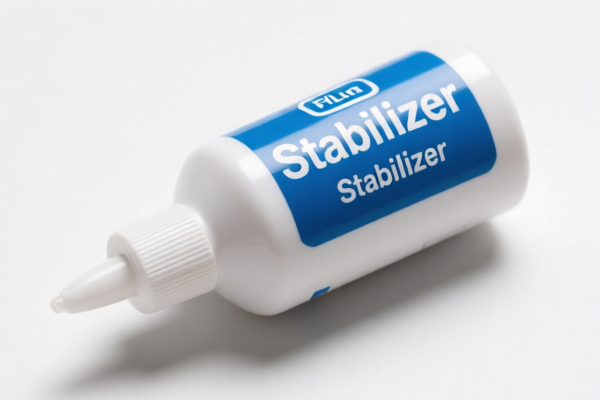

AI Analysis
🏭 Wet Stabilizer for Casting (Foundry Additive)
🌐 HS Code Reference & Customs Clearance Guide | 2026 Latest Tariff Analysis | Professional-Level通关 Strategy
📌 Part I: Product Definition & Classification: What is a "Wet Stabilizer for Casting"?
Wet Stabilizer for Casting refers to chemical additives used in the foundry industry, specifically for sand casting processes. Its primary function is to stabilize the moisture and bonding strength of "green sand" (mold sand mixed with clay/bentonite and water) before the metal is poured.
In international trade, these products are classified as chemical additives or preparations. Depending on their specific chemical composition (e.g., whether they contain tanning agents, synthetic binders, or other organic/inorganic mixtures), they fall under different HS Code chapters: * Chapter 32: If they function as tanning agents or related chemical preparations. * Chapter 38: If they are miscellaneous chemical products, including prepared binders for foundry molds/core.
⚠️ Critical Distinction:
- If the product is a specific organic tanning agent or derivative →归入 32xx.xx
- If the product is a general chemical binder or miscellaneous preparation for molding →归入 38xx.xx
The final classification depends on the precise chemical formula and primary function declared to customs.
📦 Part II: HS Code Classification Details (2026 Latest Tariff Authority Comparison)
Based on the provided data, here are the 5 possible HS Codes for "Wet Stabilizer for Casting":
| HS Code | Product Description | Application Scenario | Tax Rate |
|---|---|---|---|
3202.90.50.00 |
Wet Stabilizer, classified as other synthetic organic/inorganic tanning agents and preparations. | Chemical additive focused on tanning properties. | 40.0% |
3824.99.39.90 |
Wet Stabilizer, used as preformed binders for molding sand or cores. Classified as chemical products/preparations. | General chemical binder for foundry molds/cores. | 35.0% |
3810.90.20.00 |
Wet Stabilizer, classified as auxiliary chemical preparations for metal processing/casting. | Metal processing aid, not specifically a "binder" but a stabilizer. | 35.0% |
3824.10.00.00 |
Wet Stabilizer, used for mold or core binding. Classified as prepared binders. | Specific prepared binder for casting molds. | 41.0% |
3202.10.50.00 |
Wet Stabilizer, classified as other synthetic organic tanning agents. | Specific category within organic tanning agents. | 41.5% |
🔍 Key Observation:
- The tax rates range from 35.0% to 41.5%.
- The difference lies in whether the product is viewed as a "Tanning Agent" (Ch 32) or a "Binder/Preparation" (Ch 38).
-3810.90.20.00and3824.99.39.90offer the lowest total tax (35.0%).
💰 Part III: Detailed Tariff Rate Explanation (Including Surtaxes & Policy Add-ons)
✅ Applicable Country: United States (US)
✅ Origin: China (CN)
✅ Effective Time: 2025/2026 Current Standards
All HS Codes listed above are subject to Section 301 Tariffs (25%) and Section 122 Tariffs (10%), in addition to the Base MFN Rate.
🎯 1. 3202.90.50.00 – Synthetic Organic/Inorganic Tanning Agents
| Item | Content |
|---|---|
| Base Duty | 5.0% |
| Section 301 Surtax | +25.0% |
| Section 122 Surtax | +10.0% |
| Total Effective Rate | 40.0% |
| Calculation | CIF Value × 40.0% |
| Legal Basis | Base MFN + USITC Footnote 301 + IEEPA Footnote 122 |
📌 Explanation:
- This classification assumes the product has tanning characteristics.
- The base duty is 5%, plus the heavy surtaxes, resulting in a 40% total burden.
🎯 2. 3824.99.39.90 – Other Chemical Preparations (Binders for Molds/Cores)
| Item | Content |
|---|---|
| Base Duty | 0.0% |
| Section 301 Surtax | +25.0% |
| Section 122 Surtax | +10.0% |
| Total Effective Rate | 35.0% |
| Calculation | CIF Value × 35.0% |
| Legal Basis | Base MFN + USITC Footnote 301 + IEEPA Footnote 122 |
📌 Advantage:
- Base duty is 0%.
- Total tax is 35%, making this one of the most cost-effective classifications if the product fits the description of a "chemical preparation" rather than a specific "binder" or "tanning agent."
🎯 3. 3810.90.20.00 – Metal Processing Auxiliary Chemicals
| Item | Content |
|---|---|
| Base Duty | 0.0% |
| Section 301 Surtax | +25.0% |
| Section 122 Surtax | +10.0% |
| Total Effective Rate | 35.0% |
| Calculation | CIF Value × 35.0% |
| Legal Basis | Base MFN + USITC Footnote 301 + IEEPA Footnote 122 |
📌 Strategy:
- Similar to above, 0% base duty.
- Classified as an "auxiliary" rather than a primary "binder." Useful if the product is primarily for stabilization rather than binding.
🎯 4. 3824.10.00.00 – Prepared Binders for Molds or Cores
| Item | Content |
|---|---|
| Base Duty | 6.0% |
| Section 301 Surtax | +25.0% |
| Section 122 Surtax | +10.0% |
| Total Effective Rate | 41.0% |
| Calculation | CIF Value × 41.0% |
| Legal Basis | Base MFN + USITC Footnote 301 + IEEPA Footnote 122 |
📌 Note:
- Higher base duty (6%) leads to a 41% total rate.
- This is for products explicitly defined as "Prepared Binders."
🎯 5. 3202.10.50.00 – Synthetic Organic Tanning Agents (Other)
| Item | Content |
|---|---|
| Base Duty | 6.5% |
| Section 301 Surtax | +25.0% |
| Section 122 Surtax | +10.0% |
| Total Effective Rate | 41.5% |
| Calculation | CIF Value × 41.5% |
| Legal Basis | Base MFN + USITC Footnote 301 + IEEPA Footnote 122 |
📌 Note:
- Highest base duty (6.5%) in this set.
- Total rate is 41.5%. Avoid if lower-rate options apply.
🛠️ Part IV: Customs Clearance Practical Advice (Pitfall Avoidance Guide)
✅ 1. Documentation Checklist (Must-Haves)
| Document | Required? | Notes |
|---|---|---|
| ✅ Product Spec Sheet | ✔️ | Must detail chemical composition, CAS numbers, and pH levels. |
| ✅ MSDS (SDS) | ✔️ | Essential for chemical imports. Classify as non-hazardous or hazardous as per GHS. |
| ✅ Certificate of Composition | ✔️ | To prove if it's a "Tanning Agent" (Ch 32) or "Binder" (Ch 38). |
| ✅ Commercial Invoice | ✔️ | Clear description: "Wet Stabilizer for Sand Casting, Chemical Additive." |
| ✅ Bill of Lading | ✔️ | Consistent with invoice. |
✅ 2. Declaration Strategy (Key Tips)
🔥 Golden Rule:
"Match Description to Function, Avoid Ambiguity, Save on Base Duty!"
| Scenario | Recommended HS Code | Tax Rate | Why? |
|---|---|---|---|
| Product is a generic chemical stabilizer | 3810.90.20.00 or 3824.99.39.90 |
35.0% | Lowest base duty (0%). Best for cost optimization. |
| Product is explicitly a synthetic tanning agent | 3202.90.50.00 |
40.0% | Only if chemical analysis confirms tanning properties. |
| Product is a prepared binder (e.g., clay-based) | 3824.10.00.00 |
41.0% | Higher base duty, but legally accurate if it's a binder. |
| Product is a specific organic tanning salt | 3202.10.50.00 |
41.5% | Highest cost. Avoid unless chemically mandated. |
📌 Critical Warning:
- Do NOT misdeclare a "Binder" as a "Stabilizer" to get 0% base duty if it is chemically a binder. Customs may audit the chemical composition.
- Provide MSDS and COA (Certificate of Analysis) to support the "0% base duty" classification under Chapter 38.
✅ 3. Special Cases
| Situation | Handling Advice |
|---|---|
| Customs Questions "Is it a Tanning Agent?" | Provide lab tests showing if it reacts with tannins. If not, argue for Chapter 38. |
| Customs Questions "Is it a Binder?" | If it primarily binds sand, declare as 3824.10.00.00 (41%). If it only stabilizes moisture, argue for 3824.99.39.90 (35%). |
| Section 301/122 Exemptions | Check if the product code is on the current US Exclusion List. Most chemical additives are NOT exempt. |
🌍 Part V: Global Market Comparison (2026)
| Country/Region | Recommended HS Code | Tariff Rate | Certification | Notes |
|---|---|---|---|---|
| 🇺🇸 USA | 3824.99.39.90 or 3810.90.20.00 |
35.0% | None (General) | Lowest total tax. Avoid Ch 32 if possible. |
| 🇨🇳 China | 3824.99.39.90 |
~5-9% | None | Import duties are lower. |
| 🇪🇺 EU | 3824.99.39.90 |
~6.5% | REACH Registration | High regulatory bar for chemicals. |
| 🇲🇽 Mexico | 3824.99.39.90 |
~5% | NOM Certification | USMCA may offer 0% if origin criteria met. |
📌 Conclusion:
- USA is the most expensive market due to 301 & 122 tariffs.
- Optimization Focus: Argue for Chapter 38 (Miscellaneous Chemicals) with 0% Base Duty to minimize the 35% total.
- Avoid Chapter 32 unless chemically necessary, as it incurs 5-6.5% base duty + surtaxes = 40-41.5%.
📌 Part VI: Common Errors & Pitfalls (Lessons Learned)
❌ Mistake 1: Declaring as "Foundry Sand" (HS 2505)
👉 Consequence: Wrong classification. Foundry sand is raw material; stabilizer is a chemical additive. High risk of penalty.
❌ Mistake 2: Ignoring Section 122 Tariffs
👉 Consequence: Forgetting the 10% IEEPA surtax. Many importers only calculate 301 (25%) + Base, missing the additional 10%. Total is not 25%+Base, but 35%+Base.
❌ Mistake 3: Misidentifying "Binder" vs. "Stabilizer"
👉 Consequence: If customs determines your "Stabilizer" is actually a "Binder," they may reclassify to 3824.10.00.00 (41%) from 3824.99.39.90 (35%), leading to back taxes.
✅ Correct Action:
"Wet Stabilizer for Casting, Chemical Additive, Non-Binding, For Sand Molds, CAS Number: XXXXX-XX-X"
🎯 Part VII: Conclusion: Professional Classification Saves Money!
🎯 Remember the Rules:
🔹 "Base Duty 0% is Key!" → Aim for 3810.90.20.00 or 3824.99.39.90 (35% Total).
🔹 "301 + 122 = 35% Surtax" → This is fixed for most chemical additives from China.
🔹 "Chapter 38 is Cheaper than Chapter 32" → Unless it's a true tanning agent, stay in Ch 38.
📌 Pro Tip:
If your product has a unique chemical formulation, consider applying for an Advance Ruling (USCBP) to confirm the 0% base duty classification under Chapter 38 before shipping. This prevents delays and unexpected costs at the US border.
📣 Immediate Action:
📞 Consult a customs broker with your MSDS and COA.
🚀 Target HS Code:3824.99.39.90or3810.90.20.00for the lowest 35% total tariff.
💼 Your Bottom Line Matters! Optimize Your HS Code Now!
✨ Precision in Classification, Profitability in Imports!
💼 Every Percentage Point Saved is Pure Profit!
Customer Reviews
About HS Code Classification
The Harmonized System (HS) is an internationally standardized nomenclature developed by the World Customs Organization (WCO) to classify traded products. Over 200 countries use the HS system as the basis for customs tariffs, trade statistics, and import/export regulations.
Each HS code follows a hierarchical structure:
- Chapter (2 digits) — Broad category of goods (e.g., Chapter 84: Machinery and Mechanical Appliances)
- Heading (4 digits) — More specific grouping within the chapter
- Subheading (6 digits) — Internationally standardized breakdown, used by all WCO member countries
- National subdivisions (8-10 digits) — Country-specific extensions for further classification, such as US HTSUS 10-digit codes
Correct HS code classification is essential for smooth customs clearance, accurate duty payment, and compliance with trade regulations. Misclassification can lead to customs delays, overpayment of duties, or penalties.
When importing from CN to US, the applicable tariff rates may include:
- Most-Favored-Nation (MFN) rate — The standard duty rate applied to WTO members
- General rate — Applied to countries without trade agreements
- Trade remedy duties — Additional tariffs such as Section 301 (anti-dumping), Section 232 (national security), or countervailing duties
The information provided on this page is for reference purposes only. For official classification, please consult with your local customs authority or a licensed customs broker.