Wet blue bovine leather lining leather
CN → US| HS Code | Tariff Rate | Origin | Destination | Doc |
|---|---|---|---|---|
| 4205008000 | 35.0% | CN | US | Official Doc |
| 4107117050 | 15.0% | CN | US | Official Doc |
| 4205006000 | 39.9% | CN | US | Official Doc |
| 4107927050 | 15.0% | CN | US | Official Doc |
| 4202110030 | 43.0% | CN | US | Official Doc |
| 4202110090 | 43.0% | CN | US | Official Doc |
Product Images
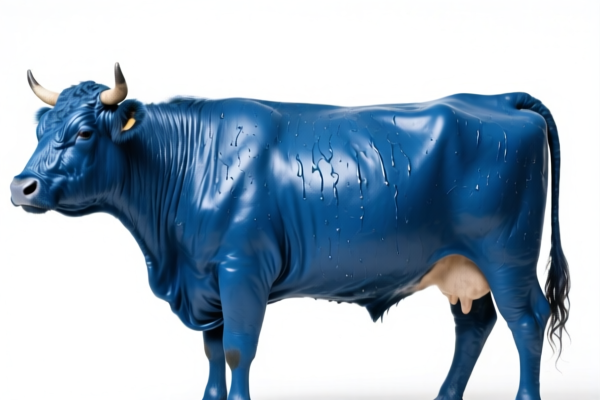
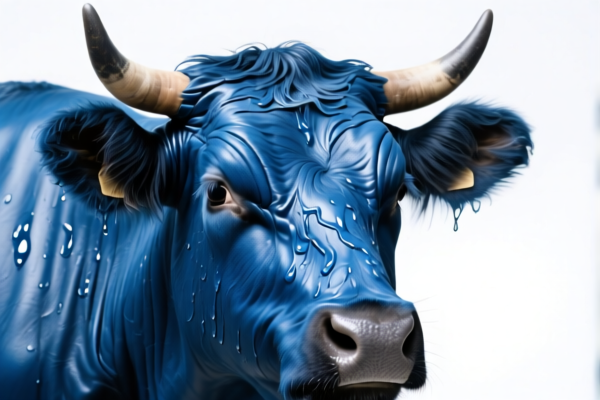
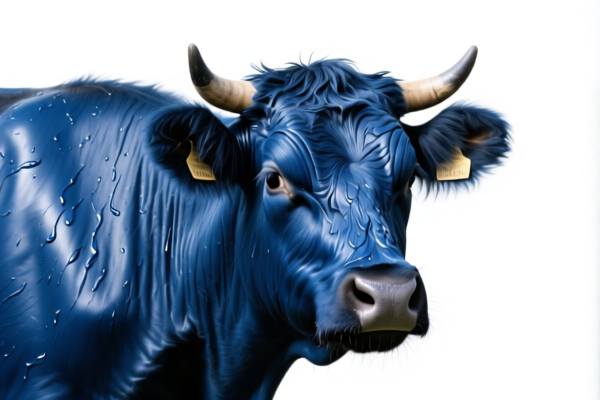
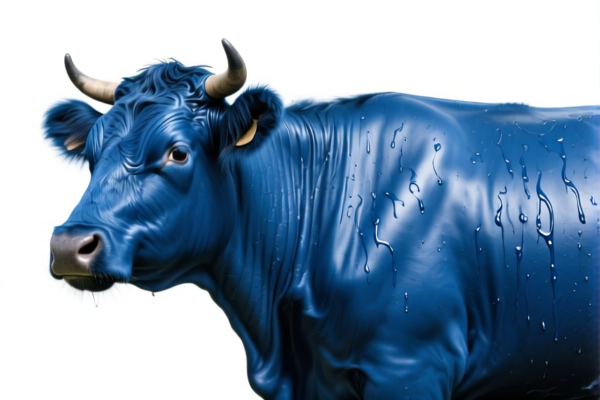
AI Analysis
🐂 Wet Blue Bovine Leather Lining Leather
🌐 HS Code Reference & Customs Clearance Guide | 2026 Latest Tariff Analysis | Professional Strategy for Water Buffalo Leather
📌 I. Product Definition & Classification: What is "Wet Blue Bovine Leather Lining"?
"Wet Blue" refers to the semi-processed state of leather that has been tanned (usually with chromium salts) but not yet fully finished (dyed, polished, or embossed). It is pale blue in color, hence the name.
"Bovine" refers to cattle/buffalo family.
"Lining" implies it is intended for use as an internal layer, collar, or backing in bags, boxes, or footwear.
In international trade, the classification depends heavily on: 1. Processing Stage: Is it merely split/finished for lining, or is it a high-quality full-grain material? 2. End Use: Is it specifically destined for bags/boxes (Chapter 42) or general leather use (Chapter 41)? 3. Quality: Full-grain vs. Split leather.
⚠️ Key Distinction Point:
- If the leather is split (lower layer) or intended for lining/backing purposes → Often falls under Chapter 42 (Articles of Leather).
- If the leather is full-grain or high-quality cow/buffalo hide, regardless of "lining" intent, it may be classified under Chapter 41 (Leather, Furskins, etc.).
- "Wet Blue" status means it is not yet "finished" in the final consumer sense, which can affect duty rates if specific subheadings distinguish between "finished" and "unfinished" leather.
📦 II. HS Code Classification Matrix (2026 Latest Tariff Authority)
Based on the provided data, here are the possible HS Codes for Water Buffalo Leather (Bovine) intended for bags/boxes or as lining:
| HS Code | Product Description | Application Scenario | Key Characteristic |
|---|---|---|---|
4205.00.80.00 |
Other leather articles | General leather goods, linings, accessories | Classified as "Other Leather Articles" |
4107.11.70.50 |
Full-grain cow/buffalo leather for bags/boxes | High-quality hides, full-grain, specific use | Full-grain, intended for bag/box making |
4205.00.60.00 |
Leather articles for bags/boxes | Specific leather products for bag/box industry | Classified specifically for bag/box use |
4107.92.70.50 |
Other cow/buffalo leather | General bovine leather, not full-grain or specific | Non-full-grain or general bovine leather |
4202.11.00.30 |
Articles of leather with outer surface of leather | Bags, suitcases, pouches | Outer surface must be leather; for bags/boxes |
4202.11.00.90 |
Other articles of leather with outer surface of leather | Similar to above, other variants | Outer surface must be leather; for bags/boxes |
🔍 Critical Note:
- Chapter 41 covers raw/slightly processed leather (like Wet Blue).
- Chapter 42 covers articles made of leather.
- However, some subheadings in Chapter 41 (e.g.,4107) cover leather for bags/boxes. The data provided shows a mix. If the "Wet Blue" is being imported as a material for bag/box manufacturing, it may fall under Chapter 41. If it is already cut/semi-finished for lining, it might be Chapter 42.
- The term "Lining" often pushes classification toward Chapter 42 as an "article" or component, unless it is a bulk hide roll.
💰 III. 2026 Latest Tariff Rate Breakdown (Including Additional Taxes, Policy Add-ons)
✅ Applicable Country: United States (US)
✅ Origin: China (CN) (Note: The 122 Clause and Section 301 tariffs suggest US-China trade context)
✅ Effective Date: Post-2025 policies (including Section 301 and 122 Clause)
🎯 1. 4205.00.80.00 — Other Leather Articles
| Item | Content |
|---|---|
| Base Tariff | 0.0% (ad valorem) |
| Section 301 Additional Tariff | +25.0% |
| 122 Clause Tariff | +10.0% |
| Total Tariff Rate | 35.0% |
| Tax Calculation | CIF Value × 35% |
| De Minimis Eligibility | ❌ No (High risk of seizure for small shipments) |
| Legal Basis Path | USITC:4205.00.80.00 → Section301:Footnote9903.88.01 → 122Clause:9903.01.25 |
📌 Explanation:
- Section 301 (25%): Applies to many leather articles from China.
- 122 Clause (10%): Specific punitive tariff on certain Chinese imports.
- Total 35%: High duty. This code is for "other" leather articles not specified elsewhere.
🎯 2. 4107.11.70.50 — Full-Grain Bovine Leather for Bags/Boxes
| Item | Content |
|---|---|
| Base Tariff | 5.0% (ad valorem) |
| Section 301 Additional Tariff | 0.0% (Exempted from Section 301?) |
| 122 Clause Tariff | +10.0% |
| Total Tariff Rate | 15.0% |
| Tax Calculation | CIF Value × 15% |
| De Minimis Eligibility | ❌ No |
| Legal Basis Path | USITC:4107.11.70.50 → 122Clause:9903.01.25 |
📌 Explanation:
- Section 301 Exemption?: The data shows 0% for Section 301, which is significantly lower than other codes. This suggests full-grain leather may have a different tariff treatment or exemption.
- 122 Clause (10%): Still applies.
- Total 15%: Much lower than 35%. This is a key optimization point.
🎯 3. 4205.00.60.00 — Leather Articles for Bags/Boxes
| Item | Content |
|---|---|
| Base Tariff | 4.9% (ad valorem) |
| Section 301 Additional Tariff | +25.0% |
| 122 Clause Tariff | +10.0% |
| Total Tariff Rate | 39.9% |
| Tax Calculation | CIF Value × 39.9% |
| De Minimis Eligibility | ❌ No |
| Legal Basis Path | USITC:4205.00.60.00 → Section301:Footnote9903.88.01 → 122Clause:9903.01.25 |
📌 Explanation:
- Despite being "for bags/boxes," this code incurs both Section 301 and 122 Clause.
- Total 39.9%: The highest rate in the list. Avoid this if possible.
🎯 4. 4107.92.70.50 — Other Cow/Buffalo Leather
| Item | Content |
|---|---|
| Base Tariff | 5.0% (ad valorem) |
| Section 301 Additional Tariff | 0.0% |
| 122 Clause Tariff | +10.0% |
| Total Tariff Rate | 15.0% |
| Tax Calculation | CIF Value × 15% |
| De Minimis Eligibility | ❌ No |
| Legal Basis Path | USITC:4107.92.70.50 → 122Clause:9903.01.25 |
📌 Explanation:
- Similar to4107.11.70.50, this code also benefits from 0% Section 301.
- Total 15%: Low duty. Suitable for non-full-grain or general bovine leather.
🎯 5. 4202.11.00.30 & 4202.11.00.90 — Articles of Leather with Outer Surface of Leather (Bags/Boxes)
| Item | Content |
|---|---|
| Base Tariff | 8.0% (ad valorem) |
| Section 301 Additional Tariff | +25.0% |
| 122 Clause Tariff | +10.0% |
| Total Tariff Rate | 43.0% |
| Tax Calculation | CIF Value × 43.0% |
| De Minimis Eligibility | ❌ No |
| Legal Basis Path | USITC:4202.11.00.30/90 → Section301:Footnote9903.88.01 → 122Clause:9903.01.25 |
📌 Explanation:
- These codes are for finished bag/box articles.
- Total 43%: The highest possible rate. Do not use for raw/semi-raw "Wet Blue" leather unless it is already a finished bag.
🛠️ IV. Customs Clearance Practical Advice (Field Pitfall Avoidance Guide)
✅ 1. Documentation Checklist (Must-Have)
| Document | Required | Notes |
|---|---|---|
| ✅ Product Specification Sheet | ✔️ | Must detail: Tanning method (Chrome), Finish status (Wet Blue), Intended Use (Lining/Bag) |
| ✅ HS Code Classification Letter | ✔️ | From a customs broker or pre-ruling |
| ✅ Commercial Invoice | ✔️ | Clearly state "Wet Blue Bovine Leather, Not Finished" |
| ✅ Packing List | ✔️ | Weight, dimensions, number of hides |
| ✅ Certificate of Origin | ✔️ | If applicable for any exemptions |
| ✅ Photos of Goods | ✔️ | Show the blue color, texture, and lack of finishing (no dye/polish) |
✅ 2. Classification Strategy (Key Mantra)
🔥 "Choose Chapter 41 for Hides, Chapter 42 for Articles. Section 301 Exemption is King!"
| Scenario | Recommended HS Code | Duty Rate | Reason |
|---|---|---|---|
| Full-Grain Bovine Leather (for bag/box) | 4107.11.70.50 |
15% | Best Rate: 0% Sec 301 + 10% 122 Clause |
| Other/Cheaper Bovine Leather | 4107.92.70.50 |
15% | Best Rate: 0% Sec 301 + 10% 122 Clause |
| Cut/Finished Leather Articles (Lining parts) | 4205.00.80.00 |
35% | High duty due to Sec 301 + 122 Clause |
| Specific Bag/Box Leather Articles | 4205.00.60.00 |
39.9% | Avoid: Highest duty in Chapter 42 |
| Finished Bags/Boxes | 4202.11.00.30/.90 |
43% | Avoid: Highest duty overall |
📌 Strategic Insight:
- If your "Wet Blue" leather is full-grain, ensure it is classified under4107.11.70.50to enjoy the 0% Section 301 rate.
- If it is split or lower quality, use4107.92.70.50for the same benefit.
- Do NOT classify raw hides as "Leather Articles" (4205or4202) if they are not yet finished products, to avoid higher duties.
✅ 3. Special Cases
| Scenario | Handling Advice |
|---|---|
| OEM/Custom Order | Provide client’s design specs to prove "Bag/Box" intent, but keep it as "Leather" (Ch 41) if possible. |
| Wet Blue + Dye Finished | If dyed, it may be considered "Finished Leather" → Still 4107 if raw hide, or 4205 if cut. Check if finishing changes the HS code. |
| Mixed Shipment | Separate "Full-Grain" from "Split" to optimize duty. |
| De Minimis (Section 321) | ❌ Not Eligible: High duty codes and Section 301/122 Clause typically exclude de minimis. Ship via Formal Entry. |
🌍 V. Global Market Comparison (2026 Latest)
| Country/Region | Recommended HS Code | Tariff Rate | Notes |
|---|---|---|---|
| 🇺🇸 USA | 4107.11.70.50 / 4107.92.70.50 |
15% | Optimal: Avoid Section 301 if possible |
| 🇺🇸 USA | 4205.00.80.00 |
35% | Higher duty for "Other" leather articles |
| 🇨🇳 China | 4107.11.70.50 |
Varies | Check latest Chinese tariff for imports |
| 🇪🇺 EU | 4107.11.70.50 |
Varies | EU has different classification (e.g., 4107 21) |
| 🇯🇵 Japan | 4107.11.70.50 |
Varies | Japan may have different Section 301 equivalents |
📌 Conclusion:
- USA is the primary market for Section 301/122 Clause scrutiny.
- Classification under Chapter 41 (Raw/Semi-Processed Leather) with 0% Section 301 is the best strategy.
📌 VI. Common Errors & Pitfall Guide (Lessons Learned)
❌ Error 1: Classifying "Wet Blue Leather" as "Finished Leather Articles" (4202)
👉 Consequence: Duty jumps to 43%.
✅ Fix: Keep it as "Leather" (4107) if not a finished bag.
❌ Error 2: Misclassifying "Full-Grain" as "Split" (4107.92 vs 4107.11)
👉 Consequence: If full-grain is misclassified as non-full-grain, you might still get 15%, but if it’s classified as "Other Articles" (4205), you pay 35-40%.
✅ Fix: Provide Grade Certificate or Photographs to prove Full-Grain status.
❌ Error 3: Ignoring the 122 Clause
👉 Consequence: Even with 0% Section 301, you still pay 10% under 122 Clause.
✅ Fix: Budget for 15% total, not 5%.
❌ Error 4: Using De Minimis for High-Value Leather
👉 Consequence: Seizure or penalty for undervaluation.
✅ Fix: Use Formal Entry and pay proper duties.
🎯 VII. Conclusion: Professional Classification Saves Money!
🎯 Remember the Mantra:
🔹 "Ch 41 is King: 0% Sec 301, 10% 122 Clause = 15% Total."
🔹 "Ch 42 is Costly: Sec 301 + 122 Clause = 35-43% Total."
🔹 "Full-Grain Gets Preference: Prove it, save 20-28%."
📌 Tip:
If your leather is not from China, Section 301 and 122 Clause may not apply. Check Origin!
If from Vietnam, Mexico, or EU, duty may be 0-5%.
Always apply for a Pre-Ruling to confirm HS Code and duty rate.
📣 Immediate Action:
📞 Contact a Customs Broker + Provide Product Photos + Apply for HS Code Pre-Ruling
🚀 Optimize Your Supply Chain, Save 20-30% in Duties!
✨ Professional Clearance Starts with Accurate Classification!
💼 Every Penny of Duty Matters!
Customer Reviews
About HS Code Classification
The Harmonized System (HS) is an internationally standardized nomenclature developed by the World Customs Organization (WCO) to classify traded products. Over 200 countries use the HS system as the basis for customs tariffs, trade statistics, and import/export regulations.
Each HS code follows a hierarchical structure:
- Chapter (2 digits) — Broad category of goods (e.g., Chapter 84: Machinery and Mechanical Appliances)
- Heading (4 digits) — More specific grouping within the chapter
- Subheading (6 digits) — Internationally standardized breakdown, used by all WCO member countries
- National subdivisions (8-10 digits) — Country-specific extensions for further classification, such as US HTSUS 10-digit codes
Correct HS code classification is essential for smooth customs clearance, accurate duty payment, and compliance with trade regulations. Misclassification can lead to customs delays, overpayment of duties, or penalties.
When importing from CN to US, the applicable tariff rates may include:
- Most-Favored-Nation (MFN) rate — The standard duty rate applied to WTO members
- General rate — Applied to countries without trade agreements
- Trade remedy duties — Additional tariffs such as Section 301 (anti-dumping), Section 232 (national security), or countervailing duties
The information provided on this page is for reference purposes only. For official classification, please consult with your local customs authority or a licensed customs broker.