Wet blue bovine shoe upper leather
CN → US| HS Code | Tariff Rate | Origin | Destination | Doc |
|---|---|---|---|---|
| 4107116010 | 13.3% | CN | US | Official Doc |
| 4107111020 | 35.0% | CN | US | Official Doc |
| 4107114000 | 12.5% | CN | US | Official Doc |
| 4107197040 | 15.0% | CN | US | Official Doc |
| 4107998000 | 12.4% | CN | US | Official Doc |
Product Images
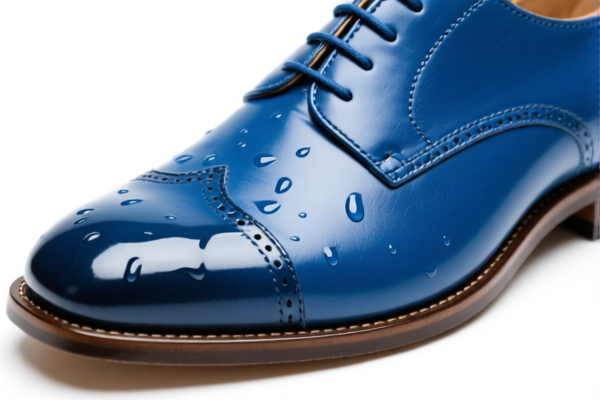
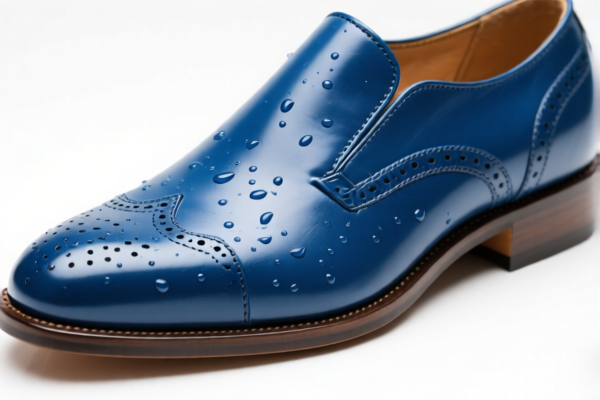
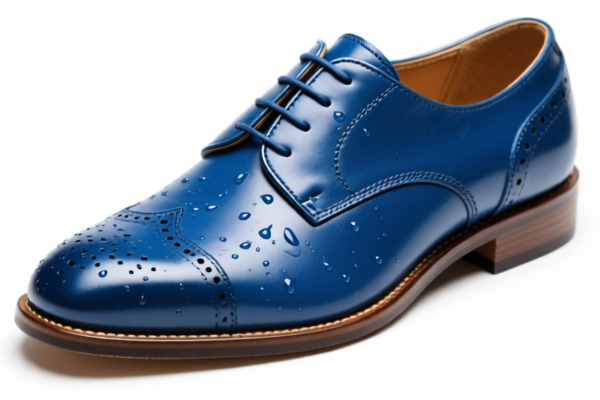
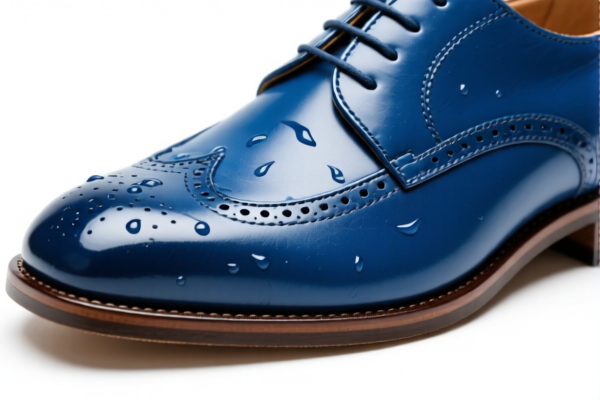
AI Analysis
🥾 Wet Blue Bovine Shoe Upper Leather (Shoe Uppers)
🌐 HS Code Reference & Customs Clearance Guide | 2026 Latest Tariff Analysis | Professional Customs Strategy
📌 I. Product Definition & Classification: Do You Really Understand "Wet Blue Leather"?
Wet Blue Leather is semi-finished bovine leather that has undergone the tanning process (chrome tanning) but has not yet undergone finishing, dyeing, or coloring. It is the intermediate stage between raw hides and finished leather.
In international trade, specifically for Shoe Uppers, it is critical to distinguish between Full Grain (保留头层/全粒面) and Split/Corrected Grain (剖层/修面), as well as the specific Bovine Species (Cattle vs. Water Buffalo), as these determine the HS Code and tariff liability.
⚠️ Key Distinction Point:
- Full Grain (全粒面): Retains the natural grain surface; higher value; stricter classification.
- Split/Corrected (剖层/修面): Surface corrected or made from the lower split; different HS Code.
- Species: Cattle (牛) vs. Water Buffalo (水牛) may have different sub-categories.
📦 II. HS Code Classification Details (2026 Latest Tariff Authority Comparison)
Based on your specific product: "Wet Blue Bovine Shoe Upper Leather", here are the relevant HS Codes found in the provided data:
| HS Code | Product Description | Application | Material/Form | Total Tax Rate |
|---|---|---|---|---|
4107.11.60.10 |
Wet Blue Bovine Full-Grain Leather for Shoe Uppers | Shoe manufacturing | Bovine, Full-Grain Leather | 13.3% |
4107.11.10.20 |
Wet Blue Bovine Full-Grain Leather for Shoe Uppers | Shoe manufacturing | Bovine, Full-Grain Leather | 35.0% |
4107.11.40.00 |
Wet Blue Water Buffalo Garment Leather | Garment manufacturing | Water Buffalo, Further Processed | 12.5% |
4107.19.70.40 |
Wet Blue Water Buffalo Garment Leather | Garment manufacturing | Water Buffalo, For Garments | 15.0% |
4107.99.80.00 |
Bovine Wet Blue Split Leather | Further Processing Product | Bovine, Split Leather | 12.4% |
🔍 Critical Note:
- Codes4107.11.60.10and4107.11.10.20are specifically for Shoe Uppers (用于鞋面).
- Codes4107.11.40.00and4107.19.70.40are for Garment/Outerwear (服装), NOT for shoes. Do not use these if the product is for shoes.
- Code4107.99.80.00is for Split Leather (剖层革), which is different from Full Grain (全粒面).
💰 III. 2026 Latest Tariff Rate Breakdown (Detailed Tax Clauses)
✅ Applicable Country: United States (US)
✅ Origin: China (CN)
✅ Effective Date: Current policies apply (including Section 122 and Section 301/IEEPA surcharges)
🎯 1. 4107.11.60.10 — Wet Blue Bovine Full-Grain Leather (Shoe Upper)
| Item | Content |
|---|---|
| Base Tariff | 3.3% |
| Section 301 Surcharge | 0.0% |
| Section 122 Surcharge | +10% (Specific to certain leather goods/materials) |
| Total Tax Rate | 13.3% |
| Tax Calculation | CIF Value × 13.3% |
| De Minimis Eligibility | ❌ No (High-value industrial material) |
| Legal Basis | Base Rate 3.3% + Section 122 (10%) |
📌 Explanation:
- This is the most cost-effective option for Full-Grain Bovine Leather intended for Shoe Uppers.
- The "122 Clause Tariff" (10%) is a specific US customs surcharge.
- Zero Section 301 makes this highly competitive compared to other leather categories.
🎯 2. 4107.11.10.20 — Wet Blue Bovine Full-Grain Leather (Shoe Upper)
| Item | Content |
|---|---|
| Base Tariff | 0.0% |
| Section 301 Surcharge | +25.0% |
| Section 122 Surcharge | +10% |
| Total Tax Rate | 35.0% |
| Tax Calculation | CIF Value × 35.0% |
| De Minimis Eligibility | ❌ No |
| Legal Basis | Section 301 (25%) + Section 122 (10%) |
📌 Warning:
- Although the base tariff is 0%, the 25% Section 301 tariff makes this 2.6x more expensive than4107.11.60.10.
- Do not use this code unless your product is technically classified here by US Customs. Misclassification can lead to severe penalties.
- The difference between4107.11.60.10and4107.11.10.20often lies in specific technical parameters (e.g., weight, thickness, or exact processing stage) defined by USITC notes.
🎯 3. 4107.99.80.00 — Bovine Wet Blue Split Leather
| Item | Content |
|---|---|
| Base Tariff | 2.4% |
| Section 301 Surcharge | 0.0% |
| Section 122 Surcharge | +10% |
| Total Tax Rate | 12.4% |
| Tax Calculation | CIF Value × 12.4% |
| De Minimis Eligibility | ❌ No |
| Legal Basis | Base Rate 2.4% + Section 122 (10%) |
📌 Explanation:
- This applies to Split Leather (剖层革), not Full Grain.
- If your product is Full Grain, do NOT use this code.
- If your product is Split Leather intended for shoe uppers, this is a valid alternative with a lower rate than4107.11.10.20.
🚫 Codes to Avoid for Shoe Uppers
| HS Code | Reason for Exclusion |
|---|---|
4107.11.40.00 |
Wrong Use: For Garment leather (服装革), not shoes. |
4107.19.70.40 |
Wrong Use: For Water Buffalo Garment leather. |
⚠️ Risk: Using garment codes for shoe materials may lead to customs rejection, reclassification, or fines for incorrect declaration of use.
🛠️ IV. Customs Clearance Practical Advice (Pitfall Avoidance Guide)
✅ 1. Required Documentation Checklist
| Document | Mandatory? | Details |
|---|---|---|
| ✅ Product Specification Sheet | ✔️ | Must specify: "Wet Blue," "Bovine," "Full Grain" or "Split," "For Shoe Upper" |
| ✅ HS Code Justification | ✔️ | Explain why it falls under 4107.11.60.10 vs 4107.11.10.20 |
| ✅ Commercial Invoice | ✔️ | Must clearly state "Wet Blue Leather for Shoe Upper" |
| ✅ Packing List | ✔️ | Weight, dimensions, number of hides/sheets |
| ✅ Photos of Product | ✔️ | Show surface texture (grain) to prove it's not split or corrected |
| ✅ Certificate of Origin | ✔️ | To verify origin and apply correct tariffs |
✅ 2. Declaration Strategy (Key Tips)
🔥 "Specify Material, Specify Use, Avoid Ambiguity!"
| Scenario | Correct Declaration | Incorrect Practice |
|---|---|---|
| Full Grain, Shoe Upper | 4107.11.60.10 (13.3%) |
Using 4107.11.10.20 (35%) → Overpaying 21.7% |
| Split Leather, Shoe Upper | 4107.99.80.00 (12.4%) |
Using 4107.11.xxxx codes → Misclassification |
| Garment Leather, Claiming Shoe Use | ❌ Never | Using 4107.11.40.00 → Incorrect Use Declaration |
| Vague Description | "Leather" | "Cow Hide" → Customs will ask for details, causing delays |
✅ 3. Special Considerations
| Situation | Advice |
|---|---|
| Section 122 Tariff | Be aware that the 10% surcharge applies to most of these leather codes. It is non-negotiable unless exempted. |
| Section 301 Exemption | Check if your specific HS Code is eligible for Section 301 exclusion. For 4107.11.60.10, the base tariff already excludes Section 301 (0%), so no exemption needed. |
| Full Grain vs. Split | Ensure your physical product matches the description. If you declare "Full Grain" but send "Split," customs will fine you. |
| Water Buffalo vs. Cattle | Do not confuse Bovine (Cow) with Water Buffalo. Different HS codes apply. |
🌍 V. Global Market Comparison (2026)
| Market | Recommended HS Code | Tariff (China Origin) | Notes |
|---|---|---|---|
| 🇺🇸 USA | 4107.11.60.10 |
13.3% (3.3% Base + 10% Sec 122) | Best option for Full Grain Shoe Leather |
| 🇺🇸 USA | 4107.11.10.20 |
35.0% (0% Base + 25% Sec 301 + 10% Sec 122) | High tariff, avoid if possible |
| 🇨🇳 China | 4107.11.60.10 |
~5-10% (Import Duty) | No Section 122 or 301 |
| 🇪🇺 EU | 4107.11 |
Varies (Check EU Tariff) | No Section 122/301, but may have environmental regulations |
📌 Conclusion:
- USA is the most complex market due to Section 122 and Section 301 surcharges.
- Choose4107.11.60.10if your product is Full Grain Bovine Leather for Shoe Uppers to minimize tariffs.
- Avoid4107.11.10.20unless you are certain of the technical classification, as the tariff is nearly triple.
📌 VI. Common Mistakes & Pitfalls (Lessons Learned)
❌ Mistake 1: Using Garment Leather Codes (4107.11.40.00) for Shoe Uppers
👉 Result: Customs may reject the declaration or reclassify it, causing delays and potential fines.
👉 Fix: Always specify "For Shoe Upper" and use 4107.11 codes designated for footwear.
❌ Mistake 2: Confusing Full Grain and Split Leather
👉 Result: Using 4107.99.80.00 for Full Grain leather.
👉 Fix: Verify the surface texture. Full Grain has natural grain; Split is sanded/corrected.
❌ Mistake 3: Ignoring Section 122 Surcharge
👉 Result: Underestimating costs. All listed codes have a 10% Section 122 tariff.
👉 Fix: Include 10% in your cost calculations for all US-bound leather.
❌ Mistake 4: Vague Product Description
👉 Result: Customs asks for clarification, leading to port delays.
👉 Fix: Use precise terms: "Wet Blue, Bovine, Full-Grain, Chrome-Tanned, For Shoe Upper."
🎯 VII. Conclusion: Precise Classification, Maximum Savings!
🎯 Remember the Rules:
🔹 "Shoe Upper? Use 4107.11.xx. Don't use Garment Codes!"
🔹 "Full Grain? Check 4107.11.60.10 (13.3%) vs 4107.11.10.20 (35%)!"
🔹 "Split Leather? Use 4107.99.80.00 (12.4%)."
🔹 "Section 122 is 10% – Always Include It!"
📌 Pro Tip:
If you are unsure whether your leather is "Full Grain" or "Split," provide photos and specifications to a customs broker before shipping.
Pre-clearance classification can save you 21.7% in tariffs (35% vs. 13.3%).
📣 Immediate Action:
📞 Contact a licensed customs broker
📄 Provide product samples/photos
✅ Confirm HS Code:4107.11.60.10or4107.99.80.00
🚀 Ensure smooth customs clearance and cost efficiency!
✨ Professional classification starts here!
💼 Every percentage point matters in international trade!
Customer Reviews
About HS Code Classification
The Harmonized System (HS) is an internationally standardized nomenclature developed by the World Customs Organization (WCO) to classify traded products. Over 200 countries use the HS system as the basis for customs tariffs, trade statistics, and import/export regulations.
Each HS code follows a hierarchical structure:
- Chapter (2 digits) — Broad category of goods (e.g., Chapter 84: Machinery and Mechanical Appliances)
- Heading (4 digits) — More specific grouping within the chapter
- Subheading (6 digits) — Internationally standardized breakdown, used by all WCO member countries
- National subdivisions (8-10 digits) — Country-specific extensions for further classification, such as US HTSUS 10-digit codes
Correct HS code classification is essential for smooth customs clearance, accurate duty payment, and compliance with trade regulations. Misclassification can lead to customs delays, overpayment of duties, or penalties.
When importing from CN to US, the applicable tariff rates may include:
- Most-Favored-Nation (MFN) rate — The standard duty rate applied to WTO members
- General rate — Applied to countries without trade agreements
- Trade remedy duties — Additional tariffs such as Section 301 (anti-dumping), Section 232 (national security), or countervailing duties
The information provided on this page is for reference purposes only. For official classification, please consult with your local customs authority or a licensed customs broker.