Wet blue bovine whole hide for luggage
CN → US| HS Code | Tariff Rate | Origin | Destination | Doc |
|---|---|---|---|---|
| 4104192000 | 37.4% | CN | US | Official Doc |
| 4104195030 | 13.3% | CN | US | Official Doc |
Product Images
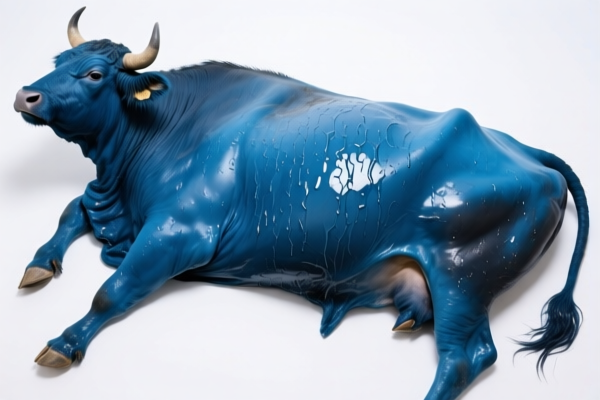
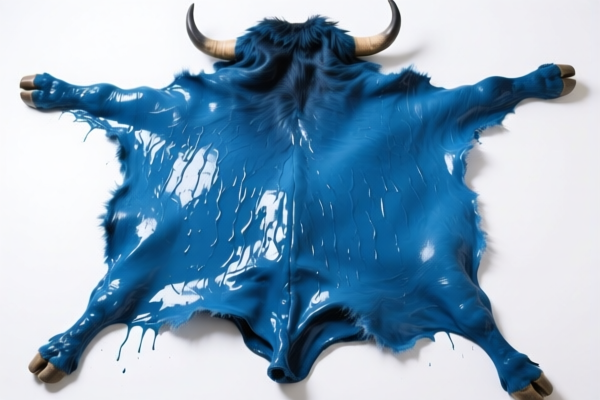
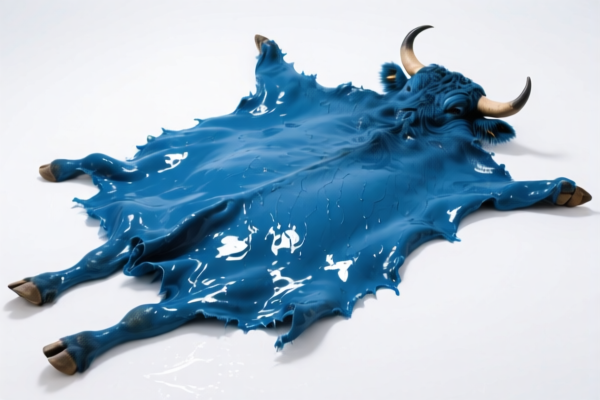
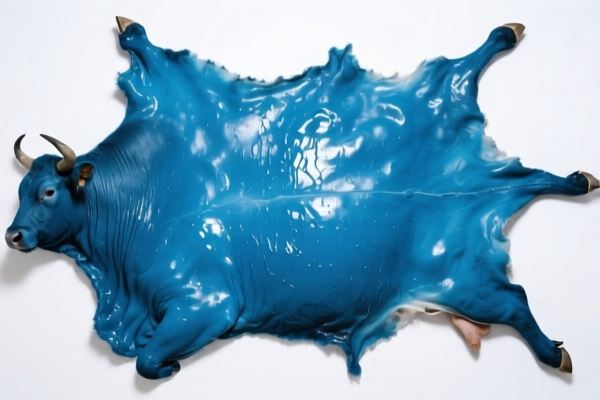
AI Analysis
🧳 Wet Blue Bovine Whole Hides for Luggage (Raw Leather Material)
🌐 HS Code Reference & Clearance Guide | 2026 Latest Tariff Analysis | Professional Entry Strategies
📌 I. Product Definition & Classification: Are You Clear on "Wet Blue" Leather?
Wet Blue Leather refers to chrome-tanned hides or skins that have undergone the tanning process but have not yet been dried, crust-finished, or colored. In the international trade of leather goods, specifically for luggage manufacturing, these materials are categorized strictly by their state (wet vs. dry) and animal source.
For luggage production, the raw material is typically: * Bovine (Cattle/Buffalo) Hides/Skins: Large surface area, durable, suitable for main body panels of bags, wallets, and shoes. * State: "Wet Blue" (high moisture content, usually shipped in salt or preserved in wet state to prevent bacterial growth before further tanning/drying). * Condition: Without hair on (fleshed and split if necessary).
⚠️ Key Distinction:
- If the leather is dried (crust leather) → It falls under different subheadings (e.g., 4104.49...).
- If the leather is finished/painted → It falls under "Further Prepared" categories (4104.69...).
- This guide strictly covers "Wet State" hides, as per your request.
📦 II. HS Code Classification Details (2026 Latest Harmonized System)
Based on the provided <DATA>, there are two specific HS codes for Wet Blue Bovine Hides. The critical differentiator is the unit surface area and whether it is split.
| HS Code | Product Description | Key Criteria | Tax Rate (Total) |
|---|---|---|---|
4104.19.20.00 |
Whole bovine leather, wet blue, unit surface area ≤ 28 sq ft (2.6 m²) | - Wet state - Whole hide (not split) - Surface area ≤ 2.6 m² |
27.4% (Base 2.4% + Add. 25%) |
4104.19.50.30 |
Other Wet Blues, Not Split, Other | - Wet state - Not split - OR Surface area > 2.6 m² - Or other "Other" categories under 4104.19.50 |
0.0% (Base 0.0% + Add. 0.0%) |
🔍 Critical Analysis:
-4104.19.20.00is highly specific: "Whole bovine leather... not exceeding 28 square feet."
- Note: Standard cowhide often exceeds 28 sq ft. If the hide is split (cut into layers), it generally does not qualify for this specific subheading, or it may fall into "Other" categories.
-4104.19.50.30is a "catch-all" for wet blues that do not fit the specific criteria of 4104.19.20.
- If the hide is larger than 28 sq ft, it cannot use4104.19.20.00and must use4104.19.50.30(or similar "Other" codes), which currently shows 0% total tax in the provided data.
- If the hide is split, it also likely falls into "Other" categories (like4104.19.50.30), resulting in 0% tax.
💰 III. 2026 Latest Tariff Rate Details (Detailed Breakdown)
✅ Applicable Country: United States (US)
✅ Origin: China (CN) (Assumed based on the "Additional Tax: 25%" pattern typical for US-China trade)
✅ Effective Date: Current USITC & USMCA/US-China Trade War tariffs
🎯 1. 4104.19.20.00 —— Whole Bovine Wet Blue (≤ 28 sq ft)
| Item | Detail |
|---|---|
| Base Tariff (Most Favored Nation) | 2.4% |
| Section 301 Additional Tariff | +25.0% |
| Total Tax Rate | 27.4% |
| Calculation Base | CIF (Cost, Insurance, and Freight) Value |
| De Minimis Eligibility | ❌ No (High value, non-exempt category) |
| Legal Authority | USITC Heading 4104.19.20.00 + Section 301 List 4A/4C |
📌 Explanation:
- This specific size class of wet blue leather incurs a significant 27.4% duty.
- The 25% additional tax is part of the ongoing trade restrictions on certain Chinese-origin goods.
- Risk: If you misdeclare a large hide (>28 sq ft) as "≤ 28 sq ft" to avoid the higher tax (if any exist in other codes) or to fit a specific quota, you face fraud penalties. However, in this data, the larger hide has 0% tax, so the incentive is reversed.
🎯 2. 4104.19.50.30 —— Other Wet Blues (Not Split, Other)
| Item | Detail |
|---|---|
| Base Tariff (MFN) | 0.0% |
| Section 301 Additional Tariff | 0.0% (As per provided data) |
| Total Tax Rate | 0.0% |
| Calculation Base | CIF Value |
| De Minimis Eligibility | ❌ No |
| Legal Authority | USITC Heading 4104.19.50.30 |
📌 Explanation:
- This code applies to wet blue hides that are not "Whole bovine leather ≤ 28 sq ft."
- Common Scenarios:
1. Large Hides: Most full-cowhides are > 28 sq ft.
2. Split Hides: If the leather has been split into layers (inner/outer), it is not "whole" in the same sense, or falls under "Other."
3. Other Animals: Though the description says "Other," if it's bovine but doesn't fit the size/spec of 4104.19.20, it lands here.
- Strategic Advantage: 0% Total Duty! This is a massive cost-saving opportunity.
🛠️ IV. Clearance Practical Advice (Pitfall Avoidance Guide)
✅ 1. Documentation Checklist (Must-Haves)
| Document | Required | Purpose |
|---|---|---|
| ✅ Commercial Invoice | ✔️ | Must clearly state: "Wet Blue Bovine Hides, Chrome Tanned, Wet State" |
| ✅ Packing List | ✔️ | Detail weight (gross/net), number of hides, and average surface area per hide |
| ✅ Product Specification Sheet | ✔️ | Confirm: Split or Not Split? Surface Area (sq ft/m²)? Moisture content? |
| ✅ Certificate of Origin | ✔️ | Required to prove origin (e.g., China) for accurate tariff application |
| ✅ Photos of Hides | ✔️ | Show texture, lack of hair, and any identifying marks |
✅ 2. Critical Declaration Strategy (Key Mantra)
🔥 “Size Matters: >28 Sq Ft = 0% Tax! <28 Sq Ft = 27.4% Tax!”
| Scenario | Correct HS Code | Tax Rate | Action |
|---|---|---|---|
| Standard Cowhide (> 28 sq ft) | 4104.19.50.30 |
0.0% | Declare as "Other" |
| Small Calf Hides (≤ 28 sq ft) | 4104.19.20.00 |
27.4% | Accept higher tax or optimize logistics |
| Split Leather (Any Size) | 4104.19.50.30 |
0.0% | Ensure documentation states "Split" |
| Crust Leather (Dry) | Not in Data | Check Other | Do NOT declare as Wet Blue if dry! |
⚠️ Warning:
- Do not misdeclare a large hide as "≤ 28 sq ft" to try to match a different code if the data shows 0% for the other. In this case,4104.19.50.30is cheaper.
- Do not declare a split hide as "Whole" (4104.19.20.00). If you do, you risk being caught with a 27.4% duty liability or penalties for misclassification.
- Wet State Proof: Ensure hides are salted or preserved correctly. Dry-out or rotting can lead to rejection.
✅ 3. Special Cases
| Case | Recommendation |
|---|---|
| Mixed Lots (Large & Small Hides) | Separate shipments or declare each lot under its correct HS code. Mixing can complicate valuation and duty calculation. |
| Imported for Further Tanning/Finishing | Still classified as "Wet Blue." The purpose (luggage) does not change the raw material classification. |
| Non-Chinese Origin (e.g., Brazil, Italy) | The 25% Additional Tax may not apply. Check USFTR for country-specific exemptions. Base tariff may differ. |
🌍 V. Global Market Comparison (2026)
| Region | HS Code | Tariff (China Origin) | Notes |
|---|---|---|---|
| 🇺🇸 USA | 4104.19.50.30 |
0.0% | Best Option for large/split hides |
| 🇪🇺 EU | 4104.19 | Varies (typically 4-6%) | No Section 301 equivalent, but VAT applies |
| 🇨🇳 China | 4104.19 | 0.0% - 5% | Low import duty for raw materials |
| 🇮🇳 India | 4104.19 | High (up to 10%+) | Protects local tanning industry |
📌 Conclusion:
- US Market: Exploit the 0% tariff for4104.19.50.30by ensuring your hides are either larger than 28 sq ft or split.
- EU/Asia: Generally lower tariffs on raw materials to support manufacturing.
📌 VI. Common Mistakes & Pitfalls (Blood & Tears Lessons)
❌ Mistake 1: Declaring all hides as 4104.19.20.00
👉 Result: You pay 27.4% on large hides that could have been 0%. Loss of Profit!
❌ Mistake 2: Declaring Split Leather as "Whole"
👉 Result: Customs inspection reveals split layers. Penalties + Back Taxes + Delays.
❌ Mistake 3: Not specifying Surface Area
👉 Result: Customs has to guess. They may choose the higher tax code or hold the shipment for clarification.
❌ Mistake 4: Confusing Wet Blue with Crust Leather
👉 Result: If the leather is dry (crust), it falls under 4104.49/4104.59. Misdeclaration can lead to fraud allegations.
✅ Correct Action:
- Measure the average surface area of each lot.
- Confirm if hides are Split or Unsplit.
- Use
4104.19.50.30for large/unsplit hides or any split hides to enjoy 0% Duty.- Use
4104.19.20.00only for small, whole hides (≤ 28 sq ft).
🎯 VII. Conclusion: Professional Declaration, Cost Optimization!
🎯 Remember the Mantra:
🔹 "Large Hides & Split Leather = 0% Duty (
4104.19.50.30)"
🔹 "Small Whole Hides = 27.4% Duty (4104.19.20.00)"
🔹 "Don't Pay 27.4% when 0% is available!"
📌 Pro Tip:
If you are importing large bovine hides for luggage, ensure your supplier provides size specifications on the invoice. If the hides are typically > 28 sq ft, explicitly declare them under 4104.19.50.30 to save 27.4% on your CIF value. This is a significant competitive advantage in the luggage manufacturing industry.
📣 Immediate Action:
📞 Consult your customs broker before shipment to confirm the split status and average size.
🚀 Optimize your HS Code selection to leverage the 0% tariff where possible.
💼 Save money on every hide!
✨ Precise Classification, Maximum Savings!
💼 Your bottom line depends on the details!
Customer Reviews
About HS Code Classification
The Harmonized System (HS) is an internationally standardized nomenclature developed by the World Customs Organization (WCO) to classify traded products. Over 200 countries use the HS system as the basis for customs tariffs, trade statistics, and import/export regulations.
Each HS code follows a hierarchical structure:
- Chapter (2 digits) — Broad category of goods (e.g., Chapter 84: Machinery and Mechanical Appliances)
- Heading (4 digits) — More specific grouping within the chapter
- Subheading (6 digits) — Internationally standardized breakdown, used by all WCO member countries
- National subdivisions (8-10 digits) — Country-specific extensions for further classification, such as US HTSUS 10-digit codes
Correct HS code classification is essential for smooth customs clearance, accurate duty payment, and compliance with trade regulations. Misclassification can lead to customs delays, overpayment of duties, or penalties.
When importing from CN to US, the applicable tariff rates may include:
- Most-Favored-Nation (MFN) rate — The standard duty rate applied to WTO members
- General rate — Applied to countries without trade agreements
- Trade remedy duties — Additional tariffs such as Section 301 (anti-dumping), Section 232 (national security), or countervailing duties
The information provided on this page is for reference purposes only. For official classification, please consult with your local customs authority or a licensed customs broker.