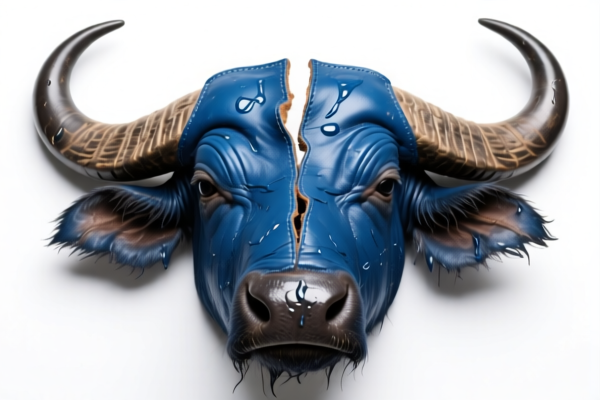
Wet blue buffalo split leather
CN → US| HS Code | Tariff Rate | Origin | Destination | Doc |
|---|---|---|---|---|
| 4107998000 | 12.4% | CN | US | Official Doc |
| 4104115040 | 13.3% | CN | US | Official Doc |
| 4115100000 | 35.0% | CN | US | Official Doc |
| 4107994000 | 12.5% | CN | US | Official Doc |
| 4104115070 | 13.3% | CN | US | Official Doc |
Product Images



AI Analysis
🐂 Wet Blue Buffalo Split Leather | 牛/水牛湿蓝剖层革
🌐 HS Code Reference & Customs Clearance Guide | 2026 Updated Tax Analysis | Professional Strategy
📌 I. Product Definition & Classification: What Exactly Is "Wet Blue Buffalo Split Leather"?
Wet Blue Buffalo Split Leather is a specific type of semi-finished leather product widely used in the manufacturing of bags, shoes, belts, and upholstery. To classify it correctly, we must break down the terminology:
- Buffalo (牛/水牛): Indicates the raw material source. In HS Code classifications, "Buffalo" is often grouped under Bovine (Cow/Ox/Buffalo).
- Wet Blue (湿蓝): Refers to the tanning stage. The leather has been chrome-tanned but not yet dyed, finished, or dried. It is damp and blue-tinted due to chrome salts.
- Split (剖层革): The leather has been mechanically split into layers. It is not the full grain surface layer but the fibrous layer beneath.
⚠️ Critical Distinction Point:
- Is it Finished/Colored? No, it is "Wet Blue" (semi-finished).
- Is it Full Grain or Split? It is Split.
- Is it Crust or Wet Blue? It is Wet Blue (unfixed dye/finish).This distinction determines whether it falls under Chapter 41 (Leather) or Chapter 4115 (Leather waste/off-cuts). Improper classification can lead to massive duty discrepancies (0% vs. 25%+).
📦 II. HS Code Classification Details (2026 Authoritative Reference)
Based on the specific characteristics (Buffalo/Cow, Wet Blue, Split), here are the relevant HS Codes from the provided data:
| HS Code | Product Description | Key Classification Criteria | Total Tax Rate |
|---|---|---|---|
4107.99.80.00 |
Cow/Buffalo Wet Blue Split Leather | Material: Cow/Buffalo; State: Wet Blue; Form: Split; Category: Other/Patterned Leather | 12.4% |
4104.11.50.40 |
Cow/Buffalo Wet Blue Split Leather | Material: Cow; State: Wet Blue; Form: Split; Key Limitation Met | 13.3% |
4107.99.40.00 |
Cow/Buffalo Wet Blue Split Leather | Material: Bovine (Cow/Buffalo); State: Wet Blue; Form: Split; Further Processing | 12.5% |
4104.11.50.70 |
Cow/Buffalo Wet Blue Split Leather | Material: Cow; State: Wet Blue; Form: Split; Key Elements Met | 13.3% |
4115.10.00.00 |
Leather-Based板材/Sheet Material | Base: Leather; Form: Sheet/Plate; Category: Leather waste/off-cuts/Other | 35.0% |
🔍 Key Observation:
- Codes4107and4104represent Tanned/Leather products. The tax rates are moderate (12.4%–13.3%).
- Code4115represents Leather Waste or Other Leather Articles. The tax rate is significantly higher (35.0%) due to additional tariffs.
- Why the variance? The specific sub-classification depends on the exact manufacturing process, thickness, and whether it meets specific "key limitations" defined in customs rulings.
💰 III. 2026 Latest Tariff Rate Breakdown (Including Surcharges & Policy Add-ons)
✅ Applicable Country: United States (US)
✅ Origin: China (CN)
✅ Effective Date: November 10, 2025 (and onwards)
🎯 1. 4107.99.80.00 & 4107.99.40.00 —— Bovine Wet Blue Split Leather
| Item | Content |
|---|---|
| Base Tariff | 2.4% / 2.5% (ad valorem) |
| Section 301 / Additional Tariff | 0.0% |
| Section 122 Tariff | 10% (Specific surcharge for certain leather/footwear materials) |
| Total Tax Rate | 12.4% / 12.5% |
| Tax Calculation | CIF Value × 12.4%~12.5% |
| De Minimis Eligibility | ❌ No (High value goods subject to full duty) |
| Legal Basis Path | USITC:4107.99.80.00 → FOOTNOTE:122 |
📌 Explanation:
- The 10% Section 122 tariff is a specific add-on for certain leather goods.
- The base rate is low (2.4–2.5%), making these codes cost-effective if the product qualifies.
- Crucial: You must prove the product is "Wet Blue" and "Split" to avoid being misclassified as "Finished Leather" (which may have different rates) or "Waste" (35%).
🎯 2. 4104.11.50.40 & 4104.11.50.70 —— Cow Wet Blue Split Leather
| Item | Content |
|---|---|
| Base Tariff | 3.3% (ad valorem) |
| Additional Tariff | 0.0% |
| Section 122 Tariff | 10% |
| Total Tax Rate | 13.3% |
| Tax Calculation | CIF Value × 13.3% |
| De Minimis Eligibility | ❌ No |
| Legal Basis Path | USITC:4104.11.50.40 → FOOTNOTE:122 |
📌 Note:
- These codes are similar to4107but apply to specific "Cow" classifications with strict key element requirements.
- The base tariff is slightly higher (3.3% vs 2.4%), resulting in a total of 13.3%.
🎯 3. 4115.10.00.00 —— Leather-Based Sheet Material (High Risk)
| Item | Content |
|---|---|
| Base Tariff | 0.0% |
| Additional Tariff | 25.0% |
| Section 122 Tariff | 10% |
| Total Tax Rate | 35.0% |
| Tax Calculation | CIF Value × 35.0% |
| De Minimis Eligibility | ❌ No |
| Legal Basis Path | USITC:4115.10.00.00 → FOOTNOTE:122 → SECTION301:25 |
🚨 WARNING:
- This code carries a 35% total tax rate.
- It applies if the leather is deemed "Waste," "Off-cuts," or "Non-usable leather sheets" not suitable for standard tanning/finishing without further processing.
- Do NOT use this code if your product is usable "Wet Blue Split Leather" unless you are certain it fails quality standards for Chapter 41.
🛠️ IV. Customs Clearance Practical Advice (Real-World Pitfall Guide)
✅ 1. Required Documentation Checklist (Non-Negotiable)
| Document | Required? | Description |
|---|---|---|
| ✅ Product Specification Sheet | ✔️ | Must state: "Wet Blue," "Split," "Buffalo/Cow," Chrome-Tanned. |
| ✅ Photos of Product | ✔️ | Show the blue color, fibrous split surface, and any markings. |
| ✅ Bill of Lading / Packing List | ✔️ | Clearly describe as "Wet Blue Buffalo Split Leather," not just "Leather." |
| ✅ Manufacturing Process Description | ✔️ | Explain the splitting process and current tanning stage. |
| ✅ Commercial Invoice | ✔️ | Value must reflect CIF terms. |
✅ 2. Declaration Strategy (Key Mantra)
🔥 "Be Specific: Wet Blue + Split + Bovine. Avoid 'Leather Waste'!"
| Scenario | Correct Declaration | Wrong Declaration | Consequence |
|---|---|---|---|
| Usable Wet Blue Split | 4107.99.80.00 / 4104.11.50.40 |
"Leather Waste" (4115) |
Overpay Tax: 12.5% → 35.0% |
| Finished/Dyed Leather | 4107.11 / 4107.21 |
"Wet Blue" | Under-declare: Misclassification, Penalties |
| Mixed Batches | Separate by Type | "Mixed Leather" | Customs Hold: Delayed Release |
✅ 3. Special Considerations
| Situation | Handling Advice |
|---|---|
| Buffalo vs. Cow | Ensure the origin and species match the HS Code. "Buffalo" is often grouped with "Cow" (Bovine) in 4107, but some specific sub-codes (4104) may require strict "Cow" verification. |
| Quality Issues | If leather is damaged or non-usable, it may fall under 4115.10.00.00. However, declaring it as such invites scrutiny. Only use if truly defective. |
| Section 122 Tariff | Confirm if your product falls under the 10% additional duty. Most wet blue leathers are subject to this. |
| Country of Origin | If the buffalo is raised in Vietnam but tanned in China, origin rules apply. US Customs may still apply Chinese-origin tariffs. |
🌍 V. Global Market Comparison (2026 Latest)
| Country/Region | Recommended HS Code | Base Tax | Surcharge | Total Tax | Notes |
|---|---|---|---|---|---|
| 🇺🇸 USA | 4107.99.80.00 |
2.4% | 10% (Sec 122) | 12.4% | High compliance risk if misclassified as 4115 (35%) |
| 🇨🇳 China | 4107.11 / 4107.21 |
5-8% | 0% | ~8% | Import duty for domestic use |
| 🇪🇺 EU | 4104 11 50 |
4% | 0% | 4% | No Section 122 equivalent |
| 🇬🇧 UK | 4104 11 50 |
4% | 0% | 4% | Post-Brexit alignment |
| 🇦🇺 Australia | 4107.99 |
5% | 0% | 5% | No additional surcharges |
📌 Conclusion:
- The US market has the highest effective tax burden for wet blue leather due to the Section 122 10% surcharge.
- EU and UK offer lower base duties (~4%).
- Misclassification as4115(Leather Waste) in the US results in a 35% tax, which is nearly triple the correct rate.
📌 VI. Common Errors & Pitfall Guide (Blood & Tears Lessons)
❌ Error 1: Declaring "Wet Blue Split Leather" as "Leather Waste" (4115.10.00.00)
👉 Consequence: Pay 35% instead of 12.5%. Overpayment of ~22.5% on CIF value.
Fix: Prove the leather is usable for further tanning/finishing.
❌ Error 2: Omitting "Wet Blue" in the description
👉 Consequence: Customs may assume it's "Finished Leather" (higher duty or different rules) or hold the shipment for inspection.
Fix: Clearly state "WET BLUE" and "SPLIT" on the invoice.
❌ Error 3: Confusing "Buffalo" with "Cow" in strict sub-codes
👉 Consequence: If the code 4104.11.50 requires "Cow" and you import "Buffalo," you may be misclassified.
Fix: Verify if your HS Code allows "Buffalo" under "Bovine" or if a separate code exists.
✅ Correct Declaration Example:
"WET BLUE BUFFALO SPLIT LEATHER, CHROME TANNED, UNSMELLING, FOR FURTHER PROCESSING, HS 4107.99.80.00"
🎯 VII. Conclusion: Precise Classification Saves Money!
🎯 Remember the Mantra:
🔹 "Wet Blue + Split = 4107/4104 (12-13%)".
🔹 "Waste/Off-cut = 4115 (35%)".
🔹 "Don't guess, specify!"
📌 Pro Tip:
If you are unsure whether your leather is "Usable Wet Blue" or "Waste," request a US Customs Advance Ruling before shipment. This can save you thousands of dollars in unnecessary duties.
📣 Immediate Action:
📞 Contact a Customs Broker
📄 Provide Photos & Specs
✅ Confirm HS Code 4107.99.80.00 or 4104.11.50.40
🚀 Ensure Smooth Clearance & Profit Protection!
✨ Professional Customs Clearance Starts with Accurate Classification!
💼 Every Percent Saved is Pure Profit!
Customer Reviews
About HS Code Classification
The Harmonized System (HS) is an internationally standardized nomenclature developed by the World Customs Organization (WCO) to classify traded products. Over 200 countries use the HS system as the basis for customs tariffs, trade statistics, and import/export regulations.
Each HS code follows a hierarchical structure:
- Chapter (2 digits) — Broad category of goods (e.g., Chapter 84: Machinery and Mechanical Appliances)
- Heading (4 digits) — More specific grouping within the chapter
- Subheading (6 digits) — Internationally standardized breakdown, used by all WCO member countries
- National subdivisions (8-10 digits) — Country-specific extensions for further classification, such as US HTSUS 10-digit codes
Correct HS code classification is essential for smooth customs clearance, accurate duty payment, and compliance with trade regulations. Misclassification can lead to customs delays, overpayment of duties, or penalties.
When importing from CN to US, the applicable tariff rates may include:
- Most-Favored-Nation (MFN) rate — The standard duty rate applied to WTO members
- General rate — Applied to countries without trade agreements
- Trade remedy duties — Additional tariffs such as Section 301 (anti-dumping), Section 232 (national security), or countervailing duties
The information provided on this page is for reference purposes only. For official classification, please consult with your local customs authority or a licensed customs broker.