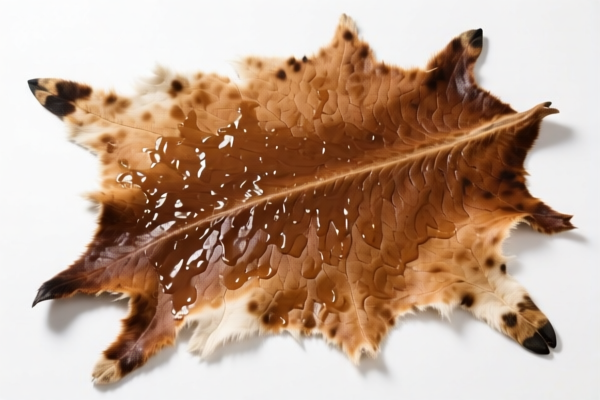
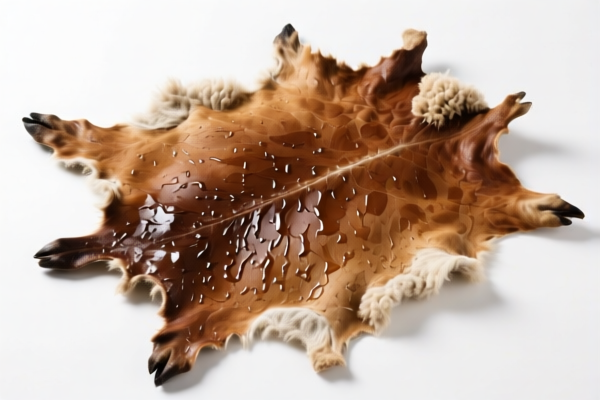
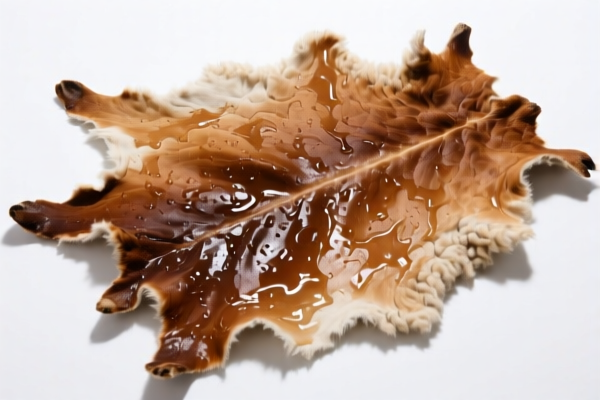
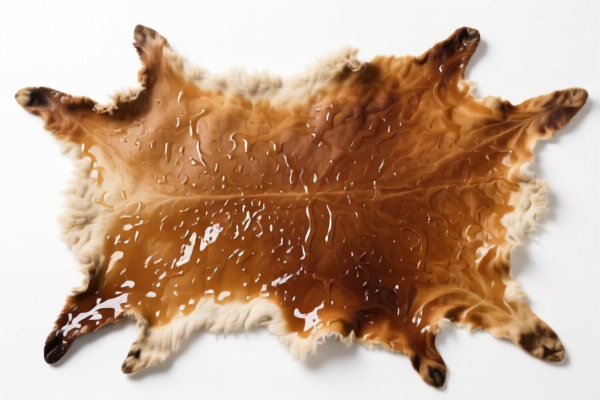
Wet tanned Sheepskin
CN → USProduct Images
AI Analysis
🐑 Wet Tanned Sheepskin (Raw Hides)
🌐 HS Code Reference & Clearance Guide | 2026 Latest Tariff Analysis | Professional Customs Strategy
📌 I. Product Definition & Classification: What is "Wet Tanned Sheepskin"?
Wet Tanned Sheepskin refers to sheep pelts that have undergone a tanning process (usually chrome or vegetable tanning) but are still in a "wet state" (high moisture content, typically sold in pits, vats, or stacked with preservatives) and have not yet been dried, dyed, finished, or cut into specific leather goods.
In international trade, the key distinction lies between "Raw Hides/Skins" (untanned) and "Tanned Leather" (finished). Wet tanning places the product firmly in the Leather Chapter (41 or 43), but the state of the leather (wet vs. dry) and the animal type (sheep vs. cattle) dictate the exact HS Code.
⚠️ Critical Distinction:
- Wet Tanned (Raw State): High moisture, usually bundled or packed in tanning salts. → Chapter 41 (Leather).
- Dry Tanned/Finished: Low moisture, ready for garment manufacture. → Chapter 41 or Chapter 43 (if fur-bearing).
- Sheepskin with Wool On: If the wool is intact, it may fall under Chapter 43 (Fur Skins), but wet tanned sheepskins with wool are often still classified under Chapter 41 if the tanning process has altered the skin significantly, though this is a high-risk area for customs audits.
- Sheepskin without Wool (Sheepskin Leather): Clearly Chapter 41.
📦 II. HS Code Classification Details (2026 Latest Tariff Authority)
| HS Code | Product Description | Application Scenario | Wool Present? | State |
|---|---|---|---|---|
| 4104.41 | Sheepskin, wet blue (chrome tanned) | Raw material for leather goods, jackets | ✅ Yes (usually) | Wet |
| 4104.42 | Other sheepskin, tanned | Tanned but not wet blue (e.g., vegetable) | ✅ Yes | Wet/Damp |
| 4104.19 | Cattle leather (for comparison) | Not applicable | ❌ No | - |
| 4301.10 | Raw sheepskin (with wool) | Untanned sheepskin with wool | ✅ Yes | Raw |
| 4104.50 | Other sheepskin (finished/dry) | Garment-ready leather | ✅ Yes | Dry |
| 4104.60 | Other cattle leather (wet) | Not applicable | ❌ No | Wet |
🔍 Key Reminder:
- Wet Tanned Sheepskin is primarily classified under Heading 4104 (Leather, tanned or further prepared, whether or not clipped or grain-split).
- Specifically, 4104.41 is for Sheepskin, wet blue (chrome-tanned, the most common method for wet tanned sheepskin).
- If the sheepskin is untanned, it falls under Heading 4103 (4103.21 for Sheepskin, raw).
- Warning: If the wool is long and untrimmed, and the tanning is minimal, customs may argue for Chapter 43 (Fur), which has different duty structures. However, commercial wet tanned sheepskins are almost exclusively 4104.41.
💰 III. 2026 Latest Tariff Rate Breakdown (Including Surcharges, Policy Add-ons)
✅ Applicable Country: United States (US)
✅ Country of Origin: China (CN)
✅ Effective Date: Post-November 2025 (Current Trade War Context)
🎯 1. 4104.41.00.00 —— Sheepskin, Wet Blue (Chrome Tanned)
| Item | Content |
|---|---|
| Base Rate (MFN) | 4.5% (ad valorem) |
| Section 301 Additional Duty | +25% (List 4A - Footnote 9903.88.01) |
| IEEPA Additional Duty | +10% (China/HK products, effective Nov 2025) |
| Total Duty Rate | 39.5% |
| Tax Calculation | CIF Value × 39.5% |
| De Minimis Eligibility | ❌ Denied (deny_de_minimis) |
| Legal Path | USITC:4104.41.00.00 → FOOTNOTE:9903.88.01 (301) → IEEPA:9903.01.24 (10%) |
📌 Explanation:
- 301 Tariff (25%): Leather goods and raw leather materials from China are heavily targeted. Wet tanned sheepskin is considered a "raw material" for the fashion/apparel industry.
- IEEPA Tariff (10%): Newer surcharge on Chinese imports under the International Emergency Economic Powers Act.
- Base Rate (4.5%): Standard Most Favored Nation (MFN) rate for tanned sheepskin.
- Total Burden: 39.5% is a significant cost driver. Importers must factor this into landed cost calculations.
🎯 2. 4104.42.00.00 —— Other Tanned Sheepskin (Non-Chrome)
| Item | Content |
|---|---|
| Base Rate (MFN) | 4.5% |
| Section 301 Additional Duty | +25% |
| IEEPA Additional Duty | +10% |
| Total Duty Rate | 39.5% |
| Tax Calculation | CIF Value × 39.5% |
| De Minimis Eligibility | ❌ Denied |
| Legal Path | USITC:4104.42.00.00 → FOOTNOTE:9903.88.01 → IEEPA:9903.01.24 |
📌 Note:
- Vegetable-tanned sheepskins (less common for wet trade but possible) face the same high duties.
- If the sheepskin is untanned (Raw Sheepskin, 4103.21.00.00), the base rate is lower (4.5%), but the 301 + IEEPA surcharges still apply, resulting in ~39.5% total as well.
🛠️ IV. Customs Clearance Practical Advice (Real-World Pitfall Guide)
✅ 1. Required Documentation Checklist (Mandatory)
| Document | Must Provide | Description |
|---|---|---|
| ✅ Bill of Lading/Air Waybill | ✔️ | Must show gross weight, net weight, and number of bales/skins. |
| ✅ Commercial Invoice | ✔️ | Must clearly state: "Wet Tanned Sheepskin, Chrome Tanned, Country of Origin: China". |
| ✅ Packing List | ✔️ | Detail the number of skins, weight per skin, and moisture content if available. |
| ✅ Tanning Certificate | ✔️ | Proof of tanning method (Chrome vs. Vegetable) to support HS Code 4104.41. |
| ✅ Moisture Content Declaration | ✔️ | Essential for "Wet" classification. If >75% water, it’s wet; if <30%, it’s dry. |
| ✅ Fiber Content Label | ✔️ | "100% Sheep Leather" |
| ✅ Environmental Compliance Doc | ✔️ | EPA compliance for chrome waste (if applicable for importer certification). |
✅ 2. Declaration Tips (Key Mantra)
🔥 "Wet Blue, 4104, Don't Split, Just Add!"
| Scenario | Correct Declaration | Wrong Action |
|---|---|---|
| Wet Tanned Sheepskin (Chrome) | 4104.41.00.00 |
Misclassifying as "Textile" (Chapter 50-63) → Smuggling Risk! |
| Raw Sheepskin (Untanned) | 4103.21.00.00 |
Declaring as "Tanned" → Audit Trigger |
| Sheepskin Garments (Finished) | 4203.10.00.00 |
Declaring as "Raw Material" → Wrong Duty Base |
| Sheepskin with Long Wool (Fur) | 4301.10.00.00 (if raw) or 4303.10 (if tanned/fur) |
Declaring as 4104 if wool is intact and tanning is minimal → Classification Error |
✅ 3. Special Circumstances Handling
| Scenario | Handling Advice |
|---|---|
| Mixed Bundles | If a shipment contains both cattle hides and sheepskins, declare separately. Do not blend HS Codes. |
| Wool Removal | If the wool is removed before tanning, it is "Sheep Leather" (4104.41). If wool remains, it is still 4104.41 for wet tanned, but ensure the description says "Sheepskin with wool". |
| Transshipment | If shipped via Vietnam/Malaysia, Rules of Origin apply. If only minimal processing (sorting, repacking), China Origin still applies, and 301/IEEPA duties apply. |
| Moisture Control | Wet sheepskins can mold during transit. Ensure ventilated containers and desiccants. Moldy goods may be rejected by US Customs for health/safety reasons. |
🌍 V. Global Market Comparison (2026 Latest)
| Country/Region | Recommended HS Code | Duty Rate (China Origin) | Certification Requirements | Notes |
|---|---|---|---|---|
| 🇺🇸 USA | 4104.41.00.00 |
39.5% (4.5% + 25% + 10%) | EPA, CBP | High duty; strict origin control. |
| 🇨🇳 China | 4104.41.00.00 |
4.5% | CCC (if applicable) | Low duty for domestic trade. |
| 🇪🇺 EU | 4104.41 |
4.5% | REACH (Chrome VI test) | No 301/IEEPA; focus on environmental standards. |
| 🇬🇧 UK | 4104.41 |
4.5% | UKCA/Post-Brexit Standards | Similar to EU. |
| 🇯🇵 Japan | 4104.41 |
4.0% | JIS Standards | Low duty; high quality inspection. |
📌 Conclusion:
- The US is the most expensive market for Chinese wet tanned sheepskin due to the 39.5% effective duty rate.
- EU, Japan, and UK offer significantly better duty rates (~4.5%), making them more attractive for Chinese exporters.
- Strategy: Consider third-country transshipment (e.g., Turkey, Vietnam) only if substantial transformation occurs there, to avoid US origin rules. However, US Customs is vigilant against circumvention.
📌 VI. Common Mistakes & Pitfall Guide (Blood Lessons)
❌ Mistake 1: Declaring "Leather" without specifying "Wet Tanned" or "Sheepskin"
👉 Consequence: Customs may classify under a higher-rate or restricted category → Delay + Inspection.
❌ Mistake 2: Mixing Raw (Untanned) and Tanned Sheepskin in one HS Code
👉 Consequence: Incorrect duty calculation → Penalties + Back Taxes.
❌ Mistake 3: Ignoring the 301/IEEPA Surcharges
👉 Consequence: Underpayment of duties → Seizure + Fines. The 39.5% total is not optional.
❌ Mistake 4: Using "Textile" or "Fabric" in the description for Sheepskin
👉 Consequence: Accusation of misclassification → Criminal Investigation.
✅ Correct Practice:
"Wet Tanned Sheepskin, Chrome Tanned, Raw State, China Origin, HS Code 4104.41.00.00"
🎯 VII. Conclusion: Professional Declaration, Save Money, Avoid Risk
🎯 Remember the Mantra:
🔹 "Wet Blue, 4104, Don't Hide the Origin."
🔹 "39.5% is the US Price, Plan Your Supply Chain."
🔹 "Separate Raw from Tanned, Avoid the Ban."
📌 Pro Tip:
If your supplier is in China, consider sourcing from Turkey or Italy for EU/US markets to avoid 301/IEEPA surcharges.
If shipping to the US, pre-clearance and Advance Ruling from CBP are highly recommended to confirm the 4104.41 classification for your specific product sheet.
📣 Immediate Action:
📞 Contact a licensed customs broker + Provide Tanning Certificate + Verify Origin Rules
🚀 Optimize your landed cost with accurate classification!
✨ Professional Clearance Starts with Precise Classification!
💼 Your Margins Depend on Every Percentage Point!
Customer Reviews
About HS Code Classification
The Harmonized System (HS) is an internationally standardized nomenclature developed by the World Customs Organization (WCO) to classify traded products. Over 200 countries use the HS system as the basis for customs tariffs, trade statistics, and import/export regulations.
Each HS code follows a hierarchical structure:
- Chapter (2 digits) — Broad category of goods (e.g., Chapter 84: Machinery and Mechanical Appliances)
- Heading (4 digits) — More specific grouping within the chapter
- Subheading (6 digits) — Internationally standardized breakdown, used by all WCO member countries
- National subdivisions (8-10 digits) — Country-specific extensions for further classification, such as US HTSUS 10-digit codes
Correct HS code classification is essential for smooth customs clearance, accurate duty payment, and compliance with trade regulations. Misclassification can lead to customs delays, overpayment of duties, or penalties.
When importing from CN to US, the applicable tariff rates may include:
- Most-Favored-Nation (MFN) rate — The standard duty rate applied to WTO members
- General rate — Applied to countries without trade agreements
- Trade remedy duties — Additional tariffs such as Section 301 (anti-dumping), Section 232 (national security), or countervailing duties
The information provided on this page is for reference purposes only. For official classification, please consult with your local customs authority or a licensed customs broker.