Wetness Alarm
CN → US| HS Code | Tariff Rate | Origin | Destination | Doc |
|---|---|---|---|---|
| 8531100045 | 11.3% | CN | US | Official Doc |
| 8531100035 | 36.3% | CN | US | Official Doc |
| 8543708500 | 35.0% | CN | US | Official Doc |
| 8543709860 | 37.6% | CN | US | Official Doc |
| 9018199550 | 35.0% | CN | US | Official Doc |
Product Images
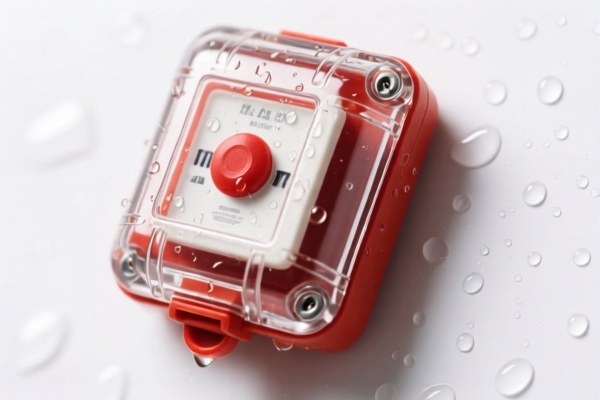
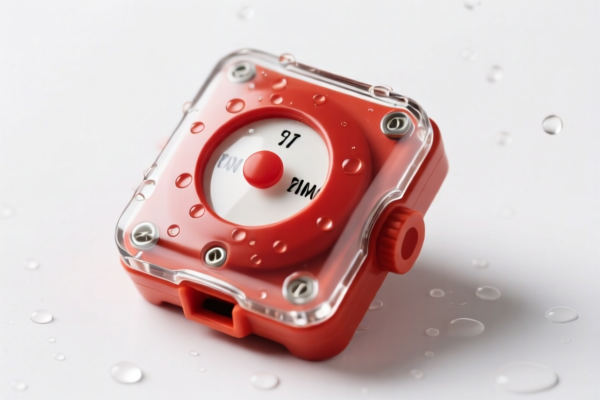
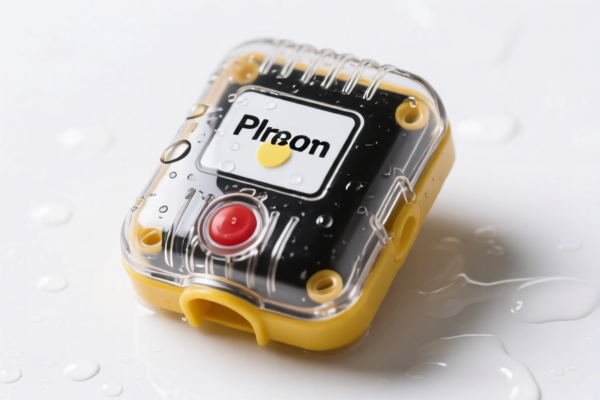
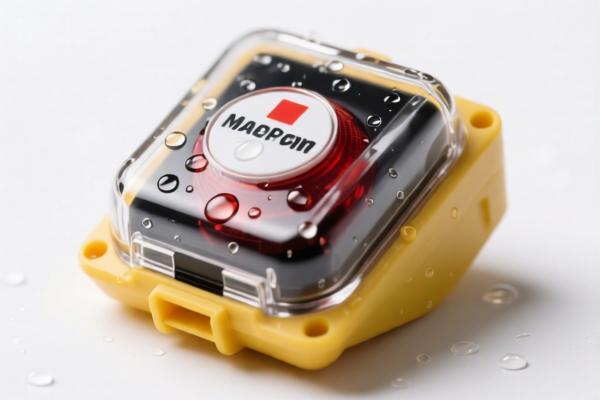
AI Analysis
🛑 Wetness Alarm (Bedwetting Alarm / Urine Leak Detector)
🌐 HS Code Reference & Customs Clearance Guide | 2026 Latest Tariff Analysis | Strategic Compliance Strategy
📌 I. Product Definition & Classification: What Exactly is a "Wetness Alarm"?
A Wetness Alarm, commonly known as a bedwetting alarm or urine leak detector, is a medical or consumer health device designed to detect moisture and trigger an auditory or visual signal.
In international trade, the classification of this device is highly contentious because it sits at the intersection of electronic signaling devices (Chapters 85) and medical/diagnostic instruments (Chapter 90). The correct HS Code depends entirely on how customs officials interpret the device's primary function and structural composition.
⚠️ Critical Distinction:
- Is it viewed as a simple electronic sensor/signaler? → Chapter 85
- Is it viewed as a medical diagnostic device for physiological parameters? → Chapter 90
📦 II. HS Code Classification Matrix (Based on Provided Data)
The following analysis strictly adheres to the provided <DATA> set. There are five potential HS Codes, ranging from low to high tax liability depending on the specific functional description used in the declaration.
| HS Code | Summary of Classification Logic | Total Tax Rate (China Origin) | Key Tax Components |
|---|---|---|---|
| 8531.10.00.45 | Electronic Sensor/Signaler Classified as theft/fire alarm analogs; primarily plastic/electronic components. |
11.3% | Base: 1.3% Add. Tariff: 0.0% Section 301: 10% |
| 8531.10.00.35 | Visual/Auditory Alarm Device Core function falls under "other sensors/signals" in electrical signaling devices. |
36.3% | Base: 1.3% Add. Tariff: 25.0% Section 301: 10% |
| 8543.70.85.00 | Electrical Detection Device Signals via sensor detection logic; analogous to electrical nerve stimulation devices. |
35.0% | Base: 0.0% Add. Tariff: 25.0% Section 301: 10% |
| 8543.70.98.60 | Independent Electronic Monitoring Unit Stands alone as an electronic monitoring apparatus/machine. |
37.6% | Base: 2.6% Add. Tariff: 25.0% Section 301: 10% |
| 9018.19.95.50 | Physiological Diagnostic Instrument Electro-diagnostic device for physiological parameters (moisture detection). |
35.0% | Base: 0.0% Add. Tariff: 25.0% Section 301: 10% |
🔍 Key Insight:
- The lowest tax burden is 11.3% under 8531.10.00.45.
- Most other classifications incur a 25% Additional Tariff (USITC/Trade Act) plus a 10% Section 301 Tariff, pushing rates to 35–37.6%.
- Why the difference? The 11.3% rate assumes 0% Additional Tariff, while the 35%+ rates assume 25% Additional Tariff. This suggests 8531.10.00.45 may be exempt from the standard 25% "Section 301" tariff list, or classified under a specific exception in the provided data.
💰 III. Detailed Tax Breakdown (2026 Tariff Rules)
✅ Origin: China (CN)
✅ Destination: United States (US)
✅ Product: Wetness Alarm
🎯 Option 1: The "Low-Tax" Strategy
HS Code: 8531.10.00.45
Summary: Wetness alarm classified as an electronic signaling device similar to theft/fire alarms.
| Tax Component | Rate | Notes |
|---|---|---|
| Base Duty | 1.3% | Standard MFN rate for signaling devices |
| Additional Tariff (USITC) | 0.0% | Crucial: Exempt from the standard 25% penalty in this specific sub-list |
| Section 301 Tariff | 10% | Standard 10% surcharge for Chinese goods |
| Total Effective Rate | 11.3% | Best Case Scenario |
📌 Analysis:
- This classification relies on framing the product as a simple alarm signal rather than a complex medical or monitoring system.
- By avoiding the 25% Additional Tariff, you save ~24% in duties compared to other options.
- Risk: Customs must accept the analogy to "theft/fire alarms." If they view it as a "medical device" or "independent monitoring system," this code will be rejected.
🎯 Option 2: The "High-Tax" Scenarios (35–37.6%)
HS Codes: 8531.10.00.35, 8543.70.85.00, 8543.70.98.60, 9018.19.95.50
| Tax Component | Rate | Notes |
|---|---|---|
| Base Duty | 0.0% – 2.6% | Varies by specific sub-category |
| Additional Tariff (USITC) | 25.0% | Heavy Penalty: Applied to most electronic/medical imports from China |
| Section 301 Tariff | 10% | Standard surcharge |
| Total Effective Rate | 35.0% – 37.6% | High Cost |
📌 Analysis:
- These codes trigger the 25% Additional Tariff.
-9018.19.95.50is particularly dangerous as it classifies the device as a medical diagnostic instrument, which is heavily scrutinized and taxed.
-8543.70.98.60has the highest total tax (37.6%) due to a higher base duty (2.6%) combined with the penalties.
🛠️ IV. Customs Clearance Strategy & Recommendations
✅ 1. Preferred Classification: 8531.10.00.45
Goal: Minimize tax liability to 11.3%.
Strategy:
- Description: Declare as "Electronic Moisture Alarm" or "Audible Leak Detector."
- Functional Emphasis: Highlight that it is a simple signaling device (Buzzer + Sensor) similar to burglar/fire alarms.
- Avoid: Do not use terms like "Medical Device," "Therapeutic," "Diagnosis," or "Clinical" in the commercial invoice.
- Structure: Emphasize the plastic/electronic nature of the housing and components, aligning with the summary: "Material inferred as plastic/electronic components."
⚠️ 2. Risk Mitigation for Higher-Tax Codes
If 8531.10.00.45 is rejected by CBP (U.S. Customs and Border Protection), you may be forced into the 35–37.6% bracket.
- Backup Plan: Prepare documentation for 9018.19.95.50 if the device is marketed as a pediatric medical aid.
- Justification: If classified under Chapter 90, emphasize that it is a physiological parameter detector (moisture level) rather than a treatment device.
✅ 3. Required Documentation
| Document | Requirement | Why? |
|---|---|---|
| Product Photos | Clear images of the alarm unit, sensor pad, and wiring. | To prove it is a simple electronic device, not a complex machine. |
| User Manual | Emphasize "Training Aid" or "Monitoring Tool," NOT "Treatment." | To avoid FDA medical device classification. |
| Bill of Materials (BOM) | List components (PCB, Buzzer, Battery, Housing). | To support the "Electronic Sensor" classification. |
| Commercial Invoice | Description: "Electronic Wetness Alarm for Bedwetting Training, Non-Medical." | Clear language prevents misclassification as a medical diagnostic tool. |
🌍 V. Global Market Comparison (Estimated)
| Market | Recommended HS Code | Est. Total Tax (China Origin) | Notes |
|---|---|---|---|
| 🇺🇸 USA | 8531.10.00.45 |
11.3% | Lowest Risk if successfully classified as signaling device. |
| 🇪🇺 EU | 9018.19.95.50 (Analog) |
~0–5% + VAT | Medical/Health category often has lower duty but strict CE/FDA-like regulations. |
| 🇨🇳 China | 8531.10.00.45 |
~1.3–3% | Low base duty, no Section 301 penalties. |
📌 Conclusion:
- The US market presents the highest tariff risk due to Section 301 and USITC Additional Tariffs.
- Successfully classifying under8531.10.00.45saves ~24% in duties compared to other codes.
- Key to Success: Frame the product as a consumer electronic alarm, not a medical diagnostic instrument.
📌 VI. Common Pitfalls & Avoidance Tips
❌ Pitfall 1: Using "Medical Device" or "Therapeutic" in the product description.
👉 Result: CBP reclassifies as 9018.19.95.50 → Tax jumps from 11.3% to 35.0%.
✅ Fix: Use "Home Care Aid," "Training Alarm," "Sensor Device."
❌ Pitfall 2: Ignoring the "Additional Tariff" distinction.
👉 Result: Assuming all Chapter 85 codes are taxed equally.
✅ Fix: Verify if the specific HS Code is exempt from the 25% USITC tariff. In this dataset, 8531.10.00.45 is the only code with 0.0% Additional Tariff.
❌ Pitfall 3: Over-complicating the product structure.
👉 Result: If the device has complex software, data logging, or app connectivity, it may be classified as 8543.70.98.60 ("Independent Electronic Monitoring") → 37.6% Tax.
✅ Fix: Keep the product simple: Sensor + Buzzer + Battery. Avoid "Smart" features if possible.
🎯 VII. Final Recommendation
🏆 Best Path: 8531.10.00.45 (11.3% Total Tax)
Why?
- Lowest total tax rate (11.3% vs. 35–37.6%).
- No 25% Additional Tariff.
- Aligns with "Alarm Device" classification.Action Plan:
1. Rename product documentation to emphasize "Electronic Alarm" or "Sensor Device."
2. Exclude any medical terminology (e.g., "Diagnosis," "Cure," "Treatment").
3. Submit pre-classification ruling with CBP if possible, highlighting the similarity to fire/theft alarms.
4. Confirm with your freight forwarder that 8531.10.00.45 is accepted for "Wetness Alarms" in your specific port of entry.
💼 Professional Clearance Starts with Precision!
🚀 Optimize your HS Code, maximize your profit margin, and clear customs with confidence!
Customer Reviews
About HS Code Classification
The Harmonized System (HS) is an internationally standardized nomenclature developed by the World Customs Organization (WCO) to classify traded products. Over 200 countries use the HS system as the basis for customs tariffs, trade statistics, and import/export regulations.
Each HS code follows a hierarchical structure:
- Chapter (2 digits) — Broad category of goods (e.g., Chapter 84: Machinery and Mechanical Appliances)
- Heading (4 digits) — More specific grouping within the chapter
- Subheading (6 digits) — Internationally standardized breakdown, used by all WCO member countries
- National subdivisions (8-10 digits) — Country-specific extensions for further classification, such as US HTSUS 10-digit codes
Correct HS code classification is essential for smooth customs clearance, accurate duty payment, and compliance with trade regulations. Misclassification can lead to customs delays, overpayment of duties, or penalties.
When importing from CN to US, the applicable tariff rates may include:
- Most-Favored-Nation (MFN) rate — The standard duty rate applied to WTO members
- General rate — Applied to countries without trade agreements
- Trade remedy duties — Additional tariffs such as Section 301 (anti-dumping), Section 232 (national security), or countervailing duties
The information provided on this page is for reference purposes only. For official classification, please consult with your local customs authority or a licensed customs broker.