Wettable Powder Fungicide
CN → US| HS Code | Tariff Rate | Origin | Destination | Doc |
|---|---|---|---|---|
| 3802905000 | 39.8% | CN | US | Official Doc |
| 2930901000 | 41.5% | CN | US | Official Doc |
| 2930903000 | 38.7% | CN | US | Official Doc |
| 3808922800 | 38.7% | CN | US | Official Doc |
| 3808922400 | 35.0% | CN | US | Official Doc |
Product Images

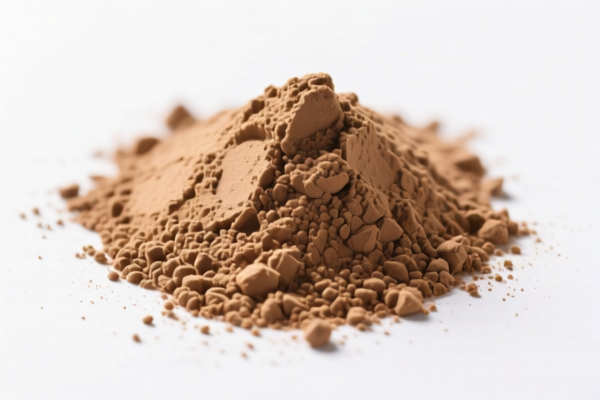
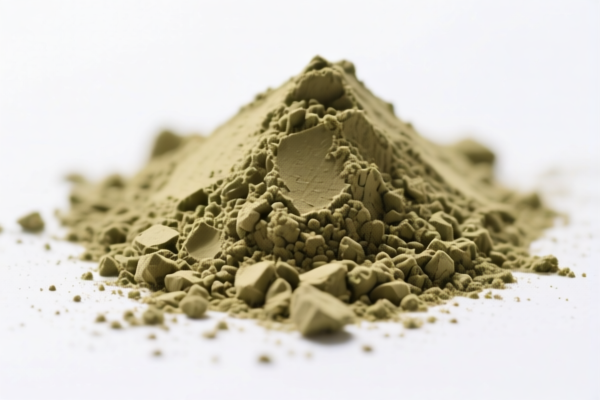
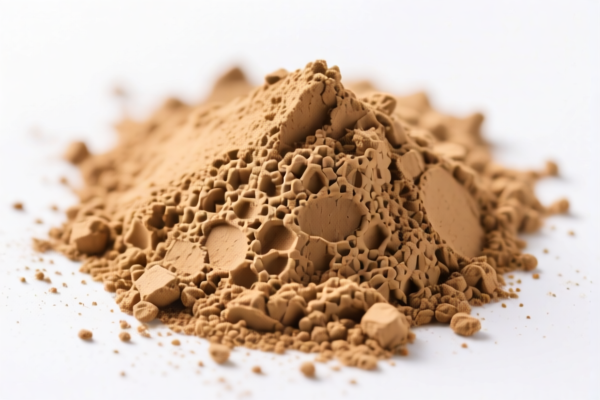
AI Analysis
🌾 Wettable Powder Fungicides: Comprehensive HS Code Guide & 2026 Customs Strategy
🌐 HS Code Reference & Clearance Guide | 2026 Latest Tariff Analysis | Professional Customs Strategy
📌 I. Product Definition & Classification: Do You Really Know "Wettable Powder Fungicide"?
Wettable Powder (WP) Fungicide refers to a dry, finely ground pesticide formulation designed to be mixed with water to form a suspension for spraying on crops. It is widely used to control fungal diseases in agriculture, horticulture, and forestry.
In international trade, the classification depends on two key factors: 1. Chemical Composition: Is it a pure chemical substance (organic sulfur compounds) or a formulated mixture (preparation)? 2. Function: Is it intended for industrial chemical use (synthesis intermediates) or direct agricultural application (biocide/fungicide)?
⚠️ Key Distinction Points: - Pure Chemical Substances: If the product is a specific organic sulfur compound (e.g., pure Thiosemicarbazide derivatives) used as a raw material or intermediate, it falls under Chapter 29 (Organic Chemicals). - Formulated Preparations: If the product is a finished "Wettable Powder" containing the active ingredient mixed with fillers, adjuvants, and surfactants specifically for killing fungi, it falls under Chapter 38 (Miscellaneous Chemical Products, specifically pesticides).
📦 II. HS Code Classification Detail (2026 Latest Tariff Authority)
Based on the specific chemical nature and formulation of your Wettable Powder Fungicide, here is the authoritative breakdown:
| HS Code | Product Description | Composition & Usage | Tax Rate (China Origin) |
|---|---|---|---|
| 2930.90.10.00 | Organic Sulfur Compound (Thiourea) | Pure chemical, Fungicide purpose, Wettable Powder form. | 41.5% |
| 2930.90.30.00 | Organic Sulfur Compounds (Containing Thiourea) | Mixture of organic sulfur, Fungicide purpose, Wettable Powder form. | 38.7% |
| 3802.90.50.00 | Thiourea Derivatives (Powder) | Chemical derivatives of thiourea, Powder form, no material conflict. | 39.8% |
| 3808.92.24.00 | Fungicide Formulations (Thiourea-based) | Thiourea-containing fungicide preparation, meets classification definition. | 35.0% |
| 3808.92.28.00 | Fungicide Preparations (Thiourea) | Thiourea-containing fungicide preparation, Wettable Powder form. | 38.7% |
🔍 Critical Interpretation: - 2930.x Series: Applies to the active chemical ingredient itself (e.g., Thiourea or its specific organic derivatives) before it is mixed with carriers. - 3808.x Series: Applies to the final commercial product (the "Wettable Powder" sold to farmers), which includes the active ingredient + inert carriers + wetting agents. - 3802.90.50.00: Specifically targets Thiourea derivatives that may not fit neatly into the "fungicide preparation" definition but are chemically related.
💰 III. 2026 Tariff Rate Breakdown (Including Surcharges & Policy Add-ons)
✅ Target Market: United States (US) Import from China (CN)
✅ Effective Date: Current Trade War Measures (Section 301 & 122)
✅ Applicable Goods: Pesticides & Chemicals
🎯 1. High-Risk Chemical Substances (HS 2930.90.10.00)
Organic Sulfur Compound (Thiourea), Fungicide Use, Powder
| Item | Detail |
|---|---|
| Base Tariff | 6.5% (Normal MFN Rate) |
| Section 301 (Add-on) | +25.0% (Trade War Tariff) |
| Section 122 Tariff | +10.0% (Reciprocal Trade Sanctions) |
| Total Tax | 41.5% |
| Calculation | CIF Value × 41.5% |
| Legal Basis | USITC:2930.90.10.00 + EO 13936 (Sec 301) + Sec 122 |
📌 Explanation:
- The 25% is a standard Section 301 surcharge on "Other Organic Chemicals". - The 10% is the specific "Section 122" reciprocal tariff often applied to specific Chinese chemical imports. - Total Cost Impact: Nearly 42% of the CIF value is tax.
🎯 2. Formulated Fungicide Preparations (HS 3808.92.24.00)
Thiourea-containing Fungicide, Formulated, Powder
| Item | Detail |
|---|---|
| Base Tariff | 0.0% (Duty-free for some fungicide preparations) |
| Section 301 (Add-on) | +25.0% |
| Section 122 Tariff | +10.0% |
| Total Tax | 35.0% |
| Calculation | CIF Value × 35.0% |
| Legal Basis | USITC:3808.92.24.00 + Section 301 + Section 122 |
📌 Strategy Insight:
- This is the most tax-efficient option among the fungicide preparations because the Base Tariff is 0%. - However, the 25% + 10% = 35% surcharge remains unavoidable for Chinese origin goods in this category.
🎯 3. Thiourea Derivatives & Other Preparations (HS 3802.90.50.00 / 3808.92.28.00)
Thiourea Derivatives (3802) & Fungicide Prep (3808)
| Item | Detail |
|---|---|
| Base Tariff | 3.7% - 4.8% (Varies by specific derivative) |
| Section 301 (Add-on) | +25.0% |
| Section 122 Tariff | +10.0% |
| Total Tax | 38.7% - 39.8% |
| Legal Basis | Section 301 + Section 122 applied to Chemical/Prep codes |
🛠️ IV. Customs Clearance Practical Advice (Avoid Pitfalls)
✅ 1. Document Preparation Checklist (Mandatory)
| Document | Requirement | Why It Matters |
|---|---|---|
| Material Safety Data Sheet (MSDS) | ✔️ Must include "Active Ingredient %", "Fillers", "Physical State" | Critical for determining if it's "Pure Chemical" (2930) or "Preparation" (3808). |
| Certificate of Analysis (COA) | ✔️ Must show purity levels and specific chemical structure | Prevents misclassification between 2930.90.10 (Pure) and 3808.92 (Mixed). |
| Product Label & Packaging Photo | ✔️ Must clearly state "Fungicide", "For Agricultural Use", "Wettable Powder" | Supports 3808 classification (Preparation) over 2930 (Raw Material). |
| Technical Specification Sheet | ✔️ Must list all inactive ingredients (adjuvants, carriers) | If >50% is filler + active, it's 3808. If 100% active, it's 2930. |
| Commercial Invoice | ✔️ Must specify HS Code & "Thiourea" content | Avoids "Unknown Substance" flagging. |
✅ 2. Declaration Strategy (The Golden Rules)
🔥 "Composition Determines Code: Pure = 2930, Formulated = 3808"
| Scenario | Correct HS Code | Incorrect Code | Consequence |
|---|---|---|---|
| Raw Thiourea Powder (No additives) | 2930.90.10.00 |
3808.92.28.00 |
Overpayment: 38.7% vs 41.5% (Not huge, but wrong) |
| Finished Fungicide WP (With fillers) | 3808.92.24.00 (Best) |
2930.90.10.00 |
Underpayment Risk: Customs will re-classify to 3808, apply 35%, plus penalties. |
| Thiourea Derivative (Intermediate) | 3802.90.50.00 |
2930.90.30.00 |
Confusion: May delay customs due to "Chemical vs. Preparation" debate. |
✅ 3. Special Situations & Mitigation
| Situation | Action Plan |
|---|---|
| Mixed Active Ingredients | If your WP contains Thiourea + other fungicides, declare as 3808.92.28.00 (Preparation). Do not try to split the chemical names. |
| "For Laboratory Use" vs. "For Field" | If marketed for "Industrial Use" (lab reagent), use 2930. If marketed for "Agricultural Use" (crop spray), use 3808. 3808 is the correct code for Wettable Powder Fungicides. |
| High Tax Burden | 35% - 41.5% is significant. Consider: 1. De minimis (not applicable here, high value). 2. Section 301 Exclusion (Check if your specific Thiourea formulation is on the exclusion list). 3. Supplier Location: Can you source from a non-China origin (e.g., Vietnam, India) to avoid 25% + 10%? |
🌍 V. Global Market Comparison (2026 Outlook)
| Country/Region | Recommended HS Code | Total Tax (Approx.) | Key Requirement |
|---|---|---|---|
| 🇺🇸 USA | 3808.92.24.00 |
35.0% | EPA Registration + FDA/USDA Compliance |
| 🇪🇺 EU | 3808.94.98 |
0% - 6.5% | Biocidal Products Regulation (BPR) Approval |
| 🇨🇳 China | 2930.90.10.00 / 3808.92.24.00 |
3.7% - 6.5% | Agricultural Ministry Registration |
| 🇯🇵 Japan | 3808.99.00 |
5.0% | Pesticide Registration (Ministry of Agriculture) |
📌 Conclusion:
- The US market is the most expensive due to Section 301 (25%) and Section 122 (10%). - EU and Japan offer lower rates but have stricter registration hurdles (BPR, Pesticide Act). - Always verify EPA registration for US imports; unregistered pesticides can be seized and destroyed.
📌 VI. Common Mistakes & Pitfalls (Lessons Learned)
❌ Mistake 1: Declaring a "Wettable Powder" as a "Pure Chemical" (2930.90.10.00).
👉 Consequence: Customs will detect the presence of fillers (kaolin, clay) via MSDS and reclassify to 3808. If the importer didn't account for the 3808 tax structure, they face underpayment penalties.
❌ Mistake 2: Failing to disclose the "Thiourea" content.
👉 Consequence: Thiourea is a controlled substance in some contexts. Failure to declare can lead to drug/chemical enforcement scrutiny or seizure.
❌ Mistake 3: Ignoring the "Section 122" Tariff (10%).
👉 Consequence: Many traders only calculate the 25% (Section 301). The additional 10% is critical for cost calculation. Total = 35% or 41.5%.
✅ Correct Approach:
"Fungicide Preparation, Wettable Powder, Active Ingredient: Thiourea Derivative, Containing Fillers, EPA Registration No. XXXXX, for Agricultural Use."
🎯 VII. Final Verdict: Strategic Recommendations
🎯 Key Takeaway:
🔹 "Formulation Wins": If it is a finished WP fungicide, 3808.92.24.00 is the safest and most accurate code with the lowest base tariff (0%), resulting in a total of 35%.
🔹 "Pure Substance Risk": If you claim it is pure Thiourea (2930.90.10.00), the total tax jumps to 41.5%.
🔹 "Don't Guess the Code": Misclassification leads to customs delays, fines, and seizure.
📌 Pro Tip:
Before shipping, apply for a Binding Ruling (Section 301 Exclusion) if possible. While unlikely for general Thiourea fungicides, specific formulations might qualify for exemptions if they are not produced domestically in the US.
📣 Action Step:
📞 Consult your Customs Broker immediately to review your MSDS and Formulation Sheet.
🚀 Calculate the 35% - 41.5% cost impact on your CIF value.
💡 Ensure your EPA/USDA registration is valid for the specific HS Code you choose.
✨ Precision in Classification = Savings in Customs!
💼 Don't let a 5% tax rate difference ruin your profit margin.
Customer Reviews
About HS Code Classification
The Harmonized System (HS) is an internationally standardized nomenclature developed by the World Customs Organization (WCO) to classify traded products. Over 200 countries use the HS system as the basis for customs tariffs, trade statistics, and import/export regulations.
Each HS code follows a hierarchical structure:
- Chapter (2 digits) — Broad category of goods (e.g., Chapter 84: Machinery and Mechanical Appliances)
- Heading (4 digits) — More specific grouping within the chapter
- Subheading (6 digits) — Internationally standardized breakdown, used by all WCO member countries
- National subdivisions (8-10 digits) — Country-specific extensions for further classification, such as US HTSUS 10-digit codes
Correct HS code classification is essential for smooth customs clearance, accurate duty payment, and compliance with trade regulations. Misclassification can lead to customs delays, overpayment of duties, or penalties.
When importing from CN to US, the applicable tariff rates may include:
- Most-Favored-Nation (MFN) rate — The standard duty rate applied to WTO members
- General rate — Applied to countries without trade agreements
- Trade remedy duties — Additional tariffs such as Section 301 (anti-dumping), Section 232 (national security), or countervailing duties
The information provided on this page is for reference purposes only. For official classification, please consult with your local customs authority or a licensed customs broker.