Wettable Powder Herbicide Containing Inorganic Substances
CN → US| HS Code | Tariff Rate | Origin | Destination | Doc |
|---|---|---|---|---|
| 2833295190 | 38.7% | CN | US | Official Doc |
| 2827399050 | 10.0% | CN | US | Official Doc |
| 3808997000 | 40.0% | CN | US | Official Doc |
| 3808932000 | 40.0% | CN | US | Official Doc |
| 3808932000 | 40.0% | CN | US | Official Doc |
Product Images


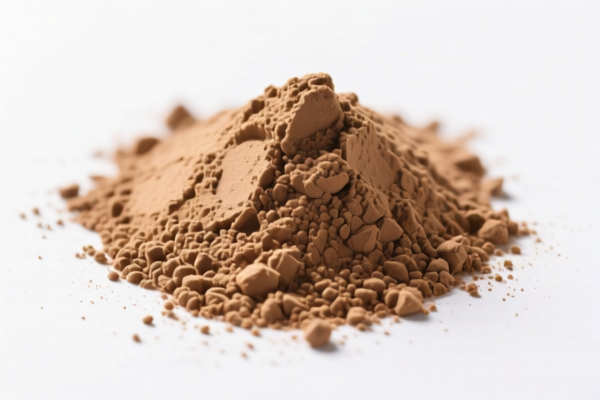
AI Analysis
🌿 Wettable Powder Herbicide Containing Inorganic Substances
🌐 HS Code Classification & Customs Clearance Guide | 2026 Taxation Breakdown | Strategic通关 Strategy
📌 I. Product Definition & Classification: What Exactly Are We Importing?
Wettable Powder (WP) Herbicides are agricultural pesticides in dry, granular, or powder form that must be mixed with water before application. When the formula includes inorganic substances (such as sulfates, chlorides, or bromides) as a primary component or carrier, the classification becomes highly specific and tax-sensitive.
⚠️ Critical Classification Distinction:
- If the product is a preparation containing inorganic salts as the active or inert carrier → Falls under 3808.93/3808.99 (Chemical preparations).
- If the product is pure inorganic salts (not mixed with organic herbicides) → Falls under 2833.29/2827.39 (Inorganic chemical salts).
- Most Commercial WPs containing herbicidal activity + inorganic salts are classified under 3808 (Insecticides, Rodenticides, etc.).
📦 II. HS Code Classification Details (2026 Customs Tariff Authority)
Based on the provided data, here is the breakdown for Wettable Powder Herbicides Containing Inorganic Substances:
| HS Code | Summary Description | Material Attribute Match | Tax Rate (Total) |
|---|---|---|---|
| 2833.29.51.90 | WP Herbicide with Sulfates & Inorganic Salts | Matches "Sulfates and other inorganic salts" | 38.7% |
| 2827.39.90.50 | WP Herbicide with Chlorides, Bromides | Matches "Inorganic compounds (Chlorides/Bromides)" | +10.0% |
| 3808.99.70.00 | General Classification: WP Herbicide (Inorganic) | Perfect match for Material & Function | 40.0% |
| 3808.93.20.00 | Specific Category: Inorganic Herbicide WP | Matches "Herbicide preparation" + Inorganic form | 40.0% |
| 3808.93.20.00 | Formulation Focus: WP Herbicide (Inorganic) | Matches "Preparation form" & Usage requirements | 40.0% |
🔍 Key Observation:
- Codes 3808.93.20.00 and 3808.99.70.00 represent the most common commercial classification for herbicidal preparations containing inorganic matter (40% total tax). - Codes 2833.29.51.90 and 2827.39.90.50 apply if the product is primarily pure inorganic salts used in herbicide form (38.7% and +10% respectively).
💰 III. 2026 Tax Rate Breakdown (Detailed Policy Analysis)
✅ Applicable Jurisdiction: China (Based on HS Code structure & "122 Clause")
✅ Product Origin: Likely China (Export context) or General Import
✅ Tax Components: Base Duty + Additional Duty + "122-Clause" Tariff
🎯 1. 2833.29.51.90 – Sulfate-Based Inorganic Herbicide WP
| Item | Content |
|---|---|
| Base Duty | 3.7% |
| Additional Duty (Surcharges) | +25.0% |
| "122-Clause" Tariff | +10.0% |
| Total Tax Rate | 38.7% |
| Material Focus | Sulfates, Inorganic Salts |
📌 Explanation:
- The 3.7% is the standard Most-Favored-Nation (MFN) tariff for inorganic sulfates. - The 25.0% surcharge is a standard additional tariff (often linked to Section 301 or similar trade measures). - The 10.0% "122-Clause Tariff" is a specific domestic policy levy applied to this category (likely for environmental or specific import control reasons).
🎯 2. 2827.39.90.50 – Chloride/Bromide-Based Inorganic Herbicide WP
| Item | Content |
|---|---|
| Base Duty | 0.0% (Data shows empty, implies 0 or exempt base) |
| Additional Duty | 0.0% |
| "122-Clause" Tariff | +10.0% |
| Total Tax Rate | +10.0% |
| Material Focus | Chlorides, Bromides, Inorganic Compounds |
📌 Note:
- This category has NO Base or Additional Duty, making it the most cost-effective option if the product strictly fits the "Chloride/Bromide" definition and is not classified as a pesticide preparation (3808). - Risk: If Customs deems it a "Pesticide Preparation" (3808), you may be forced to pay the higher 40% rate.
🎯 3. 3808.99.70.00 & 3808.93.20.00 – Pesticide Preparations (Inorganic WP)
| Item | Content |
|---|---|
| Base Duty | 5.0% |
| Additional Duty | +25.0% |
| "122-Clause" Tariff | +10.0% |
| Total Tax Rate | 40.0% |
| Material Focus | Full Function Definition (Herbicide + Inorganic) |
📌 Explanation:
- This is the standard "Pesticide" tax bracket. - 5.0% Base is standard for chemical preparations. - 25.0% is the heavy surcharge (likely Section 301 or similar). - 10.0% is the mandatory 122-Clause levy. - Total: 40% is the highest rate, applicable to most commercial "Wettable Powder Herbicides" regardless of the specific inorganic salt used, unless they qualify for the pure salt categories (28xx).
🛠️ IV. Customs Clearance Practical Advice (Risk Mitigation)
✅ 1. Material Composition Verification (The "Inorganic" Trap)
| Action | Requirement | Reason |
|---|---|---|
| Certificate of Analysis (COA) | Must explicitly list % of Inorganic Sulfates/Chlorides | To prove if it falls under 28xx (low tax) or 3808 (high tax). |
| Formula Declaration | Must specify if the herbicide is organic mixed with inorganic carriers | Determines if "Pesticide Preparation" (3808) applies. |
| Physical State Proof | Confirm "Wettable Powder" (WP) form via photos/safety data sheet | Ensures correct HS Code (3808 vs. 3809). |
⚠️ Critical Warning:
If your product is a mixture of an organic herbicide (e.g., Glyphosate) + inorganic salts (e.g., Ammonium Sulfate), Customs will almost certainly classify it as 3808.93.20.00 (40% tax), NOT 2833.29 (38.7% tax). The "Inorganic Substance" must be the primary active or carrier to access lower rates.
✅ 2. Strategic Declaration Tips
🔥 Declaration Formula:
"Wettable Powder Herbicide containing [Specific Inorganic Salt, e.g., Ammonium Sulfate], for agricultural use, Form: WP, Active Content: XX%"
| Scenario | Recommended HS Code | Expected Tax | Risk Level |
|---|---|---|---|
| Pure Inorganic Salt (e.g., Sodium Chlorate) | 2827.39.90.50 | 10% | Low (if pure) |
| Inorganic Sulfate Herbicide (Pure) | 2833.29.51.90 | 38.7% | Medium |
| Commercial Herbicide WP (Organic + Inorganic) | 3808.93.20.00 | 40% | High (Standard) |
| Generic "Herbicide" without details | 3808.99.70.00 | 40% | High (Ambiguity) |
✅ 3. Special Handling for "122-Clause" Tariff
📌 What is the "122-Clause Tariff"?
- This is a specific 10% surcharge applied to certain chemical categories (often related to environmental controls or specific trade policies). - Actionable Advice:
- Check if your product qualifies for any Exemptions (e.g., low-volume experimental use, specific agricultural zones). - Ensure the Customs Declaration explicitly states the 122-Clause applicability to avoid under-declaration penalties.
🌍 V. Market Comparison & Strategic Recommendation
| Factor | 2833/2827 (Inorganic Salts) | 3808 (Pesticide Prep) |
|---|---|---|
| Tax Rate | 10% ~ 38.7% | 40% |
| Regulatory Burden | Chemical Safety Focus | Pesticide License + Safety |
| Ease of Clearance | Moderate | High (Due to high tax scrutiny) |
| Best For | Pure salts, non-organic formulations | Commercial herbicide blends |
📌 Conclusion:
- If your product is a pure inorganic salt used as a herbicide, fight for 2833.29.51.90 or 2827.39.90.50 to save 1.3% to 30%. - If it is a commercial herbicide (even with inorganic salts), expect 40%. Do not try to under-declare; the penalty is severe.
📌 VI. Common Mistakes & Avoidance
❌ Mistake 1: Declaring a "Mixed Herbicide" as "Inorganic Salt" to avoid the 25% surcharge.
👉 Result: Customs rejects, imposes 40% + Fines.
👉 Fix: Be transparent about "Organic + Inorganic" mix; declare as 3808.93.20.00.
❌ Mistake 2: Ignoring the 122-Clause Tariff (10%).
👉 Result: Underpayment → Back taxes + Interest.
👉 Fix: Always include "122-Clause Tariff: 10%" in cost calculations.
❌ Mistake 3: Confusing "Wettable Powder" with "Liquid Concentrate".
👉 Result: Wrong HS Code (3808.93 vs 3808.99).
👉 Fix: Confirm physical state (Powder) in the Bill of Lading.
🎯 VII. Final Verdict: Action Plan
- Analyze the Formula: Is the active ingredient pure inorganic? If yes, target 28xx. If organic/inorganic mix, target 3808.
- Prepare Documentation: COA, Formula, Safety Data Sheet (SDS), Pesticide License.
- Calculate Costs: Budget for 40% tax if it's a standard herbicide WP.
- Consult a Broker: Get a Pre-Classification Ruling before shipping to avoid the 122-Clause penalty surprises.
📣 Immediate Action:
📞 Contact Customs Broker with the Exact Formula (not just the name).
🚀 Verify "122-Clause" applicability in the target market.
💡 Remember: "Inorganic" does not automatically mean "Low Tax" – it depends on the formulation.
✨ Professional Customs Strategy: Precision in classification = Savings in tax!
💼 Your Profit Margin depends on the first 10 digits of the HS Code!
Customer Reviews
About HS Code Classification
The Harmonized System (HS) is an internationally standardized nomenclature developed by the World Customs Organization (WCO) to classify traded products. Over 200 countries use the HS system as the basis for customs tariffs, trade statistics, and import/export regulations.
Each HS code follows a hierarchical structure:
- Chapter (2 digits) — Broad category of goods (e.g., Chapter 84: Machinery and Mechanical Appliances)
- Heading (4 digits) — More specific grouping within the chapter
- Subheading (6 digits) — Internationally standardized breakdown, used by all WCO member countries
- National subdivisions (8-10 digits) — Country-specific extensions for further classification, such as US HTSUS 10-digit codes
Correct HS code classification is essential for smooth customs clearance, accurate duty payment, and compliance with trade regulations. Misclassification can lead to customs delays, overpayment of duties, or penalties.
When importing from CN to US, the applicable tariff rates may include:
- Most-Favored-Nation (MFN) rate — The standard duty rate applied to WTO members
- General rate — Applied to countries without trade agreements
- Trade remedy duties — Additional tariffs such as Section 301 (anti-dumping), Section 232 (national security), or countervailing duties
The information provided on this page is for reference purposes only. For official classification, please consult with your local customs authority or a licensed customs broker.